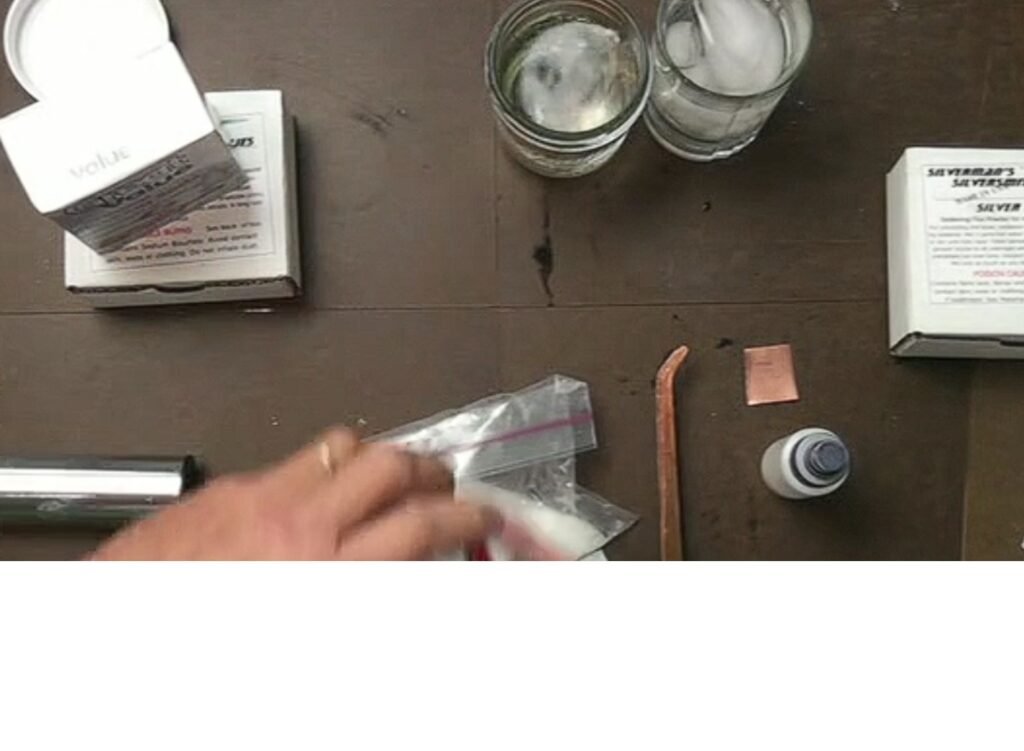
Before you pick up a torch or unbox a single tool, the space you work in will determine how safe, comfortable, and successful your silversmithing sessions are. In the very first lesson of the Beginning Silversmithing series, David Lee Smith walks through exactly what your workspace needs — and what it doesn’t. Whether you’re setting up a dedicated studio or carving out a corner of your kitchen table, these fundamentals apply to everyone.
Lighting
The goal is a clean, well-lit area — but not necessarily bright overhead fluorescents. Dimmable lighting is ideal. When you’re working at the torch, being able to lower the ambient light slightly helps you see solder flow clearly as it happens. Strong overhead lighting can wash out the visual cues you rely on to know when your solder is moving.
If you can get a dimmable fixture over your workbench, it’s worth the effort before your first session. A simple clamp-on adjustable lamp does the job if a full fixture isn’t practical.
Ventilation
At a minimum you need a window that opens. Fresh air circulation is the baseline requirement for any silversmithing workspace, and it matters more than many beginners realize.
If you plan to work regularly or at any kind of professional level, a dedicated ventilation system positioned over your workbench becomes necessary. The same is true if you ever use hot pickle — a chemical used to clean oxidation off metal after soldering. Hot pickle generates fumes that spread through the room quickly. In David’s classes, cold pickle is used specifically to avoid that problem, but if your process ever involves hot solutions, ventilation is non-negotiable.
The chemicals used in silversmithing have limited long-term exposure data available. David’s approach is simple: if you don’t know it’s safe, treat it as though it isn’t. Good ventilation is cheap insurance.
Floor covering
The ideal floor for a silversmithing workspace is concrete or tile. Both are fire-resistant and easy to clean if something hot drops. Wood is the next best option — not ideal, but workable.
If you’re working on carpet, you need to cover it. Tempered hardboard, the kind available at Lowe’s or Menards cut to size, is the recommended solution. It burns, but it burns slowly — giving you time to respond if a piece of hot metal lands on it. For a kitchen table setup, a full table cover of hardboard provides solid protection underneath your work surface.
Always keep a jar of water nearby. If something drops and lands on your covering, pour water on the spot and make sure it’s thoroughly soaked. A smoldering spot that looks extinguished can reignite later. David’s rule: if you know something burned, address it before you leave the workspace.
Working outdoors or near windows
Direct sunlight creates a problem most beginners don’t anticipate — it makes your torch flame nearly invisible. Solder flow becomes very difficult to see in bright light, which means you lose the visual feedback that tells you when to move the flame and when the solder has flowed fully.
If you work outside or near a bright window, shade is not optional. It’s a functional requirement. Even a simple canopy or repositioning your workbench relative to the window can solve the problem completely.
A few final setup notes
Keep your paper towels cut small — David cuts his rolls in half before putting them on the bench. Large pieces of paper towel near an active torch are a fire waiting to happen. A small metal trash can near the bench is also worth having; if something hot needs to go somewhere, metal contains it far better than plastic.
Get your workspace right before you start. It’s one of those things that’s much easier to do at the beginning than to fix in the middle of a project.