Garnet is one of the oldest gemstones known to humanity, worn and treasured for more than five thousand years. Most people picture garnet as a deep, glowing red — and that red variety is the classic January birthstone — but garnet is actually a whole family of related minerals that comes in nearly every color except blue. The rich red stones, called almandine and pyrope, are the most common and the most affordable, which makes them a favorite for silversmiths and a perfect stone for anyone learning to set their first cabochon. The name comes from the Latin word for pomegranate, because a cluster of small red garnet crystals looks exactly like the glistening seeds inside that fruit.
### Physical Properties
Garnet sits between 6.5 and 7.5 on the Mohs hardness scale, which makes the common red varieties durable enough for everyday rings, pendants, and bracelets. It has a brilliant glassy luster and a high refractive index, so a well-cut garnet shows real fire and sparkle. Garnet has no cleavage, which means it does not split along flat planes the way some stones do — it breaks with a conchoidal fracture instead, and that lack of cleavage makes it forgiving to cut and set. Most red garnet is faceted to show off its brilliance, but plenty of material is cut into smooth cabochons that sit beautifully in a silver bezel. The deep red against oxidized sterling silver is a timeless, rich combination.
### The Garnet Family and Color
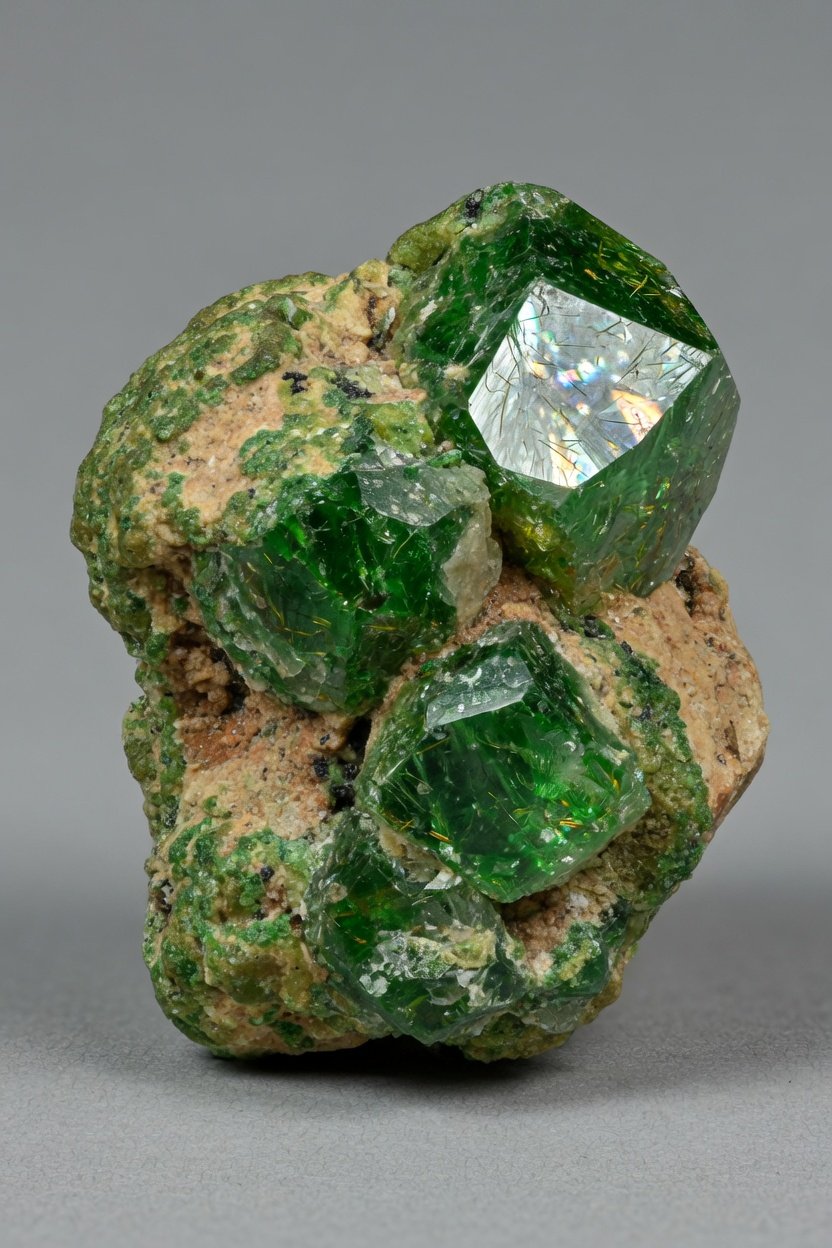
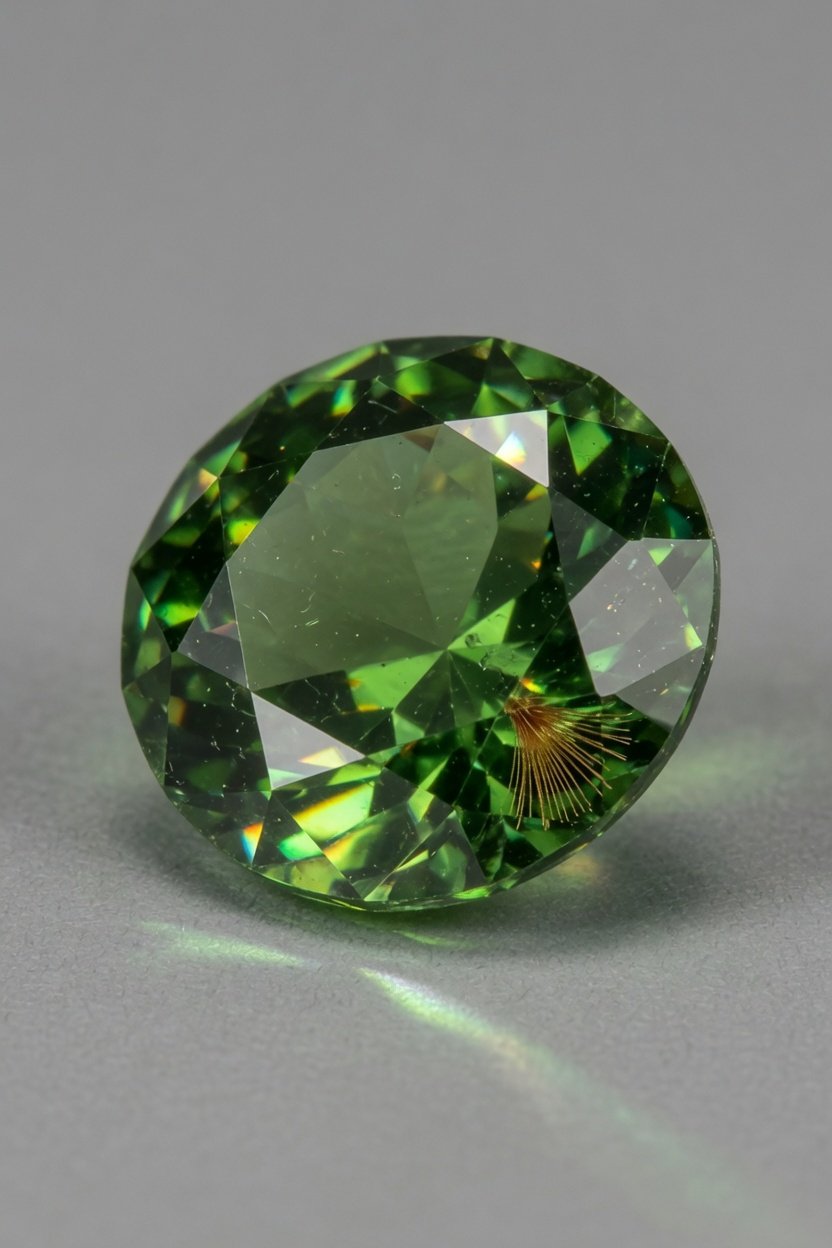
While red is the garnet most people know, the family is large. Almandine and pyrope give the deep reds and purples. Spessartine produces vivid orange, sometimes called mandarin garnet. Grossular includes the lush green tsavorite and the warm brown-orange hessonite. Andradite includes demantoid, a rare green garnet prized for its fire. Rhodolite is a beautiful raspberry-purple blend. For the beginning silversmith, the affordable red almandine and pyrope are the practical starting point, but it is worth knowing that the same mineral family offers a rainbow of choices as your skills grow.
### Origin and Sourcing
Red garnet is found on nearly every continent, which is part of why it is so affordable and accessible. Today major sources include Mozambique, Tanzania, Namibia, and other parts of Africa, along with India, Sri Lanka, Brazil, and the United States. Historically, the famous Bohemian garnet jewelry of the 1800s used tiny deep-red pyrope garnets mined in what is now the Czech Republic, set in dense clusters that became a signature European style. Garnet forms mainly in metamorphic rock — stone that has been changed by heat and pressure deep in the earth — and it is so common in some regions that it is also mined industrially as an abrasive for sandblasting and waterjet cutting.
### In Jewelry and Silversmithing
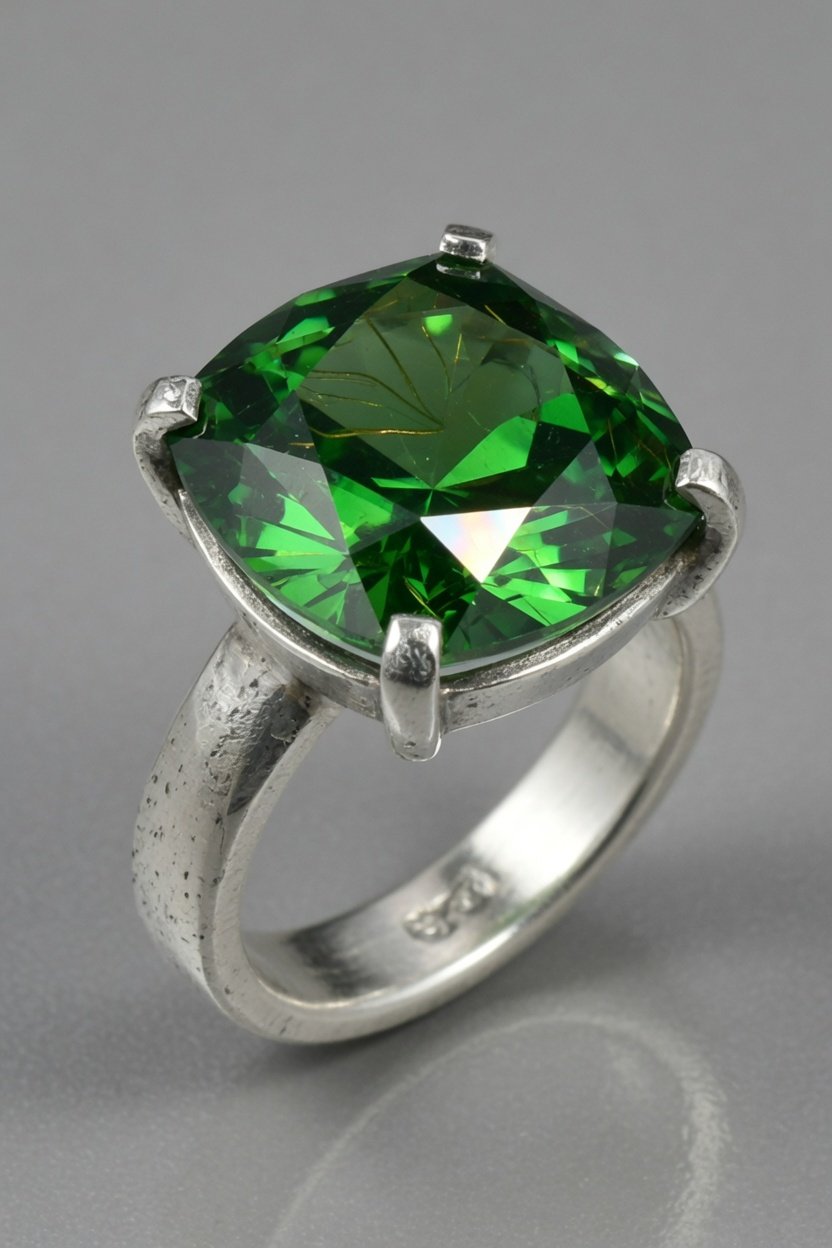
Garnet is an excellent stone for silver work. Its hardness means it tolerates everyday wear without the special care a softer stone requires, and its lack of cleavage makes it less prone to chipping during setting. Red garnet cabochons set cleanly in a bezel, and the stone's natural brilliance does not need an elaborate setting to look rich. As with most stones, garnet should be set after all soldering and heat work is finished. Clean it gently with warm soapy water and a soft brush, and keep it away from harsh chemicals and ultrasonic cleaners, which can harm some garnet varieties.
### History and Significance
Garnet has been carried and worn since the Bronze Age. Egyptian pharaohs wore garnet, and the Romans used it both as jewelry and as carved signet rings for sealing documents. Travelers and warriors carried garnet as a protective talisman, believing it lit the darkness and guarded them from harm — a legend even says Noah used a glowing garnet to steer the ark through the night. Through medieval and Victorian times garnet remained a beloved stone of passion, loyalty, and protection. When you set a red garnet in silver today, you are working with one of the most historically rich stones available — and one that is still wonderfully affordable.
### Identifying Garnet in the Field
Garnet most often forms in metamorphic rocks like schist and gneiss, where it appears as well-shaped crystals embedded in the host rock. Look for the distinctive crystal habit: garnet commonly forms rounded crystals with twelve or twenty-four flat faces, often a deep red to reddish-brown, standing out against the surrounding gray or silvery mica. It has a hardness of 6.5 to 7.5, so it scratches glass easily and is not scratched by a steel knife. Garnet has no cleavage and breaks with a conchoidal fracture, and its high specific gravity of about 3.5 to 4.3 gives crystals a noticeable heft for their size. Because garnet resists weathering better than the rock around it, loose crystals often wash into stream gravels, where they can be panned alongside other heavy minerals.
Quick Facts
Common names: Garnet, Almandine, Pyrope, Rhodolite, Spessartine
Chemical formula: X₃Y₂(SiO₄)₃ (almandine: Fe₃Al₂(SiO₄)₃)
Mohs hardness: 6.5–7.5
Specific gravity: 3.5–4.3
Color: Most often deep red; also orange, green, purple, brown
Crystal system: Cubic (isometric) — dodecahedral crystals
Luster: Vitreous (glassy) to resinous
Transparency: Transparent to translucent
Common cuts: Faceted (fine jewelry), cabochon (silversmithing)
Common treatments: Usually untreated — a naturally clean stone
Best silver setting: Bezel or prong (hard enough for either)
Birthstone month: January
Anniversary: 2nd wedding anniversary
Main sources: Mozambique, Tanzania, Namibia, India, Sri Lanka, USA
Meaning & Metaphysical Properties
Garnet has been carried for thousands of years as a stone of fire and life force. It is associated with passion, energy, and the courage to pursue what you truly want. Many people turn to garnet when they feel drained or stuck, using its warm red energy to reignite motivation and bring a sense of aliveness back into daily life. Its glow has long been a symbol of the inner fire that keeps us moving forward.
Chakra: Root chakra (Muladhara) — grounding, security, life force
Also associated with: Sacral chakra — passion and creativity
---
Across the ancient world garnet was the traveler's protective stone. Warriors carried it into battle and explorers wore it on long journeys, trusting it to light the dark and guard against harm. Today garnet is used by those facing something daunting — a hard conversation, a big change, a frightening challenge — as a steadying reminder of their own courage. Its protective quality is about strength from within, not shrinking from what is hard.
Chakra: Root (Muladhara) — safety, stability, grounding
---
Garnet is a stone of devotion. Its deep red has symbolized loyal love and lasting commitment since Roman times, when garnet rings sealed both letters and promises. It is used to strengthen bonds — between partners, family, and close friends — and to encourage the kind of steady, grounded love that endures. For anyone wanting to deepen a relationship or honor a lasting commitment, garnet carries that warm, faithful energy.
Affirmation: "I am full of life, I am protected, and I love with a steady and open heart."
At a Glance
Chakra: Root, Sacral
Element: Fire, Earth
Energy: Energizing, protective, grounding
Zodiac: Aquarius, Capricorn, Leo, Virgo
Planet: Mars, Pluto
Affirmation: I am full of life and I move forward with courage
Related Stones
Explore more stones from the Gemstone Library: Tiger's Eye · Jade · CARNELIAN