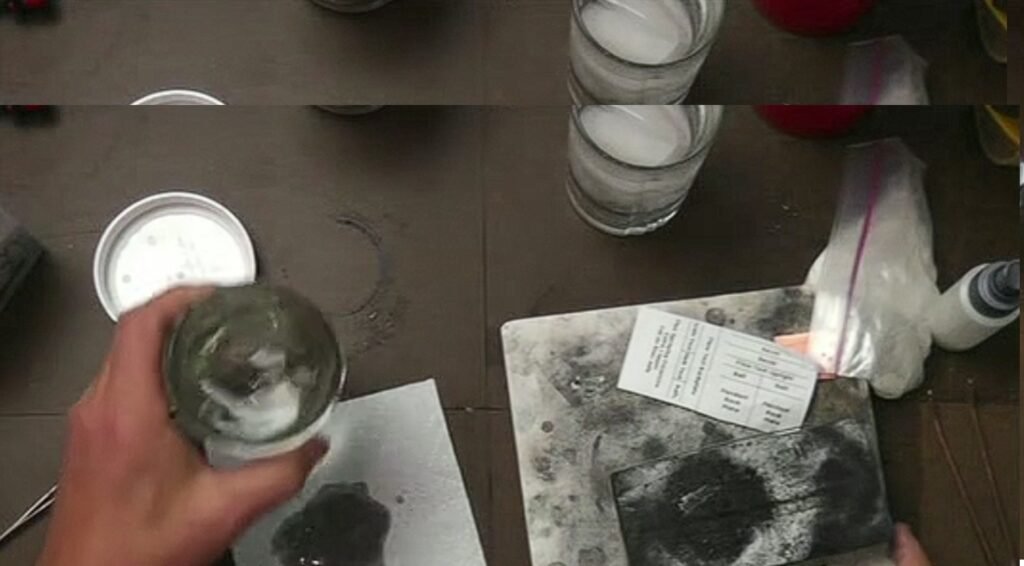
Silversmithing involves an open flame torch, acid chemicals, and hot metal. Managed correctly, it’s a remarkably safe craft — David has taught thousands of students without serious incident. But managed carelessly, the risks are real. These are the fire safety fundamentals David covers in the beginning series, and the reasons behind each of them.
Paper towels: small squares only
This one surprises beginners. Paper towels near an active torch are a fire hazard — but you need them, so the solution is managing their size. David cuts his paper towel rolls in half before putting them near the workbench. The result is small squares rather than full sheets.
The rule is to keep no more than about ten of these squares out at a time. More than that creates too large a fire risk if something ignites. If a small piece of paper towel catches from a spark or dropped hot metal and there’s no metal underneath it, you can usually just pat it out. If that doesn’t work, a small amount of water handles it.
Keeping paper towels away from the immediate torch area when you’re not actively using them is even better practice. Set them to the side and reach for one when you need it.
The charcoal block rule
Your charcoal soldering block absorbs a lot of heat over the course of a session. When you’re done for the day, leave it on the soldering board — don’t set it on anything flammable. Some silversmiths wet the block down slightly after a session to be certain it’s fully cooled. If it does retain heat and catches later, being on the soldering board contains the risk rather than spreading it.
Know your last resort
The progression when something catches fire:
First, pat it out if there’s no metal under it. Second, pour a small amount of water on it. Third — and only if the first two haven’t worked — reach for the fire extinguisher.
If you’re using the fire extinguisher, David is clear about what that means: you’re probably already in a bad situation. Be prepared to call the fire department if the extinguisher doesn’t resolve it immediately.
He recommends keeping a small fire extinguisher right on your workbench rather than across the room. In an emergency, reaching across the table is the difference between a quick fix and a disaster.
Empty your torch before storage or shipping
The butane torch used in the beginning kit must be thoroughly drained before it’s stored for an extended period or shipped anywhere. To drain it: start the torch on low, lock it in place, and let it burn out completely. Then leave it outside for a few hours to allow any remaining butane vapor to dissipate.
Before putting it away, check that it won’t light, isn’t leaking, and isn’t making any hissing sounds. A torch that passes those checks is safe to store.
The metal trash can
Keep a metal trash can near your workbench — not plastic. If a hot piece of metal needs to be discarded quickly or lands in the trash accidentally, metal contains the heat and any resulting fire. A plastic trash can can melt, catch, and spread a fire very quickly.
An unpainted metal can is better than a painted one since paint can react to heat, but a painted can is still far better than plastic.
Follow the rules and you won’t need the extinguisher
David’s closing point on fire safety is worth repeating: if you follow the habits he teaches — small paper towels, tweezers for hot metal, charcoal block on the board, torch drained before storage — the fire extinguisher stays on the bench and never gets touched. The rules exist because they work.