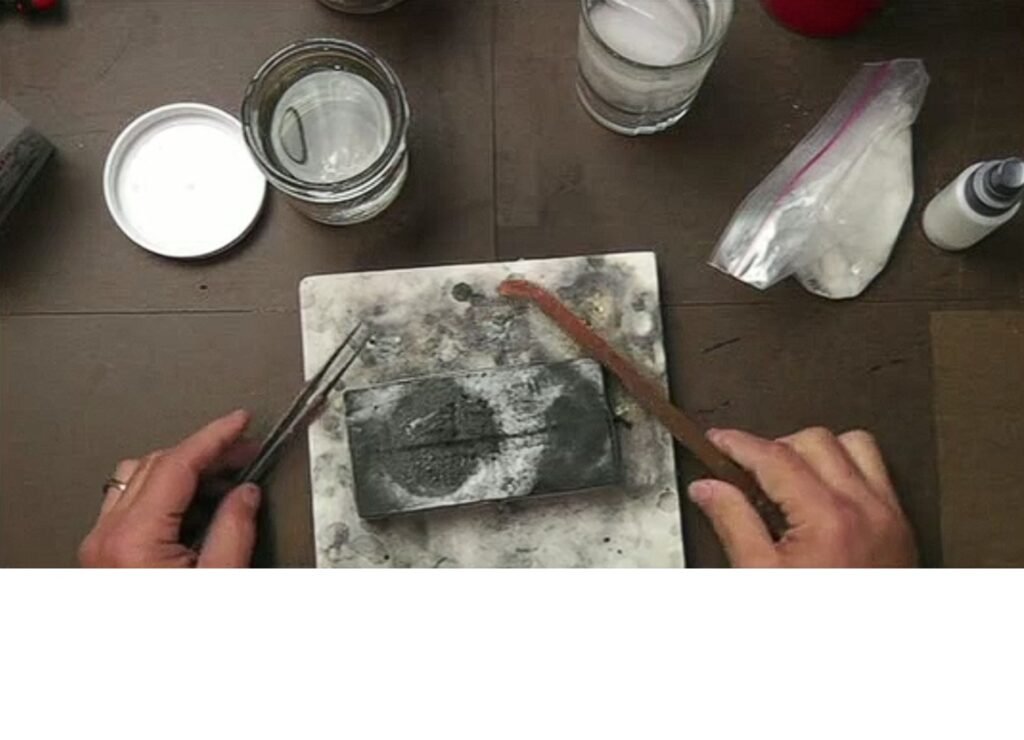
There’s a phrase David repeats in class early and often: everything is hot. It sounds simple, almost obvious. But it’s one of the most important habits a beginning silversmith can build, and one of the easiest to get careless about when you’re focused on your work.
Here’s what it means in practice, and why the habit matters more than you might expect.
Why “everything is hot” isn’t obvious in the moment
When you’re soldering, your attention is on the torch, the metal, and the solder. You’re watching for the right color, the right moment, the right flow. Then the solder flows, you pull the flame back, and your instinct is to immediately inspect what you’ve done.
That instinct leads beginners to reach for the piece with their fingers. The metal looks like metal again — not glowing, not smoking. It seems like it’s cooled down. It hasn’t.
Silver and copper conduct and retain heat in ways that don’t give you reliable visual feedback. A piece that looks room temperature can still burn you badly. The only safe assumption after the torch has been on a piece is that it’s hot — period.
Use tweezers and tongs every time
The rule is non-negotiable: use tweezers and tongs to pick up anything that’s been near the torch. Not sometimes. Every time, until it becomes reflex.
This isn’t just about burns. The habit has a second benefit — it keeps your hands away from the work area in general, which reduces accidents across the board. The more automatic it becomes to reach for your tweezers rather than your fingers, the safer your entire workflow gets.
In a pinch chain nose pliers work for this as well, and they’re already in your toolkit for other tasks. The key distinction David emphasizes: use chain nose pliers, not needle nose. Needle nose pliers have serrations inside the jaw that can mar your metal. Chain nose pliers have a smooth flat jaw that grips without damage.
Moving hot metal to pickle
After soldering, the next step is usually pickle — the mild acid solution that removes oxidation and flux residue from the metal. The workflow is: piece comes off the Charcoal Block, goes into the pickle with your tongs, then from pickle into the rinse water.
The tongs with piece go from pickle to rinse automatically — because they’re already in the pickle, they get rinsed in the same motion when you move the piece to the water jar. It’s a clean, simple workflow that keeps acid off everything it shouldn’t touch.
Rinse your tongs every single time. Pickle left on metal tools accelerates corrosion, and pickle left on your bench surface or hands causes small burns you might not notice immediately.
What about burns?
They happen. Even experienced silversmiths get them occasionally. David’s personal approach is to keep a glass with ice water or an iced drink nearby at all times. His practice — and he notes the Mayo Clinic recommends against direct ice contact -is get the burned area gets into the ice water as quickly as possible. Have something cold nearby. Know where your water jar is. And build the tweezers habit from your very first session — it’s much easier to establish it from the beginning than to break a fingers-first habit later.