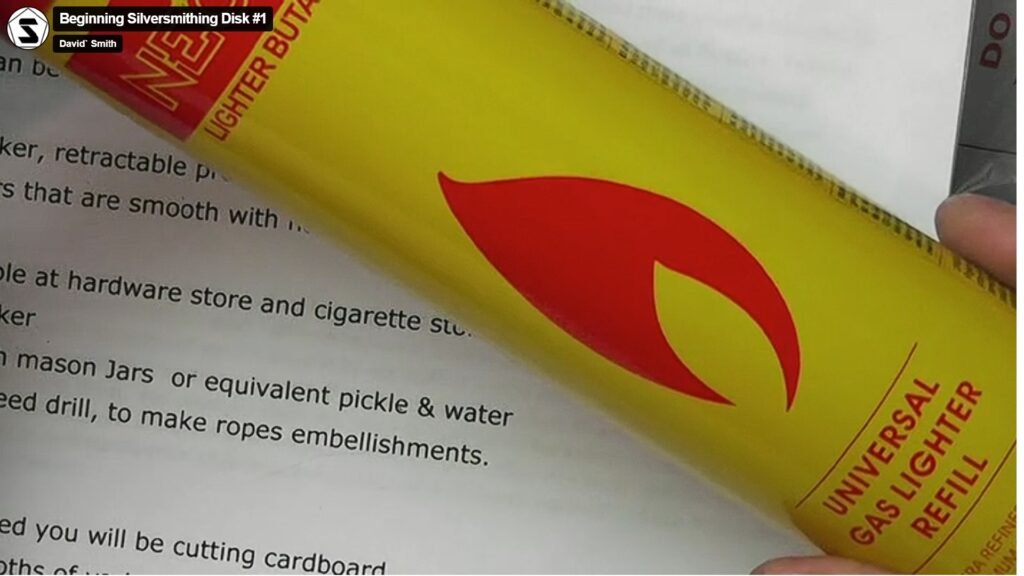
Butane is butane — or so it seems. Walk into any hardware store and you’ll find several options at similar prices. The difference between them isn’t obvious until you’ve used unfiltered butane in a precision torch and spent time troubleshooting clogs and performance problems. For silversmithing, filtered butane isn’t a preference — it’s a requirement.
What’s in unfiltered butane
Butane that isn’t refined for precision instruments contains impurities — trace oils, residues from the refining process, and particulates that aren’t a problem when you’re lighting a campfire or a cigarette but become a real problem inside a small precision torch.
The fuel delivery system in a jeweler’s torch is designed for clean, consistent fuel. Impurities build up over time, clogging the fine passages that control fuel flow. A clogged torch produces an uneven, unreliable flame — which directly affects your ability to control heat on a piece of metal. For soldering, inconsistent flame is a source of failed joins and damaged work.
What to look for on the label
The label should say one of the following: filtered, ultra-filtered, four times filtered, or ultra. Some brands use their own terminology, but anything in the four-times-filtered or higher range is appropriate for a precision torch.
If it just says butane with no filtration claim, don’t use it in your torch. The price difference is minimal and the performance difference is significant.
Where to find it
Hardware stores carry filtered butane in the torch and lighter fuel section. Tobacco shops and stores that sell cigarette lighters usually carry it as well — look for the premium lighter refill cans. Some grocery stores carry it.
The can typically comes with an assortment of fittings in the cap to match different torch and lighter valve types. Before you buy, check that the fittings are compatible with your torch, or verify that the standard fitting included matches the torch valve type in your kit.
Filling the torch
The torch used in David’s beginning series is a butane torch with a filling valve on the bottom. To fill it: Available at https://silversmithingclass.com/product/jumbo-torch-by-silversmithingclass-com/
Hold the torch upside down and press the butane can nozzle firmly into the filling valve. Keep pressure steady for several seconds. The torch is full when butane starts to escape around the valve — that’s the signal to stop.
After filling, wait a minute before lighting. Butane is cold when it first enters the torch and needs a moment to reach room temperature before the torch will light reliably.
Before storing or shipping
Always drain the torch completely before storing it for an extended period or shipping it. Start it on low, lock it in place, and let it burn out. Then leave it somewhere ventilated for a few hours to let any remaining vapor dissipate. Before putting it away, confirm it won’t light, isn’t leaking, and isn’t making any hissing sounds.
This matters particularly if you’re ever returning a borrowed tool kit — a torch with fuel in it cannot legally be shipped by mail or carry-on air travel.