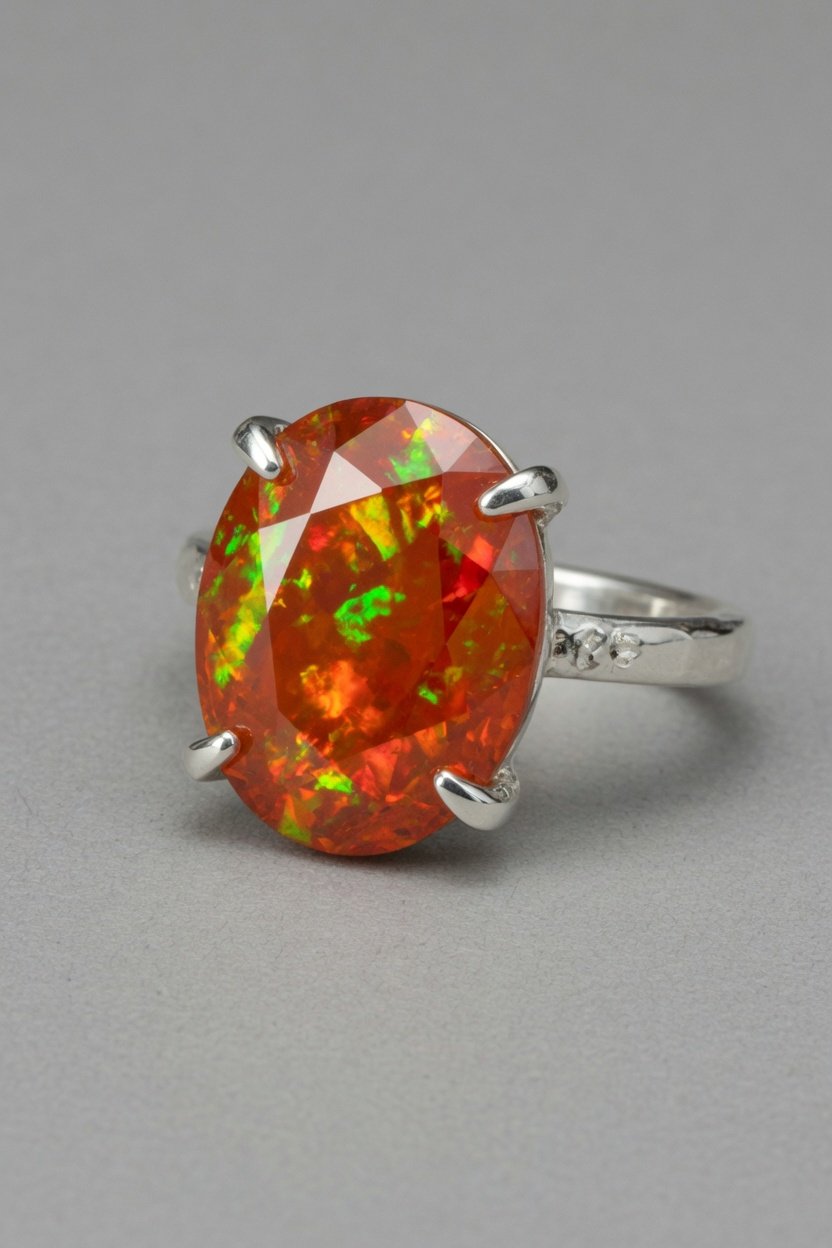
Opal is unlike any other gemstone on earth. While most gems are prized for a single pure color, opal puts on a show — flashing green, blue, red, orange, and violet that shift and dance as the stone moves in the light. This shimmering display is called play-of-color, and no two opals are ever the same. For that reason opal has been called the queen of gems, a single stone that seems to hold every other gem's color inside it. The finest precious opal comes from Australia, which has produced the vast majority of the world's supply for over a century, with Ethiopia emerging as an important newer source.
What Makes Opal Special
The magic of opal comes from how it formed. Opal is made of countless tiny spheres of silica stacked in orderly rows, with water filling the spaces between them. When light passes through these microscopic spheres it bends and splits into the colors of the rainbow — the same effect that makes a soap bubble shimmer. Because opal contains water, usually between three and ten percent, it is a softer and more delicate stone than most gems. It needs gentle care, but in return it gives a beauty no other stone can match. Opals that show strong play-of-color are called precious opal; those without it are called common opal or potch.
Physical Properties
Opal sits at about 5.5 to 6.5 on the Mohs hardness scale, which makes it softer than quartz and considerably more delicate than stones like garnet or amethyst. It has no crystal structure at all — it is what scientists call amorphous, meaning it never formed into ordered crystals the way most minerals do. Because of its water content, opal can dry out and develop fine cracks, called crazing, if exposed to heat, harsh light, or very dry air over time. This softness and sensitivity means opal is almost always cut as a smooth cabochon rathim than faceted, and it calls for a protective setting and gentle handling.
Types of Opal
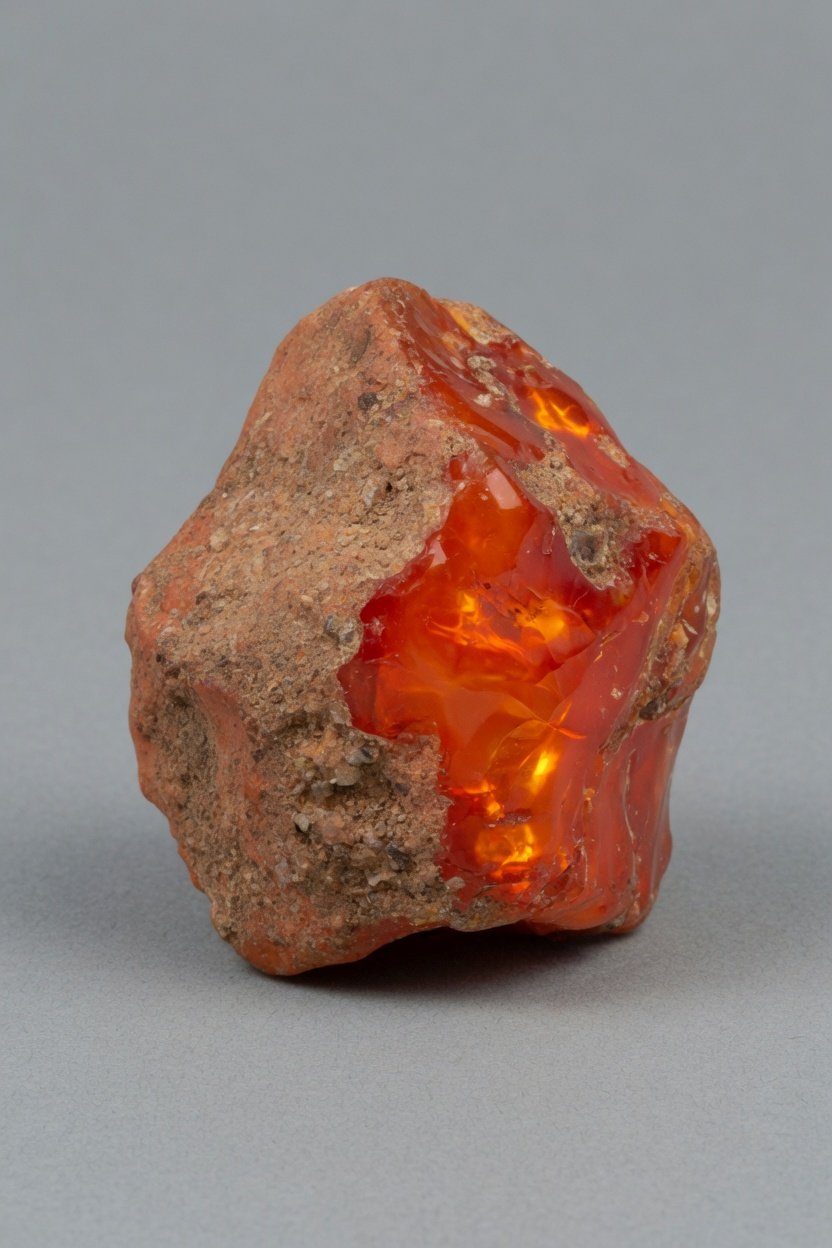
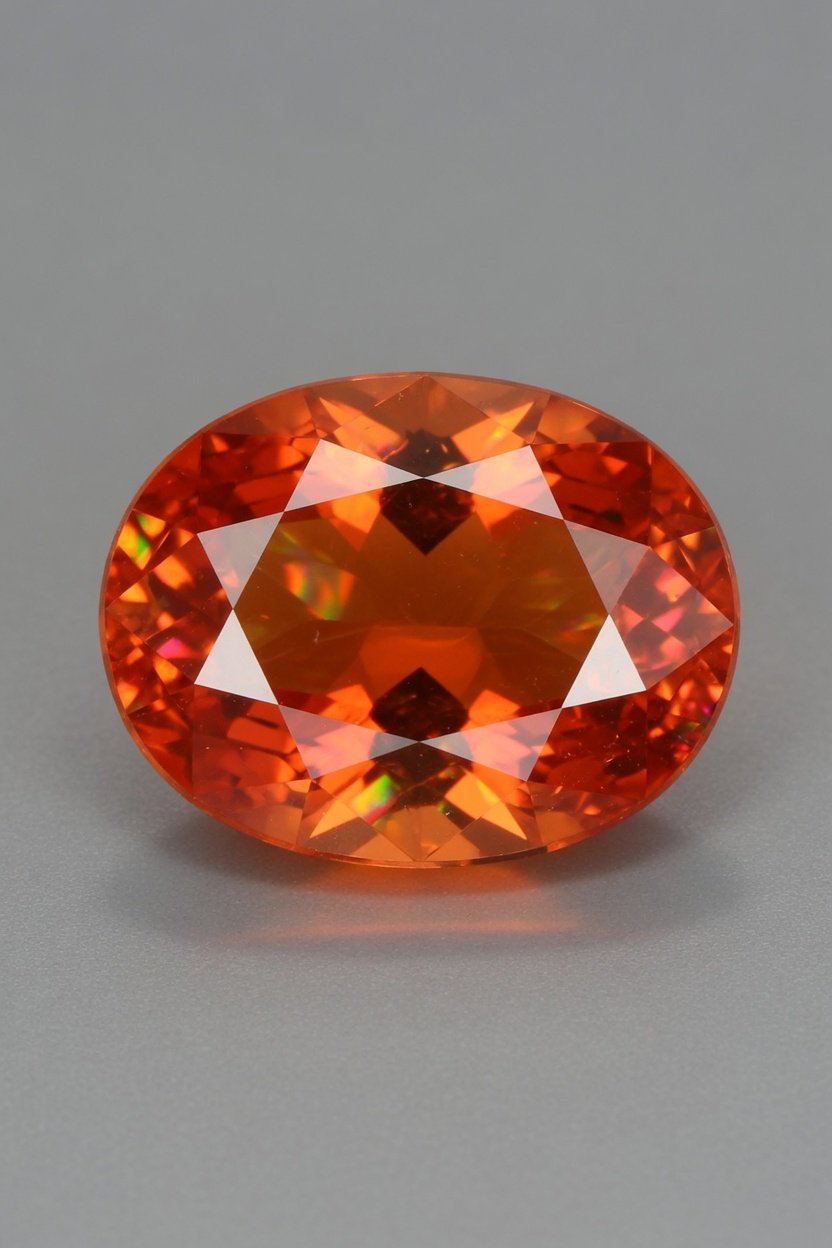
There are several beautiful kinds of opal. White opal has a pale, milky body color with flashes of play-of-color, and is the classic Australian opal from Coober Pedy. Black opal, the rarest and most valuable, has a dark body that makes its colors blaze with extraordinary intensity — the famous black opal comes from Lightning Ridge. Boulder opal forms in thin seams within ironstone rock and is left attached to that host rock when cut, giving it strength and a dramatic natural backing. Crystal opal is transparent to translucent with vivid color. Fire opal, mostly from Mexico, glows orange to red and is sometimes faceted. Ethiopian Welo opal is a bright, newer arrival prized for its vivid play-of-color.
Origin and Sourcing
Australia has long been the heart of the opal world, producing the great majority of the planet's precious opal. Lightning Ridge in New South Wales is world famous for black opal, while Coober Pedy in South Australia — a town where many residents live underground to escape the heat — produces white and crystal opal. Queensland is the source of boulder opal. In recent years Ethiopia's Welo region has become a major source of bright, affordable opal. Opal forms near the earth's surface where silica-rich water seeps into cracks and cavities in rock and slowly deposits its silica over millions of years, sometimes even replacing ancient wood, shells, or bone to create opalized fossils.
In Jewelry and Silversmithing
Opal is a rewarding but careful stone for silver work. Its softness and water content mean it should always be set after every bit of soldering and heat work is done — heat is one of opal's greatest enemies and can crack it instantly. A protective bezel setting is ideal, cradling the stone and shielding its edges. Opal looks stunning against both bright and oxidized silver, its colors leaping out from the metal. Once set, treat opal gently: keep it away from heat, harsh chemicals, ultrasonic cleaners, and long spells of dry air. Clean it with a soft damp cloth, and an opal will keep its fire for generations.
Identifying Opal in the Field
Opal is found in sedimentary rock, often in arid regions, where it fills seams, cavities, and cracks rathim than forming crystals. The unmistakable clue is play-of-color — turn a suspected opal in the light and look for flashes of shifting rainbow color from within. Common opal and potch will show a waxy to glassy luster but no color play. Opal is relatively light for its size because of its water content and low specific gravity of about 2.0 to 2.2. It is soft enough to be scratched by a steel knife. In opal country, look for it in weathered sandstone and ironstone, frequently alongside white or gray clay, and in boulder opal regions, sealed within rounded ironstone concretions that must be cracked open to reveal the color inside.
Quick Facts
Common names: Opal, White Opal, Black Opal, Boulder Opal, Fire Opal
Chemical formula: SiO₂·nH₂O (hydrated silica)
Mohs hardness: 5.5–6.5
Specific gravity: 2.0–2.2
Color: All colors via play-of-color; body white, black, or clear
Crystal system: Amorphous (no crystal structure)
Luster: Vitreous to waxy or pearly
Transparency: Transparent to opaque
Common cuts: Almost always cabochon (rarely faceted fire opal)
Common treatments: Sometimes impregnated, smoked, or backed (doublets/triplets)
Best silver setting: Bezel (protects the soft, delicate stone)
Birthstone month: October
Anniversary: 14th wedding anniversary
Main sources: Australia (Lightning Ridge, Coober Pedy), Ethiopia, Mexico
Meaning & Metaphysical Properties
Opal has long been treasured as a stone of creativity and imagination. Its ever-shifting colors are said to awaken inspiration, spark new ideas, and help artists, writers, and makers find fresh vision. Many people turn to opal when they feel creatively stuck, using its rainbow fire as a reminder that beauty and possibility live inside even the plainest-looking things. It is a stone for dreamers and for anyone wanting to bring more color and originality into their life.
Chakra: Crown chakra (Sahasrara) — inspiration, highim vision
Also associated with: Sacral chakra — creativity and joy
---
Across many traditions opal is seen as an emotional stone, reflecting and amplifying feelings the way it reflects light. It is used to lift the spirits, encourage joy and spontaneity, and gently bring buried emotions to the surface so they can be released and healed. Opal's play-of-color is a reminder that emotions, like light, are always moving and changing. Many keep opal close during times of emotional growth or when they simply want to invite more lightness and happiness into their days.
Chakra: Heart chakra (Anahata) — emotional balance and joy
---
Opal has been a stone of hope since ancient times — the Romans considered it a symbol of hope and good fortune, the most precious of all gems. Its shifting colors speak of change, renewal, and the constant transformation of life. Opal is carried by those moving through a major life change, offering a sense that something beautiful is always emerging. It encourages faith in the future and the courage to embrace the new.
Affirmation: "I am open to inspiration, my heart is full of light, and I welcome the beauty in change."
At a Glance
Chakra: Crown, Heart, Sacral
Element: Water
Energy: Inspiring, joyful, transformative
Zodiac: Libra, Cancer, Scorpio, Pisces
Planet: Venus
Affirmation: I welcome inspiration and embrace the beauty in change
Related Stones
Explore more stones from the Gemstone Library: AMETHYST · LABRADORITE · TURQUOISE