Amethyst is one of the most recognized gemstones on earth — and one of the most misunderstood. People know the purple color instantly. What they often don't know is that amethyst is simply quartz, the same mineral family as clear rock crystal, rose quartz, and smoky quartz. The difference is iron. Trace amounts of iron in the crystal lattice, combined with natural irradiation during formation, produce the violet-to-purple color that has made amethyst treasured since antiquity.
Physical Properties
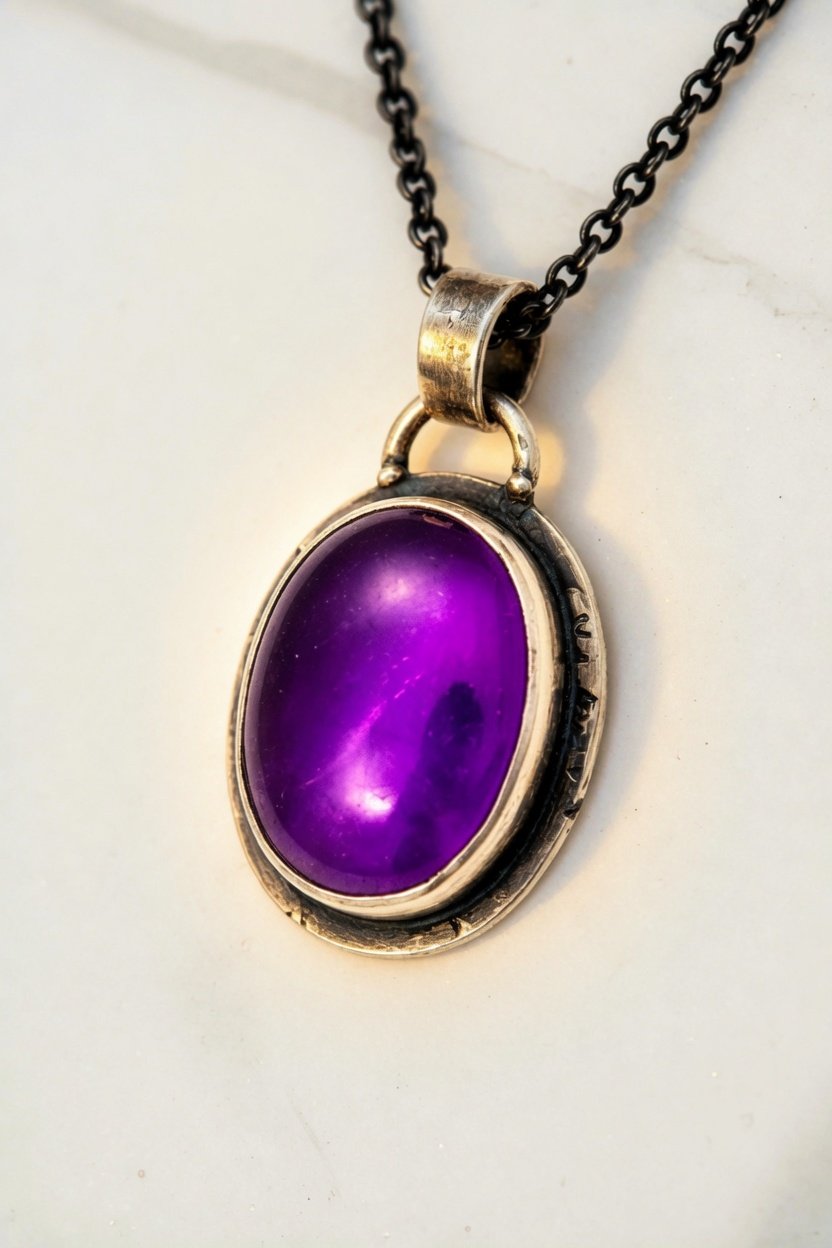
Amethyst ranks 7 on the Mohs hardness scale, making it one of the more durable gemstones used in jewelry. It handles everyday wear well and resists scratching from most common materials. The color ranges from pale lavender through deep violet-purple, with the most prized specimens showing a rich, even color sometimes described as "deep Siberian" — a reference to the historically significant Russian deposits. Color saturation varies widely by source: Brazilian amethyst tends toward lighter, more transparent tones, while African amethyst, particularly from Zambia, runs darker and more saturated. Amethyst has a vitreous luster when polished and is transparent to translucent. Most material is faceted for use in fine jewelry, but the opaque or heavily included material is cut as cabochons, which are excellent for silversmithing bezel work.
Origin and Sourcing
The most significant amethyst deposits today are in Brazil, where enormous geode formations in Rio Grande do Sul produce the majority of the world's supply. Uruguay produces smaller quantities of notably dark, saturated material. Zambia is the premier African source, known for stones with a distinctive bluish-purple secondary hue. Russia's Ural Mountains historically produced what collectors consider the finest amethyst ever found — that material is now largely exhausted, which is why "Siberian" has become a quality descriptor rather than a geographic one. Other sources include Mexico, South Korea, Austria, and several locations across the western United States. Amethyst forms in volcanic rock cavities — the hollow spaces that become geodes — where silica-rich fluid deposits successive layers of crystal over millions of years.
In Jewelry
Amethyst is one of the most versatile gemstones for jewelry making. Its hardness makes it suitable for rings, bracelets, pendants, and earrings without the protective precautions required for softer stones. In silversmithing, amethyst works beautifully in bezel settings — the purple against oxidized or brushed silver creates a classic combination that never goes out of style. It's sensitive to prolonged strong light, which can fade color over time, so storage away from direct sunlight is recommended. Amethyst is also heat-sensitive — torch work near a set amethyst can cause color change or cracking, so the stone should always be set after all soldering is complete.
History and Significance
Amethyst was considered a precious stone for most of human history, ranking alongside ruby, emerald, and sapphire. In ancient Greece and Rome it was associated with sobriety — the word amethyst derives from the Greek amethystos, meaning "not drunk." Wine goblets were carved from amethyst in the belief that drinking from them prevented intoxication. The stone was widely used in royal and ecclesiastical jewelry throughout medieval Europe; many famous crown jewels contain large amethysts. Its reclassification as a semiprecious stone only came in the 18th century when large Brazilian deposits made it widely available. That abundance is what makes it accessible today — a stone that once belonged exclusively to royalty can now be set by a beginning silversmith.
Identifying Amethyst in the Field
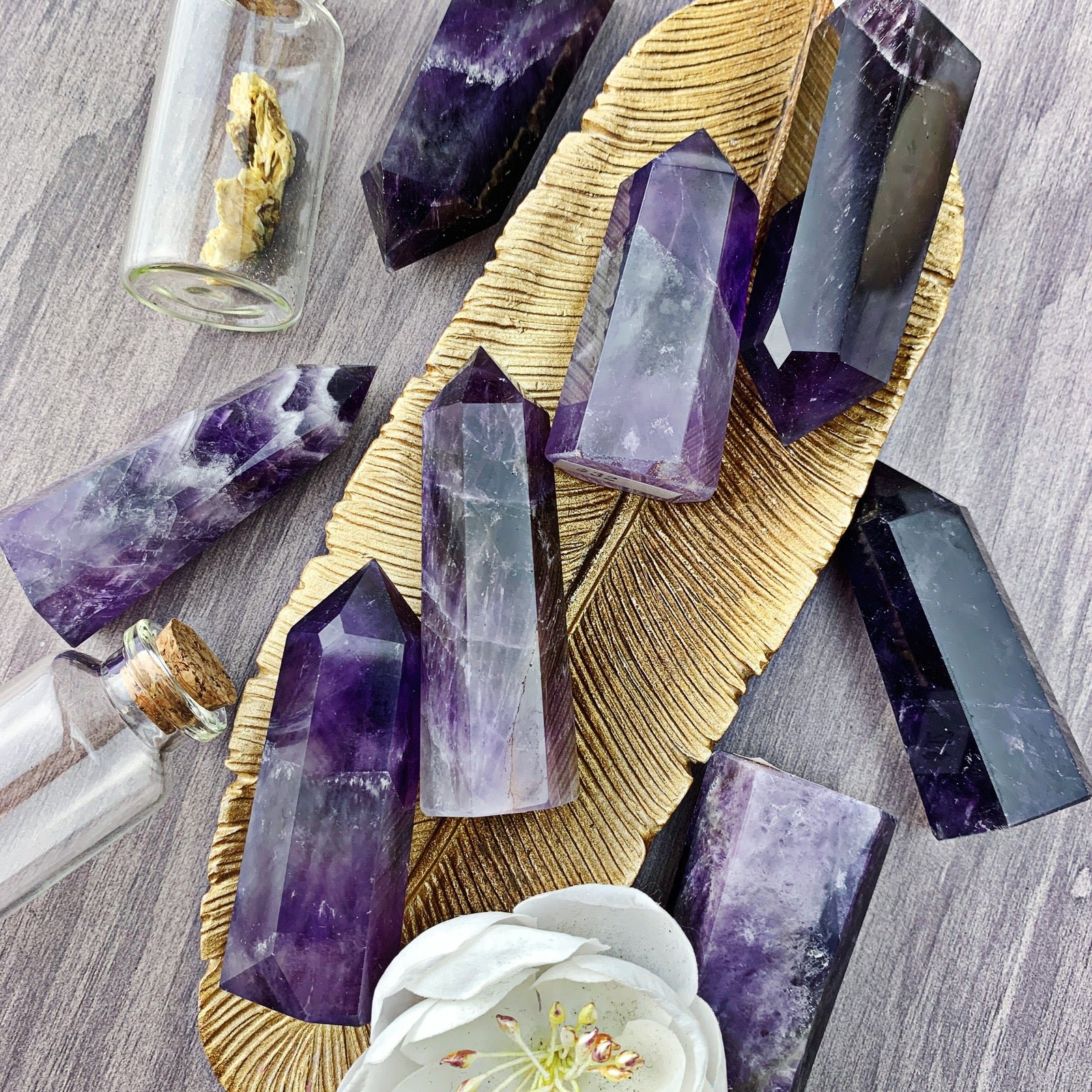
Amethyst forms in cavities in volcanic basalt, typically as part of geode formations. Field identification involves several characteristics. Color is the first clue — the violet-purple hue is distinctive, though pale specimens can be confused with other minerals. Amethyst always forms as six-sided prismatic crystals with pyramidal terminations, often with horizontal striations on the prism faces. The crystals frequently show color zoning — alternating bands of deeper and lighter purple visible when the crystal is held up to light. Hardness testing confirms identification: amethyst easily scratches glass and is not scratched by a steel knife. It has no cleavage but breaks with a conchoidal fracture. Specific gravity of 2.65 gives it a characteristic heft. Amethyst often appears alongside agate, chalcedony, and clear quartz in the same geode, since they share the same silica chemistry and formation conditions.
Quick Facts
Common names: Amethyst, Siberian Amethyst, Uruguayan Amethyst
Chemical formula: SiO₂ (Silicon Dioxide — quartz family)
Mohs hardness: 7
Specific gravity: 2.65
Color: Pale lavender to deep violet-purple
Crystal system: Trigonal — six-sided prisms with pyramidal tips
Luster: Vitreous (glassy)
Transparency: Transparent to translucent
Common cuts: Faceted (fine jewelry), cabochon (silversmithing)
Common treatments: Heat treatment (to lighten or produce citrine)
Best silver setting: Bezel, prong (hard enough for either)
Birthstone month: February
Anniversary: 6th wedding anniversary
Main sources: Brazil, Zambia, Uruguay, Russia (historic)
Meaning & Metaphysical Properties
Amethyst has been used for thousands of years as a stone of calm and mental clarity. It's considered one of the most powerful stones for quieting an overactive mind — reducing anxiety, worry, and the kind of racing thoughts that make sleep difficult. Many people keep amethyst on the nightstand or hold it during meditation specifically for this quieting effect. Its energy is described as cool and steady, like a deep breath held for just a moment longer than usual.
Chakra: Crown chakra (Sahasrara) — higher consciousness, clarity, connection
Also associated with: Third Eye chakra — intuition and inner knowing
Amethyst is strongly associated with the Third Eye — the energy center linked to intuition, perception, and the ability to see situations clearly without emotional distortion. It's used by those making difficult decisions, navigating major life transitions, or trying to cut through confusion to what is actually true. In meditation it's placed on the forehead or held in both hands to encourage the kind of clear-eyed perspective that's hard to access when stress or emotion is running the show.
Chakra: Third Eye (Ajna) — intuition, perception, mental clarity
The ancient world knew amethyst as the stone of sobriety — protection against overconsumption, addiction, and the loss of clear judgment. The Greeks carved wine cups from amethyst in the belief it kept the mind clear. Today it's carried by those in recovery, those trying to break patterns of behavior that no longer serve them, and anyone who wants to stay grounded and clear-headed under pressure. Its protective quality is less about guarding against external harm and more about maintaining internal clarity.
Affirmation: "My mind is clear, my choices are free, and I am protected by
my own steady awareness."
At a Glance
Chakra: Crown, Third Eye
Element: Air, Water
Energy: Calming, clarifying, protective
Zodiac: Pisces, Virgo, Aquarius, Capricorn
Planet: Jupiter, Neptune
Affirmation: My mind is clear and my spirit is free
Related Stones
Explore more stones from the Gemstone Library: OPAL · LABRADORITE · LAPIS LAZULI