Carnelian is one of the oldest treasured gemstones on earth — a warm, glowing stone in shades of orange, red, and rusty brown that the ancient Egyptians called "the setting sun." It belongs to the chalcedony family, a form of microcrystalline quartz, and its fiery color comes from traces of iron oxide within the stone. For more than five thousand years, people have carved it, worn it, and buried it with their dead, drawn to a color that seems to hold the warmth of a low evening sky. Few stones carry such a long, unbroken thread of human devotion.
Physical Properties
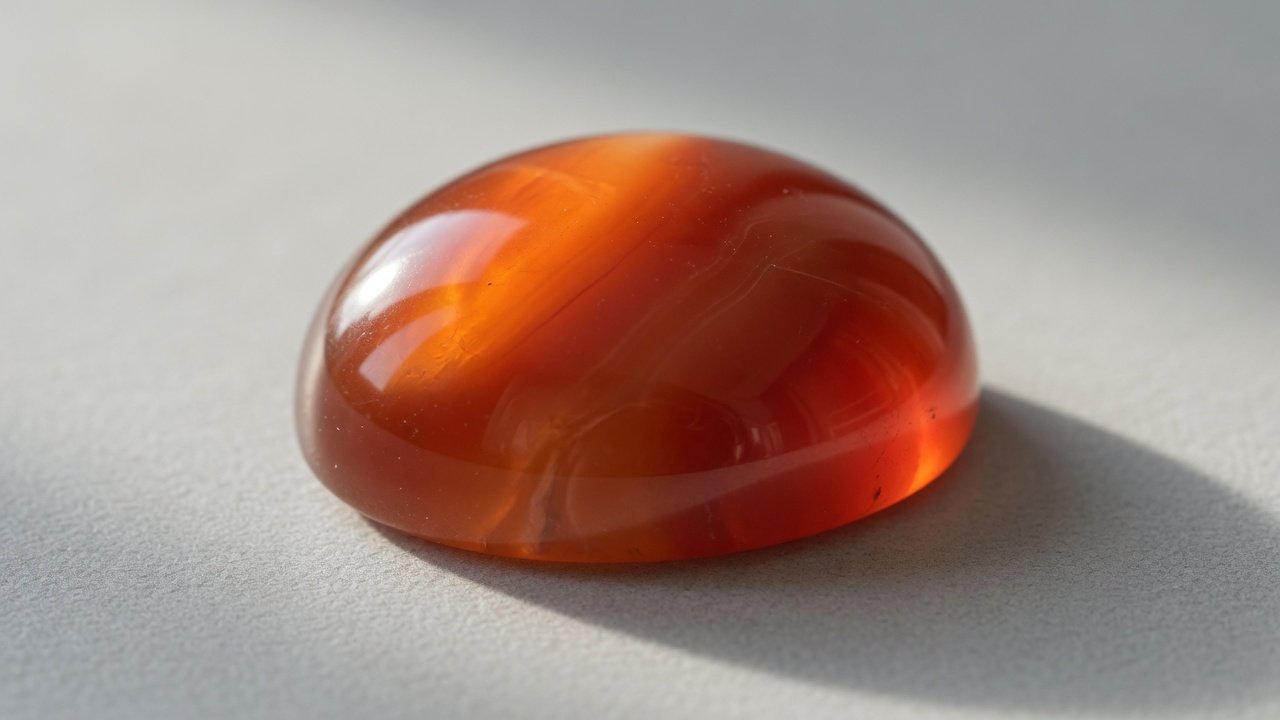
Carnelian ranks about 6.5 to 7 on the Mohs hardness scale, making it durable and well suited for everyday jewelry. It is translucent to opaque, with a smooth waxy to vitreous luster that takes an excellent polish. The color ranges from pale orange through deep red to brownish-red, sometimes gradating softly within a single stone. Because it has no cleavage and a tough, compact structure, carnelian holds up well to carving and cutting, which is exactly why ancient lapidaries prized it. It is most often cut as smooth cabochons or beads, and was historically carved into intaglios and cameos.
A Note on Color and Treatment
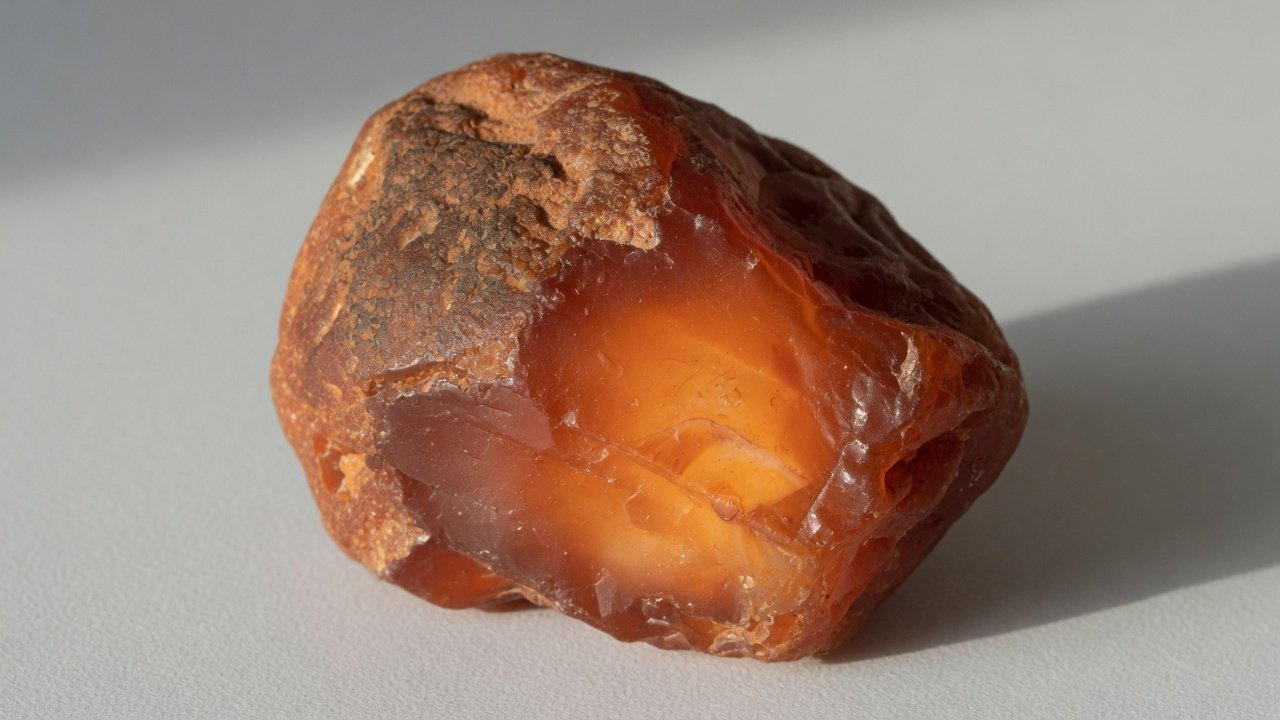
Much of the carnelian on the market today is heat-treated or dyed agate or pale chalcedony, a practice that goes back thousands of years — the ancients discovered that gently heating certain stones deepened their red. Natural carnelian shows a soft, cloudy gradation of color when held to the light, while heavily dyed material tends to look uniformly bright. Both are genuine chalcedony; the difference is simply whether the color was coaxed along. A useful field caution: a richly red exterior can sometimes hide a paler yellow interior, since the iron oxide is not always evenly distributed.
Origin and Sourcing
The historic heart of the carnelian world is India, especially the Gujarat region, home to one of the oldest gem-mining traditions on earth. For five thousand years Gujarat has produced fine carnelian, and it likely supplied the stones worn by ancient Egyptians, Greeks, and Romans. India is still considered the source of the finest material — the inlaid red flowers on the face of the Taj Mahal are carnelian. Today Brazil, Uruguay, and Madagascar are also important commercial sources, and fine carnelian turns up in many other places, including the beaches and river gravels of Oregon. The stone forms when silica-rich fluids fill cavities in volcanic rock and slowly harden, tinted by iron over long stretches of time.
History and Significance
Carnelian's story runs through nearly every ancient civilization. Carnelian beads appear in Bulgarian graves from eight thousand years ago. The Indus Valley craftsmen drilled and etched it into beads traded as far as Mesopotamia. In the Royal Tombs of Ur it lay beside gold and lapis. The Egyptians set it in gold, placed carnelian scarabs over the hearts of their dead, and tied it to the sun god and to rebirth. The Romans carved it into signet rings for sealing wax — because hot wax will not stick to carnelian, it made the perfect seal. Worn by warriors for courage and by speakers for eloquence, it earned the names the Artist's Stone and the Singer's Stone.
In Jewelry and Silversmithing
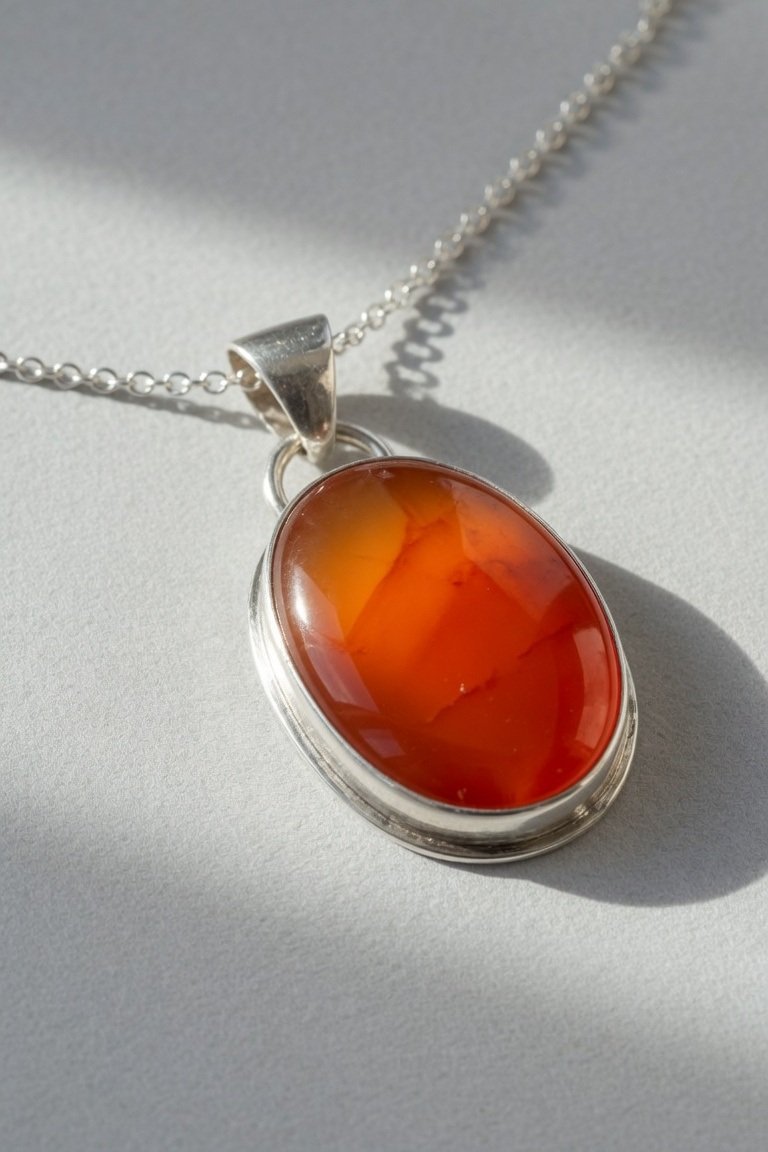
Carnelian is a wonderful stone for silver work. Its hardness near 7 means it wears well in rings, pendants, and bracelets without special precautions, and its warm color glows beautifully against both bright and oxidized silver, and especially against gold accents. It is usually set as a cabochon in a bezel, the classic and protective choice, though it is tough enough for other settings too. As with all stones, set carnelian after your soldering is complete, since prolonged heat can alter its color. Clean it simply with mild soap and warm water, and keep it out of prolonged harsh sunlight, which can slowly fade some stones.
Identifying Carnelian in the Field
Carnelian is found as nodules and waterworn pebbles in volcanic regions, river gravels, and along certain beaches. Look for a translucent orange to reddish-brown stone with a smooth, waxy surface that glows warmly when held to the light — that translucency is a key clue, since many orange look-alikes are opaque. It has a hardness near 7, so it scratches glass easily and resists a steel blade. It has no cleavage and breaks with a conchoidal fracture, leaving smooth curved surfaces. Freshly broken or wet pebbles show the color best. Remember that a red surface may conceal a paler interior, so a small window ground on the stone reveals its true color throughout.
Quick Facts
Common names: Carnelian, Cornelian, Sard (darker variety)
Chemical formula: SiO₂ (chalcedony — microcrystalline quartz)
Mohs hardness: 6.5–7
Specific gravity: 2.59–2.61
Color: Pale orange to deep red to rusty reddish-brown
Crystal system: Trigonal (forms as massive chalcedony, not crystals)
Luster: Waxy to vitreous
Transparency: Translucent to opaque
Common cuts: Cabochon, beads, carved intaglios and cameos
Common treatments: Heat treatment and dyeing (both ancient practices)
Best silver setting: Bezel (classic), durable enough for prong too
Birthstone month: Traditional alternate for July and August; Virgo zodiac
Main sources: India (Gujarat), Brazil, Uruguay, Madagascar
Meaning & Metaphysical Properties
Carnelian has been the stone of courage for thousands of years. Roman warriors wore it into battle for strength and boldness, and shy speakers carried it to find their voice. It is used today to build self-confidence, quiet self-doubt, and spark the motivation to act. Many keep carnelian close when facing something that calls for bravery — a hard conversation, a new venture, a moment that asks them to step forward. Its fiery color is a reminder of the inner fire we all carry.
Chakra: Sacral chakra (Svadhisthana) — confidence, drive, vitality
Also associated with: Root chakra — grounding and courage
Known as the Artist's Stone and the Singer's Stone, carnelian is treasured as a wellspring of creativity and passion. It is said to ignite inspiration, warm the heart, and help artists, performers, and makers find their flow. People turn to carnelian when they feel creatively blocked or emotionally cool, trusting its glowing energy to rekindle enthusiasm and joy. Like a low sun warming everything it touches, it invites warmth, expression, and the courage to create.
Chakra: Sacral chakra (Svadhisthana) — creativity, passion, pleasure
Carnelian is a stone of life force and forward motion. Ancient cultures tied it to the sun and to rebirth, and today it is carried to boost energy, banish sluggishness, and turn intention into action. It is used by those who want to overcome procrastination, restore drive after a hard stretch, or simply feel more alive and engaged. Its warm presence is like a steady ember — quiet, enduring, and ready to flare into action when needed.
Affirmation: "I am warm with courage, alive with creativity, and ready to
step boldly into what is mine to do."
At a Glance
Chakra: Sacral, Root
Element: Fire
Energy: Courageous, creative, vital, motivating
Zodiac: Virgo, Leo, Aries, Taurus
Planet: Sun, Mars
Affirmation: I carry inner fire, courage, and creative warmth
Related Stones
Explore more stones from the Gemstone Library: GARNET · AMETHYST · LABRADORITE