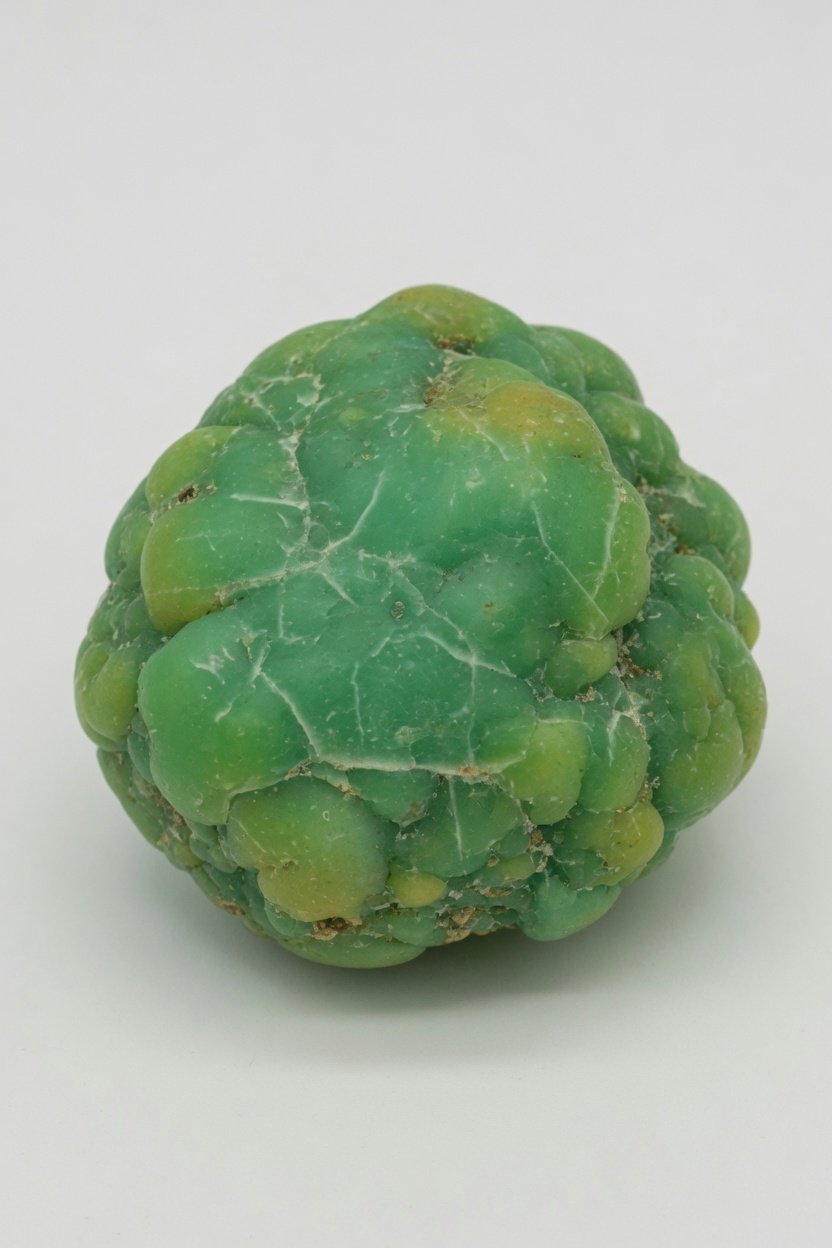
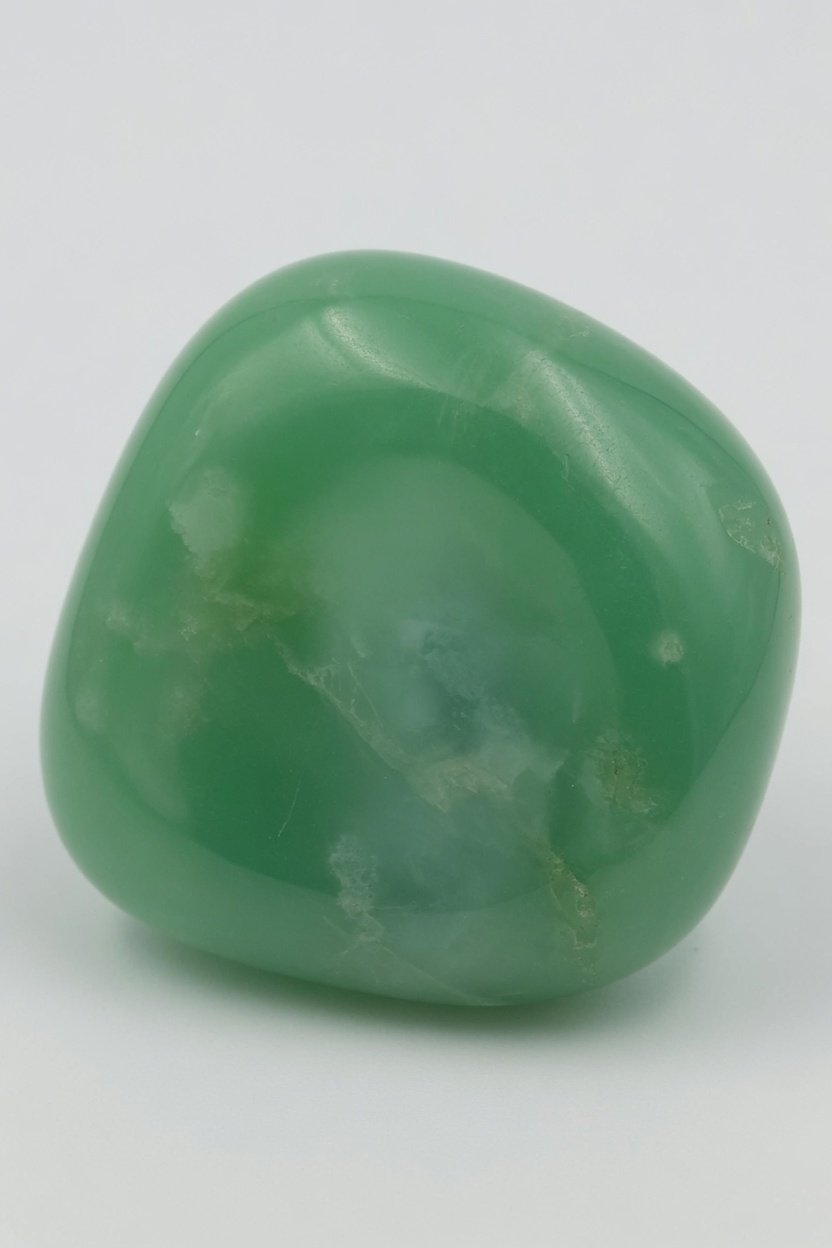
Chrysoprase draws the eye with its unmistakable apple-green glow, a color that seems to capture sunlight filtered through fresh leaves. This nickel-bearing chalcedony has long been prized for its even, saturated hue and its ability to evoke calm vitality in any setting. Silversmiths value its reliable translucency and how it responds to careful polishing.
Physical Properties Chrysoprase is a microcrystalline variety of quartz with the chemical formula SiO₂ colored by trace nickel. It registers 6.5–7 on the Mohs scale, making it durable yet soft enough to cut without excessive heat. Specific gravity ranges from 2.58 to 2.64. The stone displays a waxy to vitreous luster and is typically translucent to semi-opaque. Its cryptocrystalline structure produces a smooth, even texture that accepts a high polish without pitting when worked correctly.
Origin and Sourcing Primary deposits occur in Western Australia, where silica-rich groundwater has replaced nickel-bearing serpentine in veins and nodules. Secondary sources include Poland’s Lower Silesia region, Tanzania’s nickel laterites, and smaller occurrences in Brazil and the United States. Miners extract the material from both open-pit benches and shallow adits; the best color often lies near the surface where oxidation concentrates nickel. Rough is sorted on-site for uniformity before export.
History and Significance Ancient Greeks and Romans carved chrysoprase into seals and cameos, believing the green hue promoted eloquence. In the medieval period it adorned reliquaries and crowns across Europe. Australian deposits discovered in the nineteenth century supplied the Victorian jewelry trade, where the stone became a favorite for mourning and everyday pieces alike. Its steady color has long symbolized renewal and quiet resilience.
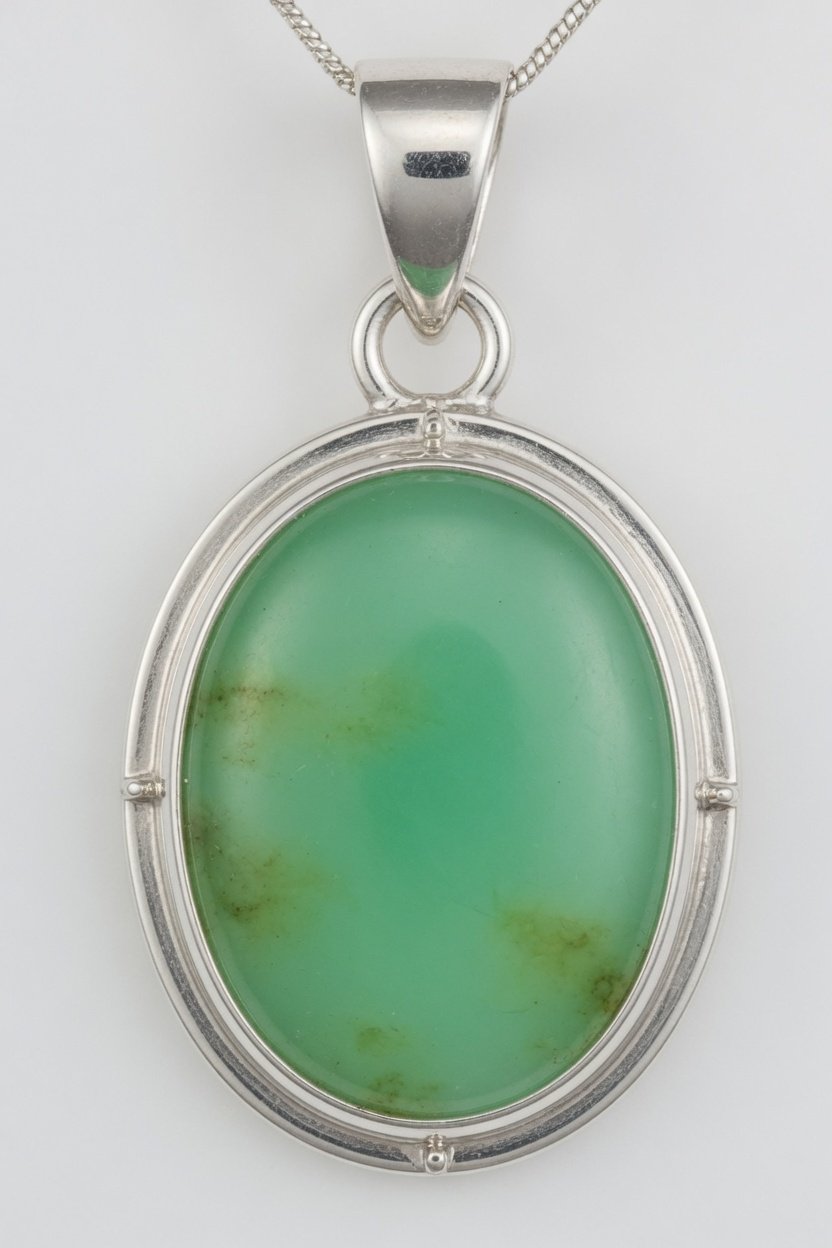
In Jewelry and Silversmithing Chrysoprase is almost always cut as cabochons to display its uniform color and translucency. Silversmiths set the finished stone only after all soldering is complete, protecting the nickel color from heat-induced darkening. Classic silver bezel settings provide both protection and a clean frame that highlights the green. Avoid prolonged ultrasonic cleaning; warm soapy water and a soft brush are safest. Store away from other gems that could scratch its surface.
Identifying Chrysoprase in the Field Look for apple-green chalcedony nodules or veins within weathered ultramafic rock or laterite. The color remains consistent throughout the piece rather than forming bands like agate. A simple streak test yields white, and the material feels slightly waxy rather than glassy. Hardness testing with a steel point leaves no mark, while dilute hydrochloric acid produces no reaction, distinguishing it from similar green carbonates.
Quick Facts
Common names: Chrysoprase, Australian jade
Chemical formula: SiO₂ (nickel-bearing chalcedony)
Mohs hardness: 6.5–7
Specific gravity: 2.58–2.64
Color: Apple green to deep emerald green
Crystal system: Trigonal (microcrystalline)
Luster: Waxy to vitreous
Transparency: Translucent to semi-opaque
Common cuts: Cabochon
Common treatments: Occasional dyeing (rare on top material)
Best silver setting: Classic Silver Bezel
Birthstone month (if any): None traditional
Main sources: Australia, Poland, Tanzania
Meaning & Intentions
HEART HEALING
Chrysoprase supports emotional recovery by gently encouraging release of old grief while inviting fresh compassion. Silversmiths often place the finished cabochon against the heart in pendants so the wearer feels its steady, cooling presence throughout the day. The stone’s even green tone mirrors the balanced rhythm of a restored heart.
Chakra: Heart — center of compassion and renewal CLARITY OF VISION
The translucent green of chrysoprase is said to clear mental fog and sharpen intuitive sight. Wearers keep the stone close during decision-making or creative work, allowing its calm wavelength to steady scattered thoughts. In a silver bezel the stone remains visible at a glance, serving as a quiet reminder to look inward before acting.
Chakra: Heart — gateway to inner knowing PROTECTIVE GROUNDING
Chrysoprase forms a subtle energetic boundary that discourages emotional drain while keeping the wearer anchored in the present moment. Set after all soldering, the cabochon in silver becomes a portable shield that absorbs daily static without losing its own color. Many silversmiths choose this stone for pieces intended for travel or high-stress environments.
Chakra: Heart — stable root of daily resilience Affirmation: "I open to renewal and remain steady in my own light." AT A GLANCE: Chakra: Heart Element: Earth Energy: Receptive Zodiac: Taurus, Libra Planet: Venus Affirmation: "I open to renewal and remain steady in my own light."
Related Stones
Explore more stones from the Gemstone Library: Rhodonite · Aventurine · Rhodochrosite