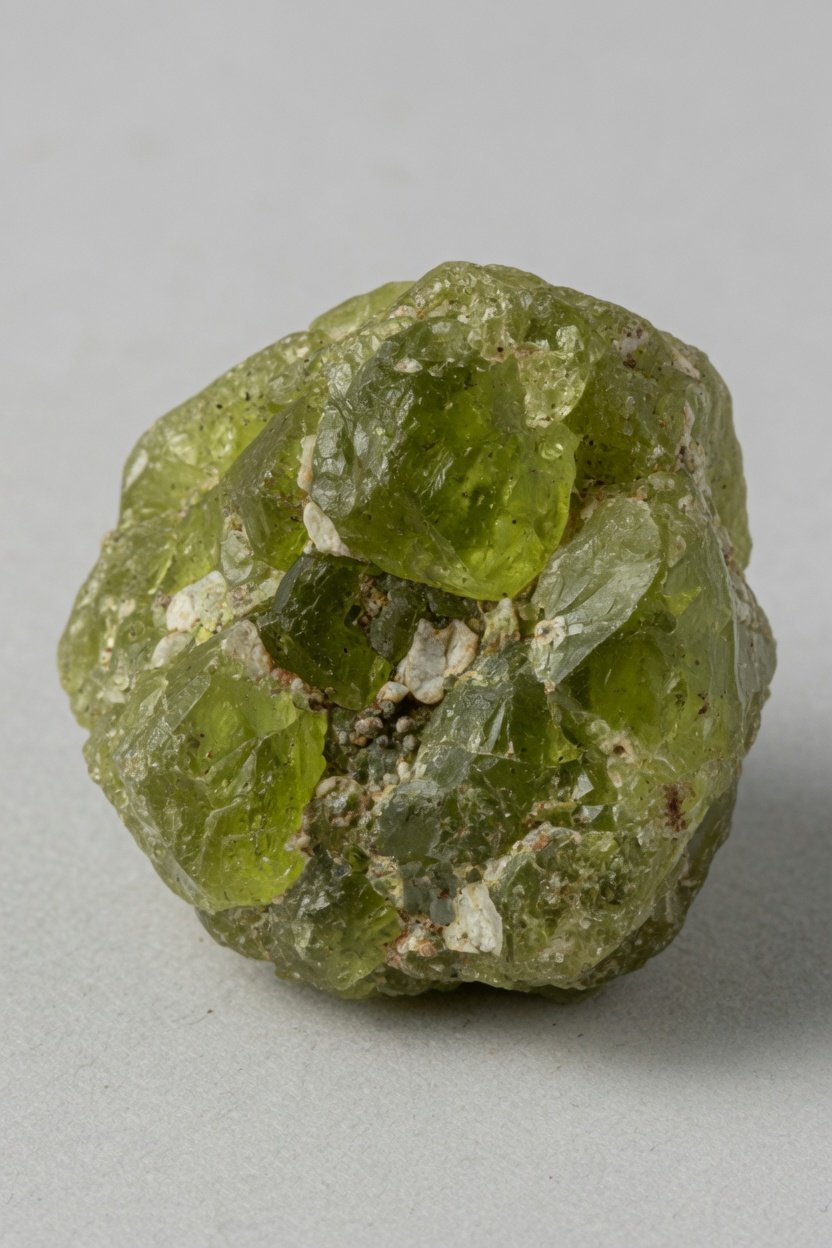
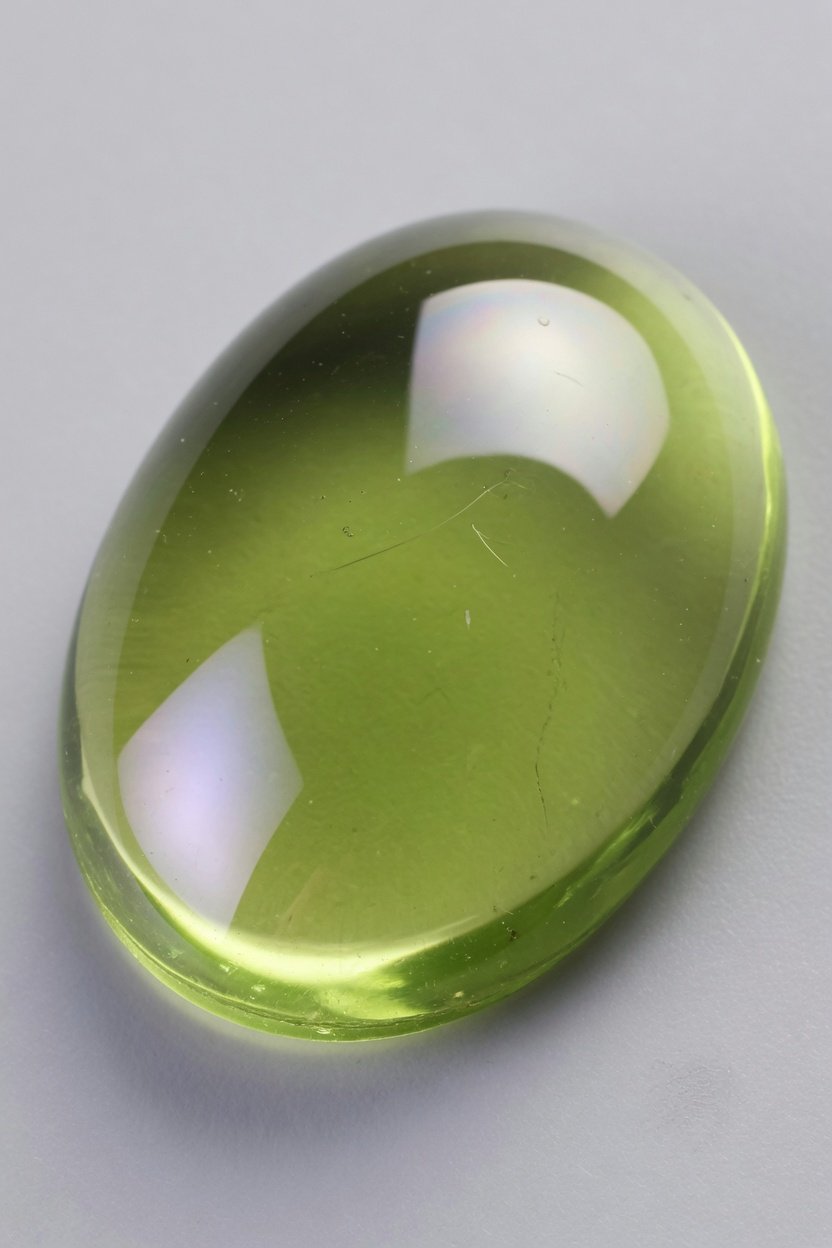
Peridot forms deep within the Earth where olivine crystals grow under intense pressure and heat before volcanic forces carry them upward into basalt flows. Its distinctive olive-green color and glassy surfaces make it immediately recognizable even to those encountering it for the first time in rough form. The stone’s clarity and lively light return distinguish it from many other green gems that can appear muddy or overly dark.
Physical Properties Peridot crystallizes in the orthorhombic system and registers 6.5–7 on the Mohs scale, giving it respectable durability for everyday wear yet leaving it vulnerable to cleavage on two planes. Specific gravity ranges from 3.2 to 4.3, producing a satisfying heft in the hand. The mineral’s chemical composition of magnesium-iron silicate produces its signature yellow-green to olive hues, with iron content directly influencing depth of color. Vitreous luster and transparency from fully clear to lightly included define its optical character. Because peridot contains no water of hydration and remains stable under moderate heat, silversmiths set the finished stone only after all soldering and pickling steps are complete; ultrasonic cleaning is safe, yet prolonged exposure to strong acids or sudden temperature shocks should be avoided to prevent surface etching or internal stress.
Origin and Sourcing Most gem-quality peridot originates in mantle-derived xenoliths brought to the surface by volcanic activity. The classic locality remains Zabargad Island in the Red Sea off Egypt, where ancient miners extracted crystals from serpentinized peridotite. Modern production centers on Pakistan’s mountainous regions near Peshawar, where miners follow narrow veins in altered basalt, and on the San Carlos Apache Reservation in Arizona, where both open-pit methods and surface collection from ant mounds yield sizable crystals. Additional sources include Myanmar, China, and Tanzania, each contributing slightly different iron ratios that shift the green toward yellow or brown.
History and Significance Ancient Egyptians mined peridot on Zabargad as early as 1500 BCE and called it the “gem of the sun” for its daytime glow under lamplight. Crusaders later brought stones back to Europe, where they adorned church reliquaries and royal regalia. In medieval texts the stone was prescribed to ward off night terrors and to strengthen the heart. Today peridot continues to symbolize renewal and protective light across many cultures that value its steady, unflashy green.
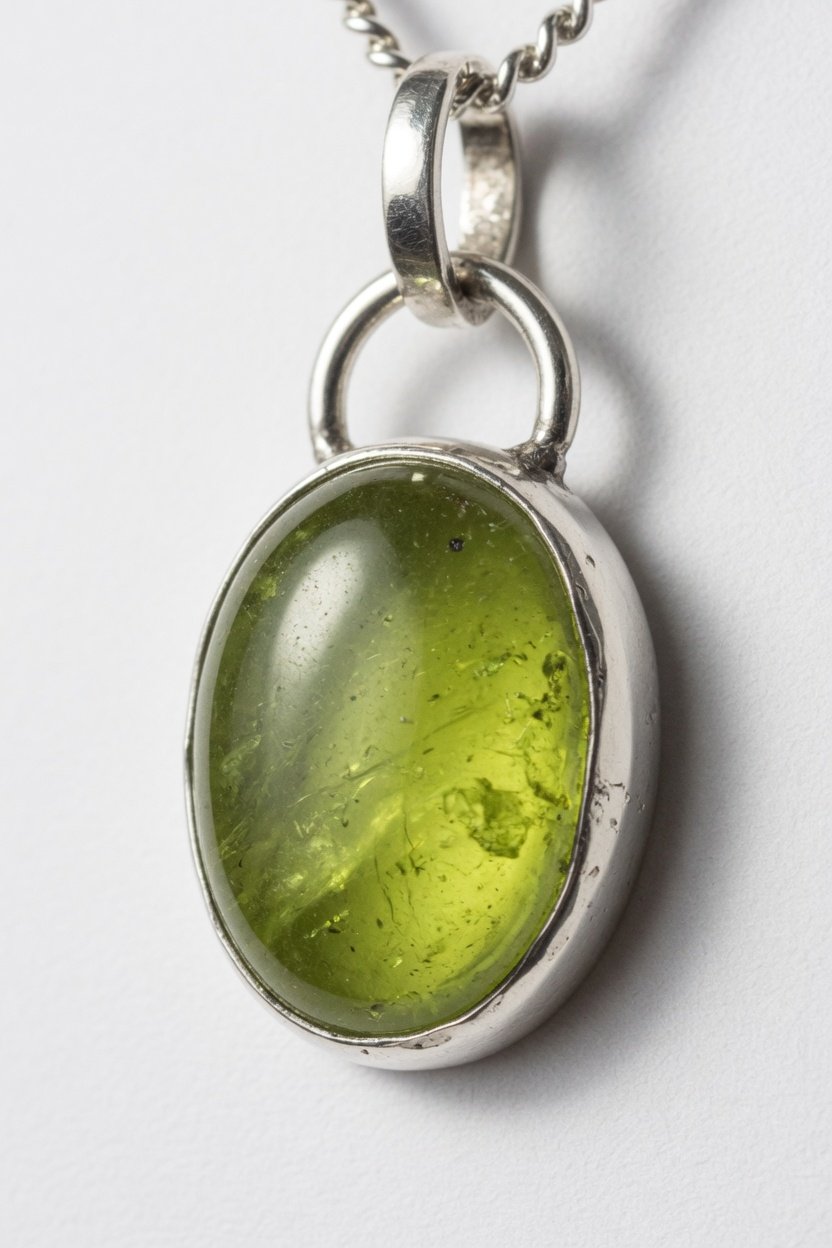
In Jewelry and Silversmithing Silversmiths favor peridot for pendants and rings because its color harmonizes with oxidized or bright silver. Faceted stones suit prong or bezel settings that allow light to travel through the crystal; cabochons work especially well in low-profile bezels that protect the cleavage planes. Because the stone’s hardness sits below quartz, finished pieces benefit from occasional gentle wiping rather than abrasive polishing cloths. Designers often orient the table facet perpendicular to the crystal’s strongest color direction to maximize the olive-green flash.
Identifying Peridot in the Field Field identification begins with the stone’s distinctive olive-green color that does not shift dramatically under different lighting, unlike some tourmalines or garnets. A simple streak test yields white, and refractive index readings cluster tightly around 1.65–1.69. Under magnification, peridot commonly shows “lotus-leaf” inclusions or tiny chromite grains. Its specific gravity and weak pleochroism further separate it from green apatite or moldavite. Collectors should note that peridot rarely occurs with obvious matrix banding; most rough appears as isolated glassy fragments or embedded crystals within dark basalt.
Quick Facts
Common names: Peridot, Chrysolite, Olivine
Chemical formula: (Mg,Fe)₂SiO₄
Mohs hardness: 6.5–7
Specific gravity: 3.2–4.3
Color: Olive green to yellowish green
Crystal system: Orthorhombic
Luster: Vitreous
Transparency: Transparent to translucent
Common cuts: Faceted oval, round, cushion; cabochon
Common treatments: Rarely heat-treated; usually none
Best silver setting: Classic Silver Bezel Pendant
Birthstone month (if any): August
Main sources: Pakistan, Egypt, United States (Arizona), Myanmar
Meaning & Intentions
PROTECTION
Peridot acts as a steady guardian when carried or worn, its clear green light believed to deflect negative influences and ease emotional tension. Silversmiths often set the stone in a protective bezel that shields the cleavage planes while allowing the color to radiate outward as a quiet shield for the wearer during daily life.
Chakra: Heart — balances compassion and self-acceptance CLARITY
The stone’s transparent depths encourage clear perception, helping users release old patterns and recognize present opportunities with calm focus. In jewelry the faceted peridot captures and returns light in precise flashes that mirror the intention of mental sharpness and renewed perspective.
Chakra: Solar Plexus — supports confident decision-making SECURITY
Peridot fosters a grounded sense of inner security by connecting the wearer to steady, earth-derived energies that remain constant through change. When set in silver the stone’s weight and color reinforce feelings of stability without overwhelming the design.
Chakra: Root — anchors physical and emotional steadiness Affirmation: "I am protected, clear, and securely rooted." AT A GLANCE: Chakra: Heart Element: Earth Energy: Receptive Zodiac: Virgo, Leo Planet: Mercury Affirmation: "I am protected, clear, and securely rooted."
Related Stones
Explore more stones from the Gemstone Library: Rhodochrosite · Aventurine · Chrysoprase