Diamond forms deep within the Earth under crushing pressure and extreme heat, emerging as the hardest natural substance known to humans and prized for its unmatched ability to capture and return light. Its journey from mantle to market spans billions of years and crosses continents, making it a stone that silversmiths approach with both technical precision and deep respect for its physical limits.
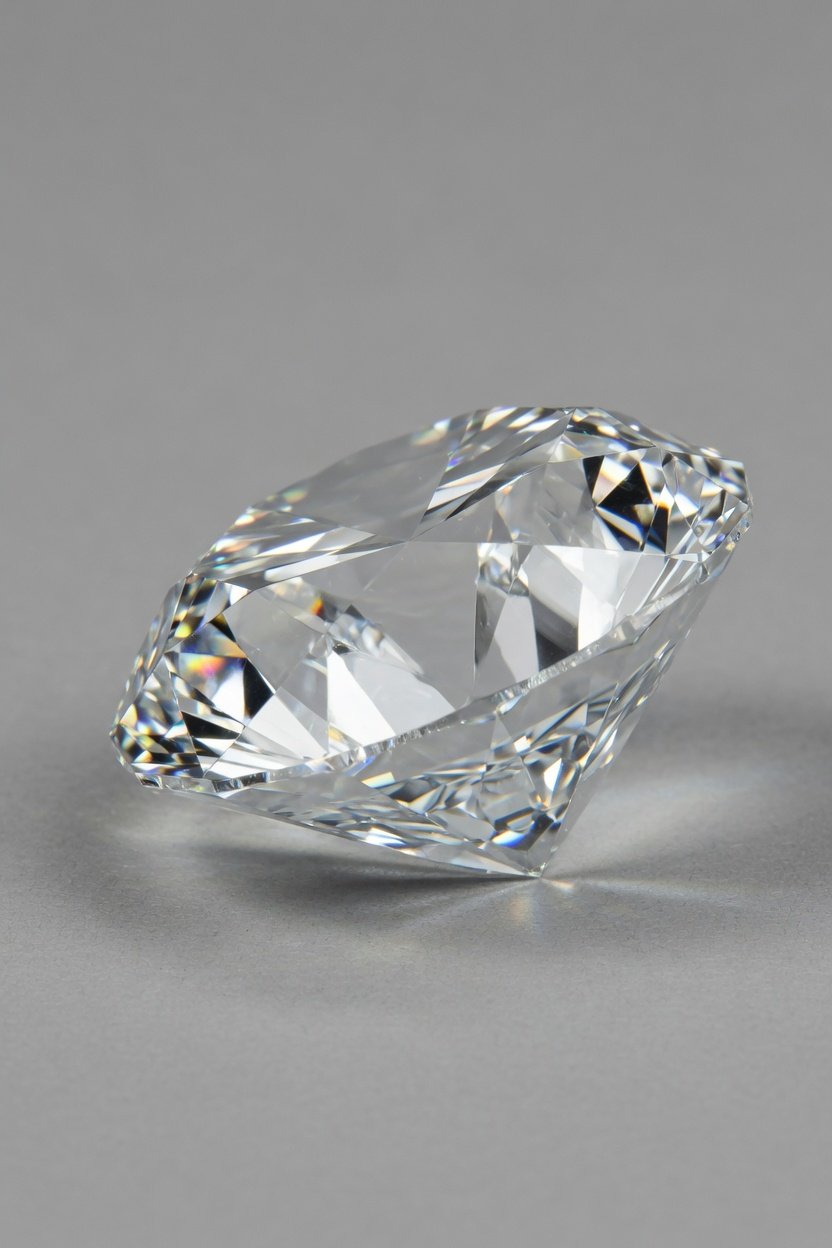
Physical Properties Diamond consists of pure carbon atoms locked into a rigid cubic crystal lattice that gives it a Mohs hardness of 10 and exceptional brilliance when properly faceted. It exhibits strong adamantine luster and high dispersion, splitting white light into spectral colors that produce its signature fire. Because diamond conducts heat efficiently yet expands minimally, it tolerates soldering temperatures far better than many gems; nevertheless, silversmiths always set the stone after all soldering and polishing are complete to avoid thermal shock to surrounding metal or accidental damage from flux and pickle solutions. Care cautions include avoiding ultrasonic cleaners on stones with internal fractures and protecting the girdle from impact that could cause chipping along cleavage planes.
Origin and Sourcing Most gem-quality diamonds originate in ancient kimberlite pipes and alluvial deposits across southern Africa, Russia, Australia, and Canada. Miners extract them through hard-rock tunneling or gravel washing, separating the dense crystals from surrounding ore with dense-media separation and X-ray sorting. Ethical sourcing now emphasizes traceable supply chains that verify labor standards and environmental rehabilitation of exhausted mines.
History and Significance Ancient Indian miners recognized diamond's durability more than two thousand years ago, calling it vajra or thunderbolt. European royalty adopted the stone in the fourteenth century for betrothal rings, cementing its association with enduring commitment. By the nineteenth century, South African discoveries flooded the market and established modern cutting centers in Antwerp and Mumbai that still dominate the trade.
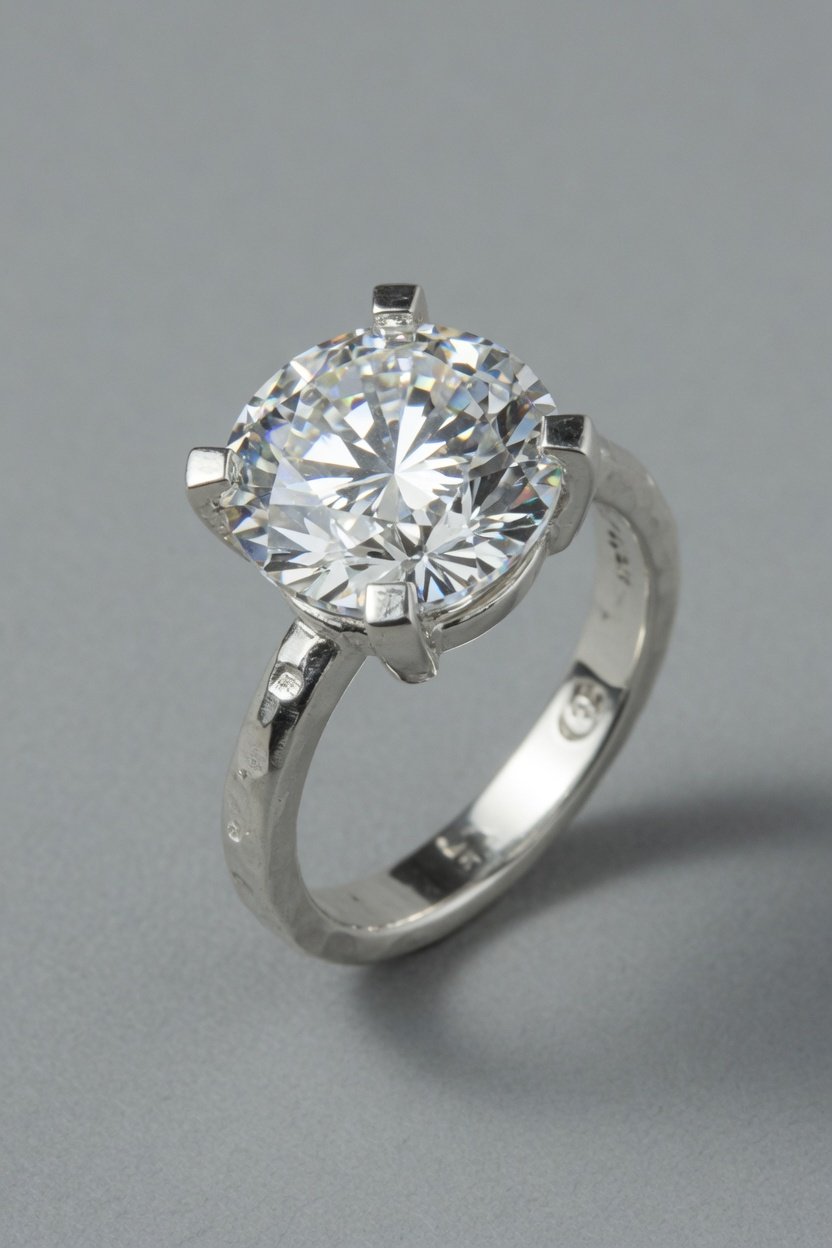
In Jewelry and Silversmithing Silversmiths favor diamond for its ability to withstand daily wear while elevating even simple silver forms. The stone's high refractive index rewards precise faceting that must be completed before setting; once polished, it is mounted after all heat work is finished. Prong settings allow maximum light return, while bezels offer protection for fancy shapes. Care cautions advise periodic professional inspection of prongs and avoidance of household chemicals that can dull the metal rather than the diamond itself.
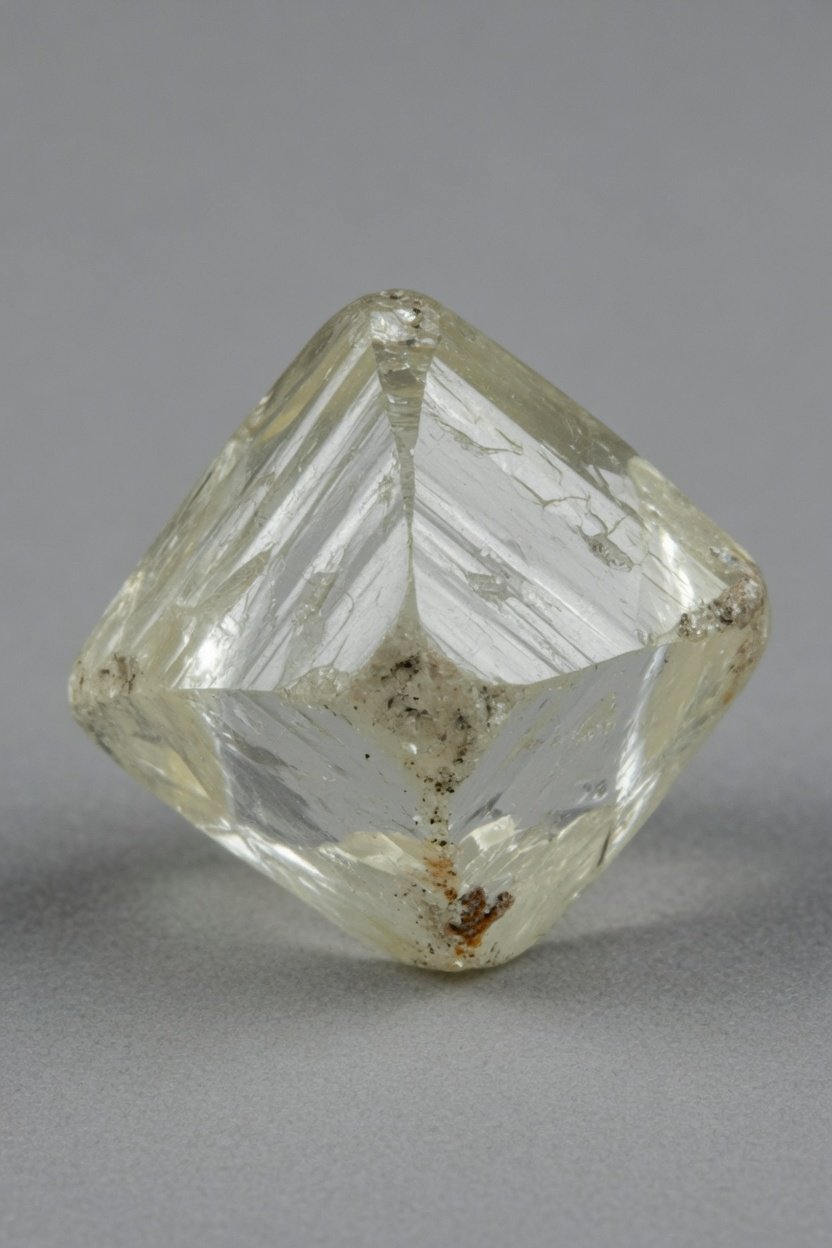
Identifying Diamond in the Field In rough form, diamond appears as octahedral crystals with a greasy to adamantine surface and no visible cleavage until struck. A simple field test involves checking for extreme hardness against corundum and observing strong single refraction under polarized light. Colorless specimens may be confused with quartz or topaz until specific gravity or thermal conductivity tests confirm the identity.
Quick Facts
Common names: Diamond
Chemical formula: C
Mohs hardness: 10
Specific gravity: 3.52
Color: Colorless to faint yellow, brown, pink, blue, green
Crystal system: Cubic
Luster: Adamantine
Transparency: Transparent to translucent
Common cuts: Round brilliant, princess, emerald, oval
Common treatments: Irradiation, high-pressure high-temperature annealing, laser drilling
Best silver setting: Contemporary Prong Ring
Birthstone month (if any): April
Main sources: South Africa, Botswana, Russia, Australia, Canada
Meaning & Intentions
CLARITY
Diamond channels mental focus and removes energetic static, helping wearers cut through confusion during decision-making or creative work. Silversmiths often set small melee stones in a protective shield pattern so the wearer can carry that steadying influence daily.
Chakra: Crown — connection to higher awareness and clear perception VISION
The stone's optical precision supports honest self-reflection and long-range planning, making it a traditional companion for artists and strategists. In jewelry, a single well-cut diamond placed at the center of a pendant draws attention inward during meditation.
Chakra: Third Eye — insight and intuitive accuracy PROTECTION
Diamond's unmatched hardness translates into an energetic boundary that deflects negativity and preserves personal integrity under pressure. Artisans incorporate it into everyday silver pieces so the wearer feels shielded without sacrificing elegance.
Chakra: Root — grounded stability and resilience Affirmation: "I move through the world with unbreakable clarity and protected purpose." AT A GLANCE: Chakra: Crown / Third Eye / Root Element: Fire Energy: Projective Zodiac: Aries, Leo Planet: Sun Affirmation: "I move through the world with unbreakable clarity and protected purpose."
Related Stones
Explore more stones from the Gemstone Library: Tiger's Eye · Topaz · Fluorite