Hessonite garnet emerges from the earth as a warm, honeyed glow that captures the essence of autumn light trapped in crystal. This cinnamon-hued variety of grossular garnet has long drawn silversmiths and collectors alike with its distinctive orange-brown fire and remarkable durability. Its rich tone and optical depth make it a compelling choice for both statement and everyday jewelry.
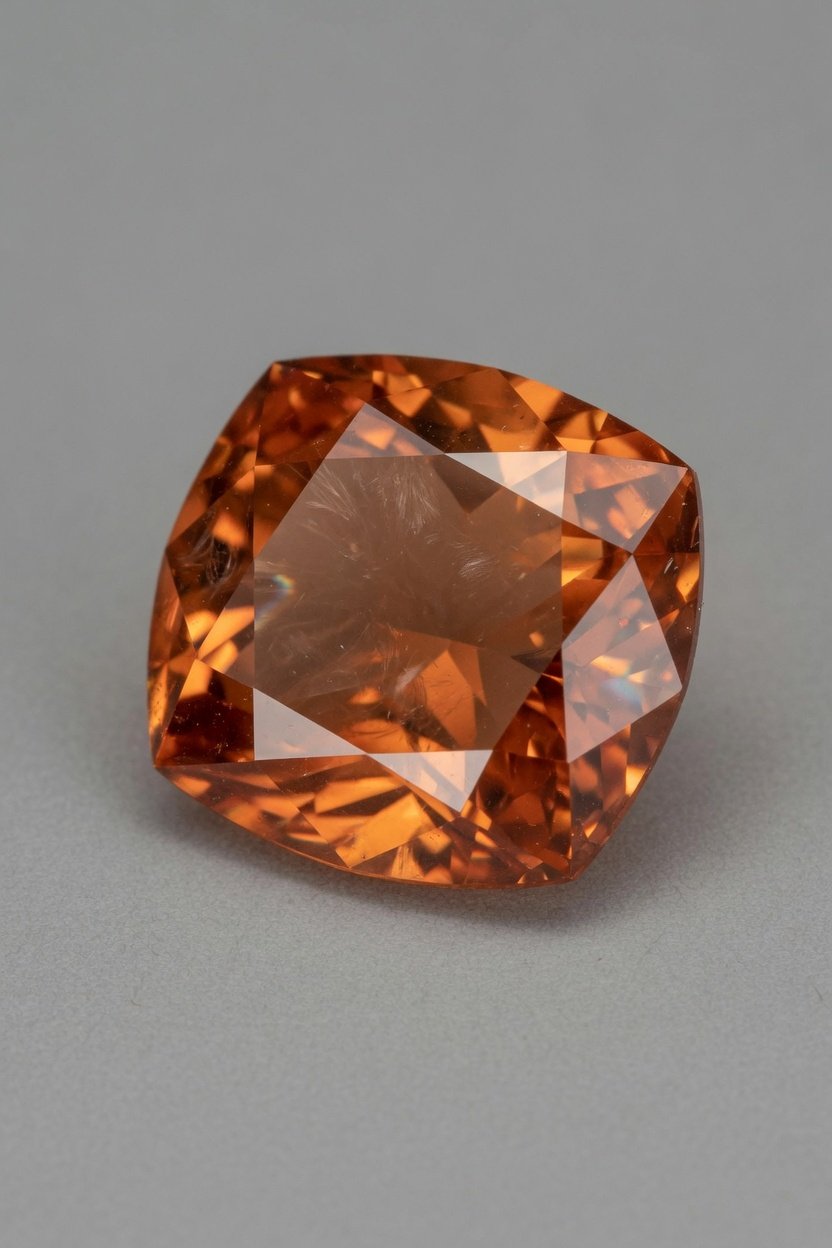
Physical Properties Hessonite displays a Mohs hardness of 6.5 to 7.5, rendering it sufficiently tough for daily wear while still requiring mindful handling during fabrication. Specific gravity ranges from 3.55 to 3.73, giving pieces a satisfying weight in hand. The stone’s cubic crystal system produces isotropic optical behavior, so it lacks the pleochroism seen in many other colored gems. Luster is vitreous, and transparency runs from transparent to translucent, often showing characteristic “whisky” inclusions that resemble fine threads or sugar crystals. Always set hessonite after all soldering operations are complete and the piece has cooled to room temperature; sudden heat can fracture the stone along internal planes. For care, avoid prolonged ultrasonic cleaning if the stone shows heavy veiling, and store away from harder gems that could scratch its surface.
Origin and Sourcing Primary deposits lie in the alluvial gravels of Sri Lanka, where monsoon rains have concentrated nodules over millennia. Additional sources include the crystalline limestones of India’s Odisha region, the skarn deposits of Quebec, Canada, and more recent finds in Tanzania’s Mererani hills. Miners typically recover hessonite through gentle screening of river sediments or selective hard-rock extraction, preserving the larger, clearer crystals prized by cutters. Trace-element signatures help gemologists distinguish origin, with Sri Lankan stones often showing higher chromium content that deepens the orange hue.
History and Significance Ancient Ceylonese traders carried hessonite along spice routes to Mediterranean workshops, where Roman and later Byzantine goldsmiths fashioned it into signet rings and amulets. In medieval Europe the stone was believed to steady the mind during travel and was set into pilgrim badges. Nineteenth-century mineralogists formally named it “hessonite” from the Greek for “inferior,” a reference to its lower hardness compared with other garnets, yet its warm color secured lasting favor among Victorian jewelers. Today the gem continues to symbolize vitality and continuity across cultures.
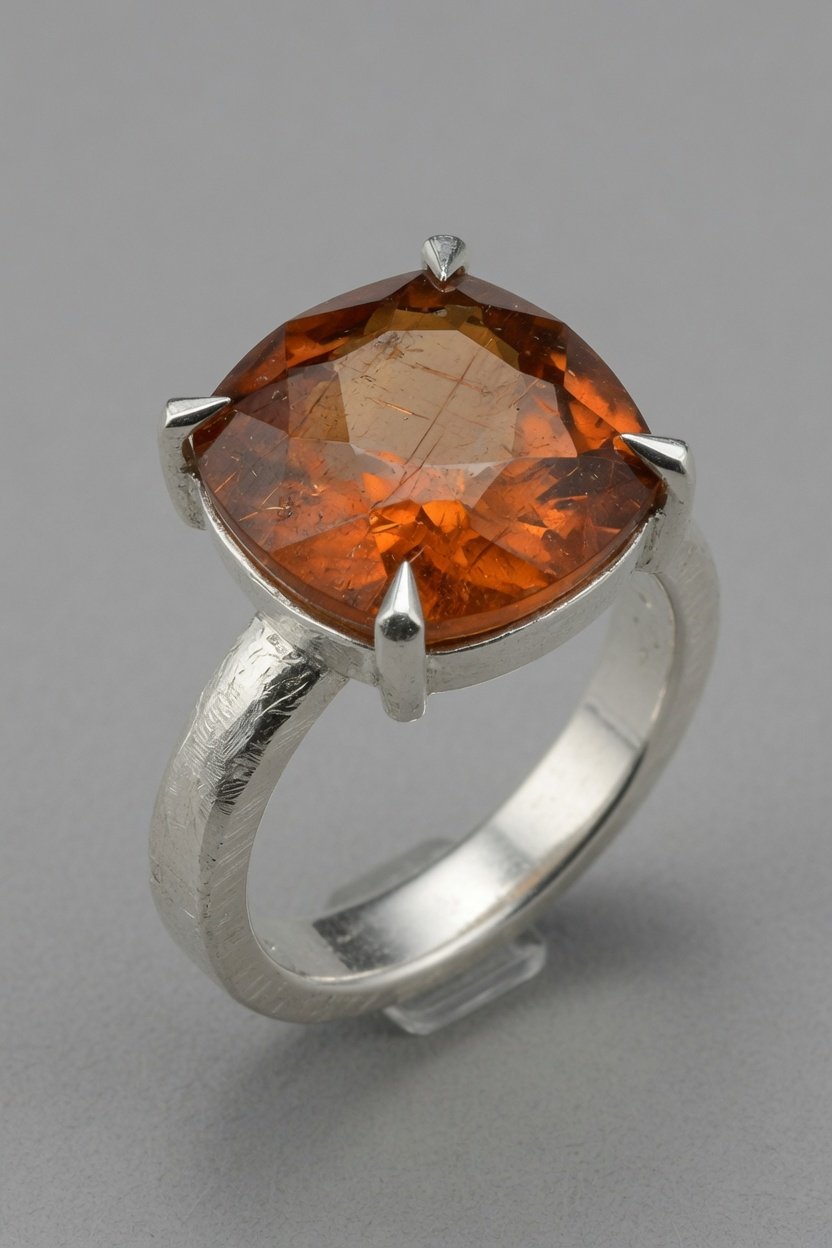
In Jewelry and Silversmithing Silversmiths favor hessonite for its compatibility with sterling silver, where the stone’s orange-brown tones contrast elegantly against cool metal. Because the gem is singly refractive, it maintains consistent color under any light angle, allowing clean, symmetrical faceting that maximizes brilliance. Prong settings are ideal for showcasing the stone’s full face, while low-bezel designs protect the girdle during wear. After final polishing, a simple rinse in warm soapy water followed by thorough drying preserves both metal and stone. Hessonite’s modest dispersion produces a subtle glow rather than rainbow fire, making it especially suited to everyday rings and pendants that benefit from understated elegance.
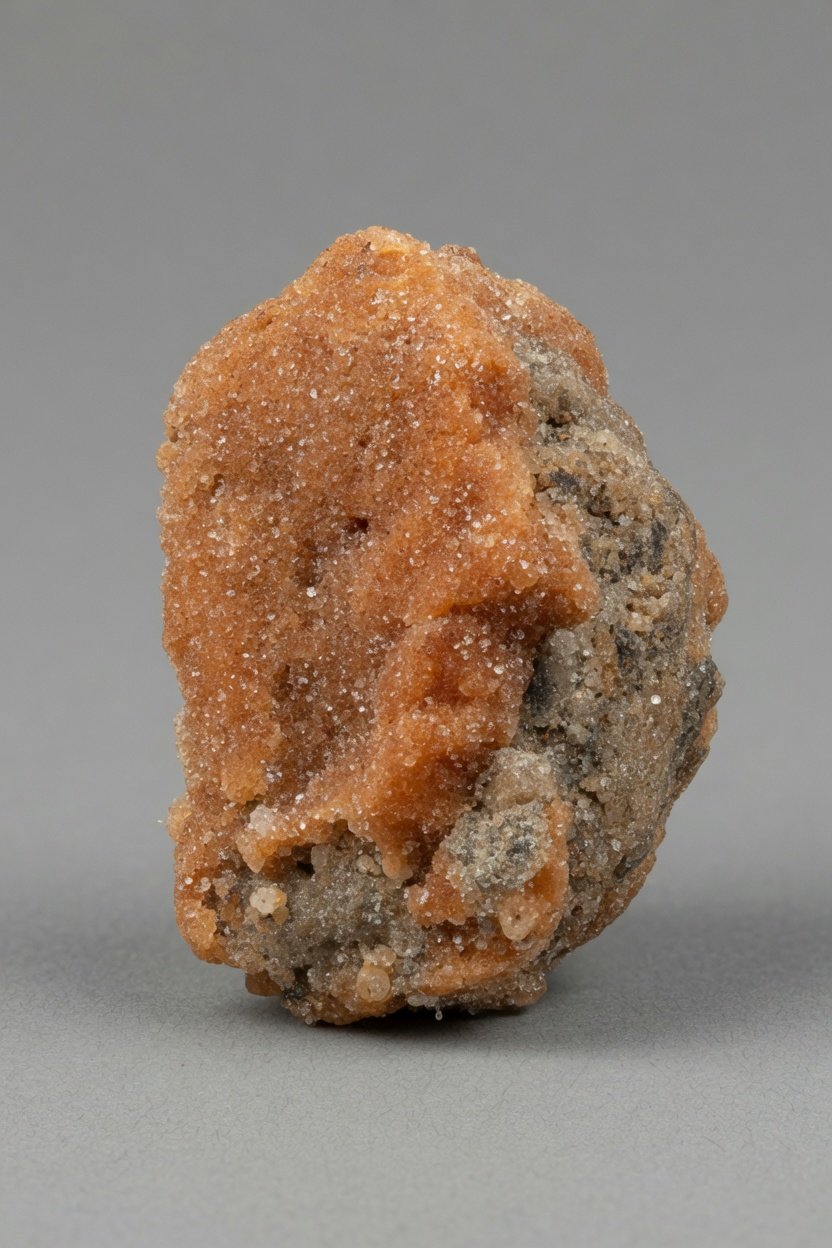
Identifying Hessonite in the Field In rough form, hessonite appears as rounded nodules with a sugary surface texture and warm orange-brown exterior that deepens when wet. Its high specific gravity distinguishes it from lighter quartz or feldspar pebbles in the same alluvial beds. A quick streak test yields a white line, and the absence of cleavage planes separates it from many carbonate minerals. When backlit, transparent pieces reveal the telltale internal veils that confirm identity before any lapidary work begins.
Quick Facts
Common names: Hessonite, Cinnamon Stone
Chemical formula: Ca3Al2(SiO4)3
Mohs hardness: 6.5-7.5
Specific gravity: 3.55-3.73
Color: Orange-brown to reddish-brown
Crystal system: Cubic
Luster: Vitreous
Transparency: Transparent to translucent
Common cuts: Faceted (round, oval, cushion)
Common treatments: None
Best silver setting: Contemporary Prong Ring
Birthstone month (if any): None (Garnet: January)
Main sources: Sri Lanka, India, Canada, Tanzania
Meaning & Intentions
GROUNDING
Hessonite anchors scattered energy and restores a sense of physical presence during times of change. Silversmiths set the stone in everyday rings so the wearer can touch its warm surface and return to the present moment. Its steady orange-brown tone acts as a tactile reminder of stability whenever daily pressures threaten to overwhelm.
Chakra: Root — connection to body and earth CLARITY
The stone’s internal veils are said to help the wearer perceive patterns in thought and emotion with greater precision. When faceted and set as a pendant, hessonite encourages honest self-examination without harsh judgment. Many artisans choose it for meditation jewelry because the gem’s consistent color supports focused attention.
Chakra: Sacral — creative insight and emotional balance PROTECTION
Hessonite forms an energetic boundary that shields against draining influences while traveling or working in crowded spaces. Its density and warm hue combine to create a sense of personal enclosure that feels supportive rather than restrictive. Silversmiths often incorporate the stone into lockets or small talismans intended for daily carry.
Chakra: Root — steady containment of personal energy Affirmation: "I stand steady, seeing clearly, held safe." AT A GLANCE: Chakra: Root Element: Earth Energy: Receptive Zodiac: Capricorn Planet: Saturn Affirmation: "I stand steady, seeing clearly, held safe."
Related Stones
Explore more stones from the Gemstone Library: Onyx · Agate · Chrysoberyl