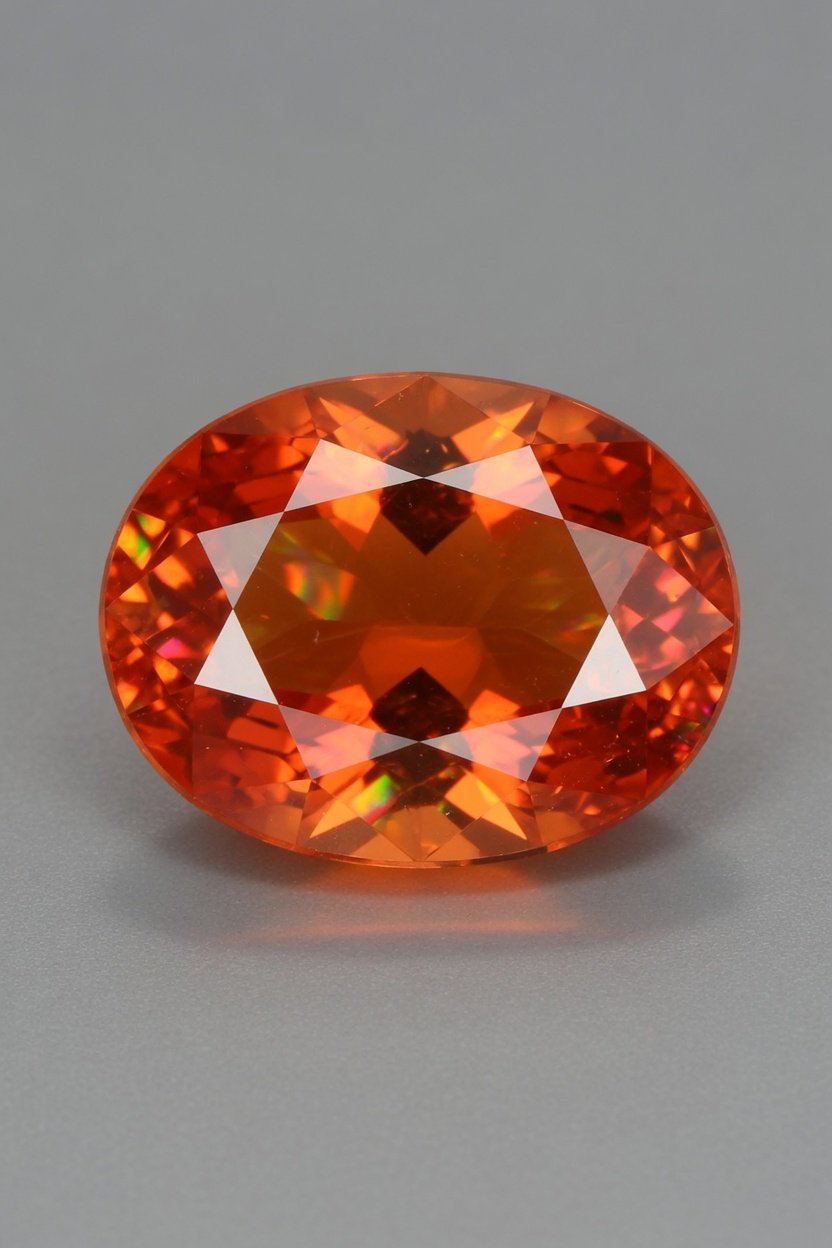
Fire Opal draws the eye with its blazing body tones and sudden bursts of spectral color that shift as light moves across the surface. Formed in volcanic environments, the stone traps water within a silica lattice, creating an optical effect that ranges from quiet glows to vivid flashes of green, blue, and gold. Silversmiths prize its warm palette yet must handle it with care because the trapped water makes it sensitive to rapid temperature changes.
Physical Properties Fire Opal registers 5.5–6.5 on the Mohs scale and shows a specific gravity near 2.0, reflecting its high water content of up to 10 percent. The material is amorphous rather than crystalline, producing conchoidal fracture and a vitreous to resinous luster. Because heat can drive off that water and cause crazing, the stone is always set after every soldering operation is complete and cooled; prolonged torch exposure or steam cleaning is avoided to prevent cracking.
Origin and Sourcing Commercial quantities come chiefly from the volcanic regions of central Mexico, with additional deposits in Australia, Ethiopia, and parts of the western United States. Mexican material often forms in cavities within rhyolite, while Australian fire opals appear in ironstone concretions. Miners extract the nodules by hand, sorting rough on site before transport to cutting centers where only a small percentage yields gem-quality pieces with strong play-of-color.
History and Significance Pre-Columbian cultures in Mexico valued fire opal for ceremonial objects, associating its inner light with the sun and divine energy. Spanish conquistadors carried specimens back to Europe, where the stone appeared in royal collections during the sixteenth century. In modern times it remains a symbol of creative vitality, its shifting colors interpreted as an emblem of transformation and emotional warmth across many silversmithing traditions.
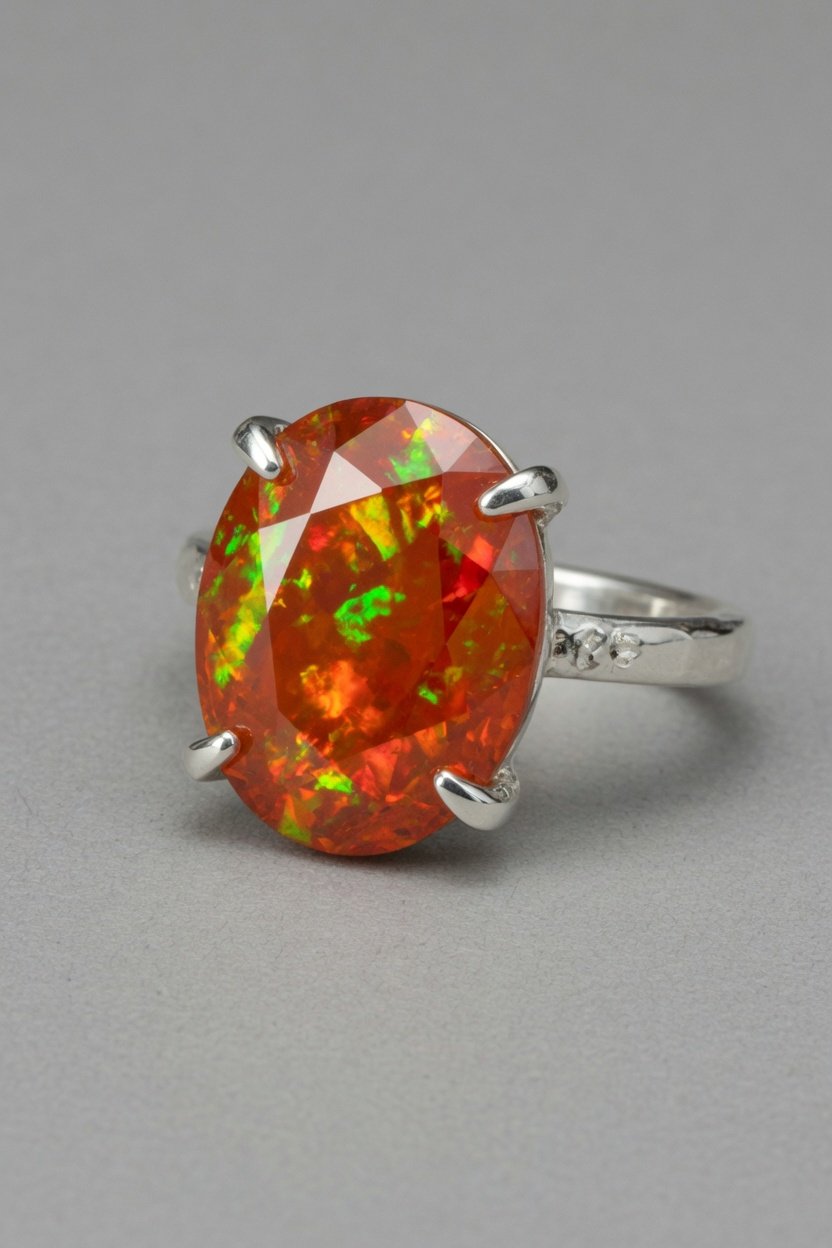
In Jewelry and Silversmithing Fire Opal is most often cut as a cabochon to preserve its play-of-color and to protect the surface from abrasion. Once the metalwork is fully soldered, cooled, and pickled, the stone is seated in a bezel or prong setting and secured with gentle pressure. Bench jewelers finish the piece by polishing the silver to a mirror shine while keeping polishing compounds away from the opal surface; ultrasonic cleaners are likewise avoided because vibration can fracture the hydrated silica.
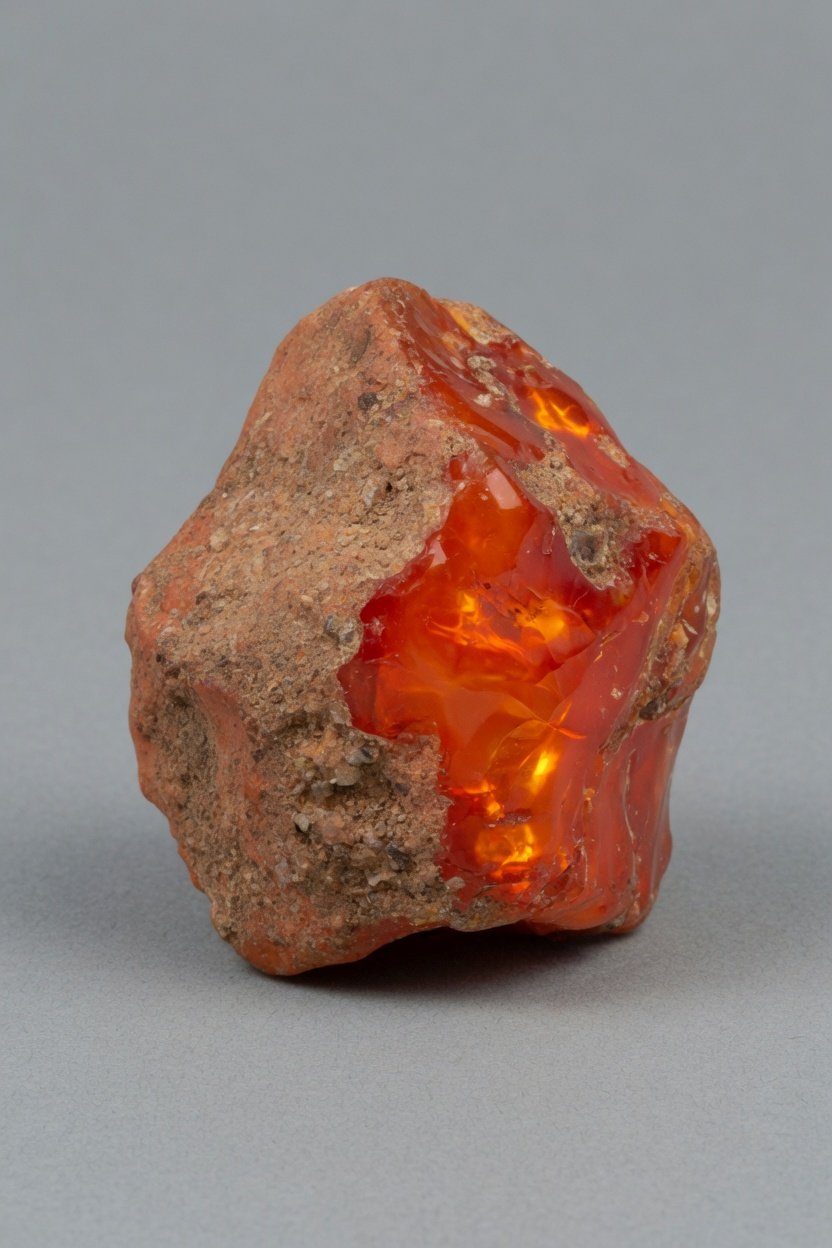
Identifying Fire Opal in the Field In rough form the material appears as translucent to semi-transparent nodules with a warm orange, red, or yellow body color and a waxy or glassy exterior. Broken surfaces may reveal tiny rainbow flashes when rotated under sunlight. Hardness testing with a steel point leaves a faint scratch, and the absence of visible crystal faces distinguishes it from similarly colored quartz or feldspar; a drop of water left on the surface slowly absorbs rather than beading, confirming the presence of internal moisture.
Quick Facts
Common names: Fire Opal, Mexican Fire Opal
Chemical formula: SiO₂·nH₂O
Mohs hardness: 5.5–6.5
Specific gravity: 1.98–2.20
Color: Orange-red to yellow body with play-of-color
Crystal system: Amorphous
Luster: Vitreous to resinous
Transparency: Transparent to translucent
Common cuts: Cabochon, freeform, oval
Common treatments: None (occasional stabilization)
Best silver setting: Classic Silver Bezel Pendant
Birthstone month (if any): None
Main sources: Mexico, Australia, Ethiopia
Meaning & Intentions
CREATIVE SPARK
Fire Opal channels inner fire into artistic expression, helping makers move past creative blocks by encouraging bold color choices and fluid design decisions. Silversmiths often keep a small polished specimen on the bench during layout and forming stages so its shifting hues remind them to explore unexpected combinations. The stone’s warm body color grounds the work while its flashes suggest new directions without forcing outcomes.
Chakra: Sacral — seat of creative flow and emotional courage INNER VISION
Fire Opal sharpens intuitive sight, allowing wearers to notice subtle patterns in their own thoughts and in the world around them. In silversmithing this translates to better recognition of how light interacts with metal curves and stone surfaces during finishing. The stone’s play-of-color acts as a quiet prompt to look again at a piece from a different angle before final assembly.
Chakra: Third Eye — clarity of perception and insight EMOTIONAL GROUNDING
Fire Opal stabilizes fluctuating moods by linking passionate energy to steady presence, making it useful during long bench sessions that require sustained focus. Its hydrated structure is said to absorb excess emotional heat and return a sense of calm centeredness. Silversmiths sometimes carry a small tumbled piece in a pocket while fabricating so the stone’s quiet weight anchors attention on the task at hand.
Chakra: Root — stability and embodied presence Affirmation: "My inner light guides steady hands and clear choices." AT A GLANCE: Chakra: Sacral Element: Fire Energy: Projective Zodiac: Leo Planet: Sun Affirmation: "My inner light guides steady hands and clear choices."
Related Stones
Explore more stones from the Gemstone Library: Diamond · Topaz · Azurite