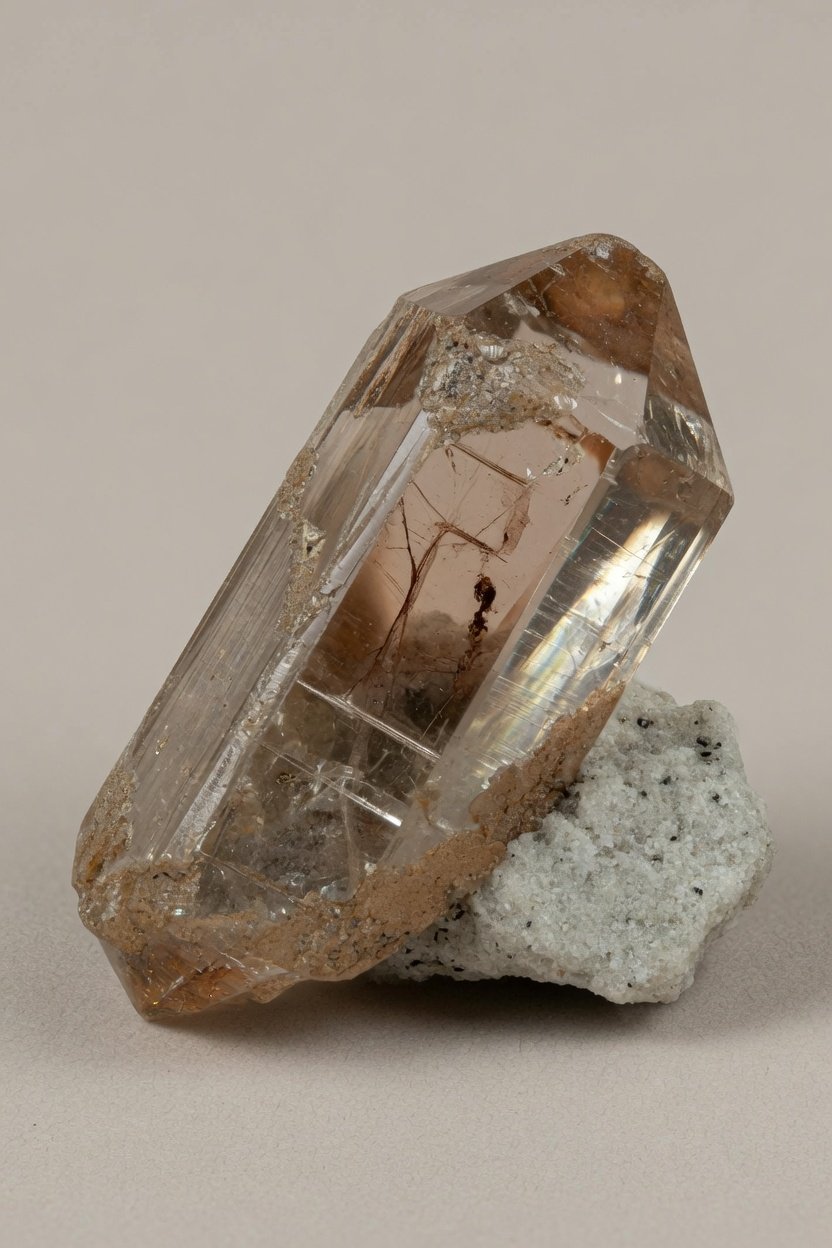
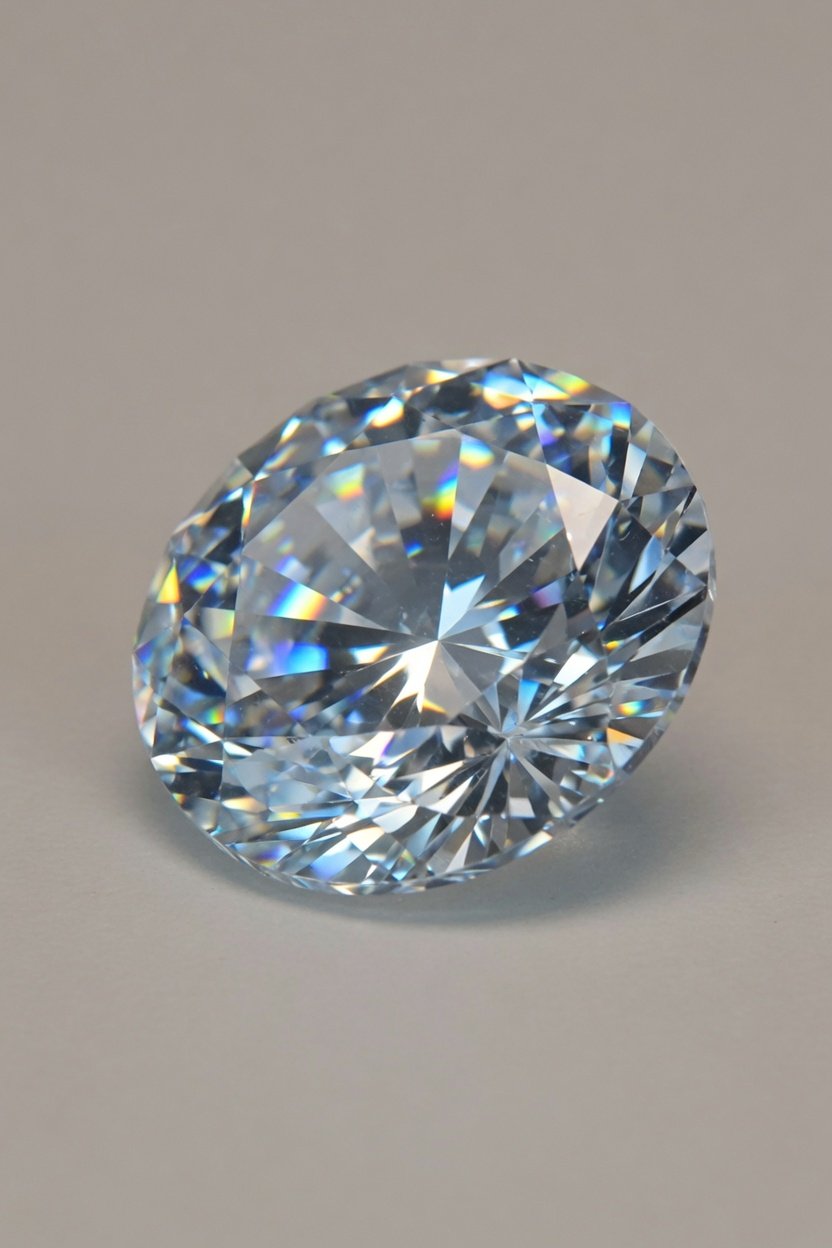
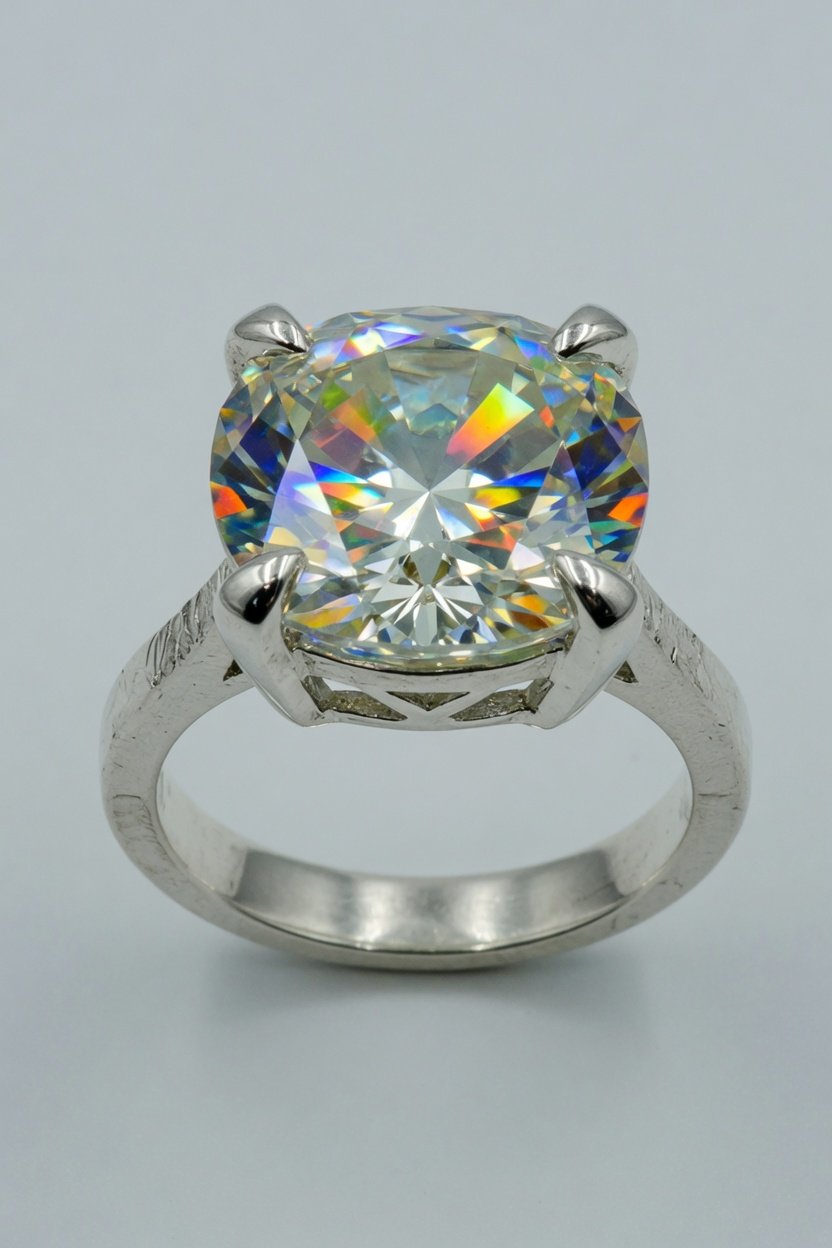
Zircon stands out among gemstones for its exceptional fire and brilliance that can rival diamond while carrying a far older geological story. This silicate mineral forms in igneous and metamorphic rocks yet frequently appears in alluvial deposits where rivers have concentrated its durable crystals over millions of years. Its ability to survive intense heat and pressure gives it both scientific value as a time capsule and practical appeal for jewelry makers seeking a stone that holds its sparkle through centuries.
Physical Properties Zircon possesses a Mohs hardness of 7.5 and a high specific gravity near 4.7, making it denser than most silicates. Its crystal system is tetragonal, often producing prismatic or bipyramidal habits that yield sharp, brilliant facets when cut. Colors range from colorless and pale yellow to vivid blue, green, and reddish-brown; the blue and colorless varieties are especially prized for their diamond-like adamantine luster. Because some zircons contain trace uranium and thorium that damage the lattice over geologic time, the stone can become metamict and slightly softer, requiring gentle handling. Set the stone after all soldering is complete and the piece has cooled to avoid thermal shock that could fracture the crystal or alter its color; store away from ultrasonic cleaners and sudden temperature changes.
Origin and Sourcing Major deposits occur in Australia, Cambodia, Sri Lanka, and parts of East Africa where both hard-rock mining and alluvial extraction take place. Australian zircons often come from ancient river gravels in New South Wales and Queensland, while Cambodian material is recovered from basaltic terrains. Miners separate the heavy mineral using shaking screens or gravity concentration because its high density causes it to settle quickly. Ethical sourcing programs now track batches from these regions to ensure fair labor practices and minimal environmental disturbance from open-pit or riverbed operations.
History and Significance Ancient texts frequently mention zircon under names such as hyacinth or jacinth, and medieval lapidaries believed the stone protected travelers and promoted sleep. Because colorless zircon was long mistaken for diamond, many historical “diamond” jewels actually contain zircon. In the early twentieth century, heat treatment of brown zircon produced the first stable blue material, transforming the stone from a collector’s curiosity into a mainstream gem. Today zircon remains a favorite among gemologists studying Earth’s earliest crust because its crystals can preserve uranium-lead ages exceeding four billion years.
In Jewelry and Silversmithing Silversmiths favor zircon for its strong dispersion that creates lively sparkle even in modest sizes. The stone is almost always faceted in brilliant, cushion, or oval cuts to maximize brilliance. Because zircon has distinct cleavage and can be heat-sensitive when metamict, all soldering, annealing, and polishing must finish before the stone is set. Prong or bezel settings in sterling silver work well; the metal’s cool tone complements both colorless and colored varieties. Avoid torch proximity once the stone is in place, and advise clients to remove zircon jewelry before household chores or exposure to strong chemicals.
Identifying Zircon in the Field In rough form zircon appears as small, heavy, glassy crystals often coated with a thin weathered crust. Its high specific gravity is immediately noticeable when hefted; a zircon crystal feels noticeably denser than quartz of similar size. Under magnification, natural zircon may show zoning or tiny needle-like inclusions. A simple field test involves checking for double refraction with a polariscope or noting the stone’s strong dispersion when light passes through an edge. Collectors should record matrix rock type and associated minerals such as feldspar or mica to confirm an igneous or metamorphic origin.
Quick Facts
Common names: Zircon, Hyacinth, Jacinth
Chemical formula: ZrSiO4
Mohs hardness: 7.5
Specific gravity: 4.6–4.7
Color: Colorless, blue, green, brown, yellow
Crystal system: Tetragonal
Luster: Adamantine to vitreous
Transparency: Transparent to translucent
Common cuts: Brilliant, cushion, oval
Common treatments: Heat treatment for color
Best silver setting: Contemporary Prong
Birthstone month (if any): December
Main sources: Australia, Cambodia, Sri Lanka, Tanzania
Meaning & Intentions
CLARITY
Zircon’s high refractive index and natural fire encourage mental focus and clear decision-making. Wearers keep a faceted stone on a desk or in a pocket during study or negotiations so the stone’s bright flashes serve as a visual reminder to cut through confusion and see facts plainly.
Chakra: Third Eye – supports insight and honest perception PROTECTION
Ancient travelers carried zircon to ward off negative influences and ensure safe passage. In modern practice a small faceted zircon set in silver is worn as a talisman that absorbs scattered energy and returns a sense of grounded stability during stressful transitions.
Chakra: Root – anchors and shields personal boundaries GROUNDING
Zircon’s dense structure and ancient formation age make it an effective anchor for scattered thoughts. Silversmiths often place a single zircon in a ring or pendant so the wearer can touch the cool metal and stone together, using the physical weight to return attention to the present moment.
Chakra: Root – stabilizes and centers daily energy Affirmation: "I see clearly, stand grounded, and move forward with confidence." AT A GLANCE: Chakra: Third Eye, Root Element: Earth Energy: Receptive Zodiac: Sagittarius, Leo Planet: Venus Affirmation: "I see clearly, stand grounded, and move forward with confidence."
Related Stones
Explore more stones from the Gemstone Library: Sillimanite · Iolite · Cobalt Blue Spinel