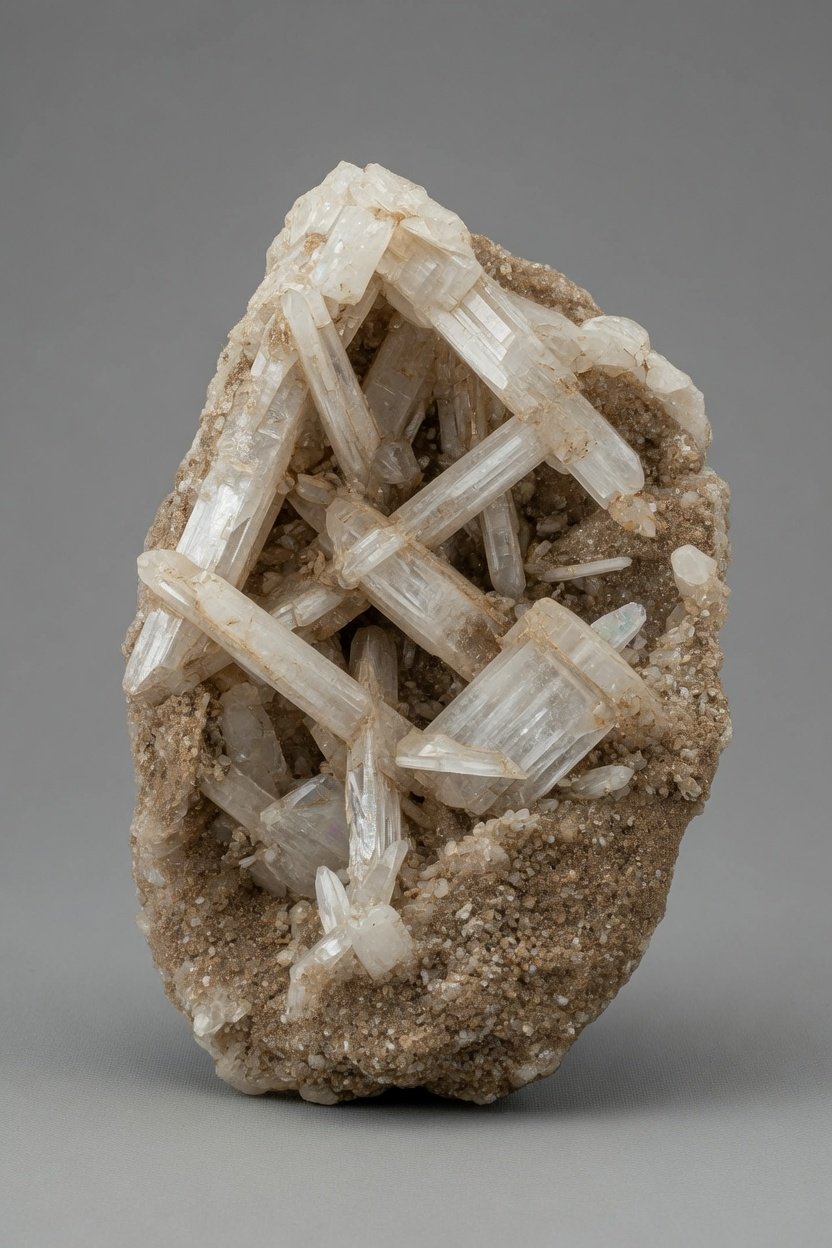
Aragonite forms striking clusters of twinned crystals that catch light with a cool, glassy sheen, drawing silversmiths toward its quiet strength for distinctive jewelry pieces. Its orthorhombic structure sets it apart from more common carbonates, offering both visual interest and a reminder of geological patience.
Physical Properties Aragonite registers 3.5–4 on the Mohs scale and possesses perfect cleavage in one direction, making it prone to splitting under sharp impact. Specific gravity hovers near 2.93, and its luster ranges from vitreous to slightly resinous. The stone is heat-sensitive because elevated temperatures can drive the phase change to calcite; therefore set the stone after all soldering and avoid prolonged torch exposure. Gentle polishing preserves its surface while care cautions include storing away from harder gems that might scratch it during wear.
Origin and Sourcing Primary deposits occur in Spain’s Aragon region, Mexican caves, Moroccan mines, and select Italian localities where groundwater precipitates the mineral in veins and cavities. Extraction often involves hard-rock adits or open-pit benches where workers follow narrow seams of white to pale-brown material. These sources supply both specimen-grade clusters and lapidary rough suitable for cabochon cutting.
History and Significance Named for its type locality in Spain, aragonite entered mineralogical literature in the late eighteenth century. Earlier cultures valued similar carbonate formations for carvings and ritual objects, though the distinct orthorhombic habit was not always differentiated from calcite. Its presence in cave formations linked it symbolically to endurance and the slow work of water over stone.
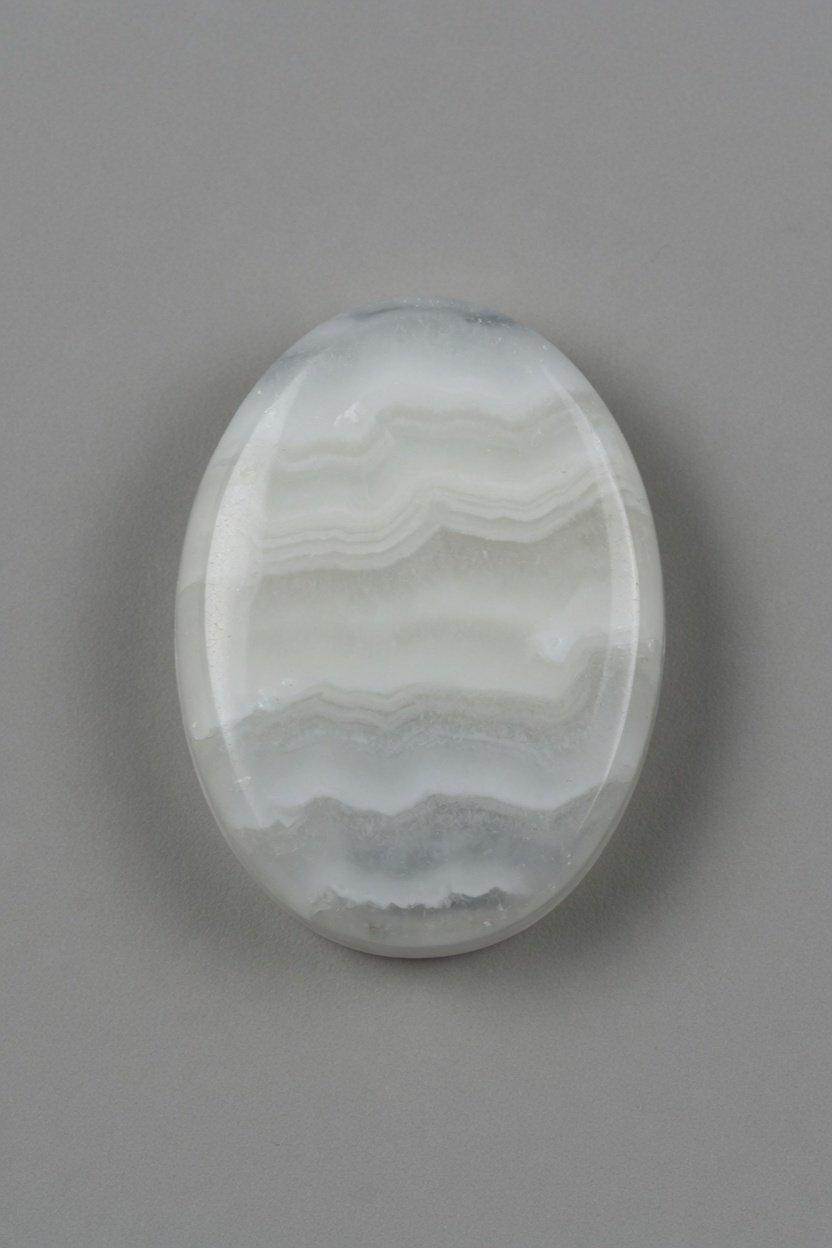
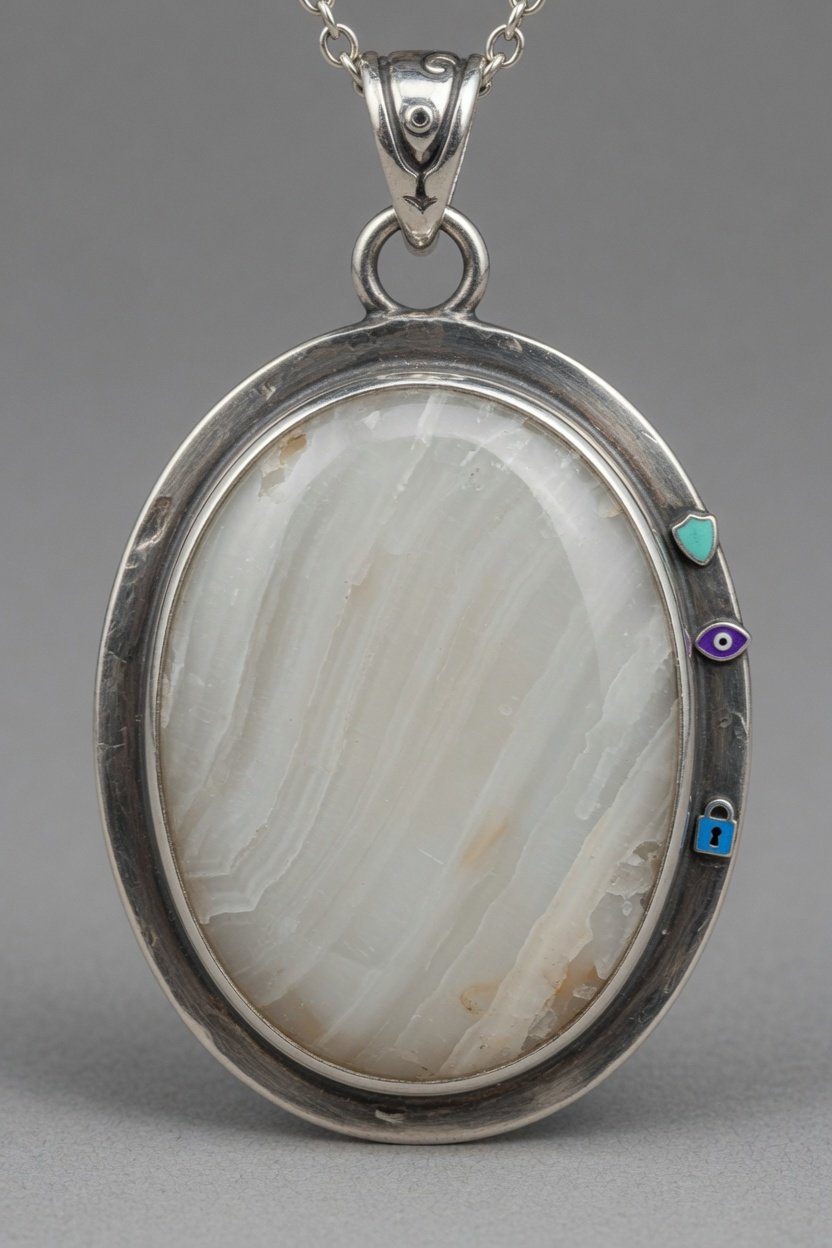
In Jewelry and Silversmithing Silversmiths favor aragonite for cabochons that highlight subtle banding or radiating patterns within sterling silver bezels. Because the stone converts to calcite above moderate heat, set the stone after all soldering and quench pieces carefully. Its modest hardness suits protective settings that shield edges while allowing the vitreous surface to catch studio light. Finished pieces benefit from occasional gentle cleaning with a soft cloth to maintain luster.
Identifying Aragonite in the Field Look for pseudo-hexagonal twinned crystals or radiating sprays on limestone matrix; a drop of dilute acid produces slower, more localized effervescence than calcite. Hardness testing with a copper coin leaves no mark, yet a steel point scratches readily. Color remains pale, rarely vivid, and the specimen feels slightly denser than expected for its size.
Quick Facts
Common names: Aragonite, Aragon Spar
Chemical formula: CaCO₃
Mohs hardness: 3.5–4
Specific gravity: 2.93
Color: White, colorless, pale brown, gray, rarely tinted
Crystal system: Orthorhombic
Luster: Vitreous to resinous
Transparency: Transparent to translucent
Common cuts: Cabochon
Common treatments: None typical; occasional stabilization for soft matrix
Best silver setting: Classic Silver Bezel
Birthstone month (if any): None
Main sources: Spain, Mexico, Morocco, Italy
Meaning & Intentions
GROUNDING
Aragonite anchors scattered energy by linking the wearer to steady earth rhythms through its dense carbonate lattice. Silversmiths set cabochons in protective bezels so the stone rests directly against skin, amplifying its calming presence during daily routines. The resulting jewelry becomes a tactile reminder to remain present.
Chakra: Root — stability and physical connection CLARITY
Aragonite’s transparent crystals encourage mental focus by reflecting light in ordered geometric patterns that quiet mental static. When cut as cabochons and placed in silver, the stone’s internal structure supports meditation practices aimed at sorting priorities. Wearers report steadier decision-making after consistent contact.
Chakra: Third Eye — insight and perception PROTECTION
Aragonite forms a subtle energetic boundary that discourages external emotional turbulence from settling. Set after soldering in a silver bezel, the cabochon maintains its integrity while shielding the wearer’s personal space during travel or crowded environments. Its modest hardness encourages mindful handling that reinforces the intention.
Chakra: Solar Plexus — personal power and boundaries Affirmation: "I stand steady, seeing clearly, and remain protected." AT A GLANCE: Chakra: Root Element: Earth Energy: Receptive Zodiac: Capricorn Planet: Saturn Affirmation: "I stand steady, seeing clearly, and remain protected."
Related Stones
Explore more stones from the Gemstone Library: Agate · Onyx · Hessonite