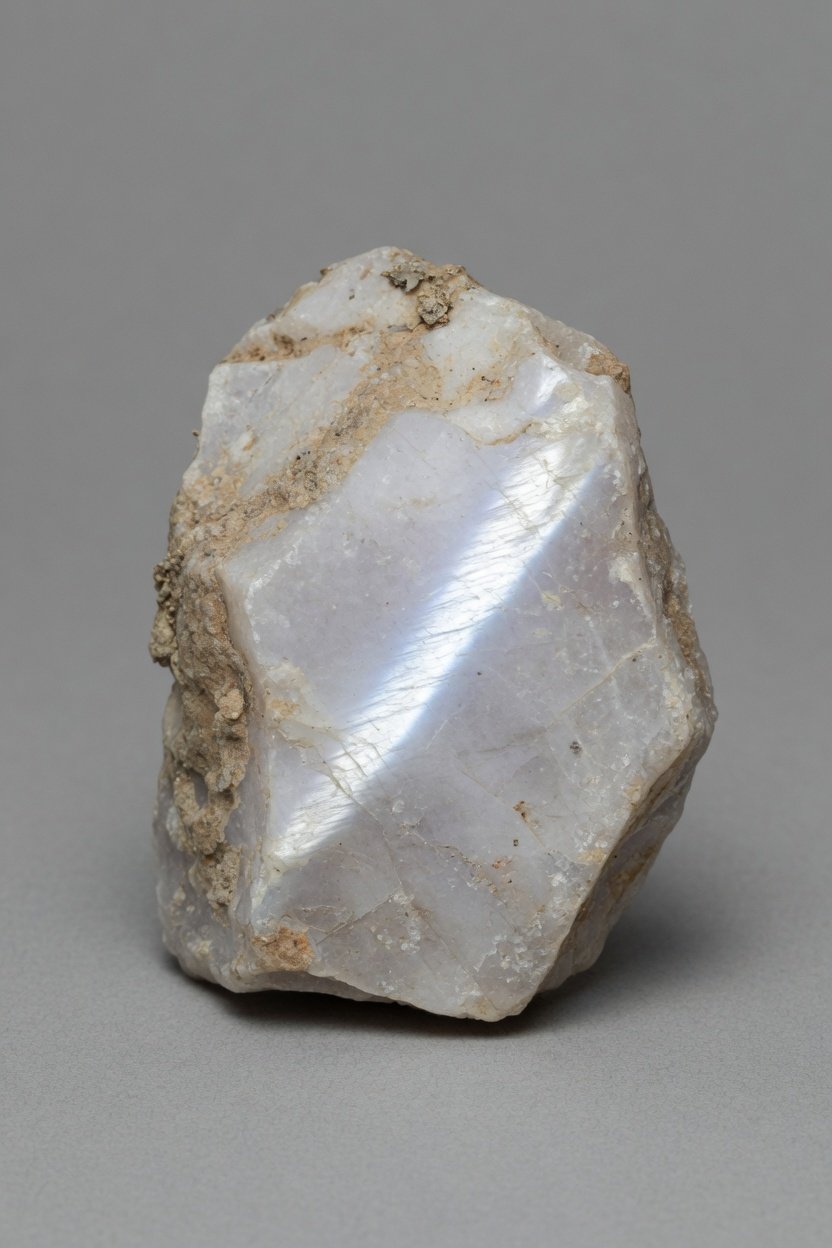
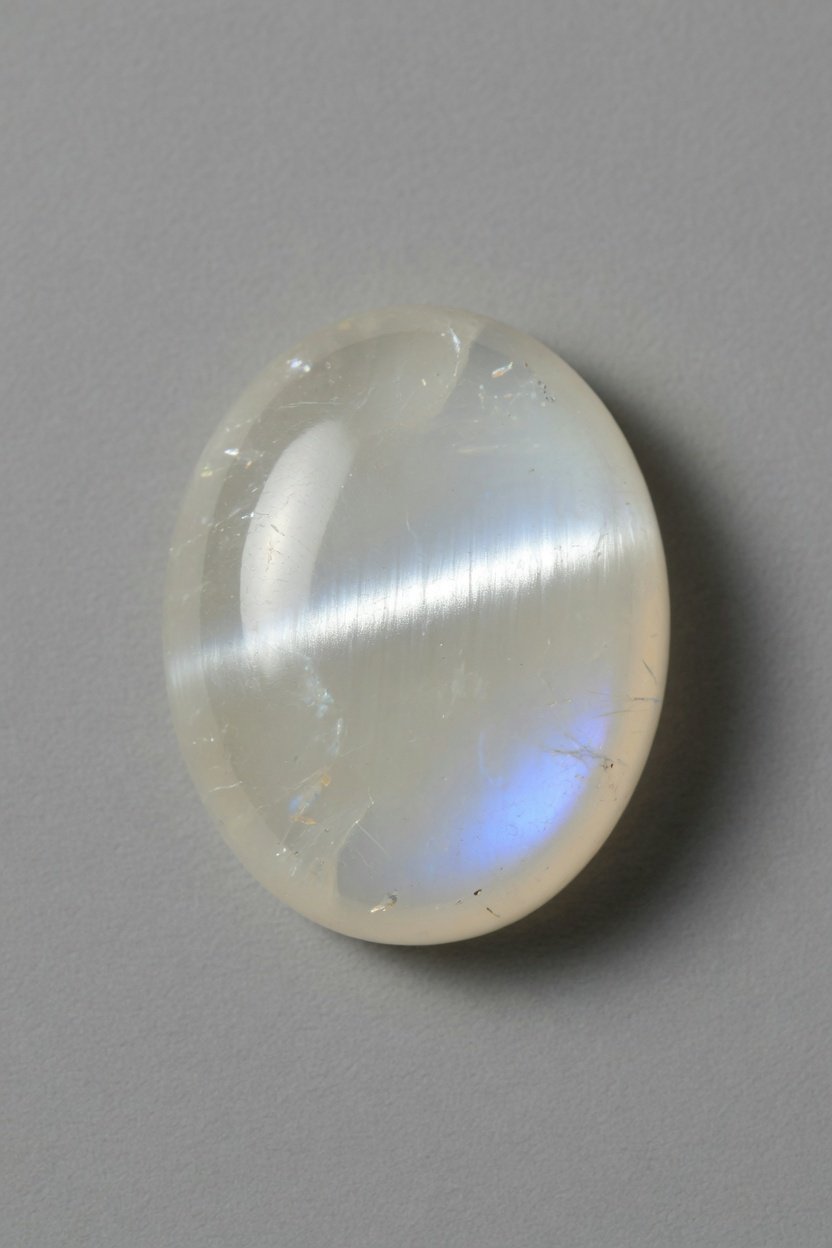
Cat's Eye Moonstone draws the eye with its milky glow and sharp silvery streak that seems to glide across the surface like moonlight on water. This feldspar variety combines the dreamy adularescence of classic moonstone with a distinct cat's-eye effect produced by aligned needle-like inclusions. Silversmiths prize it for both its optical drama and its workable yet delicate nature.
Physical Properties Cat's Eye Moonstone is potassium feldspar, primarily orthoclase, with a Mohs hardness of 6 to 6.5 and a specific gravity between 2.56 and 2.59. Its body ranges from translucent white to pale cream, occasionally tinted peach or gray, while the chatoyant band appears silvery white and the adularescence often shows a cool blue sheen. The stone exhibits perfect cleavage in two directions, making it prone to fracture if mishandled during setting. Always set the stone after all soldering is complete and the piece has cooled; the material is sensitive to sudden temperature changes that can cause internal stress cracks. Avoid ultrasonic cleaners and steam, as prolonged heat or vibration may loosen the fibrous inclusions responsible for the eye.
Origin and Sourcing Primary deposits lie in Sri Lanka, India, and Madagascar, where the stone forms in pegmatite veins and alluvial gravels. Sri Lankan material often displays the strongest blue adularescence paired with a crisp eye, while Indian specimens tend toward warmer body colors. Madagascar yields occasional peach-toned pieces. Miners extract the rough through small-scale hard-rock tunneling or by sifting river sediments, then sort for pieces showing both phenomena before export to lapidaries.
History and Significance Ancient Romans linked moonstone to the goddess Diana and believed it captured lunar light. In India the stone has long been considered sacred, reserved for jewelry worn during new-moon rituals. Victorian jewelers revived its popularity, setting cabochons into silver lockets and rings meant to evoke romance and intuition. Today the cat's-eye variety carries added mystique because the dual optical effects are relatively rare within the moonstone family.
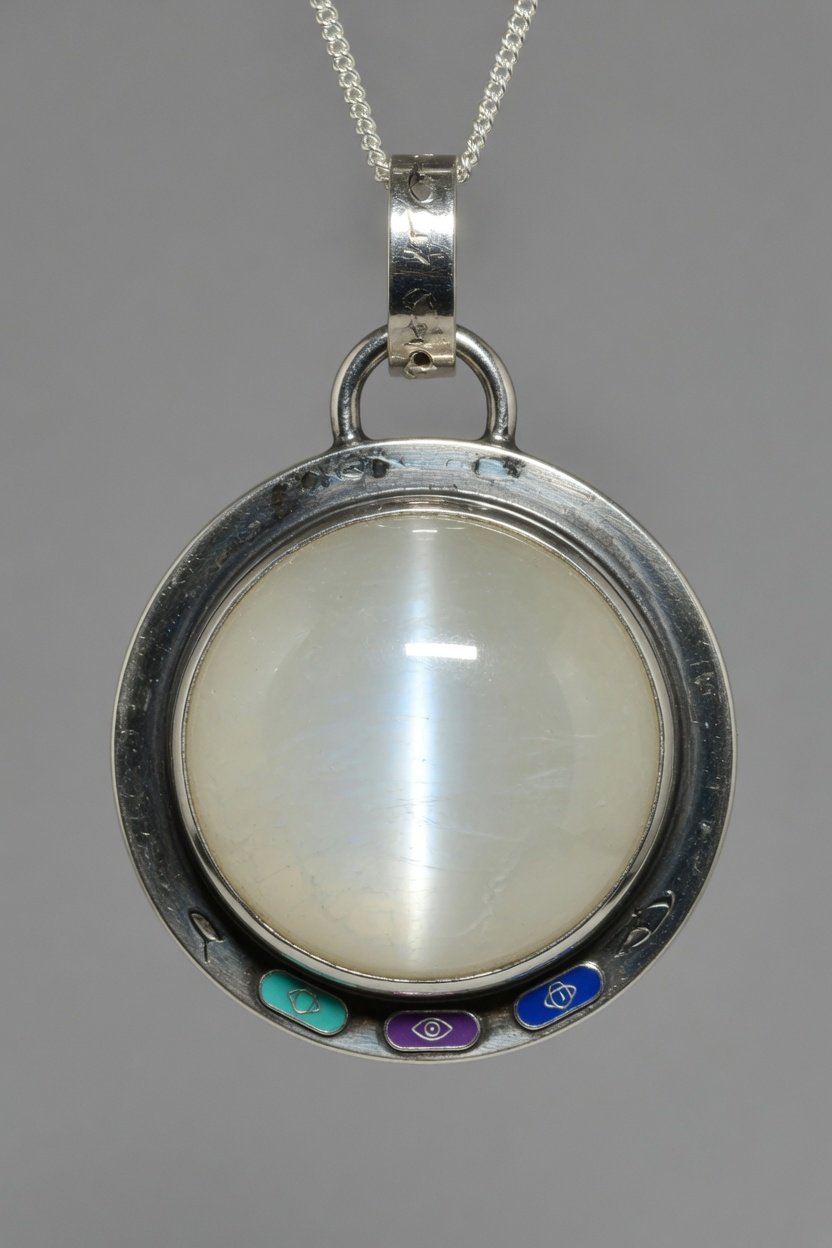
In Jewelry and Silversmithing The stone is almost always cut as a cabochon to display its chatoyancy and adularescence together. Silversmiths favor low, protective bezels that secure the dome without covering the eye. Contemporary designs often incorporate oxidized silver to contrast the pale stone. Always set the stone after all soldering is complete; direct torch heat can cloud the adularescence or fracture the cleavage planes. For daily wear, store separately to prevent scratches from harder gems and clean only with a soft cloth and mild soap.
Identifying Cat's Eye Moonstone in the Field Look for a translucent feldspar pebble with a distinct bright line that moves when the stone is rocked under direct light. The eye should be sharp and centered when the cabochon is properly oriented. A faint blue glow at certain angles confirms adularescence. Beware of glass imitations that lack the stone's cool touch and specific gravity; a quick specific-gravity test separates true feldspar from fakes.
Quick Facts
Common names: Cat's Eye Moonstone, Chatoyant Moonstone
Chemical formula: KAlSi3O8
Mohs hardness: 6-6.5
Specific gravity: 2.56-2.59
Color: White to cream with silvery eye and blue adularescence
Crystal system: Monoclinic
Luster: Vitreous to pearly
Transparency: Translucent
Common cuts: Cabochon
Common treatments: None
Best silver setting: Classic Silver Bezel Pendant
Birthstone month (if any): June
Main sources: Sri Lanka, India, Madagascar
Meaning & Intentions
INTUITION
Cat's Eye Moonstone sharpens inner vision by amplifying the wearer's natural sensitivity to subtle energies and emotional undercurrents. Silversmiths set the cabochon low so the moving eye rests directly against the skin, creating a constant tactile reminder to trust quiet impressions during decision-making.
Chakra: Third Eye – enhances perception and dream recall CLARITY
The stone's dual phenomena—adularescence and chatoyancy—symbolize the meeting of inner light and focused attention. Wearers use it during meditation or journaling to cut through mental fog and recognize patterns that were previously obscured.
Chakra: Crown – supports clear insight without attachment PROTECTION
Its silvery eye is said to deflect scattered or intrusive energies while the moonstone body maintains emotional equilibrium. Artisans often place the stone in a bezel with a narrow rim so the protective band remains visible yet secure against daily contact.
Chakra: Root – grounds intuition in practical safety Affirmation: "I see clearly and remain steady." AT A GLANCE: Chakra: Third Eye Element: Water Energy: Receptive Zodiac: Cancer, Pisces Planet: Moon Affirmation: "I see clearly and remain steady."
Related Stones
Explore more stones from the Gemstone Library: Sillimanite · Star Sapphire · Azurite