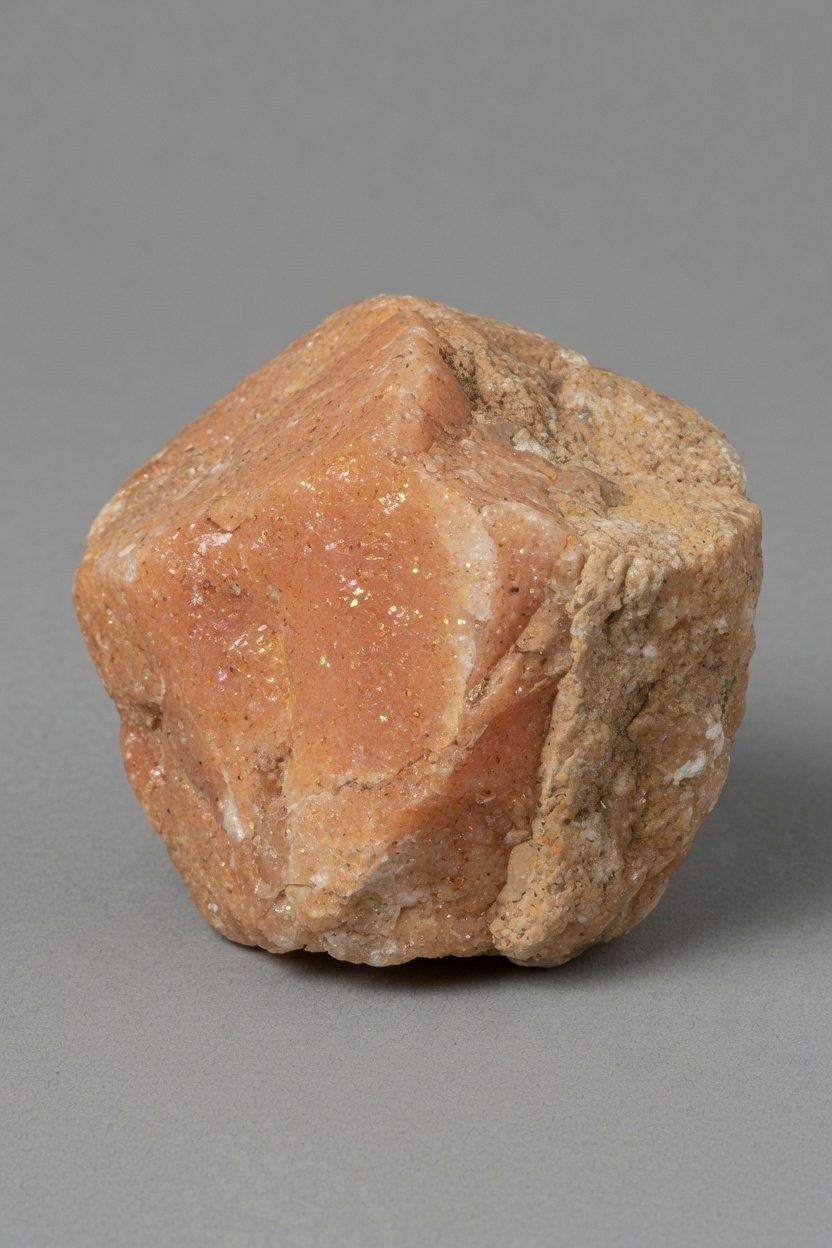
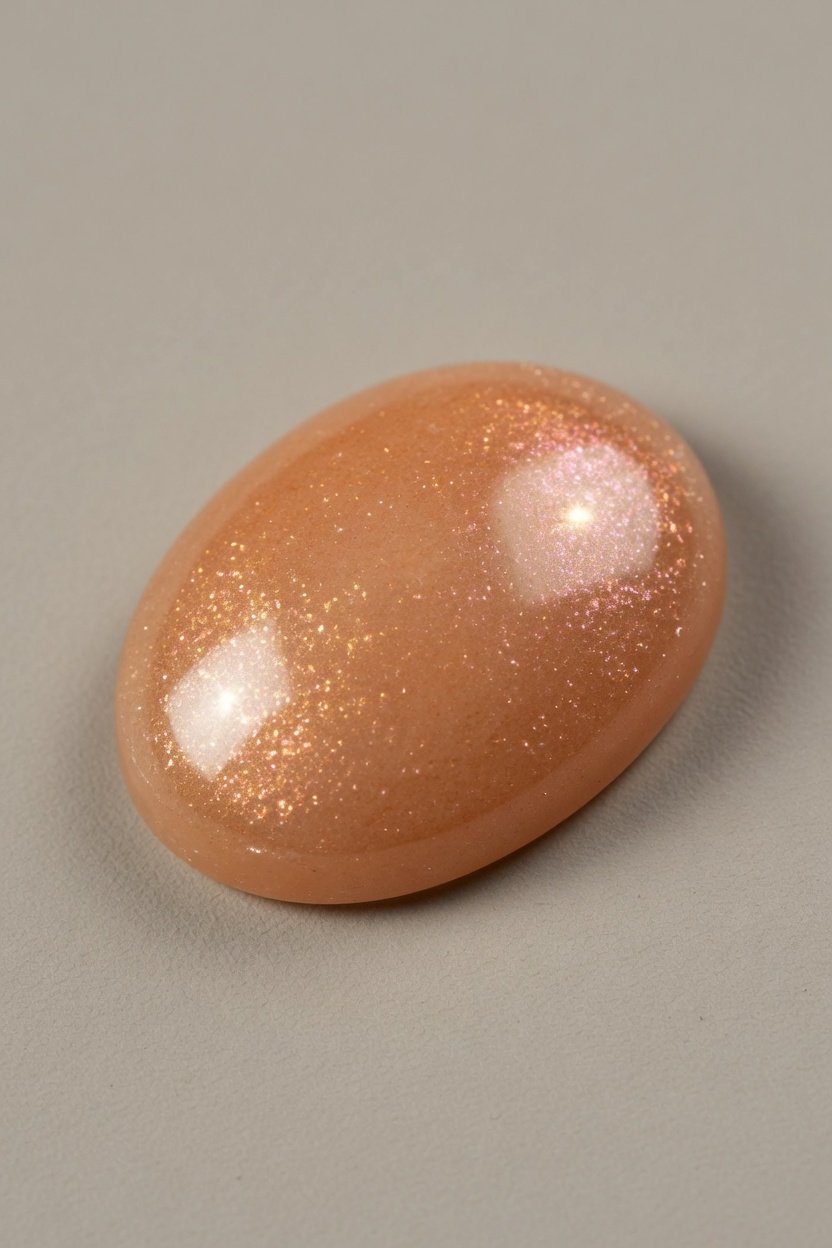
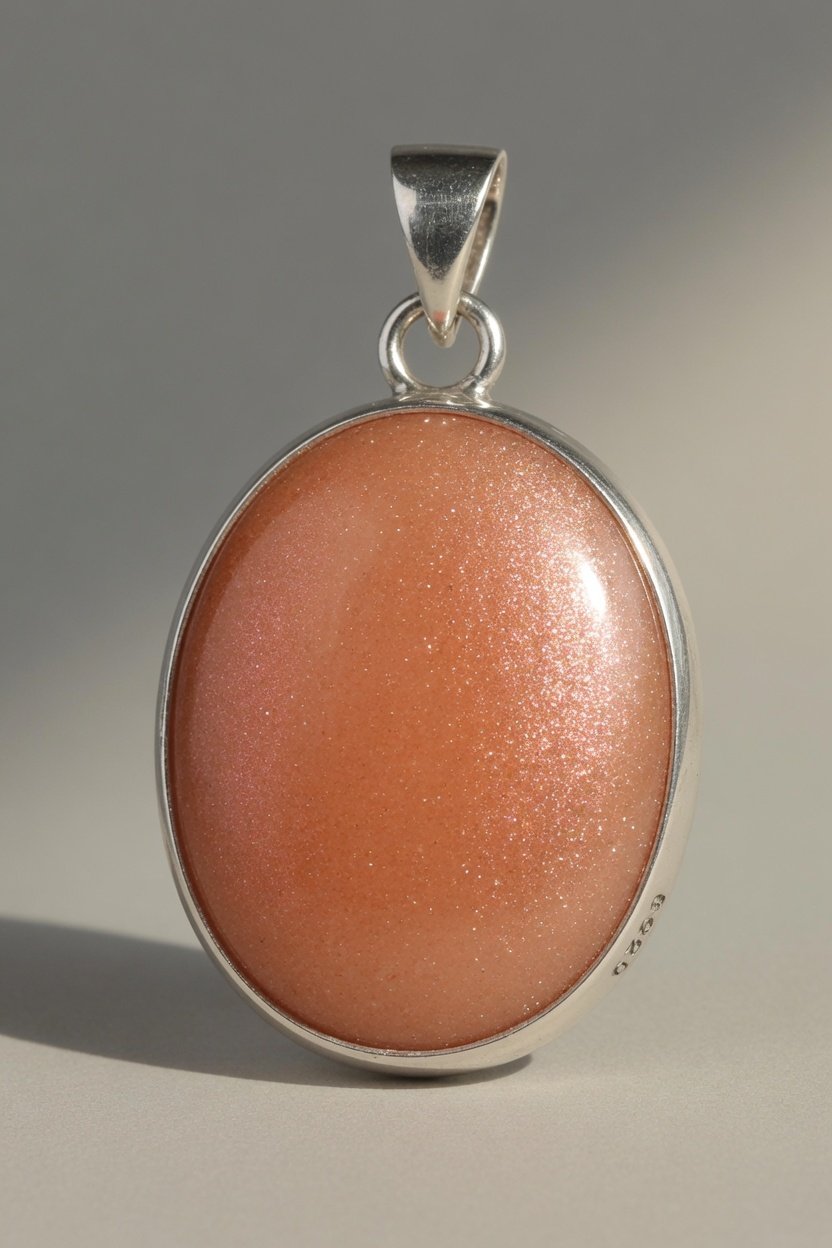
Peach Aventurine catches the eye with its gentle peach-to-orange glow and the quiet metallic flash of tiny inclusions that dance across its surface like sunlight on still water. This variety of quartz forms in modest veins yet carries an understated warmth that silversmiths prize for its ability to soften bold metalwork without competing for attention. The stone rewards careful observation, revealing depth only when light strikes it at the right angle.
Physical Properties Peach Aventurine is a translucent to opaque variety of quartz whose peach coloration comes from fine hematite or goethite platelets suspended within the silica matrix. These inclusions produce the signature aventurescence, a soft glitter visible under direct light. On the Mohs scale it registers 6.5 to 7, making it durable for everyday wear yet soft enough to be shaped with standard lapidary equipment. Specific gravity falls between 2.64 and 2.69. The material shows a waxy to vitreous luster and exhibits no cleavage, instead fracturing conchoidally. Because the stone contains iron oxides, prolonged exposure to strong acids or prolonged heat can dull the color or cause surface cracking; therefore the gem must always be set after all soldering and polishing steps are complete. Avoid steam cleaners and ultrasonic baths for finished pieces.
Origin and Sourcing Primary commercial deposits occur in the mica schists of southern India, particularly around the Nellore district, with additional material coming from Brazil and select localities in Russia. Mining is predominantly small-scale open-pit or shallow adit work where miners follow quartz veins through weathered rock. The peach hue is less common than the classic green aventurine, so parcels are hand-sorted at the mine face to separate the warmer tones. Rough is usually exported as fist-sized chunks or preformed cabs to lapidary centers in Jaipur and Idar-Oberstein.
History and Significance Although aventurine as a species appears in Venetian glass recipes from the seventeenth century, peach-colored quartz was not widely recognized until the late nineteenth century when Indian miners began separating it from green material. In folk traditions of southern India the stone was carried as a talisman for steady temperament during long journeys. European jewelers of the Edwardian era occasionally set peach aventurine in silver brooches, valuing its muted shimmer against the cool tone of the metal. Today the material remains a niche favorite among silversmiths who seek alternatives to more saturated gemstones.
In Jewelry and Silversmithing Silversmiths most often cut Peach Aventurine into smooth cabochons to preserve the aventurescent effect, then seat the stones in bezels or low-profile collets. The stone’s modest hardness allows it to be polished to a high sheen with tin oxide, yet its iron content means it must be set only after all torch work is finished and the piece has cooled completely. A simple care caution is to keep finished jewelry away from household chemicals and extreme temperature swings that could stress the quartz. When paired with oxidized silver the peach tones appear warmer; with bright polished silver the shimmer becomes more pronounced.
Identifying Peach Aventurine in the Field In rough form the stone shows a sugary quartz texture with a faint peach blush and occasional silvery flecks. A quick field test is to wet the surface; the aventurescence intensifies under water while the color remains stable. Unlike dyed quartz, genuine Peach Aventurine displays natural color zoning that follows the crystal growth direction rather than artificial saturation lines. Hardness testing with a steel point leaves a faint white scratch that does not penetrate deeply, confirming quartz rather than softer feldspar or calcite.
Quick Facts
Common names: Peach Aventurine, Orange Aventurine
Chemical formula: SiO₂ with hematite inclusions
Mohs hardness: 6.5–7
Specific gravity: 2.64–2.69
Color: Peach to orange-pink with metallic shimmer
Crystal system: Trigonal
Luster: Waxy to vitreous
Transparency: Translucent to opaque
Common cuts: Cabochon, tumbled freeform
Common treatments: None (occasional light polishing)
Best silver setting: Bezel or low-profile collet
Birthstone month (if any): None
Main sources: India, Brazil, Russia
Meaning & Intentions
STEADY TEMPER
Peach Aventurine is carried to encourage measured responses during stressful negotiations or long creative sessions. Silversmiths keep a small tumbled piece on the bench so that each time they glance at the warm shimmer they are reminded to breathe before making the next cut or solder joint. The stone’s gentle energy is thought to anchor scattered thoughts without dulling artistic spark.
Chakra: Root for grounding and physical stamina CLEAR PERCEPTION
The subtle glitter within Peach Aventurine is said to sharpen observational skills, helping wearers notice small details in both their craft and daily interactions. Artisans sometimes place a cabochon near the workbench light so the reflections highlight fine tool marks or metal textures that might otherwise be overlooked during intricate filing or engraving work.
Chakra: Third Eye for intuitive insight PROTECTED FOCUS
Many silversmiths regard the stone as a quiet guardian that shields concentration from external distractions. A bezel-set pendant worn during studio hours is believed to create a personal boundary, allowing the maker to remain immersed in the rhythm of hammering and polishing without losing track of the original design intent.
Chakra: Solar Plexus for confident boundaries Affirmation: "I work with calm clarity and steady hands." AT A GLANCE: Chakra: Root, Third Eye, Solar Plexus Element: Earth Energy: Receptive Zodiac: Virgo, Taurus Planet: Venus Affirmation: "I work with calm clarity and steady hands."
Related Stones
Explore more stones from the Gemstone Library: Howlite · Prehnite · Variscite