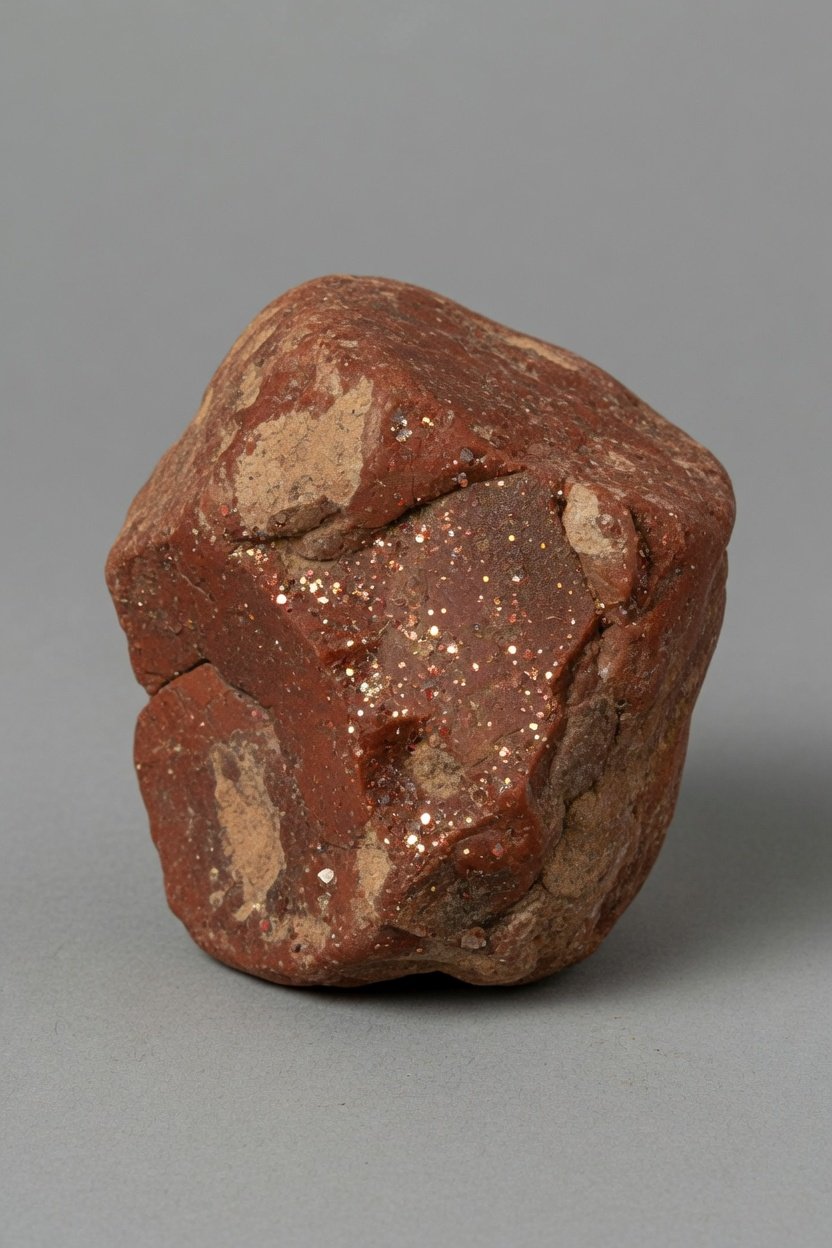
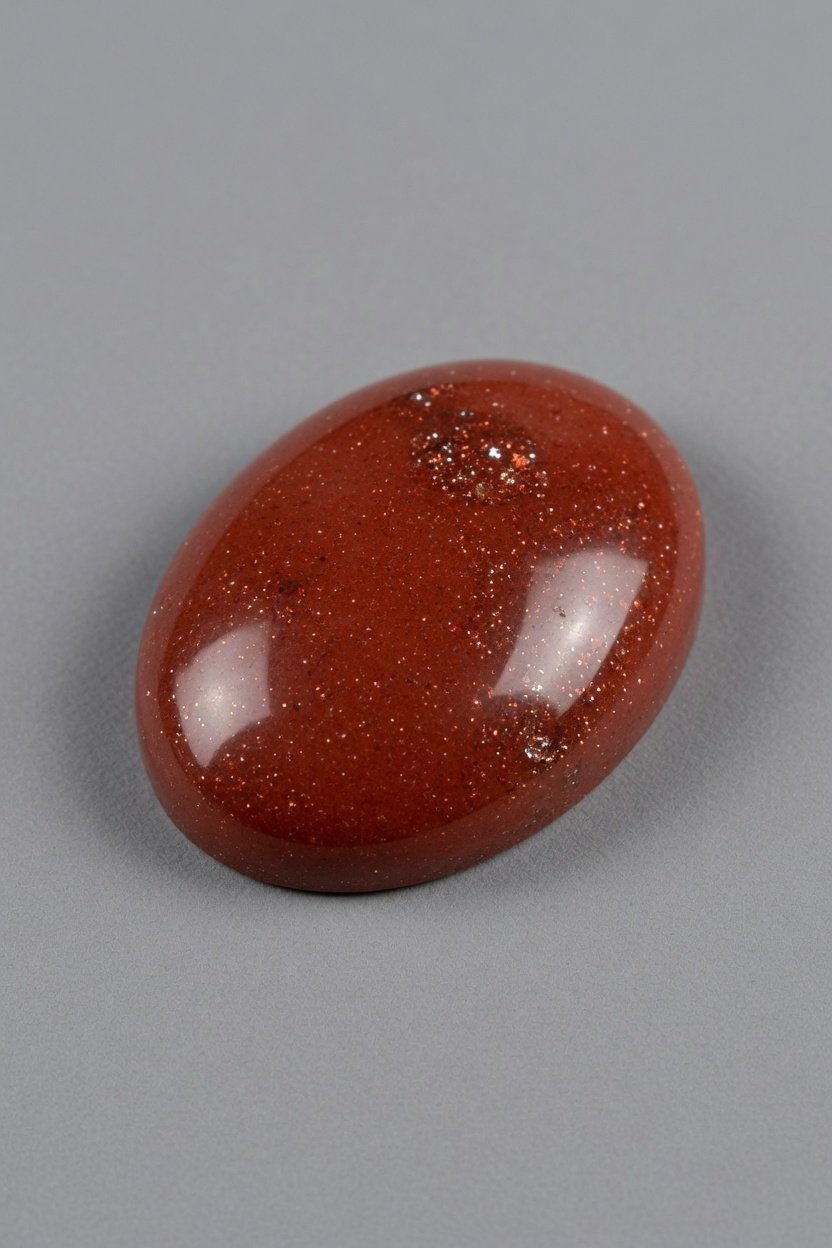
Red Aventurine draws the eye with its warm crimson tones and inner shimmer that catches light like scattered sparks. This quartz variety forms when microscopic inclusions of hematite or mica align within the crystal lattice, creating both color and the distinctive aventurescence that sets it apart from ordinary red stones. Silversmiths prize it for its ability to bring a grounded yet luminous accent to handmade jewelry.
Physical Properties Red Aventurine belongs to the quartz family with a chemical makeup of silicon dioxide and varying amounts of iron oxide or mica that produce its signature red hue and sparkle. It registers 7 on the Mohs scale, making it durable for everyday wear, yet the platy inclusions can create planes of weakness that require careful handling during cutting and setting. Specific gravity falls between 2.64 and 2.69, and the stone typically shows a vitreous to submetallic luster with translucency ranging from opaque to slightly translucent. Always set Red Aventurine after all soldering is complete to avoid heat damage to the inclusions; clean only with mild soap and a soft brush, avoiding ultrasonic cleaners or steam that could fracture the stone along inclusion lines.
Origin and Sourcing The primary commercial deposits lie in the mica-rich pegmatites and alluvial gravels of India, particularly in the states of Bihar and Rajasthan, with additional material coming from Brazil and parts of Russia. Miners extract the stone through a combination of open-pit benching and selective hand sorting from weathered quartz veins, where the red color is most intense near surface oxidation zones. Ethical sourcing programs now emphasize dust control and reclamation of worked areas to reduce environmental impact in these regions.
History and Significance Ancient Indian lapidaries incorporated Red Aventurine into temple adornments and amulets as early as the Vedic period, valuing its warm tone as a symbol of vitality and earth connection. European mineralogists later documented the stone during 19th-century trade expeditions, noting its aventurescence as a natural curiosity that rivaled early synthetic goldstone. In folk traditions across South Asia, the material was carried by traders and artisans to foster steady resolve during long journeys and seasonal hardships.
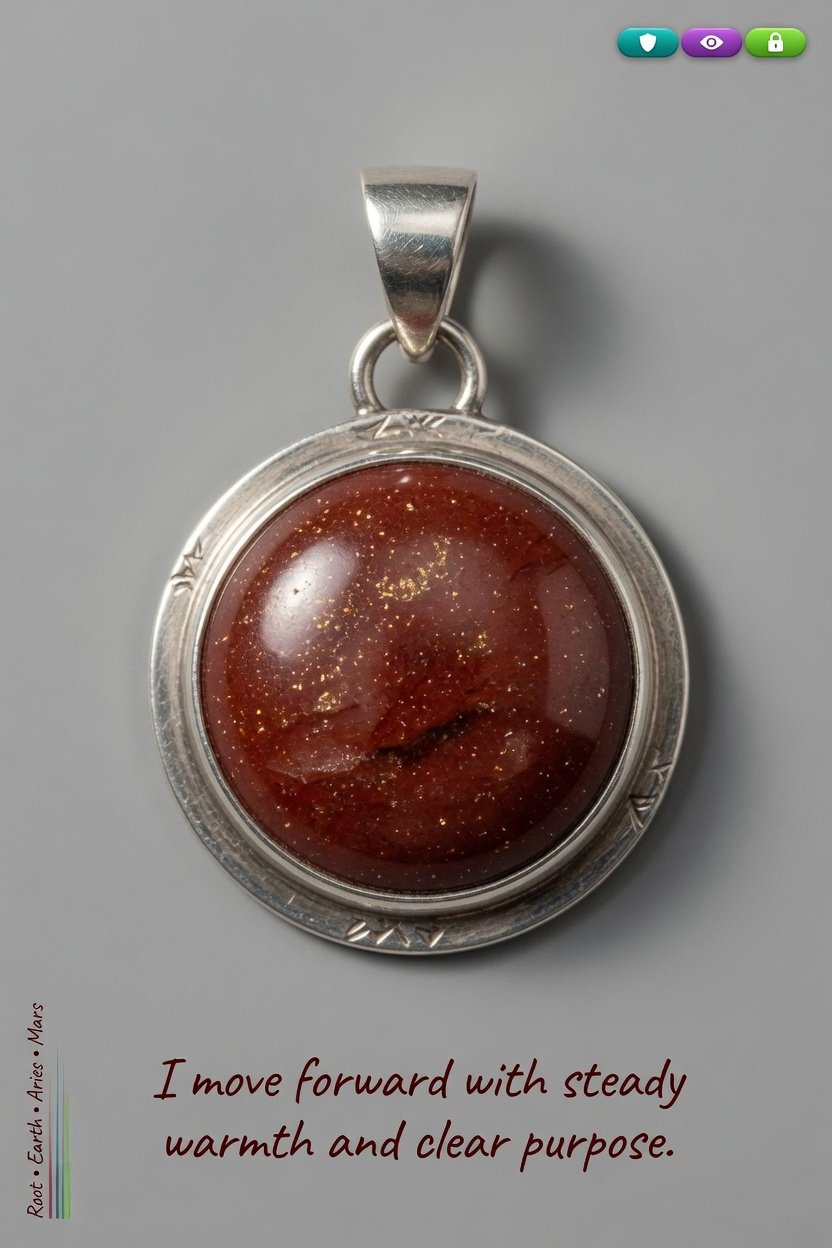
In Jewelry and Silversmithing Silversmiths favor cabochon cuts that maximize the stone’s internal shimmer against sterling silver. The material pairs especially well with oxidized or brushed finishes that echo the earthy red palette. Because the inclusions can expand under rapid temperature change, the stone must be set only after all torch work is finished; prong or bezel settings should be burnished gently to avoid pressure cracks. Routine care includes removing pieces before heavy physical labor and storing them separately to prevent abrasion from harder gems.
Identifying Red Aventurine in the Field Look for a deep brick-red to terracotta body color interrupted by tiny reflective flakes that flash when the specimen is tilted under direct light. Freshly broken surfaces reveal a sugary quartz texture without the banding typical of jasper or the uniform opacity of red chalcedony. Hardness testing with a steel point will produce a white streak on the quartz matrix while the inclusions remain resistant, confirming the stone’s identity among similar field specimens.
Quick Facts
Common names: Red Aventurine, Red Quartz Aventurine
Chemical formula: SiO₂ with Fe₂O₃ or mica inclusions
Mohs hardness: 7
Specific gravity: 2.64–2.69
Color: Brick red to terracotta with metallic sparkle
Crystal system: Trigonal
Luster: Vitreous to submetallic
Transparency: Translucent to opaque
Common cuts: Cabochon
Common treatments: None typical
Best silver setting: Classic Silver Bezel Pendant
Birthstone month (if any): None
Main sources: India, Brazil, Russia
Meaning & Intentions
VITALITY
Red Aventurine supports steady energy and physical resilience when carried or worn during demanding tasks. Silversmiths set the stone in sturdy bezels so the wearer can keep its supportive presence close through daily work and creative practice, allowing the natural inclusions to serve as quiet reminders of grounded strength.
Chakra: Root — anchors physical presence and endurance CLARITY
Red Aventurine sharpens focus when placed on a workbench or worn during design decisions. The stone’s reflective flakes encourage honest self-assessment, helping artisans notice small details in metalwork and stone placement without distraction or haste.
Chakra: Third Eye — heightens perception and insight STABILITY
Red Aventurine reinforces emotional steadiness during long projects or uncertain times. Its consistent red tone and solid quartz structure remind wearers to maintain routines and boundaries that protect creative energy from external pressure.
Chakra: Root — builds lasting security and calm Affirmation: "I move forward with steady warmth and clear purpose." AT A GLANCE: Chakra: Root Element: Earth Energy: Projective Zodiac: Aries Planet: Mars Affirmation: "I move forward with steady warmth and clear purpose."
Related Stones
Explore more stones from the Gemstone Library: Bloodstone · Anyolite (Ruby-Zoisite) · Bixbite (Red Beryl)