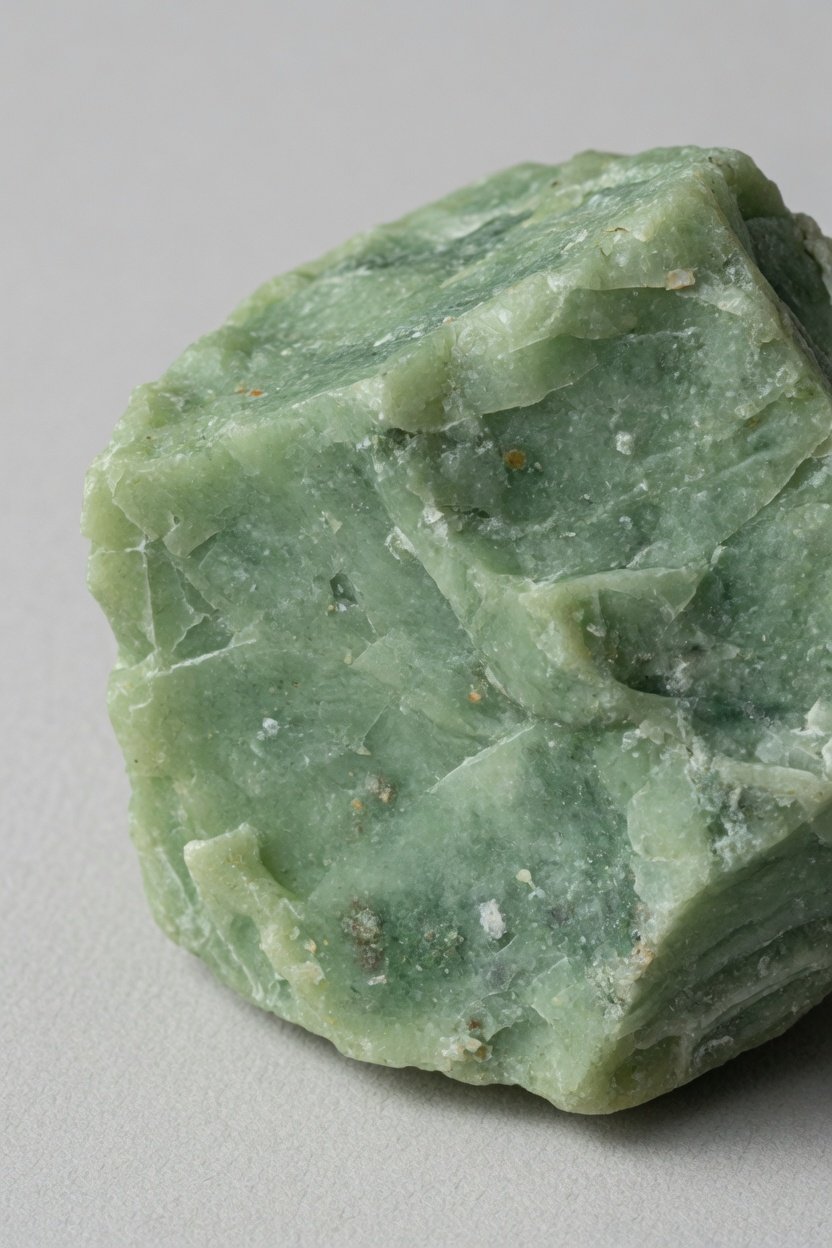
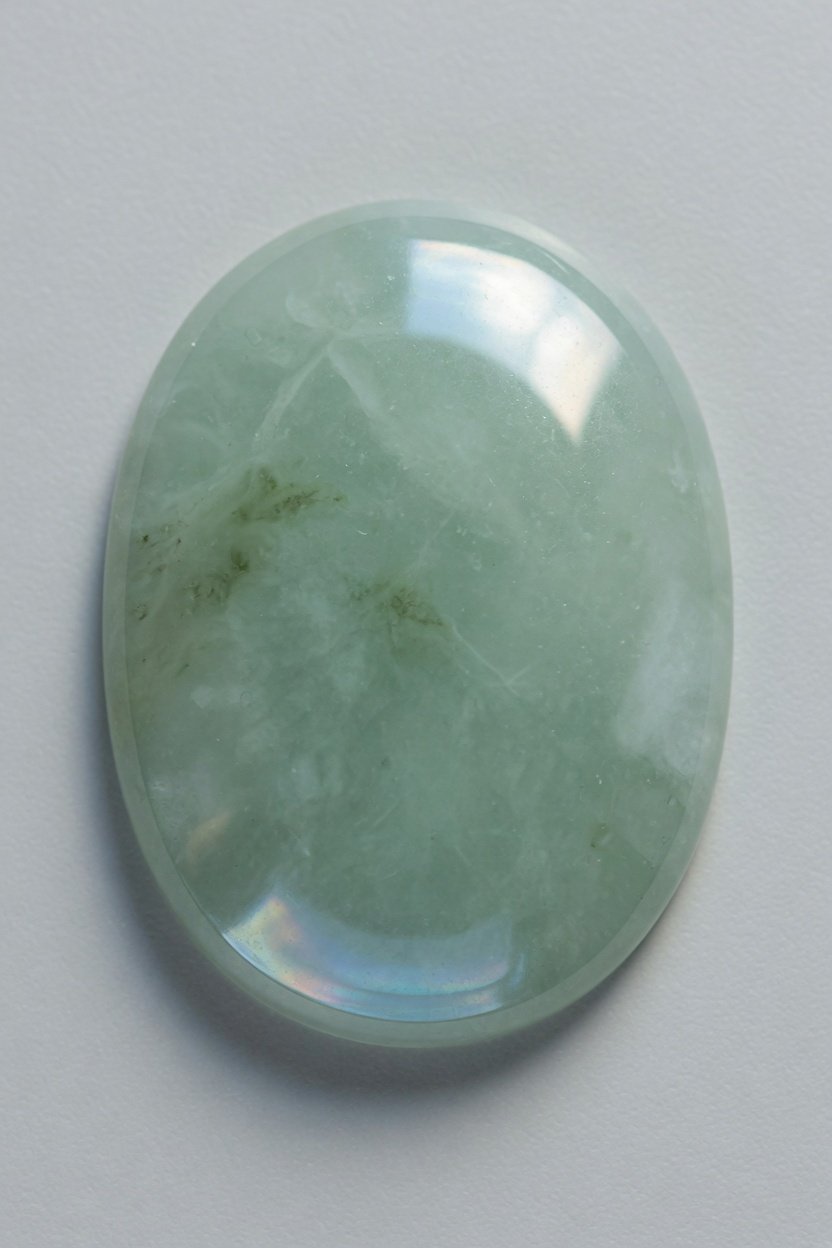
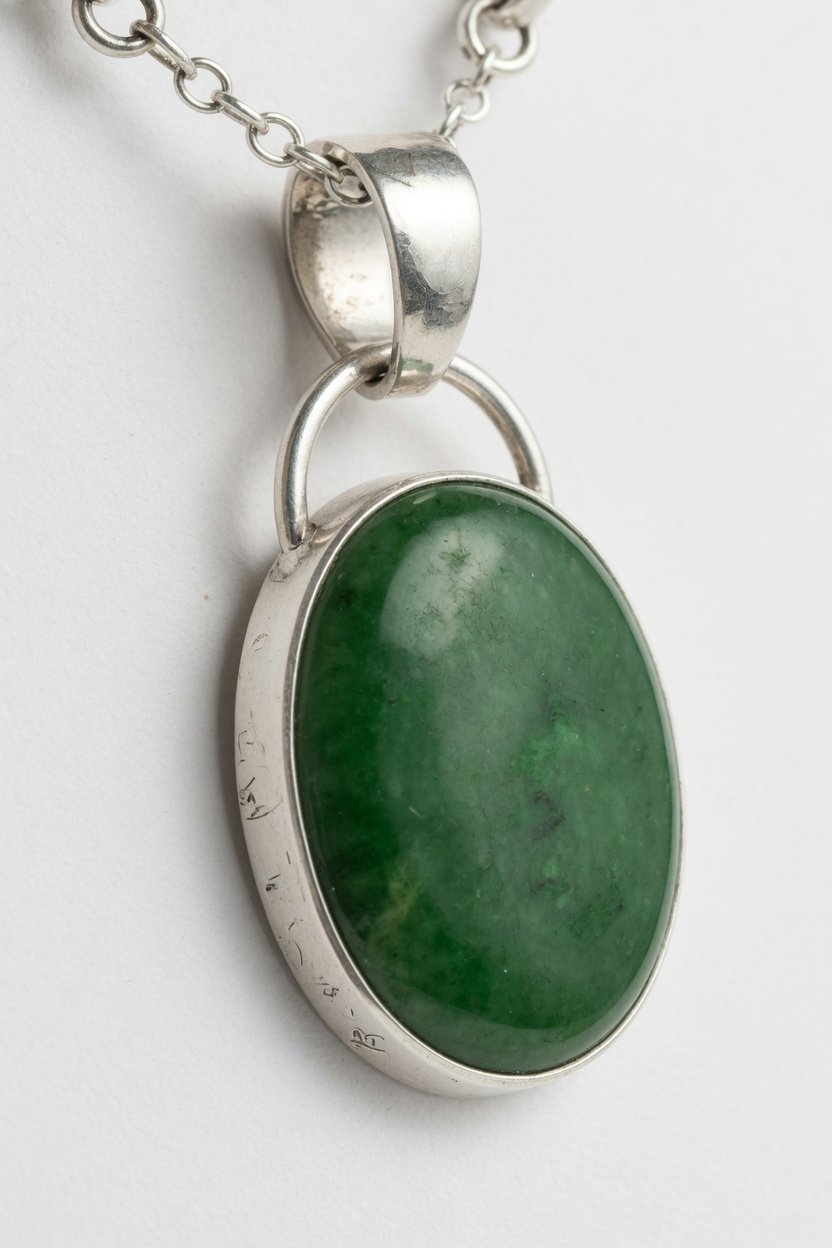
Jade has long captivated artisans with its cool, dense presence and subtle inner glow that seems to hold light within its depths. This ancient stone bridges earth and spirit across cultures, offering both tactile satisfaction and visual depth when shaped by skilled hands. Its quiet strength makes it a favored material for silversmiths seeking enduring beauty in their work.
Physical Properties Jade encompasses two distinct minerals, jadeite and nephrite, each prized for its toughness and silky texture. Jadeite registers 6.5 to 7 on the Mohs scale while nephrite sits slightly lower at 6 to 6.5, yet both resist scratching far better than their numbers suggest due to interlocking crystal structures. Specific gravity ranges from 3.3 for jadeite to 2.9 for nephrite, giving pieces a reassuring heft. Colors span vivid emerald greens to softer lavender, white, and even black, with waxy to vitreous luster and variable transparency from opaque to semi-translucent. Always set jade after all soldering is complete to avoid heat damage that can cause cracking or color shifts; avoid ultrasonic cleaners and sudden temperature changes that may fracture the stone.
Origin and Sourcing Primary deposits occur in Myanmar for jadeite and in China’s Xinjiang region plus New Zealand for nephrite, with additional sources in Guatemala, Russia, and Canada. Jade forms through metamorphic processes involving high pressure and moderate temperatures, often appearing in veins within serpentine or as alluvial boulders in riverbeds. Miners extract it via open-pit methods or by diving in swift rivers to retrieve water-worn stones, then transport rough material to workshops where color and translucency are evaluated under natural light.
History and Significance For over seven thousand years jade has served as a symbol of purity, protection, and imperial authority in China, where emperors reserved the finest white and green pieces for ritual objects and burial suits. Mesoamerican cultures carved it into masks and tools believed to connect the living with ancestors. European explorers later introduced jade to the West, though its cultural weight remained strongest in Asia. Throughout these eras the stone’s durability allowed it to survive as tangible evidence of human reverence for materials that endure beyond individual lifetimes.
In Jewelry and Silversmithing Silversmiths favor jade for cabochons that highlight its color and subtle patterns, typically setting finished stones in bezels or prongs once all torch work is done. The stone’s toughness permits intricate carving yet demands care during polishing to achieve a high sheen without overheating. Classic silver bezel pendants and artisan cabochon rings showcase jade beautifully, allowing light to interact with its internal structure. Care cautions include storing pieces separately to prevent contact with harder gems and cleaning only with mild soap and soft cloths to preserve the waxy surface.
Identifying Jade in the Field Field identification relies on the stone’s exceptional toughness and cool touch compared with similar-looking serpentine or quartz. A drop of water on the surface beads up rather than soaking in, and gentle tapping with a metal object produces a dull thud instead of a ringing tone. Translucency at the edges and faint fibrous texture visible under magnification further confirm jade, while color zoning or white inclusions can indicate natural origin versus treated material.
Quick Facts
Common names: Jade, Jadeite, Nephrite
Chemical formula: NaAlSi₂O₆ (jadeite); Ca₂(Mg,Fe)₅Si₈O₂₂(OH)₂ (nephrite)
Mohs hardness: 6–7
Specific gravity: 2.9–3.3
Color: Green, white, lavender, black, yellow
Crystal system: Monoclinic
Luster: Waxy to vitreous
Transparency: Opaque to semi-translucent
Common cuts: Cabochon, carving, beads
Common treatments: Waxing, dyeing, bleaching
Best silver setting: Classic Silver Bezel Pendant
Birthstone month: None
Main sources: Myanmar, China, New Zealand, Guatemala
Meaning & Intentions
PROTECTION
Jade has served as a guardian stone across civilizations, its dense structure believed to create an energetic barrier around the wearer. Silversmiths often set protective jade cabochons in silver bezels that further amplify the stone’s shielding qualities through reflective metal surfaces.
Chakra: Root for grounding and stability WISDOM
Ancient rulers wore jade to enhance clarity during decisions, its cool surface thought to quiet mental chatter and invite insight. In silversmithing, jade’s subtle color variations reward close observation, encouraging wearers to look beneath surface appearances.
Chakra: Third Eye for intuition and perception HARMONY
Jade promotes balance between opposing forces, its interlocking crystals mirroring the interconnectedness of life. When set after soldering, the finished silver and jade piece becomes a wearable reminder to maintain equilibrium in daily interactions.
Chakra: Heart for compassion and balance Affirmation: "I move through life with steady protection, clear vision, and harmonious balance." AT A GLANCE: Chakra: Heart Element: Earth Energy: Receptive Zodiac: Libra Planet: Venus Affirmation: "I move through life with steady protection, clear vision, and harmonious balance."
Related Stones
Explore more stones from the Gemstone Library: Agate · Tiger's Eye · Aventurine