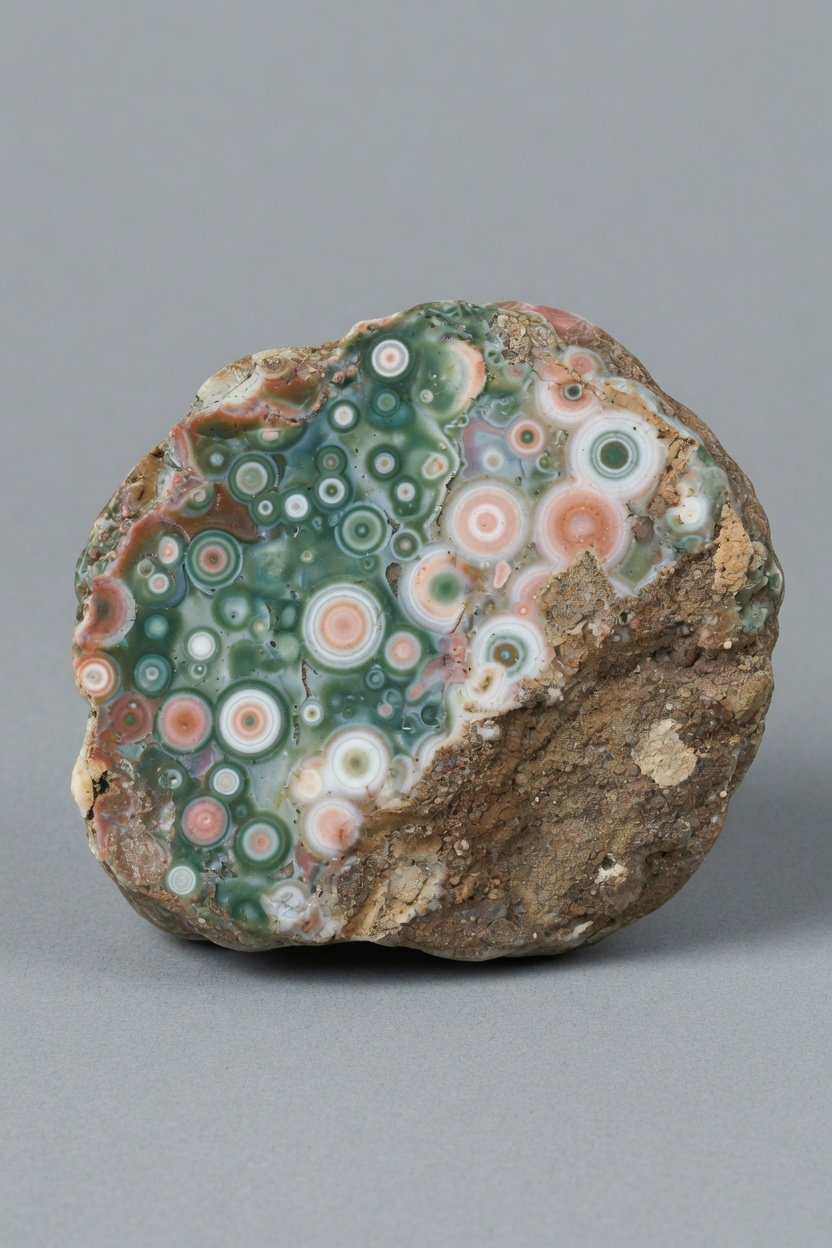
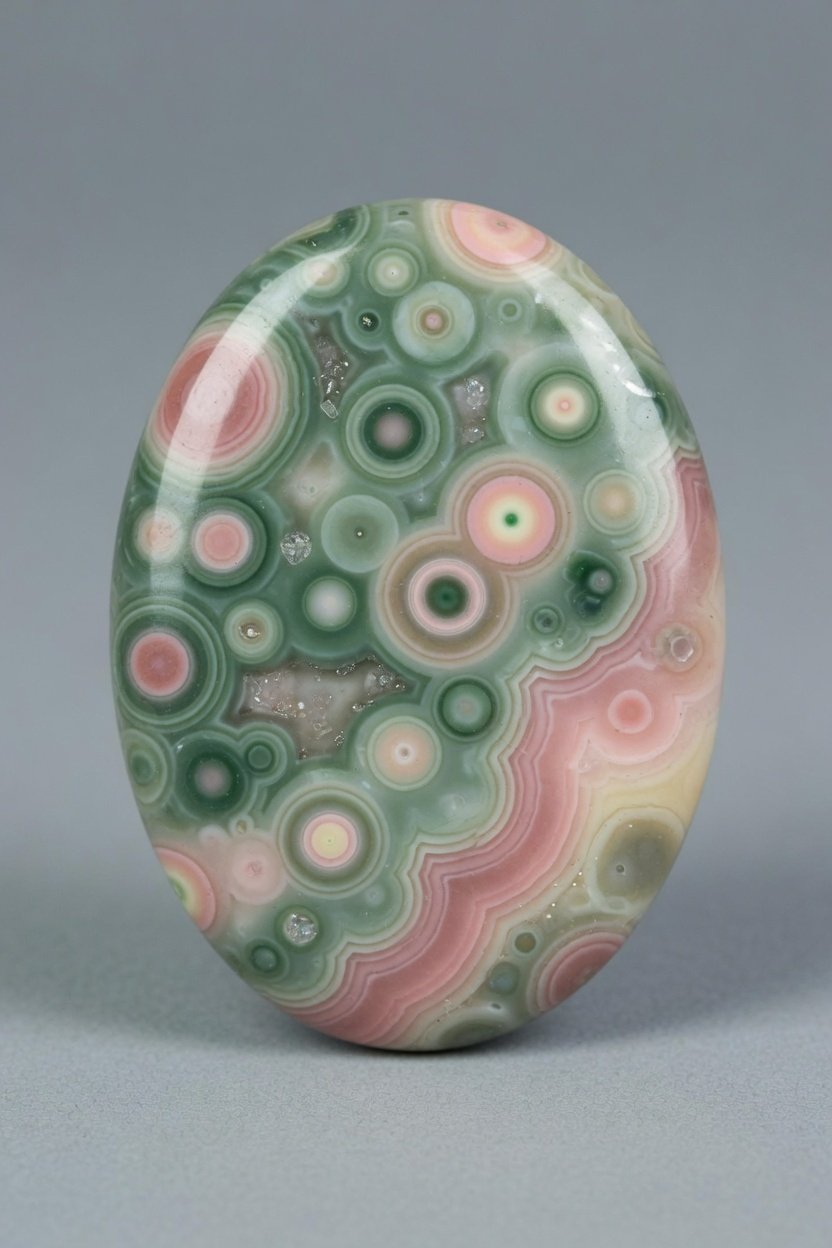
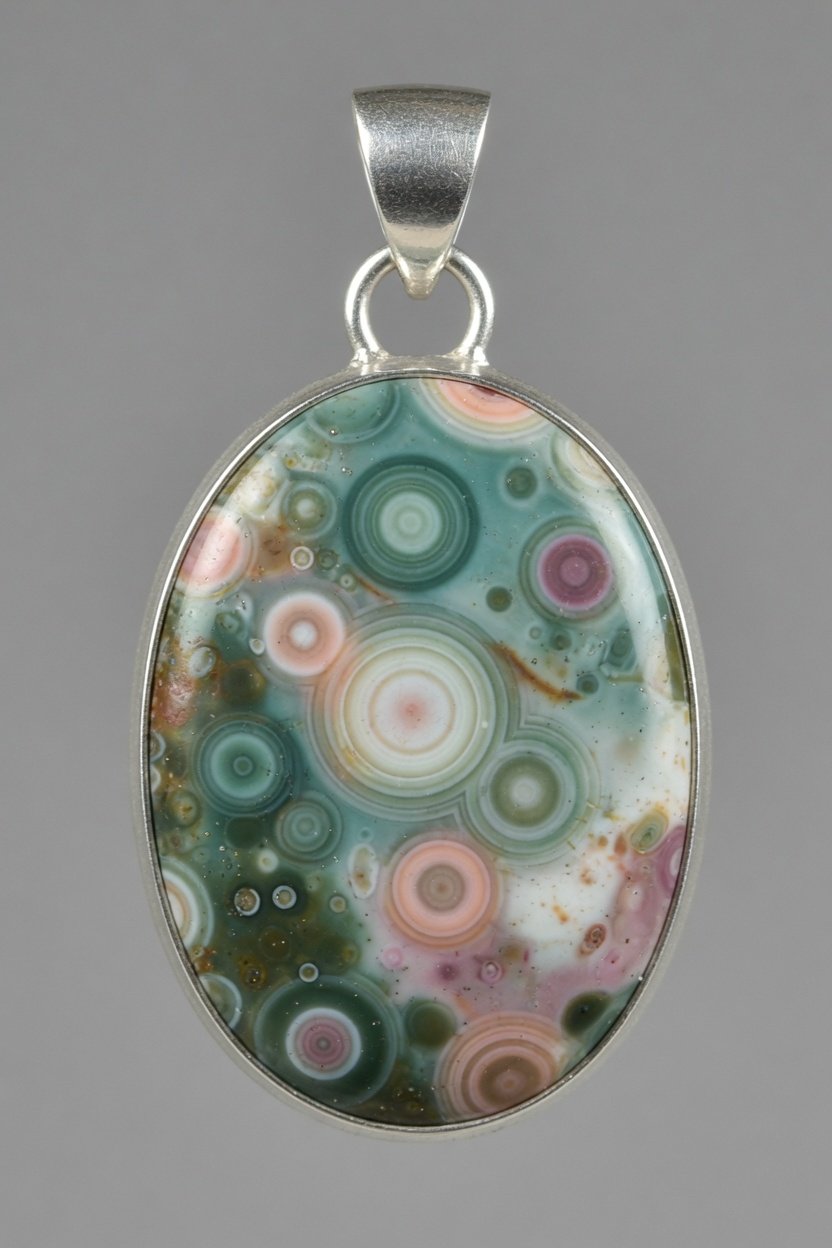
Jasper emerges from the earth like a painted canvas frozen in time, its opaque patterns of swirling reds, creams, and browns whispering of ancient rivers and volcanic fires. This chalcedony variety captivates silversmiths with its grounding presence, inviting the hand to shape raw beauty into wearable art that connects wearer to the land. In the workshop, its story unfolds through careful cutting and setting that honors both the stone’s wild origins and the precision of metalwork.
Physical Properties Jasper is a microcrystalline quartz variety prized for its complete opacity and remarkable durability under the torch. With a Mohs hardness of 6.5–7 and specific gravity around 2.6, it withstands the rigors of silversmithing yet requires thoughtful handling once formed into a cabochon. The stone’s vitreous to dull luster shines only after proper polishing, revealing intricate banding or orbicular patterns without any chatoyancy. Always set the stone after all soldering is complete to protect its surface from heat discoloration or cracking; avoid ultrasonic cleaners and harsh chemicals that can dull its natural finish.
Origin and Sourcing Most commercial jasper reaches the market from deposits in India, where ancient volcanic activity and silica-rich groundwater created vast beds of patterned stone. Miners extract rough material from open-pit sites in regions like Rajasthan and Gujarat, selecting pieces that display strong color contrast and minimal fractures. Ethical sourcing emphasizes small-scale operations that restore the land after extraction, ensuring the stone’s earthy energy remains intact from mine to bench. Silversmiths often seek Indian jasper for its consistent quality and dramatic matrix lines that complement silver’s cool tones.
History and Significance Throughout human history jasper has served as a talisman of protection and endurance, carved by ancient Egyptians into scarabs and by Native American artisans into ceremonial objects. Medieval lapidaries believed the stone strengthened the spirit during long journeys, while Renaissance jewelers prized its ability to hold intricate engravings. Today the stone carries forward this legacy of resilience, reminding wearers of the patient forces that shape both mountains and personal growth over millennia.
In Jewelry and Silversmithing Jasper excels in silver settings that frame its bold patterns without overwhelming them, particularly in bezel mounts that allow light to graze the surface. Silversmiths cut and polish the stone into cabochons before any fabrication begins, then solder the bezel or prongs separately and set the finished stone only after the piece has cooled completely. This sequence prevents thermal shock and preserves the stone’s rich coloration. Care cautions include removing jasper jewelry before swimming in chlorinated pools or applying lotions, as prolonged exposure can etch the surface and diminish its natural depth.
Identifying Jasper in the Field In the field, jasper reveals itself through its weight, opacity, and conchoidal fracture that produces sharp edges rather than the fibrous texture of agate. Collectors test for hardness by attempting a scratch with a steel knife—jasper resists while softer stones yield—and examine broken surfaces for the telltale lack of translucency even at thin edges. Look for earthy matrix or color zoning that remains consistent across the piece; genuine jasper will never show the glassy transparency of clear quartz or the banding that transmits light in chalcedony.
Quick Facts
Common names: Jasper, Picture Jasper, Brecciated Jasper
Chemical formula: SiO₂
Mohs hardness: 6.5–7
Specific gravity: 2.58–2.91
Color: Red, brown, yellow, cream, green with banding or patterns
Crystal system: Trigonal
Luster: Vitreous to dull
Transparency: Opaque
Common cuts: Cabochon, freeform, tumbled
Common treatments: None
Best silver setting: Southwestern Stamped Bezel
Birthstone month (if any): None
Main sources: India, USA, Madagascar
Meaning & Intentions
GROUNDING SHIELD
Jasper anchors scattered energy and creates a protective barrier against external stress, allowing the wearer to remain steady during demanding creative work or emotional turbulence. Silversmiths set the stone in silver to amplify its stabilizing field, placing the finished piece near the workspace so its presence quietly reinforces focus and resilience throughout the day.
Chakra: Root — foundation, security, physical presence INNER VISION
The stone’s intricate patterns encourage quiet observation and insight, helping the wearer notice subtle connections between their inner life and the outer world. When set after soldering, jasper becomes a personal mirror that rewards slow contemplation and supports clear decision-making in both craft and daily life.
Chakra: Third Eye — intuition, perception, mental clarity STEADFAST BOUNDARIES
Jasper strengthens personal limits and supports the courage to maintain healthy boundaries without aggression or withdrawal. Its solid presence in silver jewelry reminds the wearer of their own enduring strength, especially when facing situations that require calm persistence.
Chakra: Root — foundation, security, physical presence Affirmation: "I stand steady, rooted in earth and silver." AT A GLANCE: Chakra: Root Element: Earth Energy: Receptive Zodiac: Virgo Planet: Saturn Affirmation: "I stand steady, rooted in earth and silver."
Video Transcript
In India’s ancient forests this stone forms beside rivers that still shape the tiger’s home. Medieval travelers carried jasper for courage; today we set it only after every joint has cooled. Learn to capture its quiet strength—join our next bezel-setting workshop.
Related Stones
Explore more stones from the Gemstone Library: Tiger's Eye · Jade · GARNET