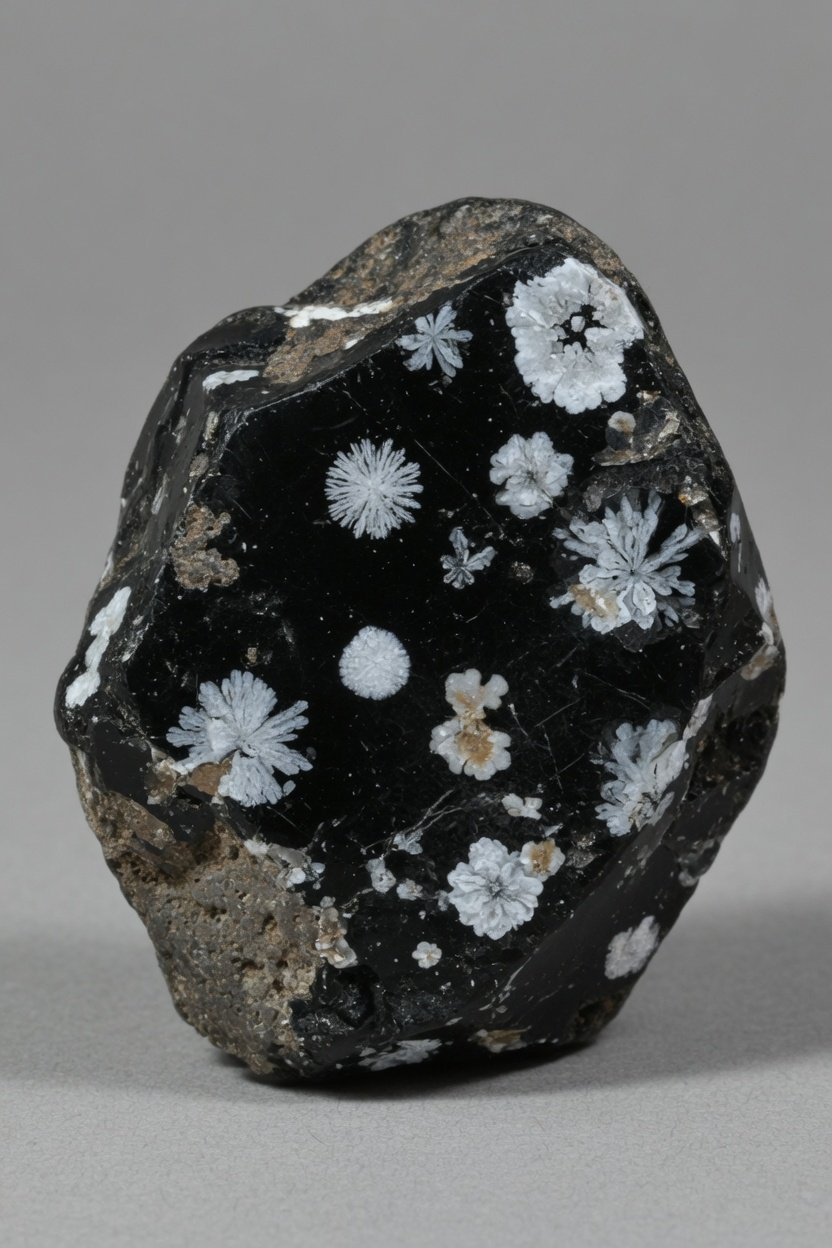
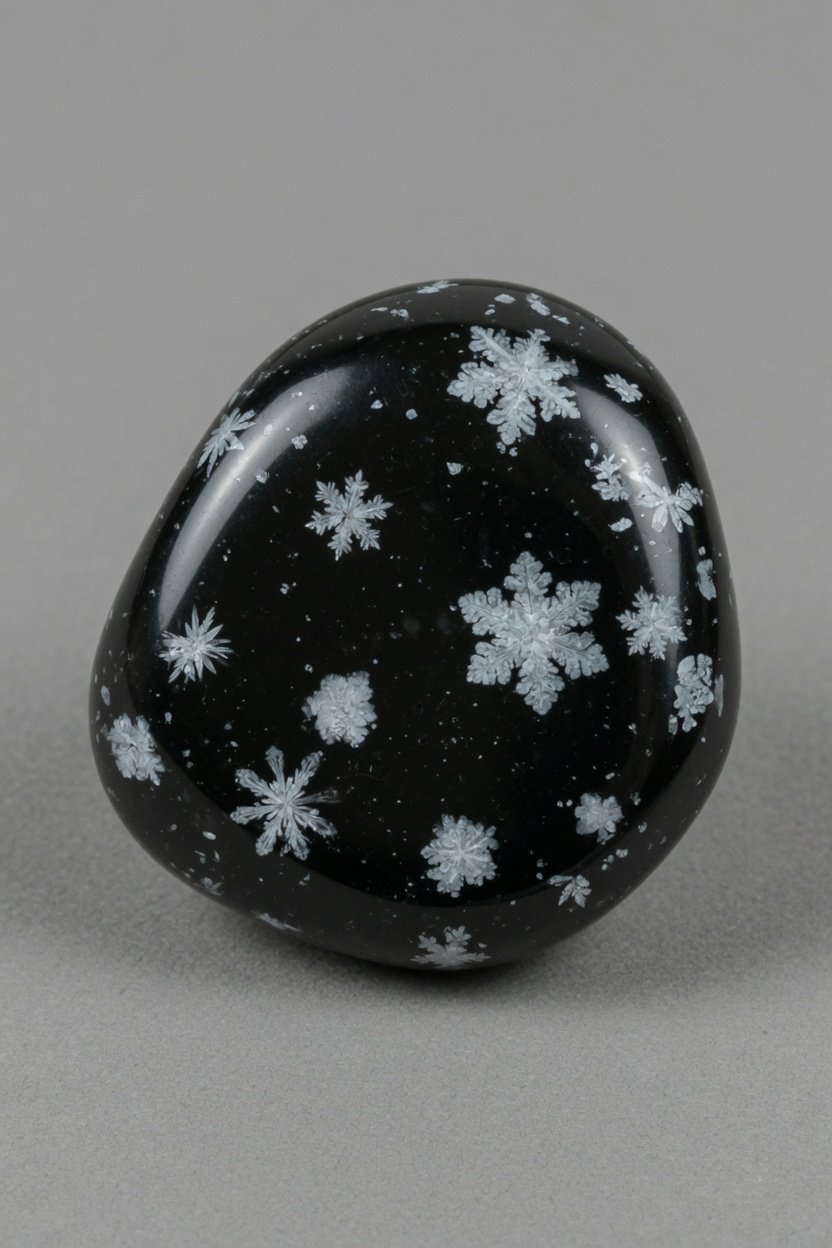
Obsidian forms when molten lava cools so rapidly that crystals never have time to develop, leaving behind a smooth, glass-like material prized for its razor edges and deep, reflective surfaces. This volcanic glass has been shaped into tools and ornaments for millennia, yet its modern appeal in silversmithing lies in the way its dark, glossy planes catch light against polished silver. Setting obsidian requires care because the stone is brittle and heat-sensitive, so it is always set after all soldering is complete to avoid thermal shock or cracking.
Physical Properties Obsidian is an amorphous form of silica rather than a true crystal, giving it a Mohs hardness of 5 to 5.5 and making it softer than quartz yet still workable with proper lapidary technique. Its specific gravity ranges from 2.35 to 2.60, and it displays a distinctive conchoidal fracture that produces curved, shell-like surfaces and extremely sharp edges. The stone is typically opaque with a brilliant vitreous luster, though thin edges may transmit light. Because obsidian can fracture under pressure or sudden temperature change, silversmiths set the stone only after all soldering and annealing steps are finished; prong or bezel settings must be formed with gentle pressure rather than hammering. Care cautions include avoiding ultrasonic cleaners, steam, and prolonged exposure to direct sunlight or extreme heat, which can cause internal stress fractures.
Origin and Sourcing Obsidian occurs wherever silica-rich lava flows cool quickly, most notably in volcanic regions of Mexico, the United States, Iceland, and Turkey. Major deposits form in rhyolitic flows and domes, often appearing as massive boulders or layered flows within older volcanic terrain. Artisanal miners extract the stone by hand from surface outcrops or shallow quarries, selecting pieces free of devitrification or internal fractures. Ethical sourcing emphasizes small-scale operations that avoid heavy machinery and restore worked areas, preserving the surrounding volcanic landscapes.
History and Significance Ancient Mesoamerican cultures knapped obsidian into blades, mirrors, and ceremonial objects, valuing its ability to hold a sharper edge than copper. In the Mediterranean, obsidian from the island of Melos traveled widely through Neolithic trade networks, while Native American groups across the American Southwest used local flows for arrowheads and scrapers. The stone’s dark, mirror-like surface later acquired symbolic weight as a scrying tool in various traditions, though its primary historical role remained practical.
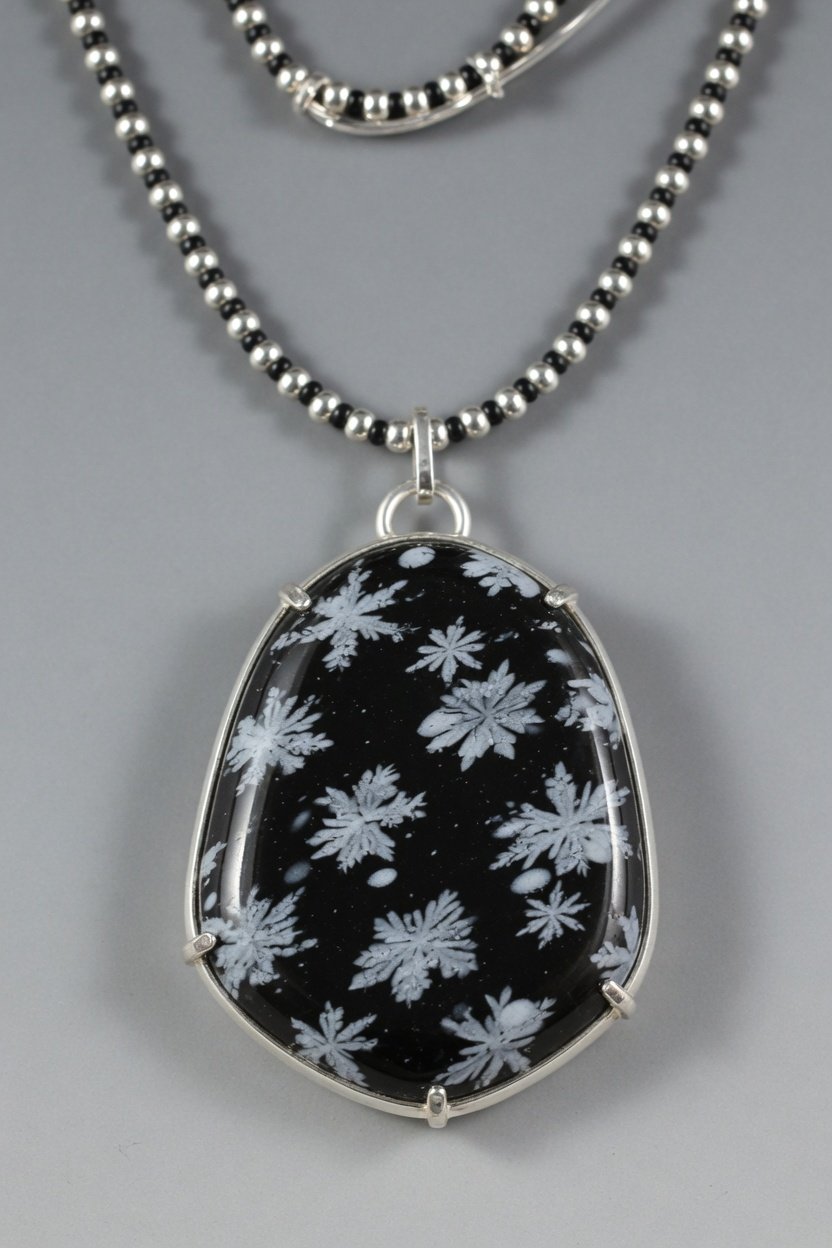
In Jewelry and Silversmithing Silversmiths favor obsidian for cabochons that emphasize its glassy depth and occasional snowflake or sheen patterns. The stone is always set after soldering to prevent cracking from heat; classic bezel settings provide the most secure and protective surround. Contemporary pieces often pair obsidian with sterling silver in bold, minimalist designs that highlight the contrast between dark stone and bright metal. Care cautions remain the same: avoid thermal shock, ultrasonic cleaning, and harsh chemicals that could etch the surface or loosen the setting.
Identifying Obsidian in the Field Fresh obsidian appears as jet-black, glassy nodules or flow-banded masses with a high vitreous sheen and no visible crystal grains. Broken surfaces show pronounced conchoidal ripples and razor edges. Field identification relies on the absence of crystalline structure, the stone’s relative lightness compared with basalt, and its tendency to produce sparks when struck with steel. Collectors test for devitrification by checking whether the material has begun to turn dull or granular over geologic time.
Quick Facts
Common names: Obsidian, Volcanic Glass
Chemical formula: SiO₂ (amorphous)
Mohs hardness: 5–5.5
Specific gravity: 2.35–2.60
Color: Black, smoky, occasionally with rainbow or golden sheen
Crystal system: Amorphous
Luster: Vitreous
Transparency: Opaque to translucent on thin edges
Common cuts: Cabochon, tumbled freeform
Common treatments: None
Best silver setting: Bezel (set after soldering)
Birthstone month (if any): None
Main sources: Mexico, United States, Iceland, Turkey
Meaning & Intentions
PROTECTION
Obsidian is traditionally carried or worn to form a reflective barrier that absorbs and deflects unwanted energies before they reach the wearer. Silversmiths often set large, smooth cabochons in protective bezels so the stone rests directly against the skin, allowing its dense, glassy surface to act as a literal and symbolic shield during daily wear or ritual use.
Chakra: Root — grounding and stabilizing presence CLARITY
The stone’s mirror-like quality is used to promote honest self-examination and to cut through confusion or illusion. When set in silver and worn near the upper body, obsidian is said to sharpen perception and encourage clear decision-making without emotional distortion.
Chakra: Third Eye — insight and focused awareness SECURITY
Obsidian is valued for creating a sense of inner containment and safety, helping the wearer feel anchored during times of change or uncertainty. Set after soldering in a snug bezel, the stone becomes a portable reminder of personal boundaries and emotional steadiness.
Chakra: Root — steady foundation and resilience Affirmation: "I am protected, clear, and securely grounded." AT A GLANCE: Chakra: Root and Third Eye Element: Earth and Fire Energy: Receptive and projective Zodiac: Scorpio, Sagittarius Planet: Saturn and Pluto Affirmation: "I am protected, clear, and securely grounded."
Related Stones
Explore more stones from the Gemstone Library: Tiger's Eye · Agate · Jade