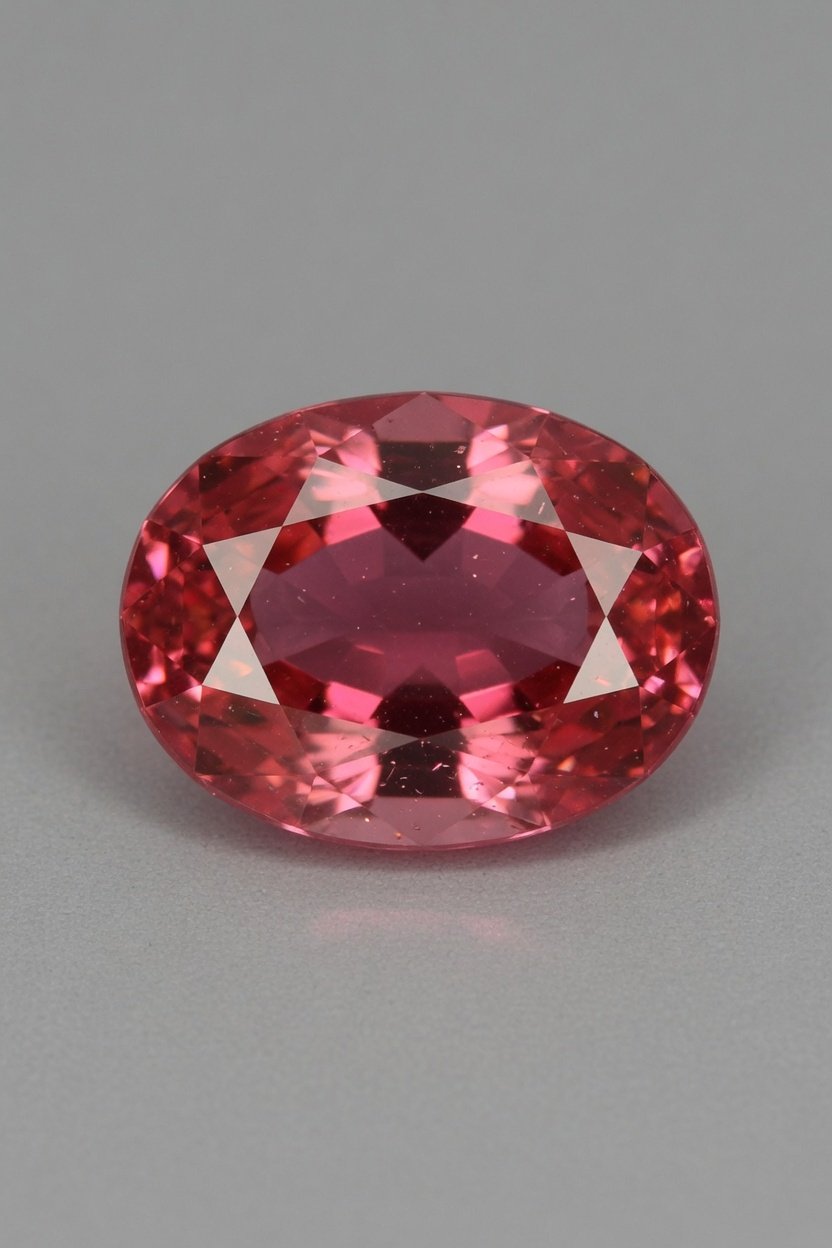
Pezzottaite emerges from the earth as a vivid raspberry-pink to deep red crystal, its cesium-rich chemistry setting it apart from ordinary beryl and giving it an intense, saturated hue that catches light like liquid gemstone. This rare mineral forms in lithium-cesium-tantalum pegmatites, where slow cooling allows its distinctive color and structure to develop over millions of years. Its scarcity and striking appearance have quickly made it a prized find for collectors and silversmiths seeking something beyond standard tourmaline or garnet.
Physical Properties Pezzottaite belongs to the beryl group but incorporates significant cesium, producing a chemical formula of Cs(Be₂Li)Al₂Si₆O₁₈. It registers 8 on the Mohs scale yet exhibits perfect basal cleavage that demands careful handling during cutting and setting. Specific gravity averages 3.10, and its vitreous luster ranges from transparent to translucent. The stone shows strong pleochroism, shifting from pink to violet-red depending on orientation. Always set pezzottaite after all soldering is complete to avoid thermal shock along cleavage planes; prolonged heat above 400 °C can cause fracturing or color loss. Store pieces away from ultrasonic cleaners and sudden temperature changes.
Origin and Sourcing The primary commercial source remains the Sakavalana pegmatite in central Madagascar, where miners extract the mineral from hard-rock veins using controlled blasting and hand sorting. Minor occurrences have been reported in Afghanistan, but Madagascar material dominates the market. Alluvial deposits occasionally yield water-worn crystals, yet most gem-grade rough still comes from primary pegmatite pockets. Ethical sourcing focuses on small-scale operations that limit environmental impact and support local communities through fair wages.
History and Significance Discovered in 2002 and named after mineralogist Francesco Pezzotta, pezzottaite was initially mistaken for red beryl or tourmaline until its cesium content was confirmed. Its brief documented history already includes recognition by the International Mineralogical Association and rapid adoption by high-end gem cutters. In Madagascar, local miners view the stone as a symbol of hidden treasure within ancient rock, while international collectors prize it for both rarity and the scientific story it tells about pegmatite evolution.
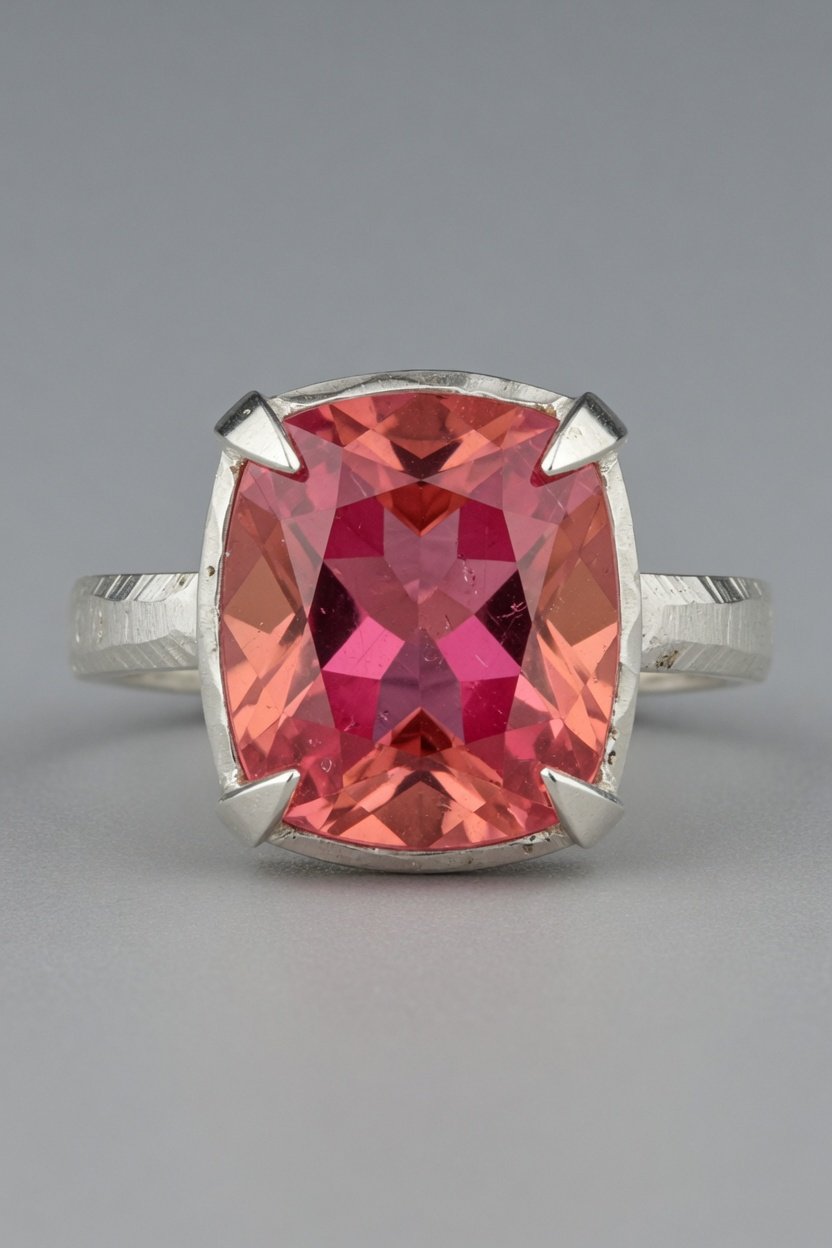
In Jewelry and Silversmithing Silversmiths favor pezzottaite for statement rings and pendants where its saturated color contrasts beautifully with oxidized silver. Its hardness allows crisp faceting, yet the perfect cleavage requires orienting the table perpendicular to the c-axis to minimize risk. After fabrication and soldering, the stone is set cold using prongs or a protective bezel. Avoid prolonged torch exposure during any repair; instead, use low-temperature methods or remove the stone entirely. Finished pieces benefit from periodic inspection of prongs to prevent accidental knocks along cleavage directions.
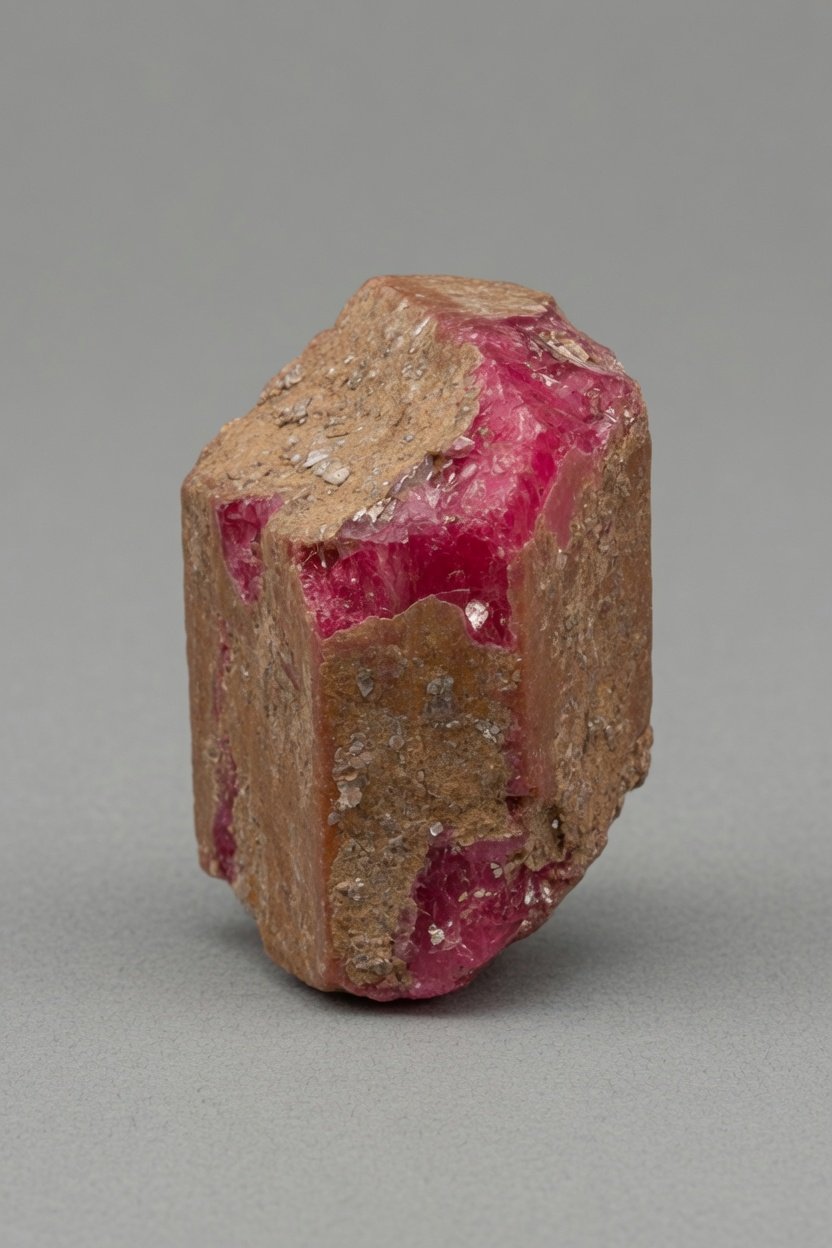
Identifying Pezzottaite in the Field In rough form, pezzottaite appears as stubby hexagonal prisms with a distinctive raspberry-pink interior beneath a weathered crust. Streak is white, and refractive index readings near 1.60–1.62 help separate it from similar pink tourmaline. Under magnification, tiny fluid inclusions and growth zoning are common. A simple flame test is unreliable; instead, rely on specific gravity and cesium detection via spectroscopy when available. Always confirm locality documentation, as misidentified red beryl occasionally enters the market.
Quick Facts
Common names: Pezzottaite, raspberry beryl, cesium beryl
Chemical formula: Cs(Be₂Li)Al₂Si₆O₁₈
Mohs hardness: 8
Specific gravity: 3.10
Color: Raspberry pink to deep red
Crystal system: Trigonal
Luster: Vitreous
Transparency: Transparent to translucent
Common cuts: Faceted oval, cushion, round
Common treatments: None
Best silver setting: Contemporary Prong Ring
Birthstone month (if any): None
Main sources: Madagascar (primary), Afghanistan
Meaning & Intentions
CLARITY
Pezzottaite supports mental clarity by encouraging focused observation and steady decision-making during complex creative work. Silversmiths place the stone on the bench while planning designs, allowing its saturated color to anchor attention and reduce distraction from scattered ideas. The mineral’s cesium content is traditionally linked to stabilizing scattered thoughts into coherent action.
Chakra: Third Eye — insight and focused perception INSIGHT
Wearing pezzottaite is said to heighten intuitive insight, helping the wearer notice subtle patterns in both materials and relationships. In meditation, the stone is held briefly before beginning a new project so its pink-red glow can quietly illuminate overlooked details. This intention draws on the mineral’s rarity as a reminder that deeper understanding often lies beneath the surface.
Chakra: Third Eye — intuitive vision and pattern recognition PROTECTION
Pezzottaite is used for energetic protection, creating a perceived boundary around the wearer’s creative energy during demanding fabrication sessions. Artisans keep a small specimen nearby when working with new techniques, trusting its presence to ward off external doubts. The stone’s hardness and rarity reinforce a sense of safeguarded focus.
Chakra: Root — grounded security and energetic boundaries Affirmation: "I see clearly and create with steady purpose." AT A GLANCE: Chakra: Third Eye Element: Air Energy: Receptive Zodiac: Aquarius Planet: Uranus Affirmation: "I see clearly and create with steady purpose."
Related Stones
Explore more stones from the Gemstone Library: Fluorite · Iolite · Scapolite