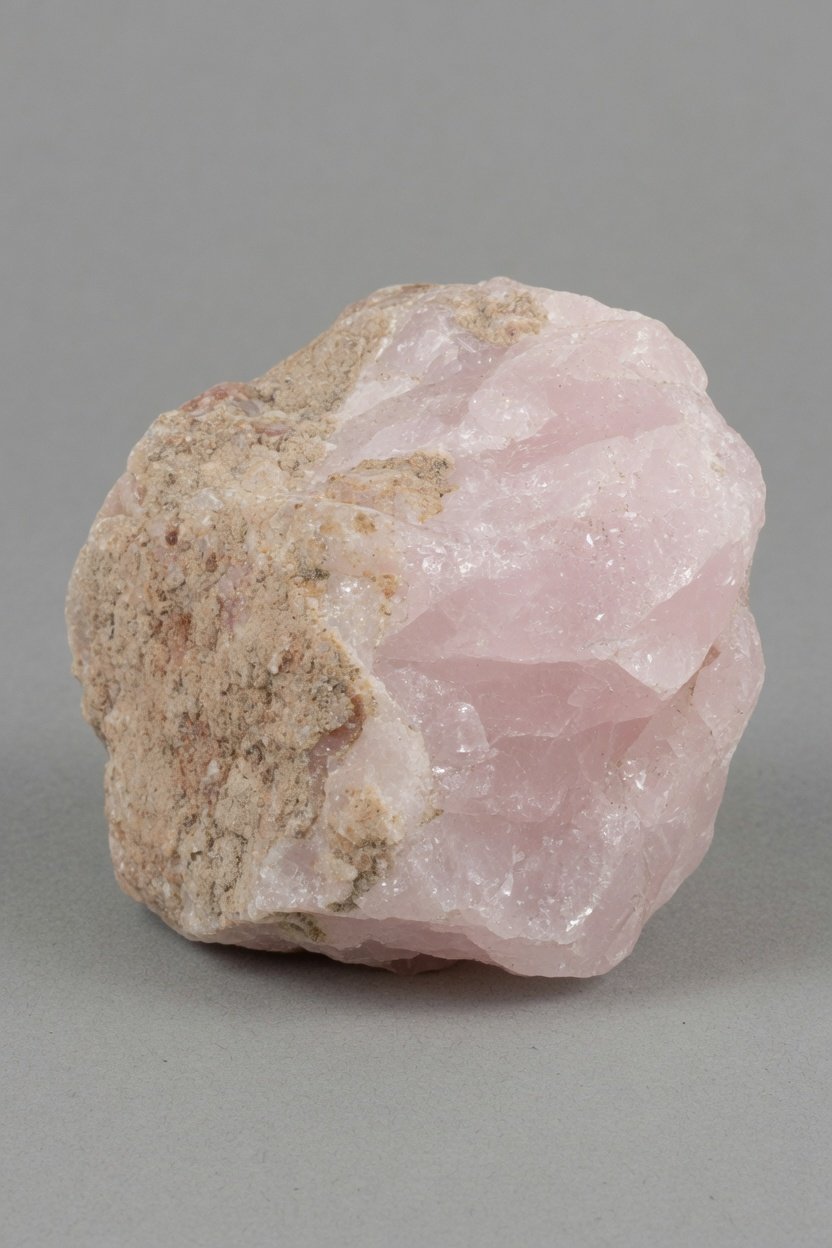
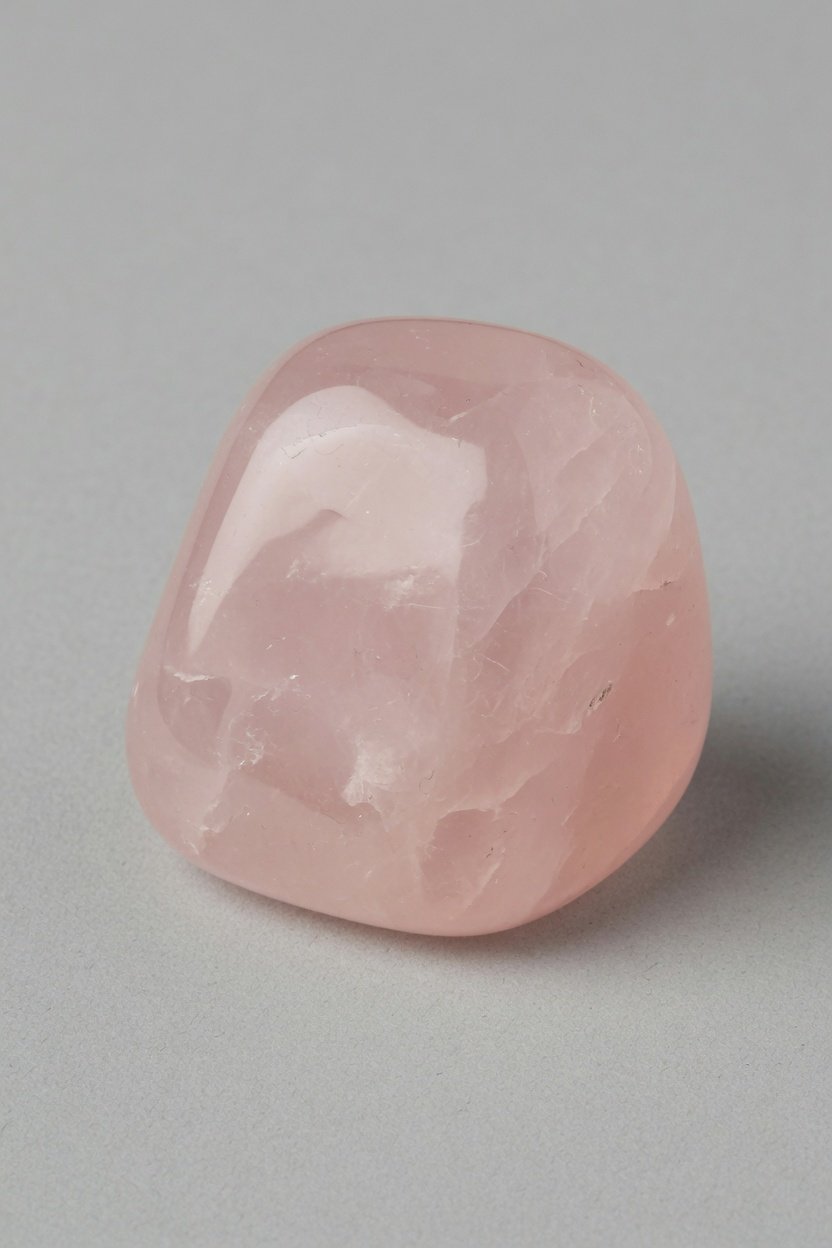
Quartz emerges from the earth as one of nature’s most abundant yet versatile minerals, its transparent hexagonal crystals catching light like frozen water in the rough. Formed deep within the planet’s crust over millions of years, this silicon dioxide gem has captivated artisans and collectors alike with its clarity and strength. Silversmithing schools prize it for both its durability and its ability to showcase fine metalwork once properly set.
Physical Properties Quartz registers 7 on the Mohs scale, giving it excellent resistance to scratching while remaining workable with standard lapidary tools. Its specific gravity of 2.65 produces a satisfying heft in the hand, and its vitreous luster delivers a glass-like brilliance after polishing. The mineral occurs in the trigonal crystal system, often forming six-sided prisms that terminate in pyramids. Color ranges from completely colorless rock crystal through smoky, milky, and faintly tinted varieties, all exhibiting conchoidal fracture and no true cleavage. In jewelry, always set the stone after all soldering is complete to avoid thermal shock; store pieces separately to prevent abrasion from harder gems.
Origin and Sourcing Major deposits stretch across Brazil’s Minas Gerais region, Madagascar’s pegmatite fields, the Arkansas quartz belt in the United States, and the alpine veins of Switzerland. Most commercial material is recovered from open-pit or hard-rock operations where miners follow crystal-lined pockets in granite and metamorphic rock. Alluvial deposits in river gravels also yield rounded crystals after natural tumbling. Ethical sourcing programs now track Brazilian and Madagascan material to ensure fair labor practices and minimal environmental impact.
History and Significance Ancient civilizations revered quartz for its supposed ability to focus intent and store energy. Roman and Egyptian artisans carved seals and amulets from clear crystals, while medieval Europeans fashioned crystal balls for divination. In the 19th century, optical-grade quartz became essential for early radio oscillators and precision lenses. Today the stone remains a symbol of clarity and endurance, its long formation story reminding makers that patience yields lasting results.
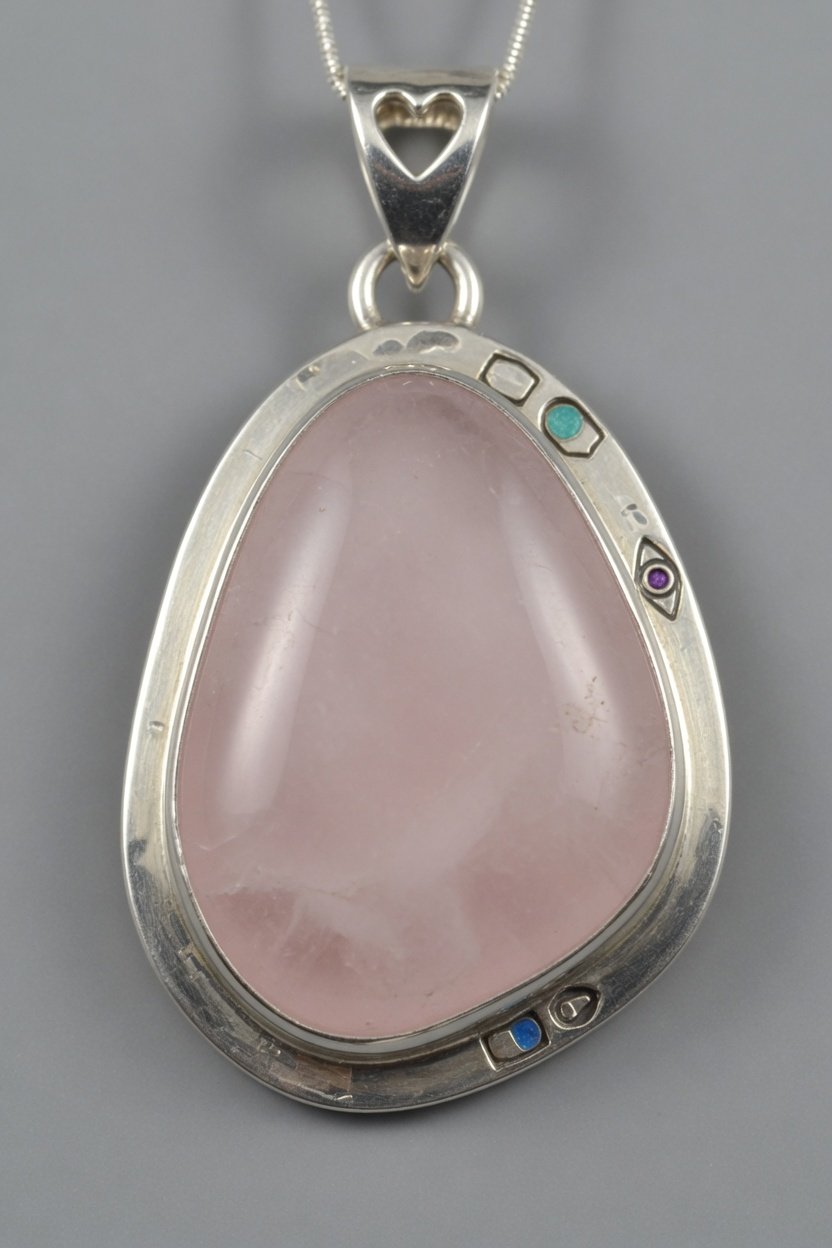
In Jewelry and Silversmithing Quartz accepts a high polish that highlights crisp facet edges or smooth cabochon domes, making it ideal for both statement and everyday pieces. Its hardness allows delicate engraving and clean bezel or prong work without chipping. Silversmiths frequently pair colorless quartz with oxidized silver to create dramatic contrast. Always set the stone after all soldering is complete; avoid prolonged torch exposure that could cause internal fracturing from rapid temperature change. Clean finished jewelry with mild soap and a soft brush, never with ultrasonic cleaners that risk loosening inclusions.
Identifying Quartz in the Field Look for hexagonal prisms with striations running perpendicular to the c-axis and a distinctive conchoidal fracture that produces curved, shell-like surfaces. Hardness testing with a steel file leaves no mark, while a quick streak test on unglazed porcelain yields white powder. In sunlight, clear specimens produce rainbow refractions along internal planes, and the presence of fluid inclusions or phantom growth lines confirms natural origin over glass imitations.
Quick Facts
Common names: Quartz, Rock Crystal, Clear Quartz
Chemical formula: SiO₂
Mohs hardness: 7
Specific gravity: 2.65
Color: Colorless to white, occasionally smoky or faintly tinted
Crystal system: Trigonal
Luster: Vitreous
Transparency: Transparent to translucent
Common cuts: Faceted, cabochon, tumbled freeform, beads
Common treatments: Heat treatment for color enhancement in some varieties
Best silver setting: Bezel or prong in sterling silver
Birthstone month (if any): April (alternative)
Main sources: Brazil, Madagascar, United States, China
Meaning & Intentions
CLARITY
Quartz is traditionally used to sharpen mental focus and dispel confusion during creative or decision-making work. Silversmiths often keep a clear specimen on the bench to maintain steady concentration while filing and setting. The stone’s transparency is believed to mirror an uncluttered mind, helping artisans see fine details more precisely.
Chakra: Crown — connection to higher awareness
AMPLIFICATION
Quartz is said to magnify the energy of surrounding stones and intentions, making it a staple in ritual or meditative jewelry. When set in silver, the metal’s conductivity is thought to enhance this effect, turning a simple pendant into a focal point for personal growth practices.
Chakra: All chakras — energy balancing
PROTECTION
Quartz is valued for creating an energetic buffer against negativity, especially when worn close to the body. Artisans incorporate it into protective talismans for travelers or those working in demanding environments, trusting its hardness to symbolize enduring strength.
Chakra: Root — grounding and stability
Affirmation: "I see clearly and hold steady." AT A GLANCE: Chakra: Crown Element: Storm Energy: Amplifying Zodiac: All signs Planet: Sun Affirmation: "I see clearly and hold steady."
Related Stones
Explore more stones from the Gemstone Library: Rutilated Quartz · Danburite · Diamond