Rose Quartz emerges from the earth in gentle shades that immediately draw the eye, its translucent pink glow hinting at quiet strength beneath a soft surface. This variety of quartz forms in massive deposits rather than sharp crystals, creating a material that silversmiths prize for its workable yet delicate nature. Its presence in jewelry often signals care and intention, inviting wearers to handle it with awareness of its unique properties.
Physical Properties Rose Quartz registers 7 on the Mohs scale, giving it respectable durability for everyday wear while remaining softer than many transparent gems. Its chemical makeup is silicon dioxide with traces of titanium, iron, or manganese that produce the characteristic pink hue, and its specific gravity hovers near 2.65. The stone displays a vitreous to slightly waxy luster and ranges from translucent to nearly opaque, often showing subtle fibrous patterns or star effects in larger pieces. Because it contains microscopic inclusions that can create internal stress, Rose Quartz must always be set after all soldering is complete to avoid heat damage that could cause cracking or color fading; avoid prolonged exposure to direct sunlight or ultrasonic cleaners as well.
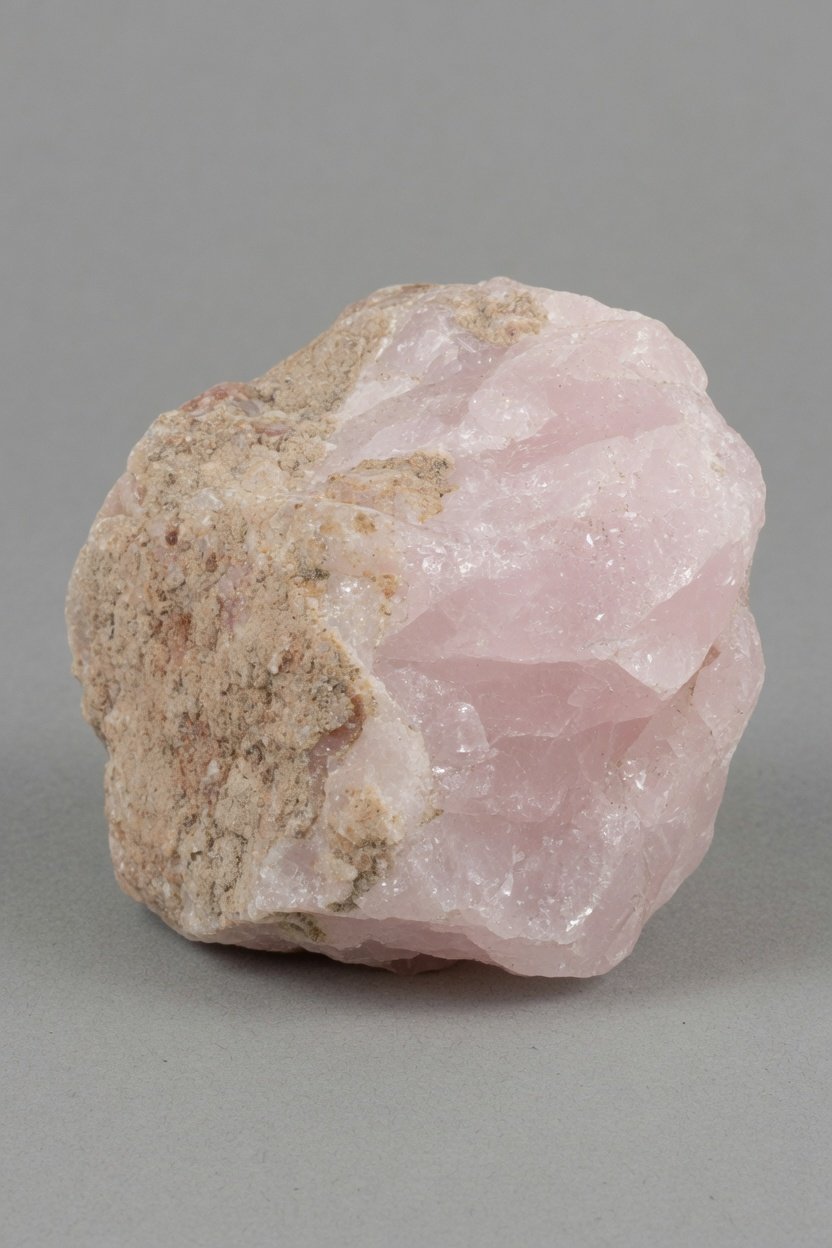
Origin and Sourcing Major deposits occur in Brazil, Madagascar, and South Dakota, where the mineral fills fractures in pegmatites or forms in massive veins within granite. Brazilian material often arrives in large, clean blocks suitable for carving, while Madagascan specimens frequently exhibit deeper rose tones and occasional asterism. Extraction typically involves open-pit methods that expose broad benches of weathered rock, allowing careful removal of matrix-covered chunks before transport to lapidary workshops.
History and Significance Ancient civilizations valued Rose Quartz for its soothing appearance, with carvings appearing in Mesopotamian tombs and Roman jewelry from the first century. Indigenous cultures in North America incorporated the stone into ceremonial objects believed to promote emotional balance. European lapidaries of the Renaissance period used it in seals and cameos, appreciating how the pink tone contrasted with silver settings. Modern metaphysical traditions continue this thread, associating the mineral with compassion and relational healing across diverse cultural lineages.
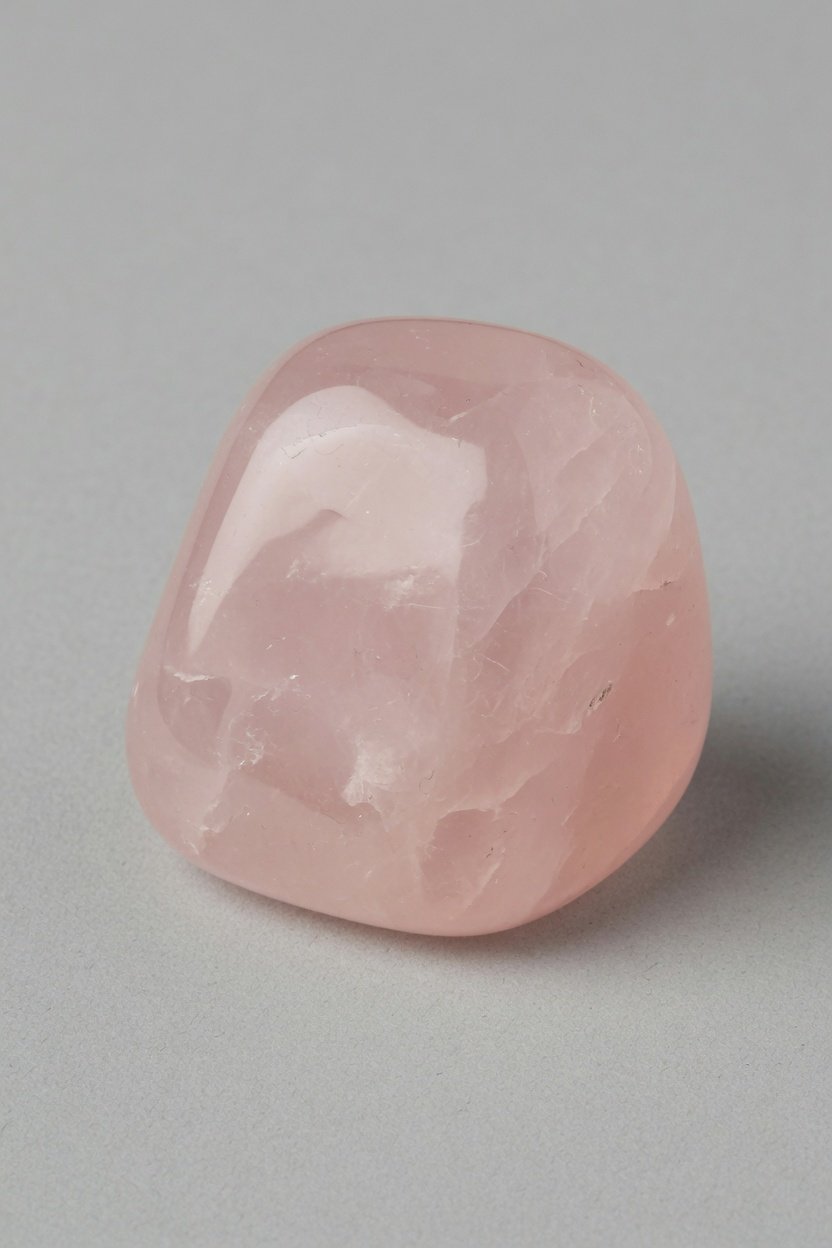
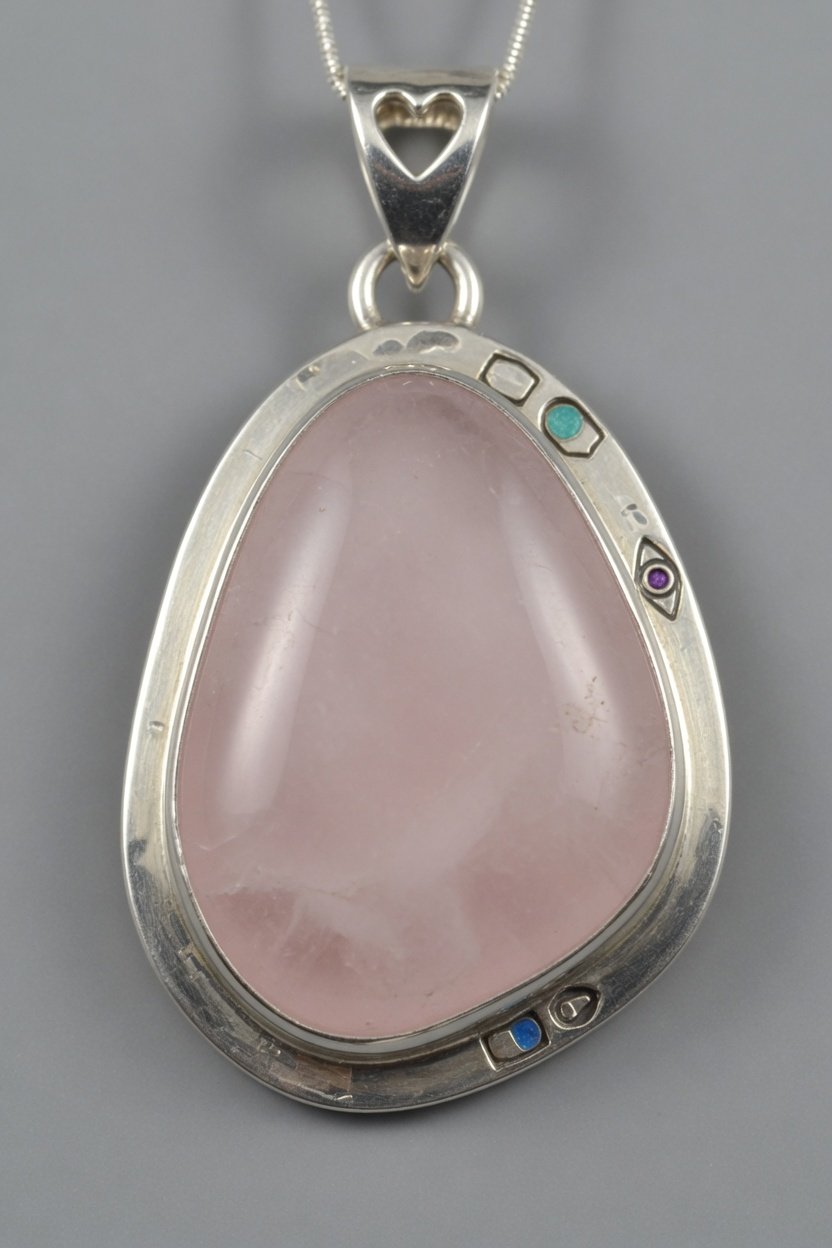
In Jewelry and Silversmithing Silversmiths favor Rose Quartz for cabochons and freeform shapes that highlight its soft color against polished metal. The stone’s moderate toughness makes it suitable for bezel settings that protect the edges while allowing light to pass through the material. Because heat from torches can alter its inclusions and produce white fractures, every piece must be fully soldered and cooled before the stone is seated; gentle polishing with non-abrasive compounds preserves the natural luster without scratching the surface. Care cautions include removing jewelry during heavy physical work to prevent chips along any natural fractures.
Identifying Rose Quartz in the Field In outcrops, Rose Quartz appears as rounded masses or vein fillings with a distinctive sugary texture and pale pink to lavender coloration that deepens slightly when wet. Collectors distinguish it from other pink minerals by its hardness test against glass and the absence of cleavage planes common in feldspars. Matrix often includes white feldspar or smoky quartz, providing visual contrast that confirms the specimen’s identity before removal.
Quick Facts
Common names: Rose Quartz, Pink Quartz
Chemical formula: SiO₂
Mohs hardness: 7
Specific gravity: 2.65
Color: Pale to medium pink, sometimes with asterism
Crystal system: Trigonal
Luster: Vitreous to waxy
Transparency: Translucent to opaque
Common cuts: Cabochon, tumbled freeform
Common treatments: None typical; occasional dyeing
Best silver setting: Bezel
Birthstone month (if any): None assigned
Main sources: Brazil, Madagascar, South Dakota
Meaning & Intentions
EMOTIONAL HEALING
Rose Quartz supports release of stored tension by encouraging steady reflection on past experiences. Silversmiths set the stone in heart-centered pendants that rest against the chest, allowing daily contact to reinforce a calm internal dialogue. The material’s gentle translucency visually reminds the wearer of gradual softening around old hurts.
Chakra: Heart — center of compassion and relational openness SELF-ACCEPTANCE
Wearing Rose Quartz helps quiet self-critical thoughts by offering a tangible symbol of unconditional regard. Artisans often choose rounded cabochons that mirror the stone’s natural softness, creating pieces that invite wearers to view themselves with similar gentleness during moments of doubt.
Chakra: Heart — center of compassion and relational openness RELATIONAL HARMONY
Rose Quartz strengthens interpersonal bonds by fostering patience and clear communication when set into matching jewelry for partners or friends. Its stable pink tone serves as a visible anchor during conversations, reminding users to approach conflict with measured responses rather than reactive patterns.
Chakra: Heart — center of compassion and relational openness Affirmation: "I welcome softness as a form of strength." AT A GLANCE: Chakra: Heart Element: Water Energy: Receptive Zodiac: Taurus, Libra Planet: Venus Affirmation: "I welcome softness as a form of strength."
Related Stones
Explore more stones from the Gemstone Library: Kunzite · Morganite · Emerald