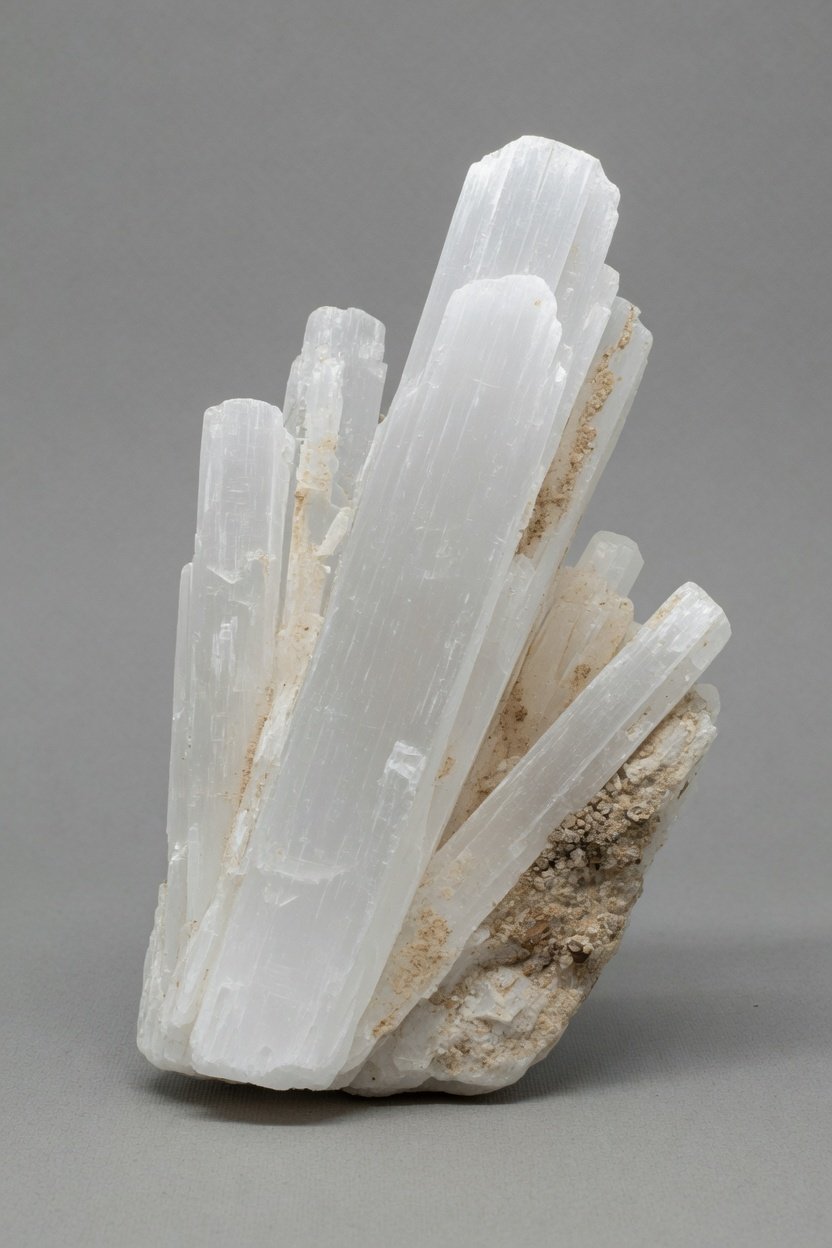
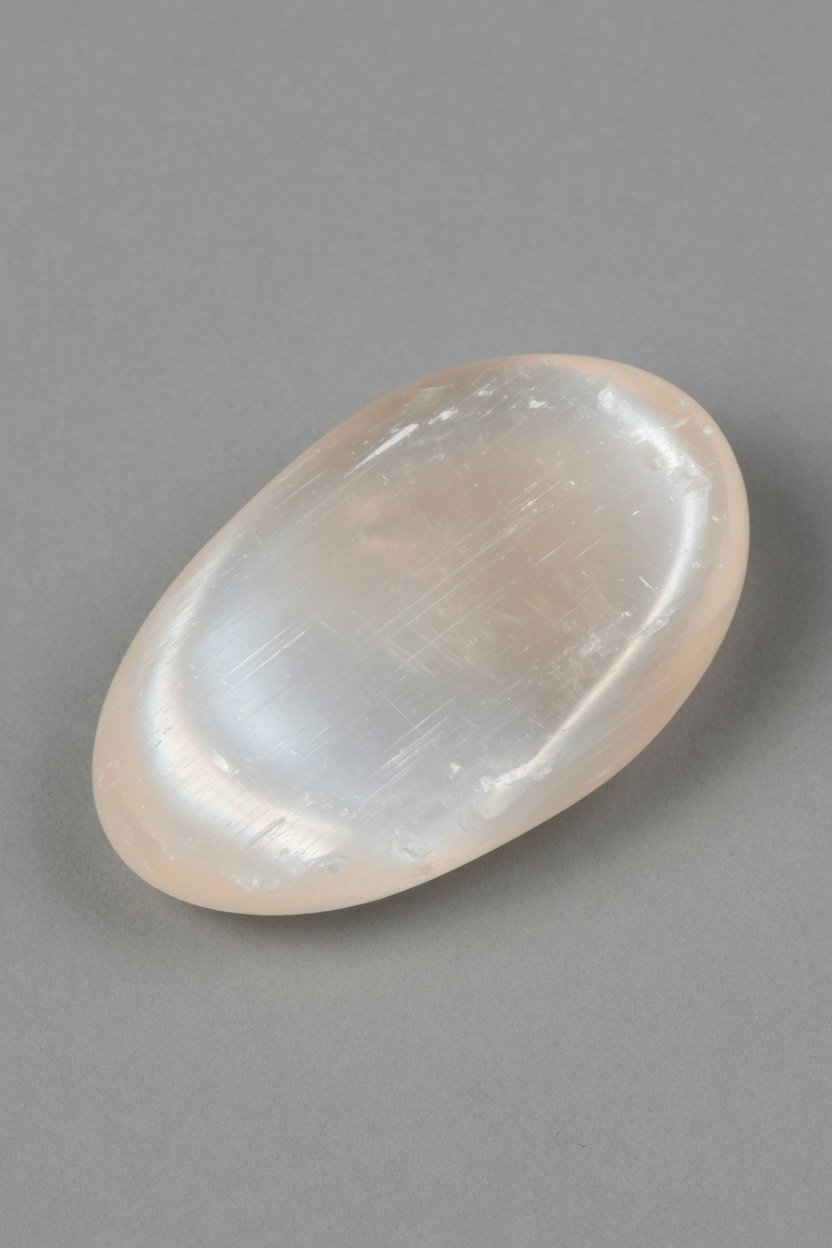
Selenite emerges from the earth as slender blades that catch and scatter light like frozen moonlight, its fibrous structure revealing an inner glow that has captivated collectors and artisans for centuries. This delicate gypsum variety forms in evaporative environments where water once pooled and vanished, leaving behind crystals that feel almost weightless yet carry profound visual depth. Silversmiths prize it for its ability to lend an ethereal quality to finished pieces, provided the stone is set only after all soldering and heat work is complete.
Physical Properties Selenite registers just 2 on the Mohs scale, making it one of the softest minerals used in jewelry and requiring extreme care during every stage of handling. Its chemical makeup includes two water molecules per formula unit, rendering the stone both heat-sensitive and water-soluble; prolonged exposure to moisture can cause clouding or surface etching. Specific gravity hovers near 2.3, and the mineral displays perfect cleavage in one direction that produces thin, flexible sheets when worked. Luster ranges from vitreous on fresh faces to a silky, pearly sheen along fibrous zones, while transparency varies from fully clear to milky translucent. Because of these traits, selenite must be set after all soldering operations are finished and cooled; direct flame or ultrasonic cleaning will damage the stone irreversibly.
Origin and Sourcing Primary commercial deposits lie in Mexico’s Naica and surrounding districts, Morocco’s Atlas Mountains, and the American Southwest, where selenite forms in evaporite basins or as cavity fillings within limestone. Mexican material often appears as large, transparent blades or “windows,” while Moroccan specimens frequently exhibit the classic fibrous “satin spar” habit prized for its chatoyant glow. Extraction typically involves careful hand digging in open-pit or shallow underground workings to avoid fracturing the fragile crystals. Rough is then sorted on-site, wrapped in protective cloth, and shipped to lapidaries who stabilize the pieces before any cutting or polishing occurs.
History and Significance Ancient Egyptians carved selenite into ritual objects and amulets, believing its luminous quality connected the wearer to lunar deities. In medieval Europe the mineral was ground into powders for medicinal salves, and Native American peoples of the Southwest incorporated it into ceremonial objects meant to clear stagnant energy. Victorian-era mineralogists named it after the Greek moon goddess Selene because of the way polished surfaces reflected soft white light. Throughout these cultures the stone symbolized purity and mental clarity, associations that persist among modern crystal workers.
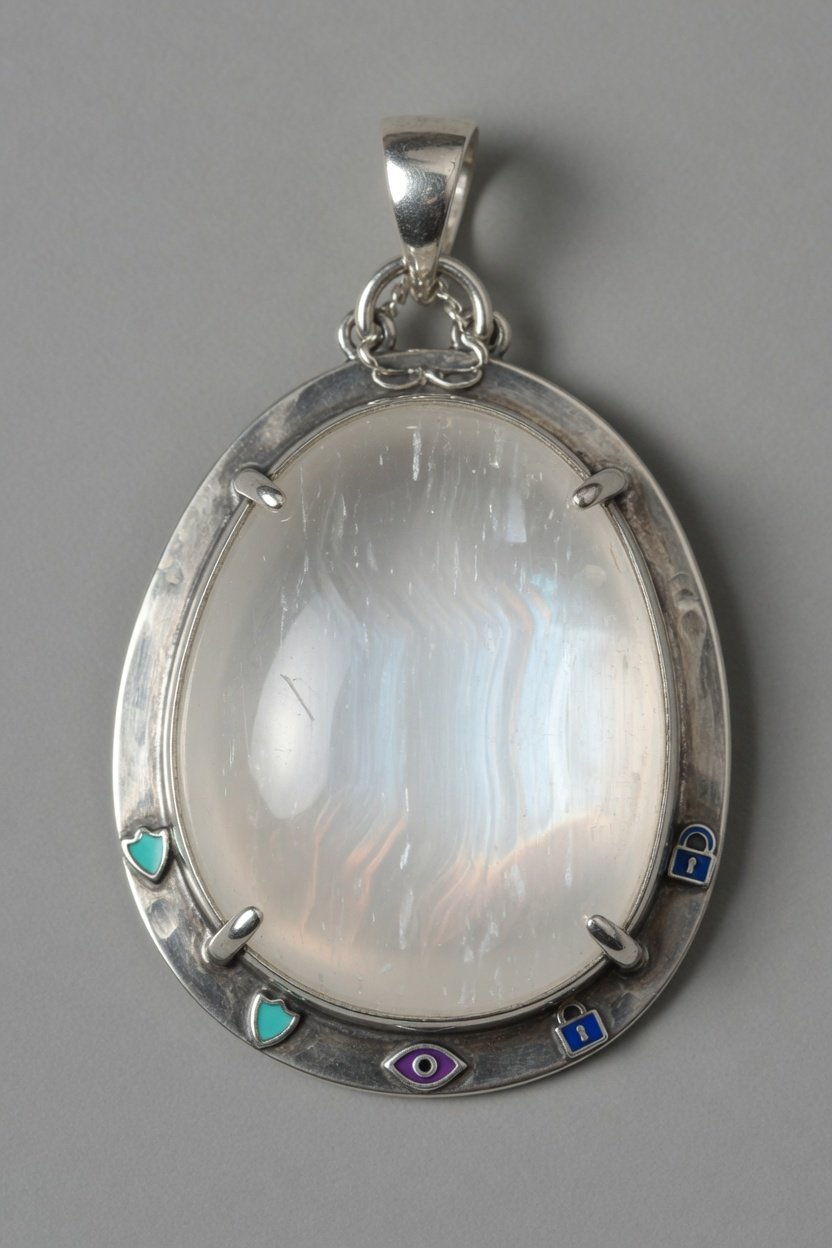
In Jewelry and Silversmithing Selenite’s low hardness limits it to protective settings such as bezels or gentle prongs that shield the edges from wear. Artisans often orient fibrous material to maximize the silky chatoyancy across the face of a cabochon or freeform. Because the stone contains structural water, it must be set after all soldering is complete and the piece has cooled to room temperature; even brief exposure to a torch will cause internal cracking or dehydration. Daily wear should avoid contact with water, lotions, or ultrasonic cleaners; a soft cloth wipe is sufficient to maintain its luster. When properly cared for, selenite adds a distinctive, moonlit accent to silver designs.
Identifying Selenite in the Field In outcrops, selenite appears as colorless to white tabular or fibrous crystals with a distinctive pearly sheen and perfect cleavage that allows thin sheets to peel away. Hardness testing with a copper penny will leave a mark, confirming its softness, while a drop of water on an inconspicuous area will slowly absorb rather than bead up. The fibrous variety shows a cat’s-eye effect when polished across the grain, distinguishing it from similar-looking calcite or quartz. Always test in an inconspicuous spot and remember that any heat or prolonged moisture will alter the specimen.
Quick Facts
Common names: Selenite, Satin Spar, Gypsum
Chemical formula: CaSO4·2H2O
Mohs hardness: 2
Specific gravity: 2.3
Color: Colorless to white, occasionally pale tints
Crystal system: Monoclinic
Luster: Vitreous to pearly
Transparency: Transparent to translucent
Common cuts: Tumbled freeform, cabochon, carved
Common treatments: None typical
Best silver setting: Bezel or protective frame
Birthstone month (if any): None
Main sources: Mexico, Morocco, United States
Meaning & Intentions
CLARITY
Selenite is traditionally used to sweep away mental fog and promote clear decision-making. Artisans set the stone in a simple silver frame so the wearer can gaze into its fibrous depths during moments of reflection, allowing the mineral’s natural light play to anchor attention. The cool, luminous surface acts as a visual cue to release scattered thoughts and return to focused presence.
Chakra: Crown — connection to higher awareness VISION
Practitioners carry or wear selenite to sharpen intuitive sight and illuminate hidden patterns in daily life. The stone’s translucent layers are said to act like a lens, helping users notice subtle energies or opportunities that might otherwise pass unseen. When placed on a desk or altar, the mineral’s steady glow serves as a reminder to trust inner perception.
Chakra: Third Eye — insight and perception PROTECTION
Selenite is valued for creating a gentle energetic boundary around the wearer, shielding against external negativity while remaining soft rather than aggressive. Silver settings enhance this effect by grounding the stone’s light in a durable metal frame that can be worn daily. Users report feeling calmer and more centered when the piece rests against the skin.
Chakra: Root — stability and grounding Affirmation: "I release what no longer serves and welcome clear light." AT A GLANCE: Chakra: Crown Element: Air Energy: Receptive Zodiac: Cancer Planet: Moon Affirmation: "I release what no longer serves and welcome clear light."
Related Stones
Explore more stones from the Gemstone Library: Danburite · Rock Crystal (Clear Quartz) · Rutilated Quartz