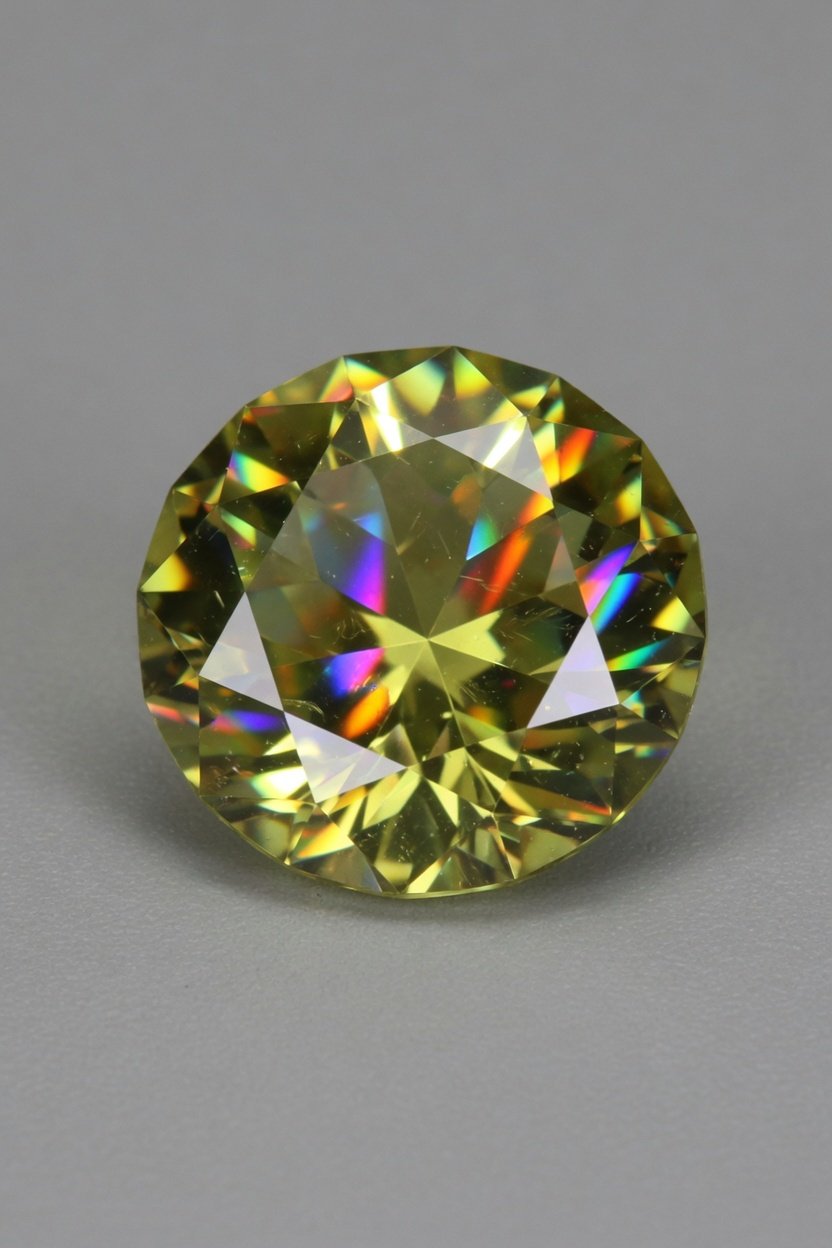
Sphene catches the eye with its diamond-like fire trapped inside a warm green or golden body, flashing intense spectral colors at every turn of the stone. This rare titanium silicate rewards the patient silversmith who understands its limits and celebrates its brilliance once properly set.
Physical Properties Sphene, also called titanite, registers 5 to 5.5 on the Mohs scale and possesses perfect cleavage in one direction, making it vulnerable to sharp impacts. Its specific gravity ranges from 3.48 to 3.60, and the mineral exhibits extreme dispersion that produces vivid rainbow flashes even in modest sizes. The crystal system is monoclinic, commonly forming wedge-shaped or tabular crystals with an adamantine to resinous luster. Transparency varies from transparent to translucent, and the stone is doubly refractive with a high birefringence that can create doubling of facet edges under magnification. Because of its modest hardness and pronounced cleavage, every finished sphene must be set only after all soldering and heat work on the silver piece is complete; exposure to torch temperatures risks cracking along cleavage planes. Daily wear requires protection from knocks, and ultrasonic or steam cleaners should be avoided.
Origin and Sourcing Primary commercial sources include Madagascar’s pegmatites, the Ural Mountains of Russia, Pakistan’s alpine clefts, Brazil’s alluvial gravels, and smaller deposits in Canada and Mexico. Most gem-grade sphene is recovered from weathered pegmatites or alluvial fans where crystals survive transport. Rough is typically hand-sorted at the source to preserve the few transparent pieces suitable for faceting.
History and Significance Named in 1822 from the Greek word for wedge, sphene remained largely a collector’s curiosity until the late twentieth century when lapidaries began cutting it specifically to exploit its dispersion. Earlier references sometimes called it “greenite” or simply titanite. Its optical properties were first quantified in European mineralogical journals, yet it never achieved the popularity of tourmaline or garnet because of its fragility and limited supply of clean rough.
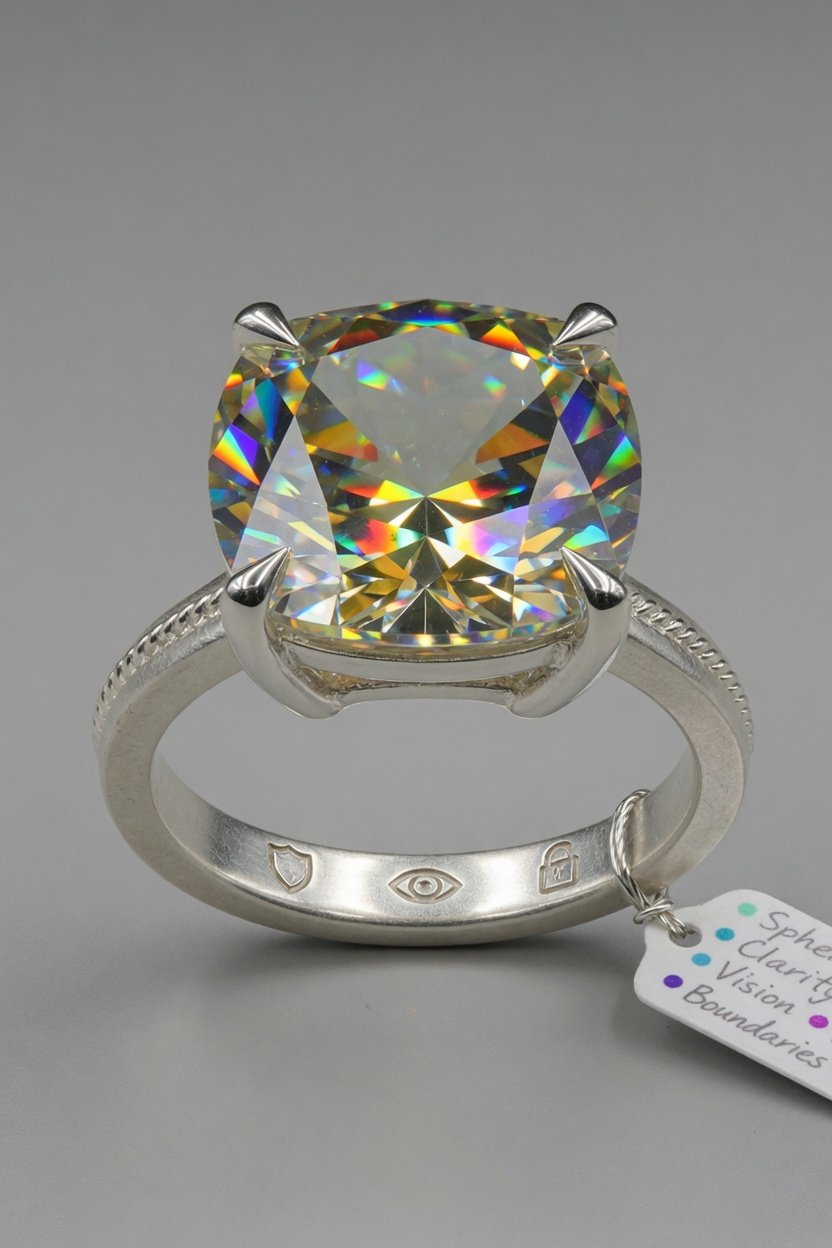
In Jewelry and Silversmithing Contemporary silversmiths favor sphene for one-of-a-kind rings and pendants where its fire can be shown against oxidized or satin-finished silver. The stone’s warm green-to-golden palette pairs especially well with reticulated or textured silver that echoes natural crystal faces. Because cleavage planes can open under thermal shock, the finished piece is never placed in a setting until all soldering, annealing, and polishing steps are finished. Prong or bezel settings that cushion the girdle are preferred; tension settings are avoided. A final rinse in mild soap and water followed by thorough drying is the only routine care required.
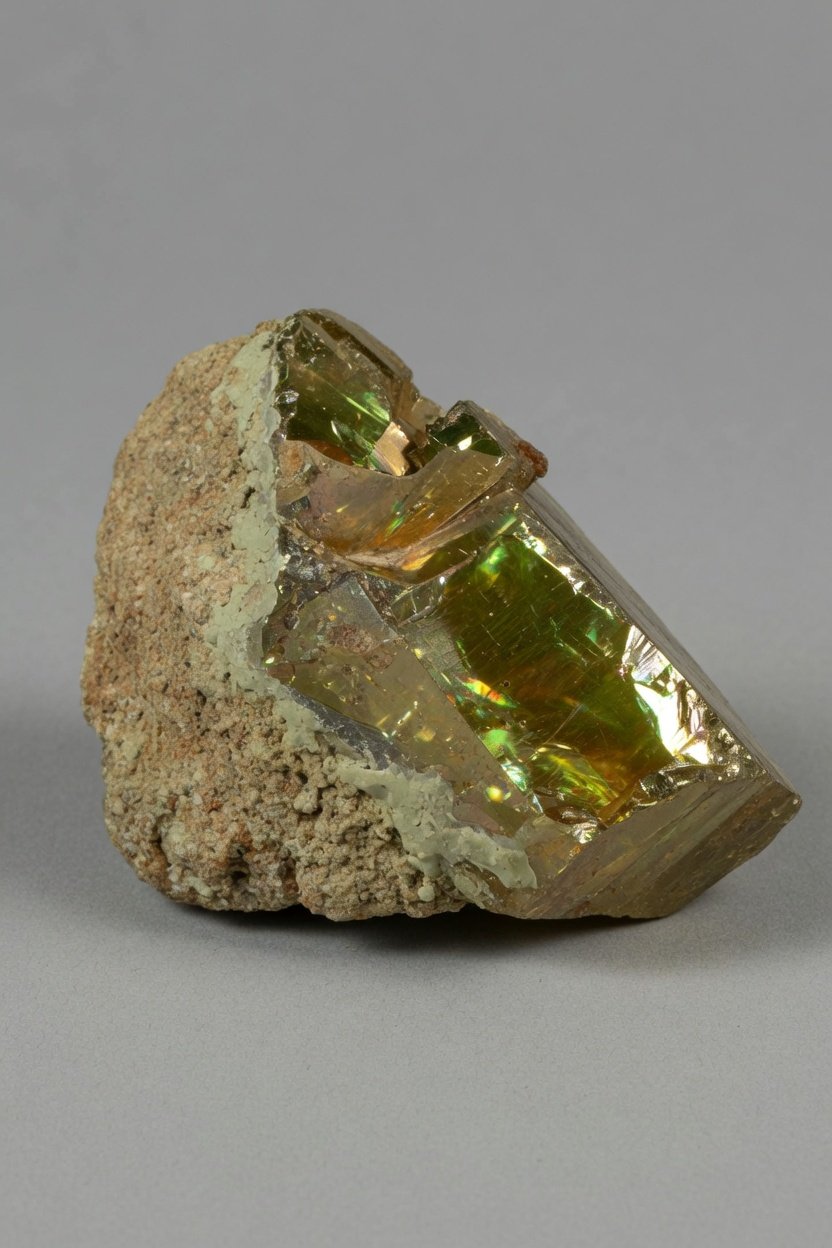
Identifying Sphene in the Field In matrix, sphene appears as translucent brown or green wedges with a greasy-to-adamantine surface that reflects light more brightly than surrounding feldspar or quartz. A quick field test is to look for strong doubling of back facets when a loupe is placed against a transparent edge; few other green minerals display comparable dispersion. Streak is white and the mineral is non-magnetic.
Quick Facts
Common names: Sphene, Titanite
Chemical formula: CaTiSiO5
Mohs hardness: 5–5.5
Specific gravity: 3.48–3.60
Color: Yellow-green, brown, orange, rarely pink
Crystal system: Monoclinic
Luster: Adamantine to resinous
Transparency: Transparent to translucent
Common cuts: Faceted ovals, rounds, cushions
Common treatments: None
Best silver setting: Contemporary Prong Ring
Birthstone month (if any): None
Main sources: Madagascar, Russia, Pakistan, Brazil
Meaning & Intentions
CLARITY
Sphene sharpens mental focus by amplifying the wearer’s ability to separate signal from noise during decision-making. Silversmiths set the stone in open prongs so light can travel through the facets and continually remind the owner to cut through confusion. The stone’s high dispersion acts as a visual metaphor for breaking complex problems into clear spectral parts.
Chakra: Third Eye – supports insight and pattern recognition VISION
Wearers use sphene to illuminate long-term goals, letting its rainbow flashes highlight possibilities that ordinary sight misses. In silver work the stone is oriented so the strongest dispersion faces outward, turning every glance into a small act of foresight and creative planning.
Chakra: Third Eye – awakens intuitive sight BOUNDARIES
Sphene strengthens personal limits by encouraging the wearer to recognize when to protect time and energy. Set in silver, the stone’s durability despite modest hardness models resilient yet flexible boundaries that can be maintained without rigidity.
Chakra: Root – grounds protective awareness Affirmation: "I see clearly and hold my ground with grace." AT A GLANCE: Chakra: Third Eye Element: Air Energy: Amplifying Zodiac: Sagittarius Planet: Mercury Affirmation: "I see clearly and hold my ground with grace."
Related Stones
Explore more stones from the Gemstone Library: Phenakite · Fluorite · Cobalt Blue Spinel