Turquoise has been loved for thousands of years. Long ago, people in ancient Egypt, Persia, Tibet, and the American Southwest wore it close to their hearts. They thought the bright blue-green color came from the sky or the sea. Native American tribes saw it as a piece of the sky that fell to earth. They made necklaces, rings, and special items with it to bring good luck, protection, and healing.
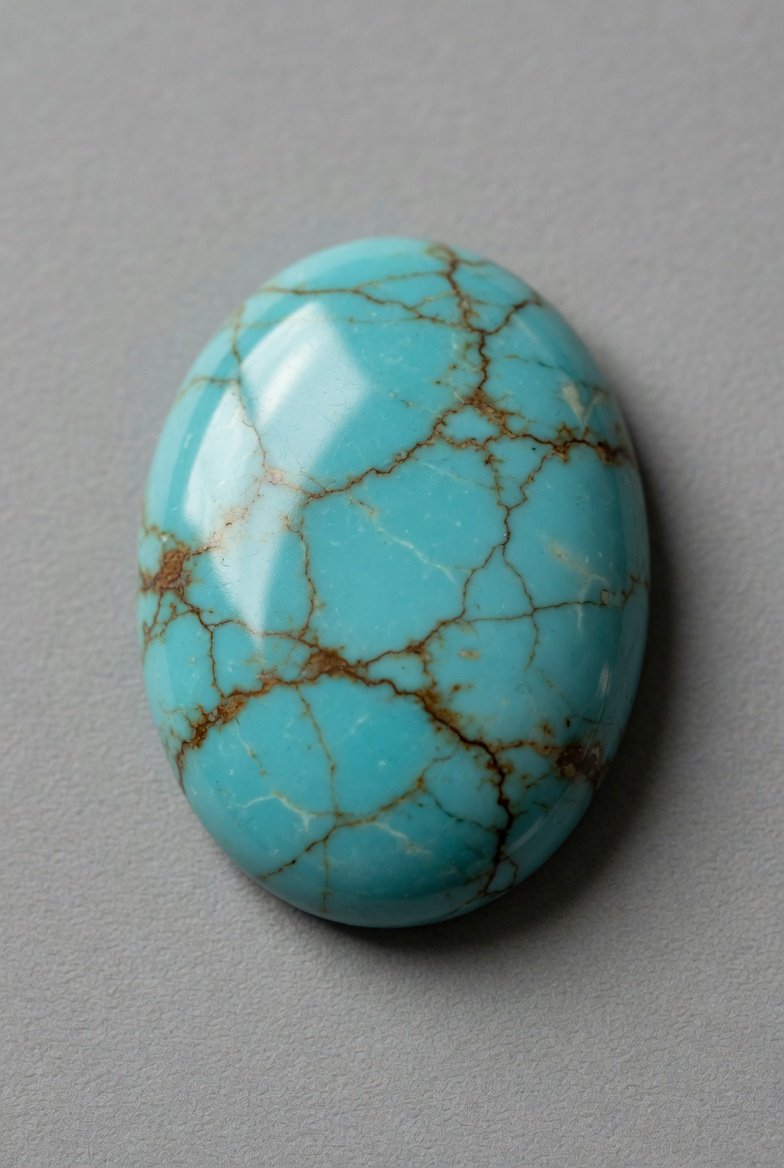
The stone gets its pretty color from tiny bits of copper. Over millions of years, copper mixes with aluminum and water to make the soft blue we know. You often see thin brown or black lines running through it — that's called matrix. It's usually iron or leftover rock from where the turquoise grew. Some people like clean blue pieces with little matrix, while others love the webbed patterns because every stone looks different, like a fingerprint from nature.
Physical Properties
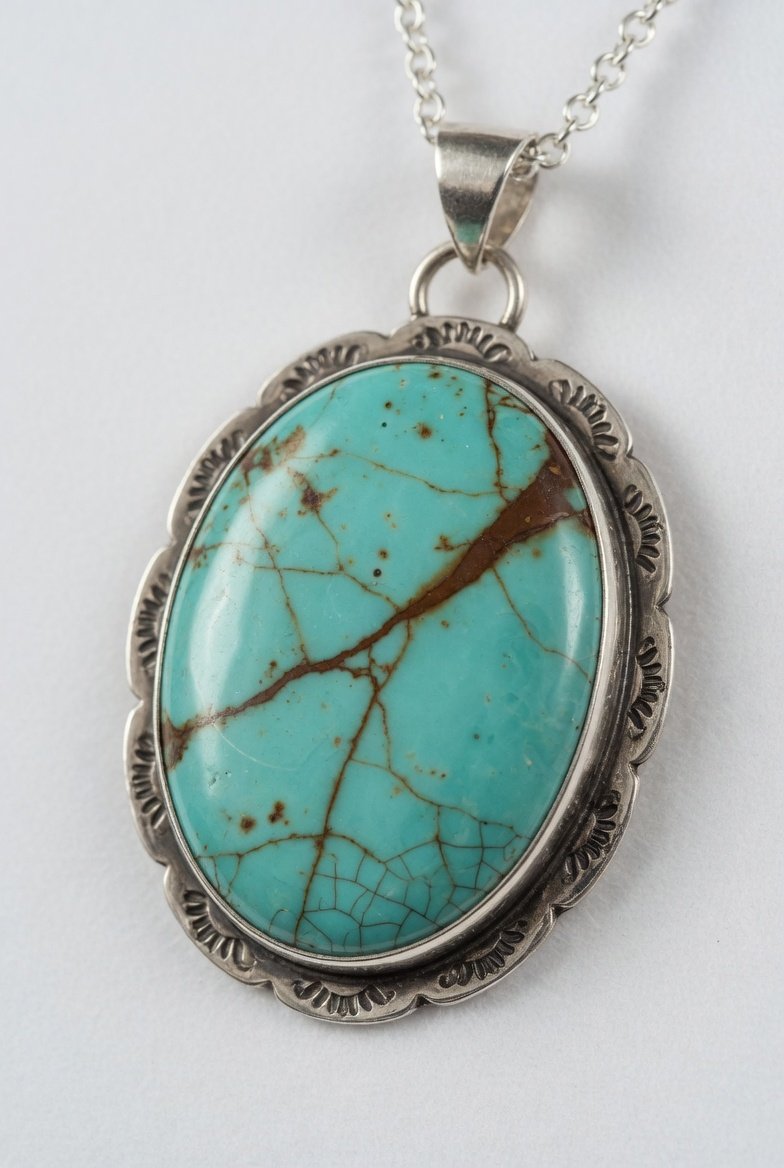
Turquoise isn't super hard — it's about 5 to 6 on the Mohs scale. A knife can scratch it if you're not careful, but it's strong enough for everyday jewelry when treated right. Jewelers love using it as cabochons because the smooth dome shape shows off the color and patterns nicely. In silver, a bezel setting works best to protect the edges from chipping. Keep it away from harsh cleaners, heat, or chemicals — it can dry out or change color over time.
Treatments and Sourcing
Most turquoise you buy today is stabilized. That means someone added a clear resin to fill tiny holes and make it tougher for rings and pendants. Some is dyed to look brighter, and a little is pressed from small bits (called reconstituted). Natural turquoise from places like Sleeping Beauty Mine in Arizona is rarer now and costs more, but even treated pieces still have that classic sky-blue magic. Major sources include the United States — especially Arizona and Nevada — along with China, Iran, Egypt, and Mexico.
In Jewelry
Turquoise is one of the most beloved stones in silversmithing. Its moderate hardness means it works beautifully as a cabochon in a protective bezel setting, which is the classic Southwestern style. The blue-green stone against sterling silver is a combination that has defined Native American and Southwestern jewelry for generations. Because turquoise is porous and sensitive, it should be set after all soldering and heat work is done, and protected from lotions, perfumes, and household chemicals.
History and Significance
People have always felt special about turquoise. In the Southwest, it stands for water, rain, and life. In old Persia, traders carried it as a lucky charm against bad things. When you set a turquoise cabochon in sterling silver today, you're part of a very old story. It's not just a pretty stone — it's a little piece of history you can wear every day. Clean it gently with a soft cloth and warm soapy water, and it will stay beautiful for years.
Identifying Turquoise in the Field
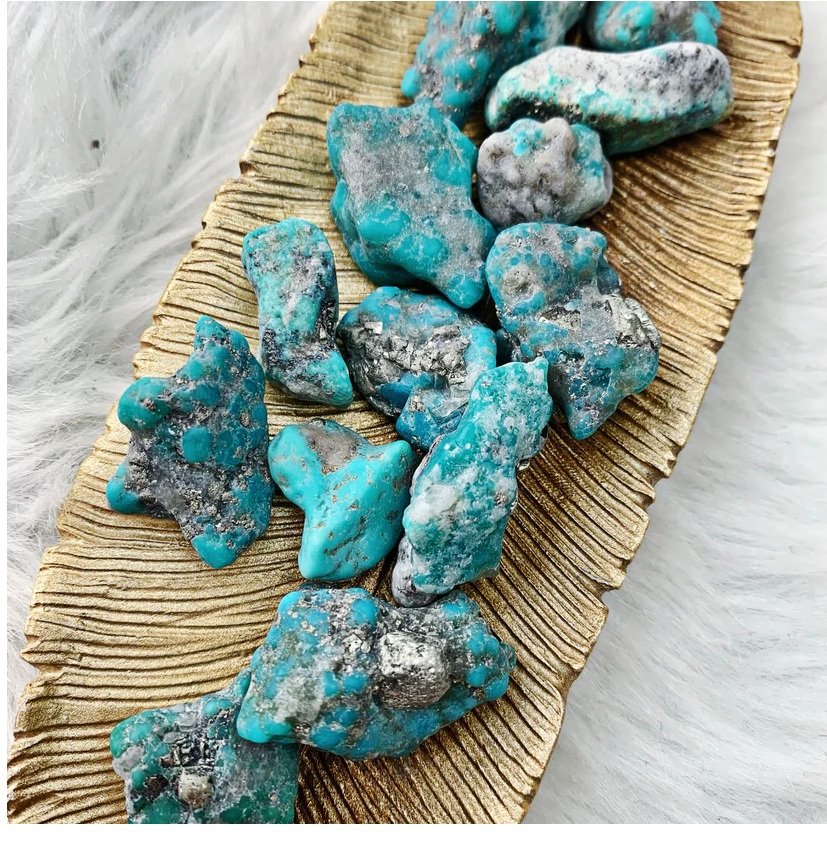
Turquoise forms near the surface in dry, arid regions, usually in fractured rock associated with copper deposits. Look for blue to blue-green nodules or veins standing out against brown or tan host rock — the color comes from copper and is the first visual clue. It leaves a faint white to pale green streak on unglazed porcelain. At 5 to 6 on the Mohs scale it can be scratched by a steel knife but not by a copper coin. Natural turquoise often appears as thin veins or nuggets within host rock rather than large solid masses, with dark web-like matrix lines running through it. It breaks with a conchoidal to uneven fracture and has no cleavage. Proximity to copper mines, iron-oxide staining on exposed rock, and arid desert terrain with shallow water tables are all signs that turquoise may be present.
Quick Facts
Common names: Turquoise, Sleeping Beauty, Persian Turquoise, Kingman
Chemical formula: CuAl₆(PO₄)₄(OH)₈·4H₂O
Mohs hardness: 5–6
Specific gravity: 2.6–2.8
Color: Sky blue to greenish-blue, often with matrix veins
Crystal system: Triclinic (rarely forms visible crystals; usually massive)
Luster: Waxy to subvitreous
Transparency: Opaque
Common cuts: Mostly cabochon, sometimes tumbled or carved
Common treatments: Stabilized, dyed, reconstituted
Best silver setting: Bezel (protects edges)
Birthstone month: December
Main sources: USA (Arizona, Nevada), China, Iran, Egypt, Mexico
Meaning & Metaphysical Properties
Turquoise has been carried as a protective stone for thousands of years. Ancient Persian traders wore it as a charm against misfortune, and warriors in many cultures attached it to weapons and bridles for safekeeping. It's considered a guardian stone — watching over travelers, riders, and anyone venturing into the unknown. Many people keep turquoise close during travel or major life changes for that steady sense of being looked after.
Chakra: Throat chakra (Vishuddha) — communication, truth, protection
Also associated with: Third Eye chakra — intuition and inner vision
Turquoise is strongly tied to the Throat chakra and the ability to speak honestly and clearly. It's used by those who want to express themselves with confidence, communicate difficult truths with kindness, or find the right words in important moments. Teachers, speakers, writers, and anyone who works with their voice are drawn to turquoise for its calming, clarifying influence on self-expression.
Chakra: Throat (Vishuddha) — communication, self-expression, truth
Across many traditions turquoise is seen as a master healer — a stone that restores balance, soothes the spirit, and supports overall well-being. Southwestern cultures connect it to water, rain, and life itself, the source of renewal in a dry land. It's used to ease stress, lift the mood, and bring a sense of wholeness and grounding after difficult times.
Affirmation: "I am protected, my voice is clear, and I walk in balance with
the world around me."
At a Glance
Chakra: Throat, Third Eye
Element: Air, Earth, Water
Energy: Protective, calming, balancing
Zodiac: Sagittarius, Scorpio, Aquarius, Pisces
Planet: Venus, Neptune, Jupiter
Affirmation: I am protected and my voice is clear
Related Stones
Explore more stones from the Gemstone Library: AMETHYST · LABRADORITE · LAPIS LAZULI