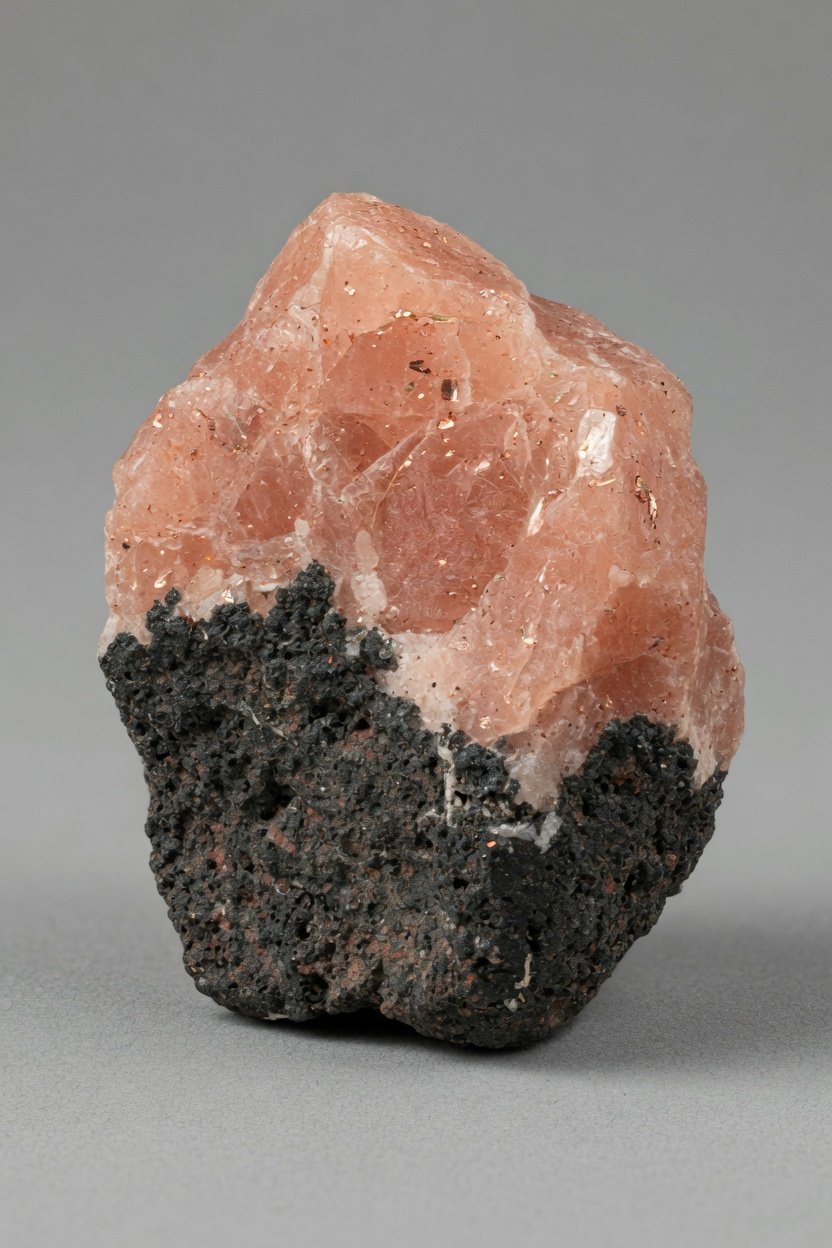
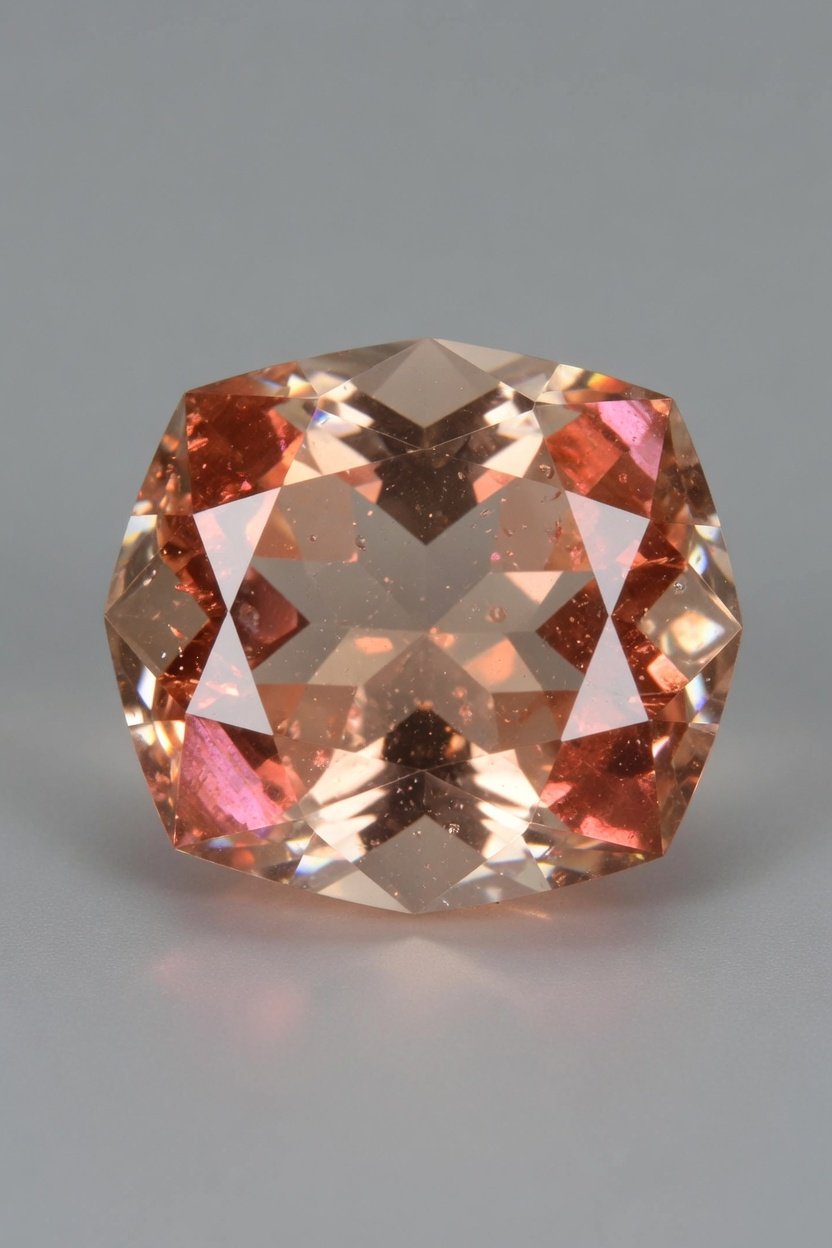
Sunstone catches the eye with its warm, glowing body color and sudden metallic flashes that appear as the stone turns in light. These copper-colored spangles arise from tiny inclusions suspended inside clear feldspar, giving the gem an inner fire that seems to move on its own. The effect is strongest in well-cut cabochons that let light skim across the inclusions.
Physical Properties Sunstone is a variety of plagioclase or potassium feldspar whose body color ranges from pale yellow-orange to deep brick red. Hardness sits at 6–6.5 on the Mohs scale, so it resists everyday wear yet remains softer than quartz or topaz. Specific gravity measures 2.62–2.70. The stone shows vitreous luster and ranges from transparent to translucent. Copper platelets create the aventurescent flash known as schiller; when these platelets align parallel to a face they produce a bright, sheet-like reflection. The crystal system is triclinic. No treatments are normally applied.
Origin and Sourcing Primary commercial deposits occur in the high desert of Oregon, where basalt flows weathered to release the gems. Additional sources include India, Tanzania, Madagascar, and parts of Norway. Oregon material is recovered from both open-pit benches and shallow alluvial gravels. Miners follow basalt layers, breaking ore with light explosives and hand tools before washing and sorting. Indian sunstone often comes from pegmatite pockets worked by small teams. All material is hand-selected for color and flash intensity.
History and Significance Native Americans of the Pacific Northwest collected sunstone for ceremonial objects long before European contact. In the nineteenth century, Norwegian specimens reached European collectors and were first described scientifically. Oregon sunstone gained official state gem status in 1987 after sustained prospecting revealed large, clean crystals suitable for jewelry. The stone’s name reflects both its solar color and the way light seems to ignite inside it.
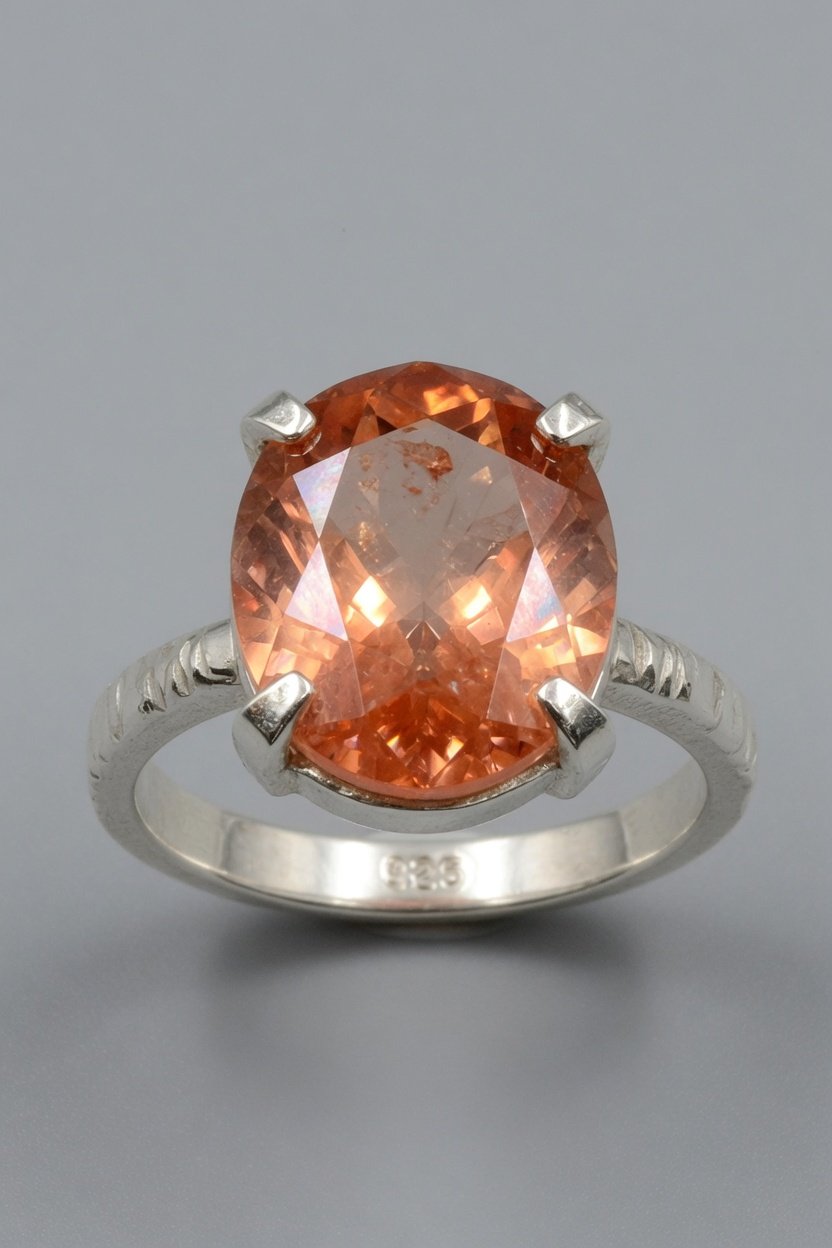
In Jewelry and Silversmithing Sunstone is almost always cut as a cabochon to display maximum schiller. Set the stone only after all soldering and pickling are complete so heat does not cloud the copper inclusions. Classic silver bezel settings or low-profile prongs protect the girdle while allowing light to enter from the sides. A simple polish with rouge on a soft wheel restores luster; avoid ultrasonic cleaners and prolonged sunlight that can fade lighter tones over decades.
Identifying Sunstone in the Field Look for translucent feldspar fragments showing warm orange or red body color and tiny bright flashes when rotated under direct sun. The flash appears as distinct copper platelets rather than a uniform glitter. Hardness test yields 6–6.5; the stone is easily scratched by steel but not by glass. Matrix is usually fine-grained basalt or weathered volcanic rock. Avoid confusing it with aventurine quartz, which shows uniform green or blue sparkle and registers 7 on the Mohs scale.
Quick Facts
Common names: Sunstone, Oregon Sunstone, Aventurine Feldspar
Chemical formula: (Ca,Na)(Al,Si)4O8 with copper inclusions
Mohs hardness: 6–6.5
Specific gravity: 2.62–2.70
Color: Orange-red to pink with metallic copper flashes
Crystal system: Triclinic
Luster: Vitreous
Transparency: Transparent to translucent
Common cuts: Cabochon, occasional faceted
Common treatments: None
Best silver setting: Classic Silver Bezel Pendant
Birthstone month (if any): None
Main sources: Oregon (USA), India, Tanzania, Madagascar
Meaning & Intentions
VITAL PROTECTION
Sunstone creates a steady field of warmth that guards personal energy without aggression. Wearers place the cabochon near the solar plexus so the copper flashes continually remind the body to release tension before it settles into defensiveness. The stone’s gentle radiance filters scattered thoughts and returns focus to immediate tasks, supporting steady progress through demanding days.
Chakra: Solar Plexus — confidence, personal power, steady will CLEAR SIGHT
Placed on a desk or worn as a pendant, sunstone sharpens perception of subtle patterns in both work and relationships. The metallic inclusions act as tiny mirrors that catch stray light and direct attention back to overlooked details. Regular handling trains the eye to notice small shifts in color and mood, improving decision-making under pressure.
Chakra: Third Eye — insight, pattern recognition, mental clarity STEADY GROUNDING
Sunstone anchors scattered attention by linking the bright flash of inspiration to the solid weight of the stone in hand. During long creative sessions the cabochon rests against the skin, its warmth and density returning awareness to the present moment. This simple contact prevents ideas from drifting into abstraction before they can be shaped into finished work.
Chakra: Root — stability, presence, physical endurance Affirmation: "I carry steady light and clear purpose." AT A GLANCE: Chakra: Solar Plexus Element: Fire Energy: Projective Zodiac: Leo Planet: Sun Affirmation: "I carry steady light and clear purpose."
Related Stones
Explore more stones from the Gemstone Library: Tiger's Eye · Aventurine · Jasper