Kunzite first reveals itself in the dim tunnels of ancient pegmatites as a soft pink glow that deepens to lilac when turned toward the light, a lithium-rich crystal prized by silversmiths for its gentle transparency and shifting color. Its delicate beauty demands respect during every stage of fabrication, especially when heat is involved. The stone must always be set after all soldering is complete to preserve its hue and internal structure.
Physical Properties Kunzite is a pink to violet variety of spodumene with the chemical formula LiAlSi2O6. It registers 6.5–7 on the Mohs scale and shows a specific gravity of 3.1–3.2. The mineral belongs to the monoclinic system and displays strong pleochroism, appearing colorless, pink, or violet depending on the viewing angle. Its vitreous luster ranges from transparent to translucent, and the stone often contains fine parallel striations. Because kunzite contains lithium and can lose color when exposed to prolonged heat or sunlight, silversmiths must set the finished stone only after all torch work and soldering are complete; avoid any direct heat during setting and store finished pieces away from bright display lights to maintain the original tone.
Origin and Sourcing The finest kunzite crystals form in lithium-rich pegmatites, most notably in the Hindu Kush mountains of Afghanistan, the pegmatite fields of Minas Gerais in Brazil, the highland deposits of Madagascar, and the Pala district of California. These locations yield crystals that range from pale blush to saturated violet. Miners extract the material through hard-rock tunneling, following narrow veins with hand tools and headlamps to avoid fracturing the brittle crystals. Rough is then transported to cutting centers where orientation is chosen to maximize the strongest pink or lilac face.
History and Significance Kunzite was first recognized as a distinct gem variety in 1902 and named after gemologist George Frederick Kunz. Early twentieth-century jewelers prized the stone for its romantic pastel shades that complemented the flowing lines of Art Nouveau designs. In metaphysical traditions it has long been associated with the heart, believed to soften emotional armor and encourage compassionate connection. Contemporary silversmiths continue this lineage by pairing the stone with oxidized silver to emphasize its quiet luminosity.
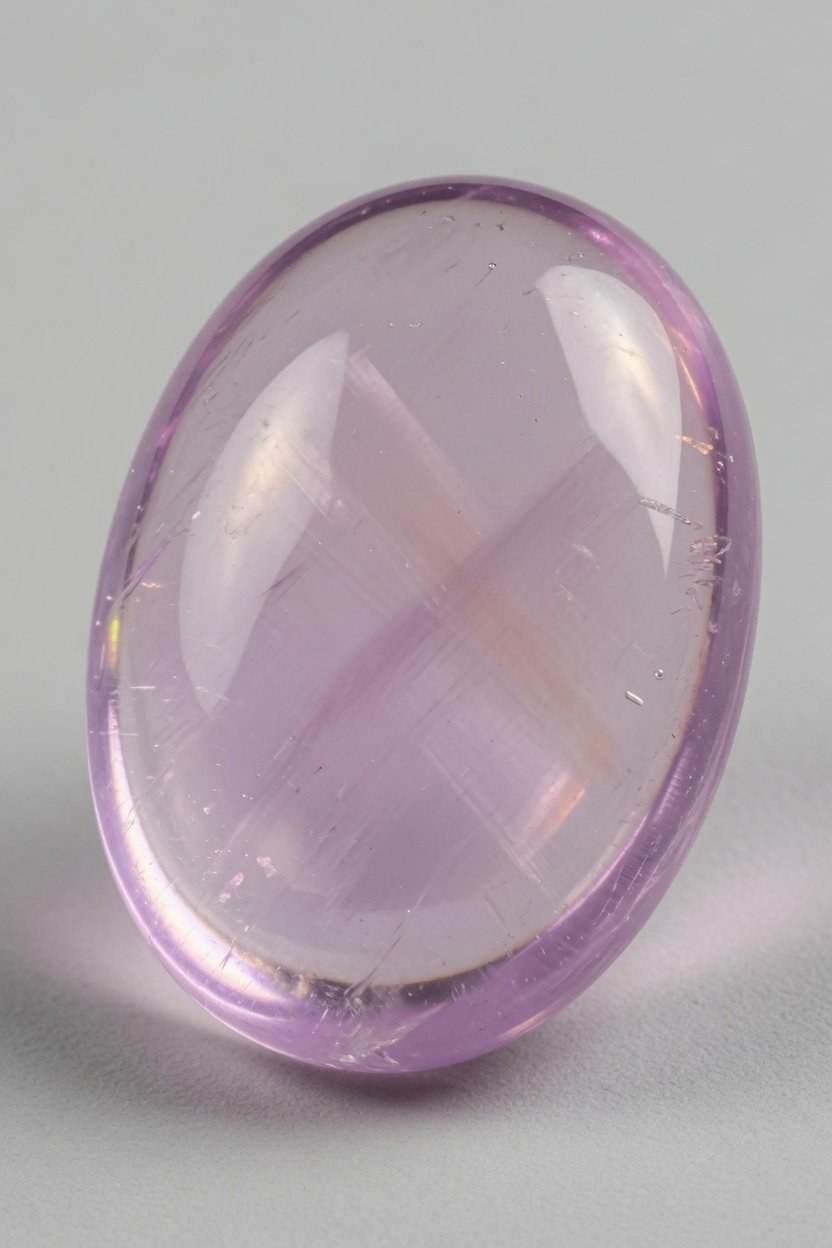
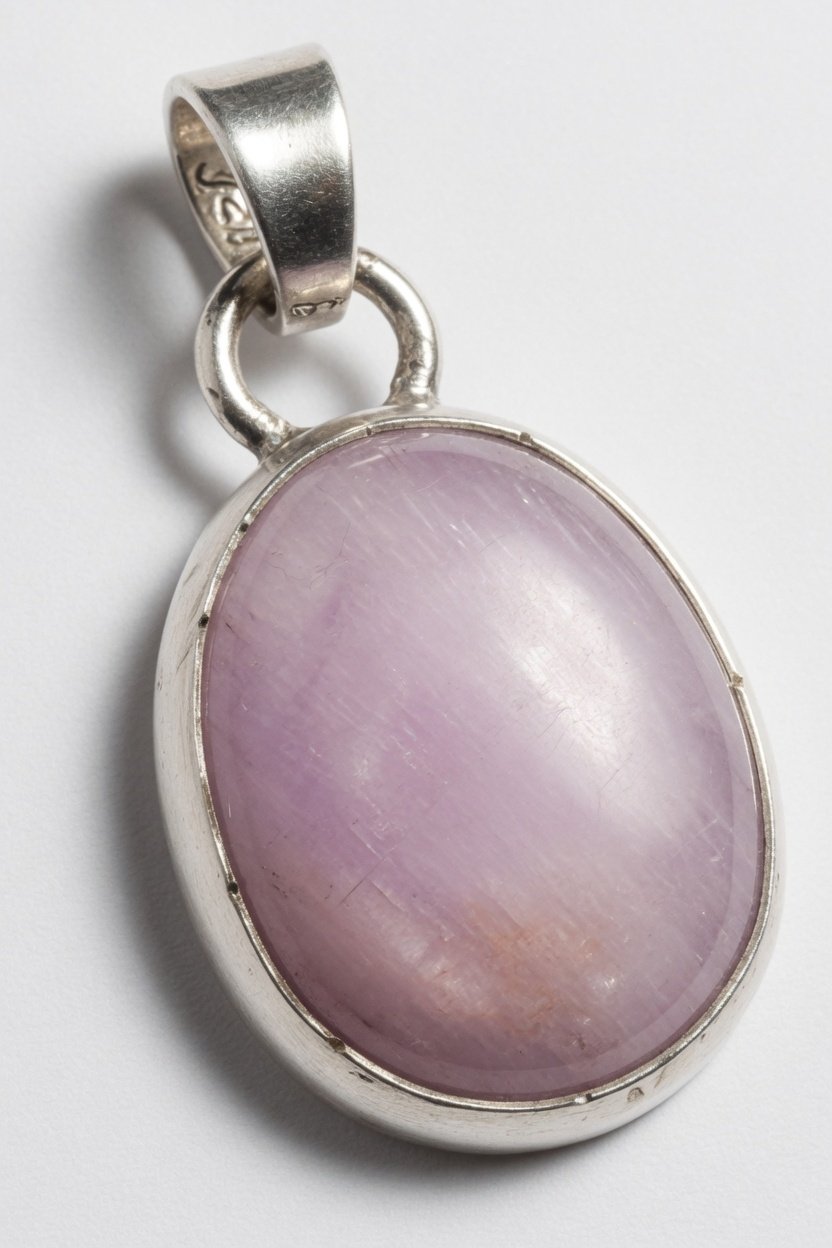
In Jewelry and Silversmithing Because kunzite is relatively soft and heat-sensitive, it is most often cut as cabochons or broad faceted ovals that show maximum color. Silversmiths favor low-profile bezel settings or protective halo designs that shield the girdle while allowing light to enter from above. The stone must always be set after all soldering is complete; any residual warmth from the torch can bleach the color permanently. Finished pieces should be cleaned with mild soap and water only, never in ultrasonic or steam cleaners that could stress the cleavage planes.
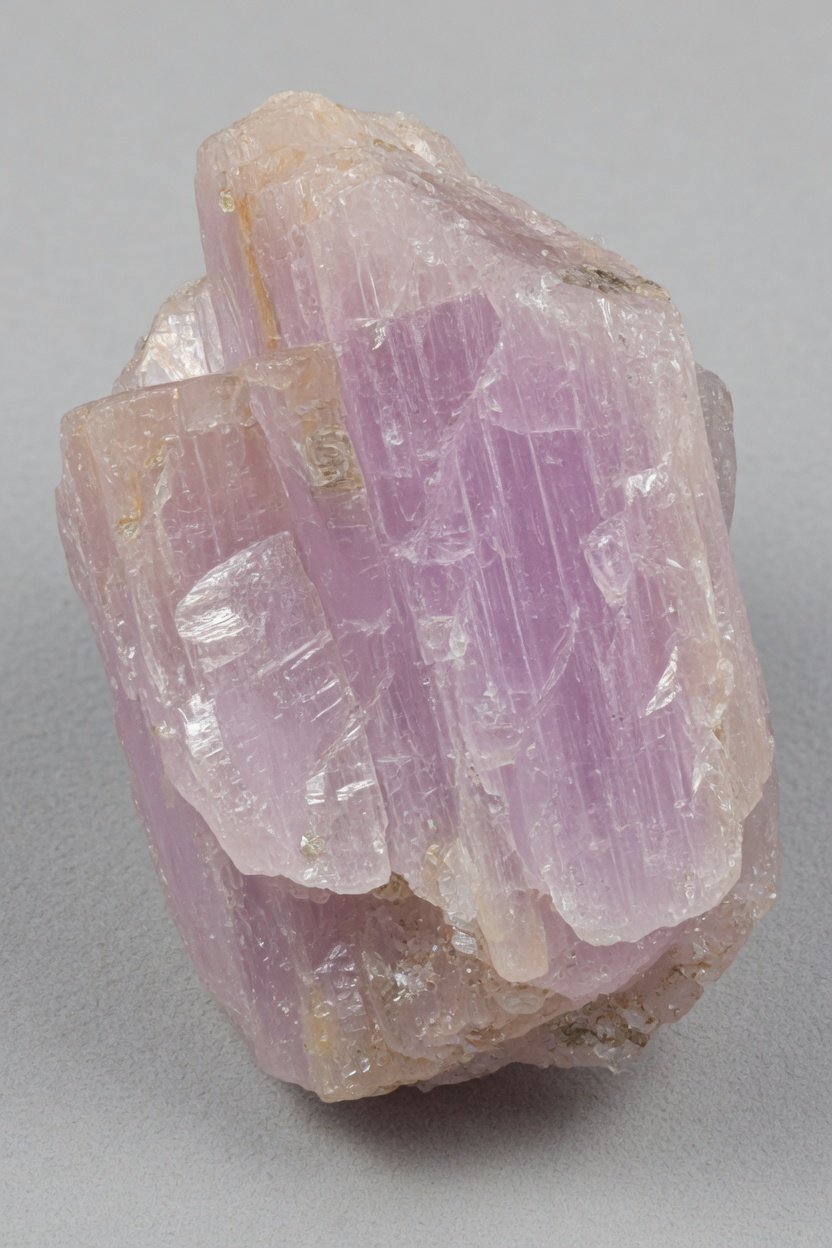
Identifying Kunzite in the Field In the field, kunzite appears as elongated prismatic crystals with a distinctive pink-lilac cast and strong pleochroism. It is softer than quartz yet harder than feldspar, and its perfect cleavage produces flat fracture surfaces. A quick test is to view the crystal through different axes: the color intensifies or disappears, confirming the spodumene species. Matrix specimens often show white feldspar or black tourmaline inclusions that help distinguish kunzite from similar-looking morganite or rose quartz.
Quick Facts
Common names: Kunzite, Spodumene (pink variety)
Chemical formula: LiAlSi2O6
Mohs hardness: 6.5–7
Specific gravity: 3.1–3.2
Color: Pink to violet, strongly pleochroic
Crystal system: Monoclinic
Luster: Vitreous
Transparency: Transparent to translucent
Common cuts: Faceted oval, cabochon
Common treatments: Irradiation for color enhancement
Best silver setting: Classic Silver Bezel Pendant
Birthstone month (if any): None
Main sources: Afghanistan, Brazil, Madagascar, USA
Meaning & Intentions
EMOTIONAL BALANCE
Kunzite is carried or worn to soften emotional barriers and invite compassionate self-acceptance. Silversmiths set the stone in open bezels so the heart chakra can receive its steady, cooling vibration throughout daily wear. The gentle pink hue acts as a visual reminder to respond rather than react when feelings run high.
Chakra: Heart — center of compassion and emotional flow SPIRITUAL AWARENESS
The stone’s shifting lilac tones are believed to heighten intuitive perception during meditation or quiet reflection. When placed near the third-eye area in a pendant, kunzite encourages clear inner vision without overstimulation, supporting those who seek deeper spiritual insight.
Chakra: Third Eye — seat of intuition and inner sight INNER PEACE
Kunzite’s calming energy is said to quiet mental chatter and create a protected space for stillness. Wearers report that the stone helps maintain serenity during stressful periods, its color acting as an anchor that returns the mind to a tranquil baseline.
Chakra: Crown — gateway to higher calm and unity Affirmation: "I welcome gentle love and steady inner calm." AT A GLANCE: Chakra: Heart Element: Water Energy: Receptive Zodiac: Taurus Planet: Venus Affirmation: "I welcome gentle love and steady inner calm."
Related Stones
Explore more stones from the Gemstone Library: Rhodonite · Aventurine · Chrysoprase