Chrysoberyl enters the jeweler’s bench as a quiet powerhouse, its hardness and subtle optical effects rewarding careful observation long before any setting is chosen. The stone’s ability to display color change or a sharp cat’s-eye band under changing light makes it a favorite among silversmiths who value both durability and understated drama.
Physical Properties Chrysoberyl crystallizes in the orthorhombic system with a Mohs hardness of 8.5, placing it just below corundum yet well above most other beryls. Specific gravity ranges from 3.5 to 3.84, and its vitreous luster remains bright even after decades of wear. The mineral shows distinct cleavage on the {110} plane, so it must be handled with awareness during pre-polish stages. Because the stone survives soldering temperatures without damage, it is always set only after all torch work is complete; ultrasonic cleaning is safe once the piece is finished.
Origin and Sourcing Primary deposits occur in Brazil’s Minas Gerais pegmatites, Sri Lanka’s alluvial gravels, Russia’s Ural Mountains, and Madagascar’s weathered dikes. Miners recover most material through open-pit or hard-rock methods, followed by hand sorting that preserves the rare color-change crystals. Trace chromium and iron produce the celebrated alexandrite shift from green in daylight to red under incandescent light, while parallel fibrous inclusions create the chatoyant cat’s-eye variety.
History and Significance Ancient texts from Sri Lanka mention “chrysoberyl” as a protective talisman carried by travelers, while Russian imperial jewelers prized alexandrite for its patriotic red-and-green display. In the nineteenth century, European lapidaries began cutting the stone to maximize the color-change effect, elevating it from curiosity to gemological benchmark. Its scarcity and optical behavior have kept it a collector’s stone rather than a mass-market commodity.
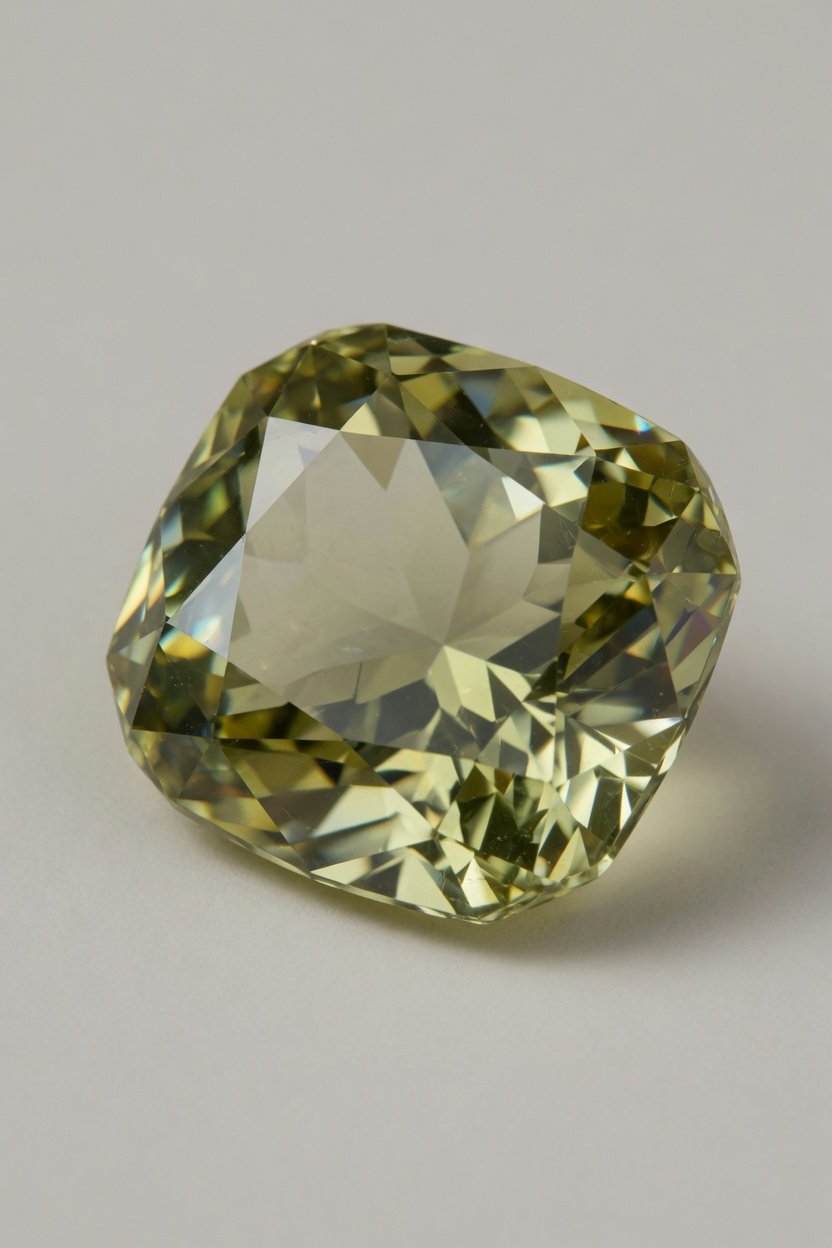
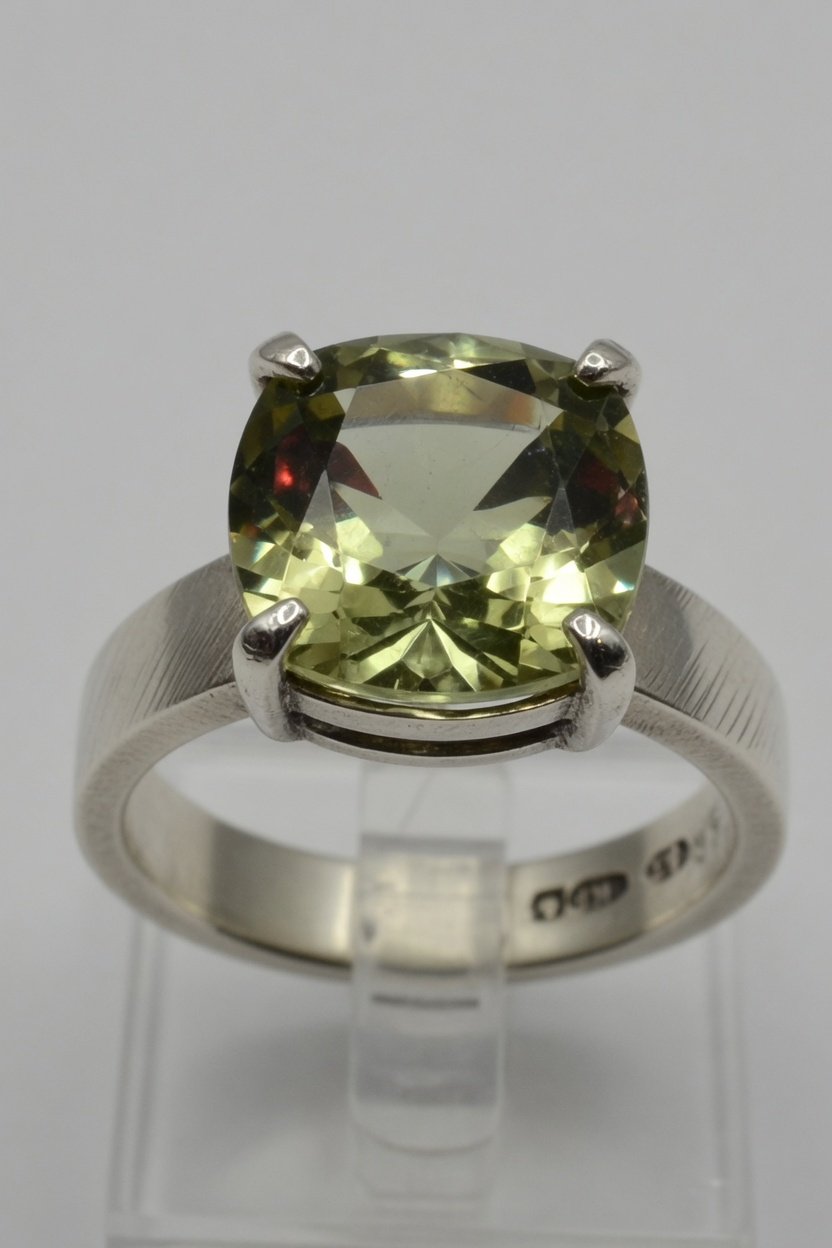
In Jewelry and Silversmithing Silversmiths select prong or bezel settings that leave the table and pavilion unobstructed so light can pass through the stone from all angles. The high hardness allows crisp facet junctions that hold polish through years of daily wear. After final assembly, the piece receives only a mild detergent bath; avoid prolonged heat or aggressive chemicals that could dull the surface. Cat’s-eye specimens are oriented so the band runs lengthwise across the cabochon, a detail that must be confirmed before the stone enters the setting.
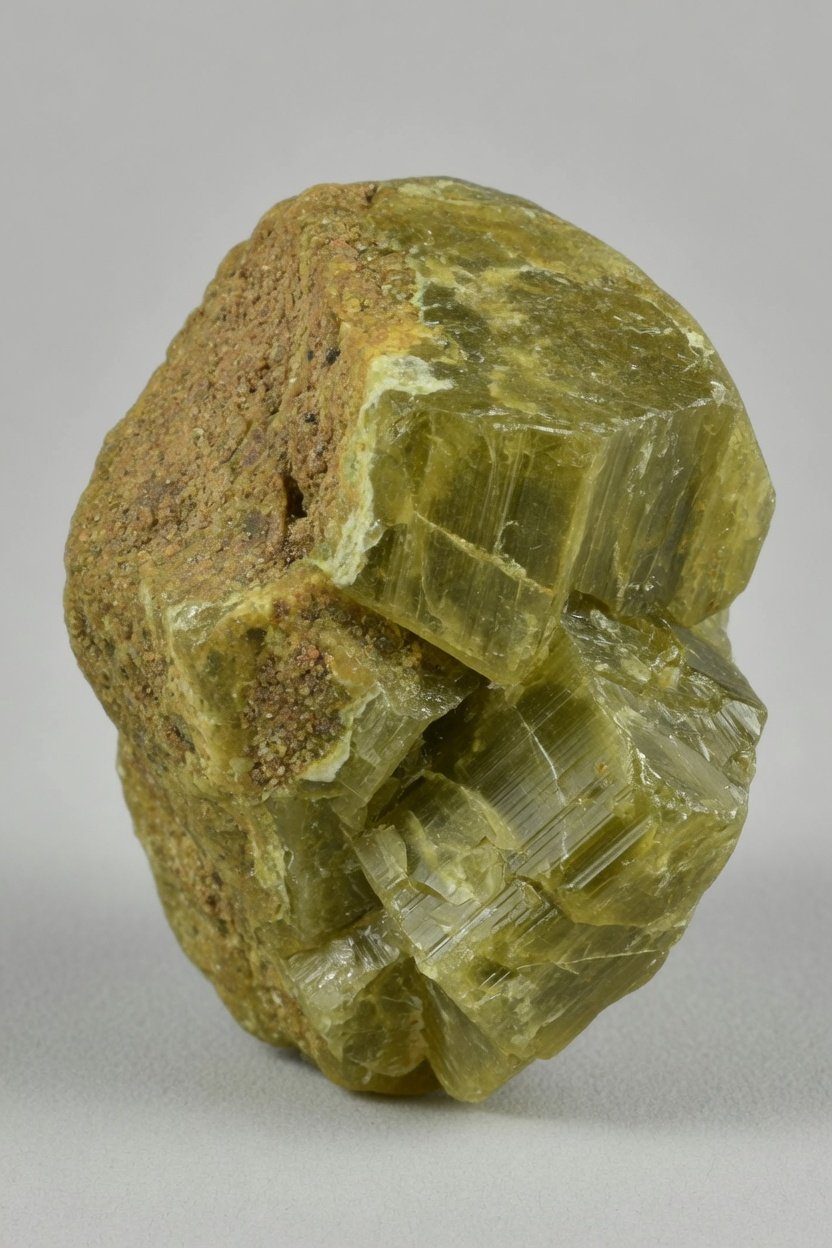
Identifying Chrysoberyl in the Field In rough form the mineral appears as tabular or prismatic crystals with a pale green to yellow-brown body and a glassy fracture. Hardness testing with a steel file produces no scratch, immediately separating it from softer beryls. Pleochroism is visible through a dichroscope as olive-green and brownish-yellow rays in non-color-change material, while alexandrite shows a distinct red-green shift under different lighting. Matrix samples are rare; most commercial rough arrives clean or lightly iron-stained.
Quick Facts
Common names: Chrysoberyl, Alexandrite, Cat's Eye Chrysoberyl
Chemical formula: BeAl₂O₄
Mohs hardness: 8.5
Specific gravity: 3.5–3.84
Color: Yellow-green, brown, color-change green to red
Crystal system: Orthorhombic
Luster: Vitreous
Transparency: Transparent to translucent
Common cuts: Faceted, cabochon
Common treatments: None
Best silver setting: Contemporary Prong Ring
Birthstone month (if any): None
Main sources: Brazil, Sri Lanka, Russia, Madagascar
Meaning & Intentions
FOCUSED RESILIENCE
Chrysoberyl’s exceptional hardness and stable crystal structure make it a steady companion for anyone building long-term projects or recovering from setbacks. Silversmiths set the stone after all soldering to preserve its clarity, then wear the finished piece as a tactile reminder that disciplined effort withstands daily pressure.
Chakra: Root — grounding and physical endurance
CLEAR PERCEPTION
The cat’s-eye variety sharpens observational skills, helping wearers notice small details in both craft and conversation. When cut as a cabochon and later set in silver, the single bright band acts like a visual anchor during meditation or focused bench work.
Chakra: Third Eye — insight and pattern recognition
STEADY BOUNDARIES
Alexandrite’s color shift mirrors the ability to adapt while keeping core values intact. Once the stone is placed in its setting after soldering, the finished jewelry becomes a portable boundary that supports clear decision-making without rigidity.
Chakra: Solar Plexus — personal power and discernment
Affirmation: "I hold steady while I adapt." AT A GLANCE: Chakra: Third Eye — insight and pattern recognition Element: Earth Energy: Receptive Zodiac: Leo Planet: Saturn Affirmation: "I hold steady while I adapt."
Related Stones
Explore more stones from the Gemstone Library: Onyx · Tourmaline · Tiger's Eye