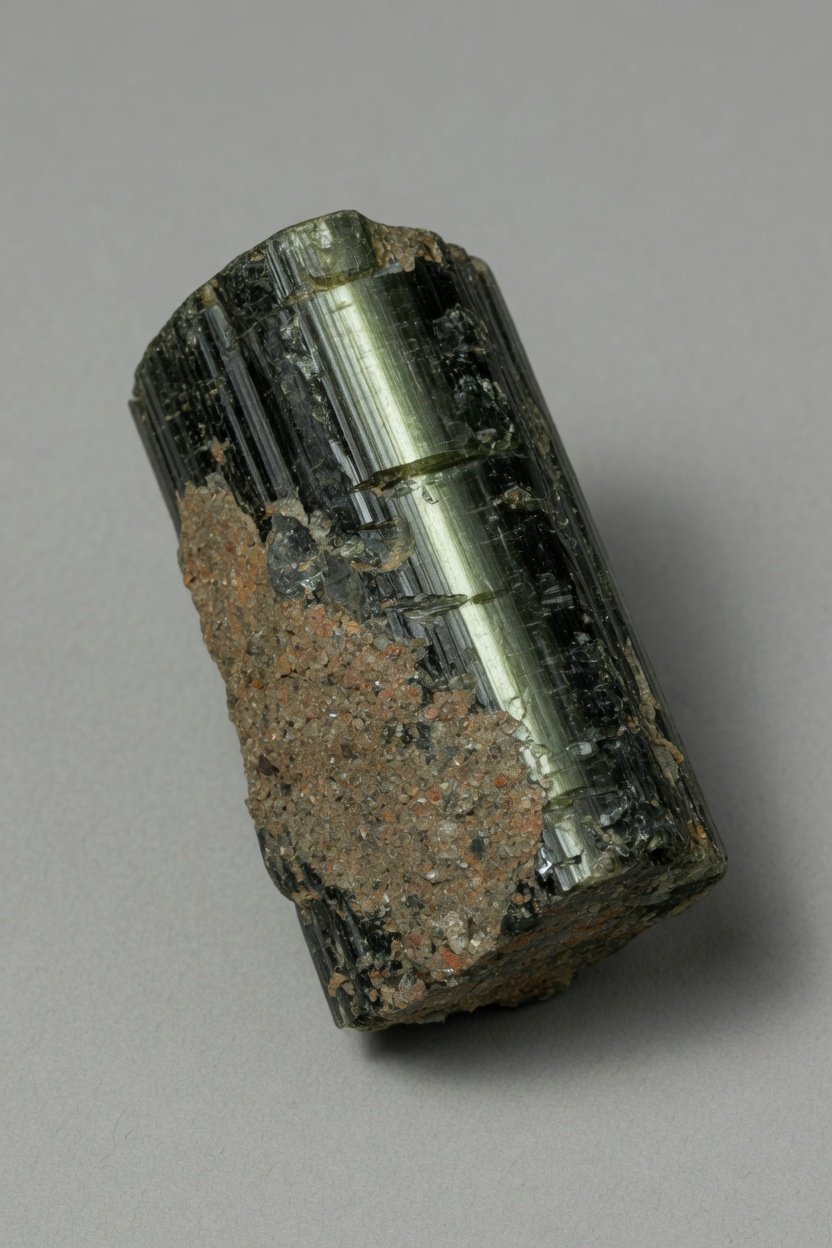
Tourmaline draws the eye with its striking vertical striations and dramatic color zoning that shifts from deep pink through emerald green within a single crystal. This borosilicate gem forms in elongated prisms that catch light differently along each axis, revealing hidden depths of hue. Silversmiths prize it for both its visual drama and its piezoelectric response that seems to energize the finished piece.
Physical Properties Tourmaline possesses a Mohs hardness of 7 to 7.5, making it durable for daily wear yet requiring careful handling during fabrication. Its specific gravity ranges from 3.0 to 3.3, and the stone exhibits strong pleochroism, displaying different colors when viewed from varying angles. The trigonal crystal system produces long, striated prisms with a vitreous luster that ranges from transparent to opaque. Tourmaline must always be set after all soldering is complete to avoid heat-induced color shifts or fractures along its distinct cleavage planes; avoid ultrasonic cleaners and store pieces separately to prevent abrasion.
Origin and Sourcing Primary deposits occur in Brazil, Madagascar, the United States, and Sri Lanka, where tourmaline crystallizes inside coarse-grained pegmatites. Miners extract the stone through hard-rock tunneling that follows narrow veins of quartz and feldspar. Brazilian material often shows bold watermelon zoning, while Madagascan crystals tend toward vivid greens and blues. Ethical sourcing emphasizes traceable pegmatite operations that restore surface vegetation after extraction.
History and Significance Ancient Egyptians carved tourmaline into talismans believed to shield travelers, while Dutch traders introduced the gem to Europe in the 1700s under the Sinhalese name “turamali.” In the nineteenth century, American mineralogists documented the stone’s electrical properties, leading to its use in early pressure gauges. Cultures across continents have long associated the gem with balance and protection, attributing its multicolored zones to the meeting of earth and sky energies.
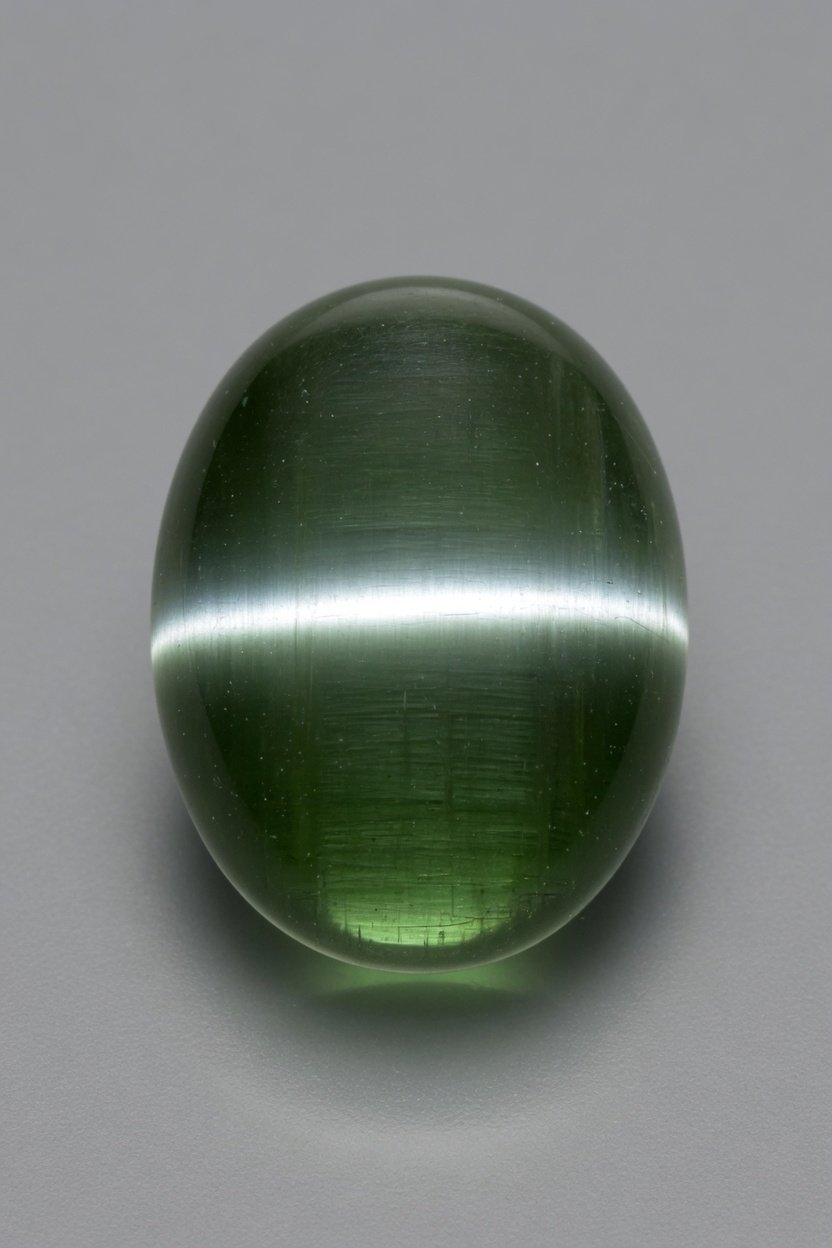
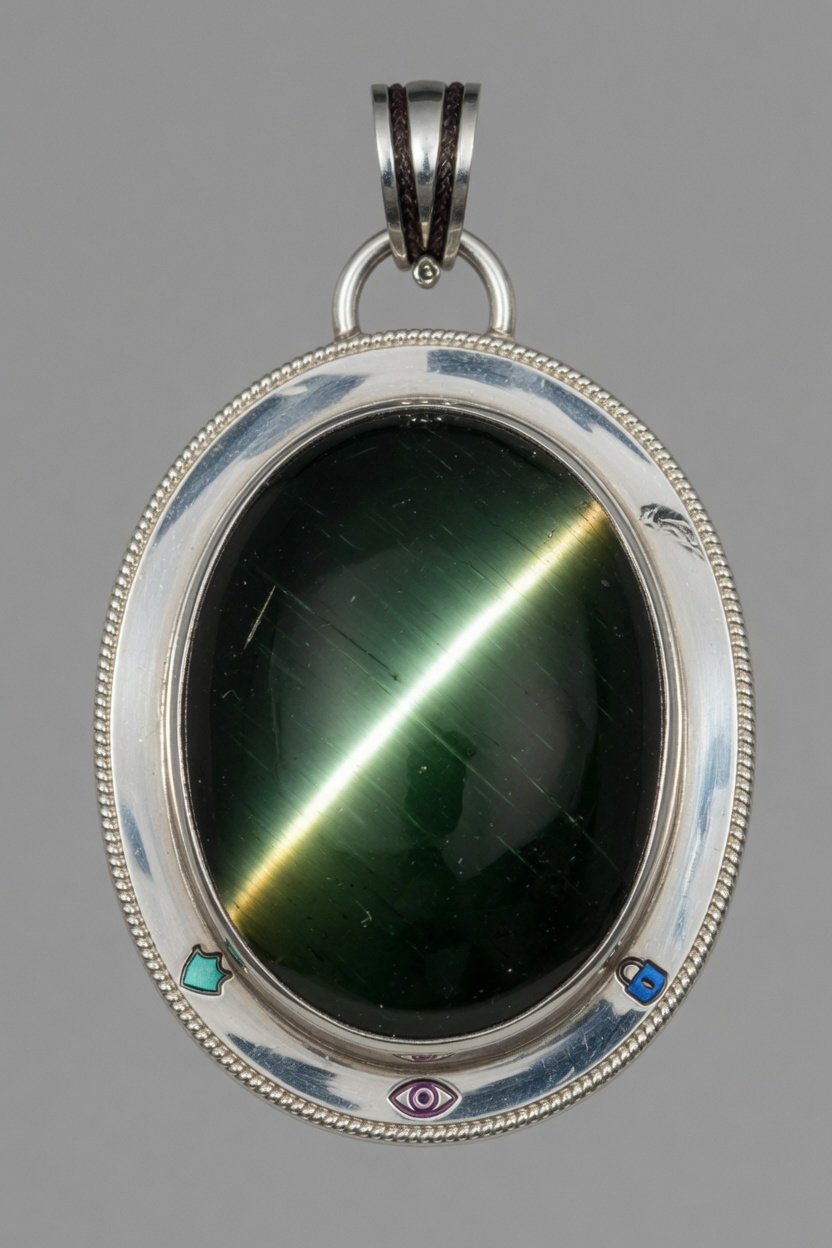
In Jewelry and Silversmithing Tourmaline’s pleochroism and color zoning make it ideal for cabochon cuts that display broad bands of color without the distraction of faceted flash. Silversmiths frequently choose low-profile bezel settings to frame the stone safely and to orient the prism so its strongest color faces forward. The metal’s cool tone enhances the gem’s saturated hues, and the closed back of a bezel also protects the stone’s sometimes delicate terminations. After polishing, a final gentle wash removes any rouge that might dull the vitreous surface.
Identifying Tourmaline in the Field Field identification begins with the stone’s distinctive vertical striations and rounded triangular cross-section. A quick test involves viewing the crystal through a dichroscope to confirm strong pleochroism; tourmaline will show two markedly different colors along its length and width. The absence of cleavage in most directions and the presence of a conchoidal fracture further distinguish it from similar-looking quartz or beryl.
Quick Facts
Common names: Tourmaline, Schorl, Elbaite, Dravite
Chemical formula: (Na,Ca)(Mg,Fe,Li,Al,Mn)3Al6(BO3)3Si6O18(OH)4
Mohs hardness: 7–7.5
Specific gravity: 3.0–3.3
Color: Pink, green, blue, black, multicolored zoning
Crystal system: Trigonal
Luster: Vitreous
Transparency: Transparent to opaque
Common cuts: Cabochon, faceted oval, trillion, beads
Common treatments: Heat, irradiation
Best silver setting: Classic Silver Bezel Pendant
Birthstone month (if any): October
Main sources: Brazil, Madagascar, United States, Sri Lanka
Meaning & Intentions
PROTECTION
Tourmaline creates a steady energetic boundary that absorbs discordant influences before they reach the wearer. Silversmiths set the stone low in a bezel so the surrounding silver amplifies this shielding quality, turning the finished pendant into a portable sanctuary that remains effective through daily wear and seasonal changes.
Chakra: Root chakra for grounding and stability INSIGHT
The stone’s color zoning mirrors layers of awareness, helping the user perceive situations from multiple angles at once. When set as a cabochon in silver, tourmaline becomes a focal point for meditation, its banded patterns encouraging quiet observation rather than reactive judgment.
Chakra: Third-eye chakra for clarity and perception BOUNDARIES
Tourmaline strengthens personal limits by sealing energetic leaks that occur during stress or conflict. A bezel setting in silver physically reinforces this intention, the closed back and smooth rim acting as a literal container that keeps the stone’s stabilizing field intact.
Chakra: Root chakra for containment and safety Affirmation: "I stand centered within my own clear boundaries." AT A GLANCE: Chakra: Root Element: Earth Energy: Receptive Zodiac: Scorpio Planet: Pluto Affirmation: "I stand centered within my own clear boundaries."
Related Stones
Explore more stones from the Gemstone Library: Jade · Moss Agate · Picture Jasper