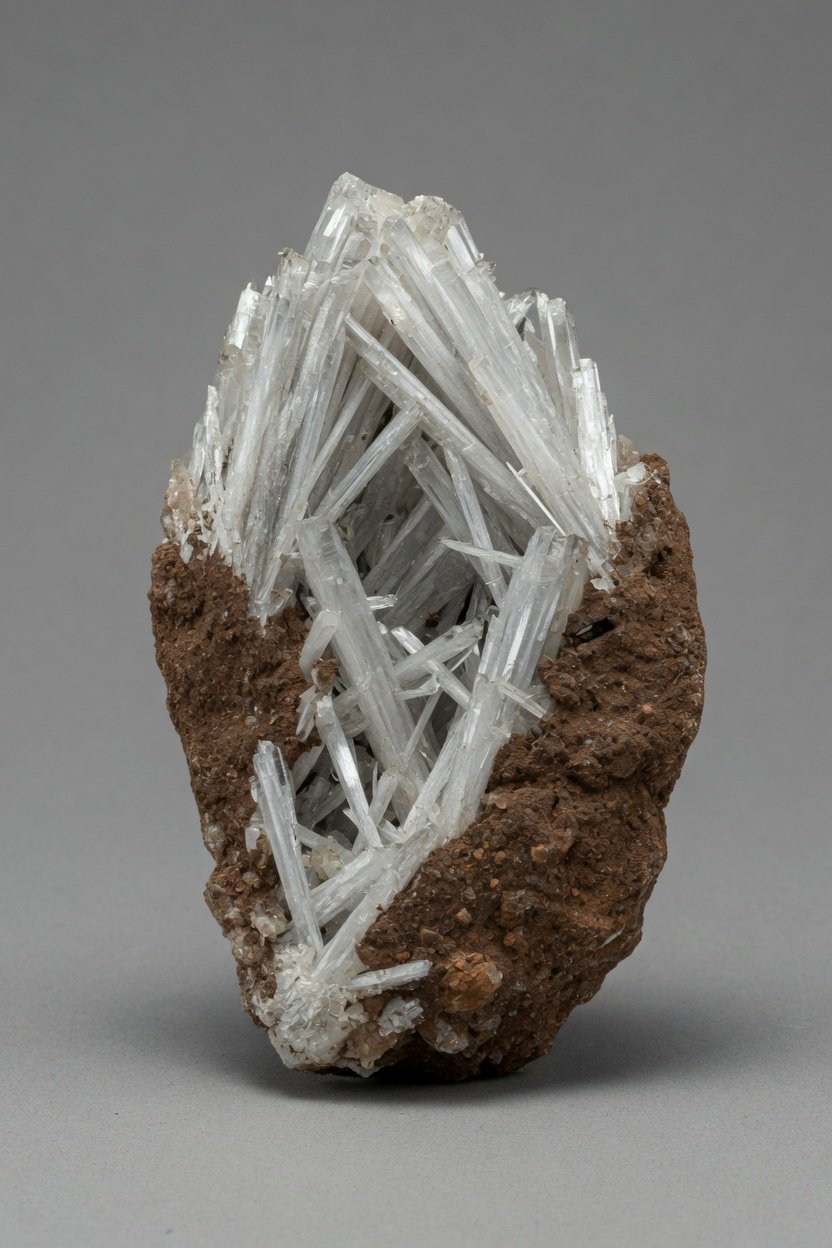
Sillimanite emerges from the earth as slender, fibrous crystals that catch light with a quiet, silky glow, revealing a stone prized by silversmiths for its ability to shift between translucent clarity and soft chatoyancy. Its orthorhombic structure and aluminum silicate composition make it both durable and distinctive, a material that rewards careful handling in handmade jewelry.
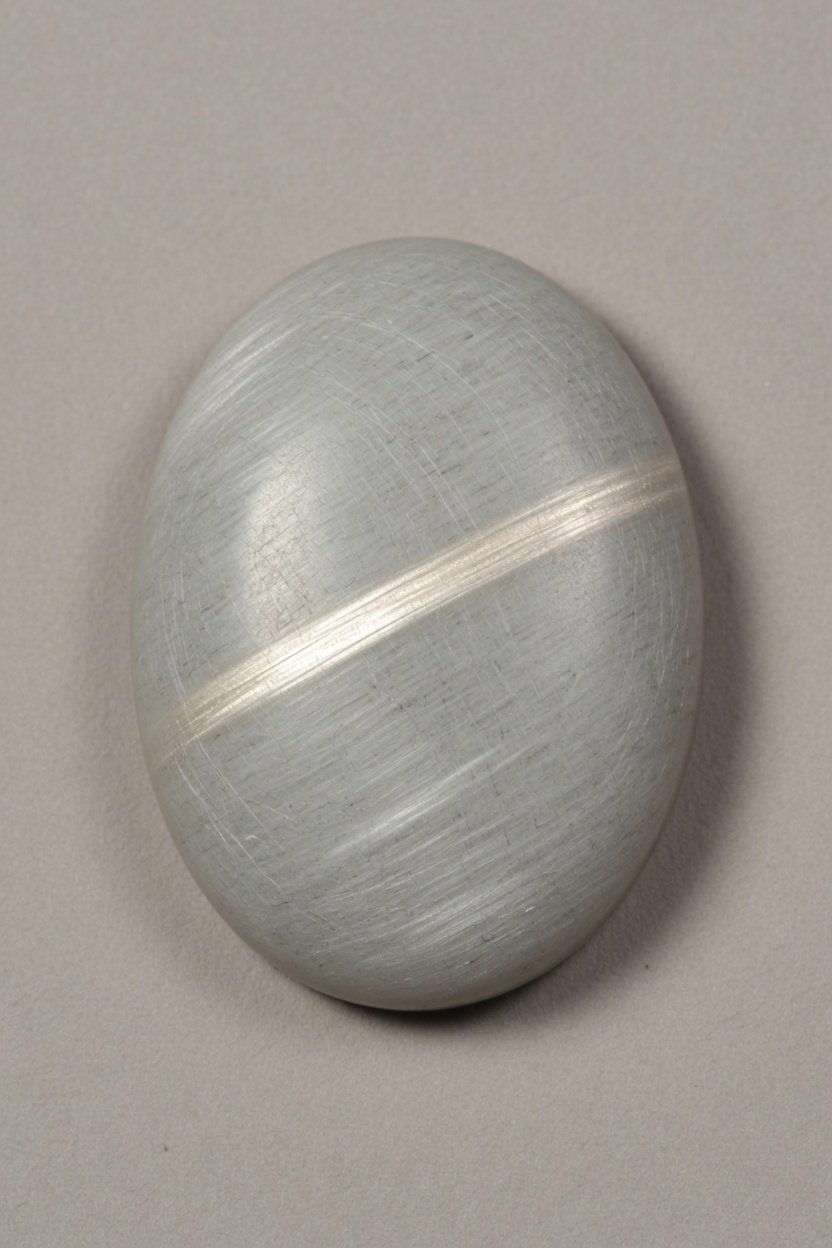
Physical Properties Sillimanite registers 6.5 to 7.5 on the Mohs scale, offering respectable hardness while remaining workable for detailed silver settings. Its specific gravity hovers near 3.2, and its fibrous habit often produces a cat’s-eye effect when cut as cabochons. The stone displays vitreous to silky luster and ranges from transparent to translucent. Always set Sillimanite after all soldering is complete to avoid thermal shock along its cleavage planes; store finished pieces away from ultrasonic cleaners and avoid prolonged exposure to strong acids or sudden temperature changes that could fracture the fibrous structure.
Origin and Sourcing Primary deposits occur in India’s Odisha and Andhra Pradesh regions, with additional material from Sri Lanka, Myanmar, Brazil, and parts of the United States. Most commercial sillimanite is recovered through hard-rock mining of metamorphic schists and gneisses, where miners follow narrow veins of aluminum-rich rock. Alluvial concentrations appear in stream gravels near these primary sources, yet the bulk of gem-grade material still requires underground extraction.
History and Significance Named for American mineralogist Benjamin Silliman, the stone entered recorded mineralogy in the early nineteenth century. Earlier, fibrous varieties served local artisans in southern India as polishing stones and small amulets. Its dual identity as both a refractory industrial mineral and an occasional gemstone underscores a long practical relationship with fire and metalworking traditions.
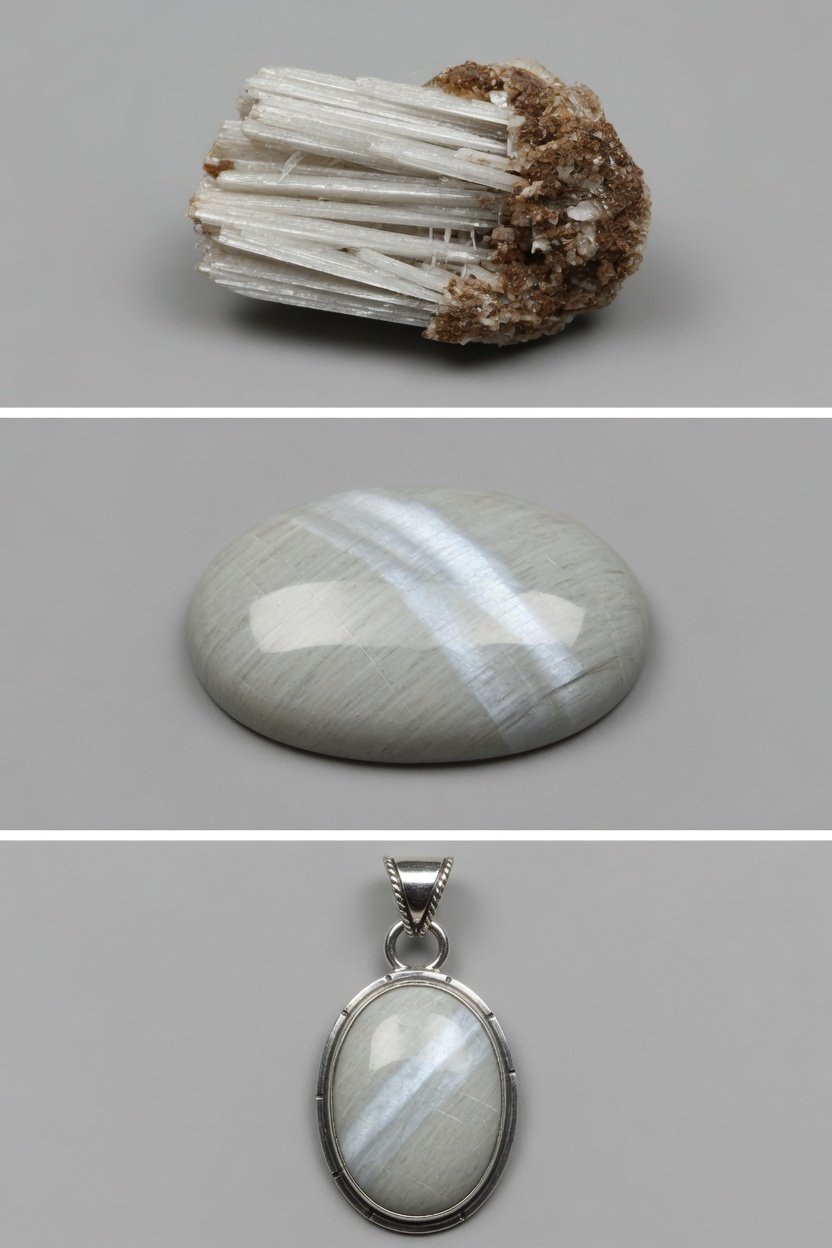
In Jewelry and Silversmithing Silversmiths favor cabochon cuts that emphasize the stone’s silky chatoyancy, setting them in low bezels that protect the fibrous surface while allowing light to skim across the dome. Contemporary designs pair the neutral palette with oxidized silver or subtle gold accents. Always set Sillimanite after all soldering is complete; its cleavage planes can part under torch heat, and sudden cooling may produce internal fractures invisible until polishing.
Identifying Sillimanite in the Field In outcrop, sillimanite forms radiating sprays of needle-like crystals within schist, often accompanied by kyanite or andalusite. Its fibrous texture and moderate hardness distinguish it from similar aluminum silicates; a streak test yields white, and the crystals resist scratching by a steel point yet yield to a file. Matrix specimens frequently show the stone’s characteristic gray-white to brownish tones against darker host rock.
Quick Facts
Common names: Sillimanite, Fibrolite
Chemical formula: Al₂SiO₅
Mohs hardness: 6.5–7.5
Specific gravity: 3.23–3.27
Color: White, gray, brown, green, blue
Crystal system: Orthorhombic
Luster: Vitreous to silky
Transparency: Transparent to translucent
Common cuts: Cabochon, faceted
Common treatments: None
Best silver setting: Classic Silver Bezel Pendant
Birthstone month (if any): None
Main sources: India, Sri Lanka, Myanmar, Brazil
Meaning & Intentions
FOCUS
Sillimanite’s steady fibrous structure supports sustained attention during long creative sessions, helping the wearer maintain clarity when intricate silverwork demands precision. Its neutral palette avoids distraction while the subtle chatoyancy gently returns the eye to the task at hand.
Chakra: Third Eye for mental clarity and insight PERCEPTION
The stone’s ability to display shifting light encourages deeper observation, training the senses to notice fine details in both metal and stone during the silversmithing process. Wearers report an enhanced sense of visual balance when aligning facets or bezels.
Chakra: Throat for clear expression and observation STABILITY
Sillimanite anchors scattered energy, offering quiet endurance for projects that require repeated heating and cooling cycles in the workshop. Its mineral resilience mirrors the steadiness needed to finish complex pieces without rushing.
Chakra: Root for grounding and endurance Affirmation: "I shape with patience and see with steady eyes." AT A GLANCE: Chakra: Third Eye, Throat, Root Element: Earth Energy: Receptive Zodiac: Virgo, Capricorn Planet: Saturn Affirmation: "I shape with patience and see with steady eyes."
Related Stones
Explore more stones from the Gemstone Library: Iolite · Onyx · Tourmaline