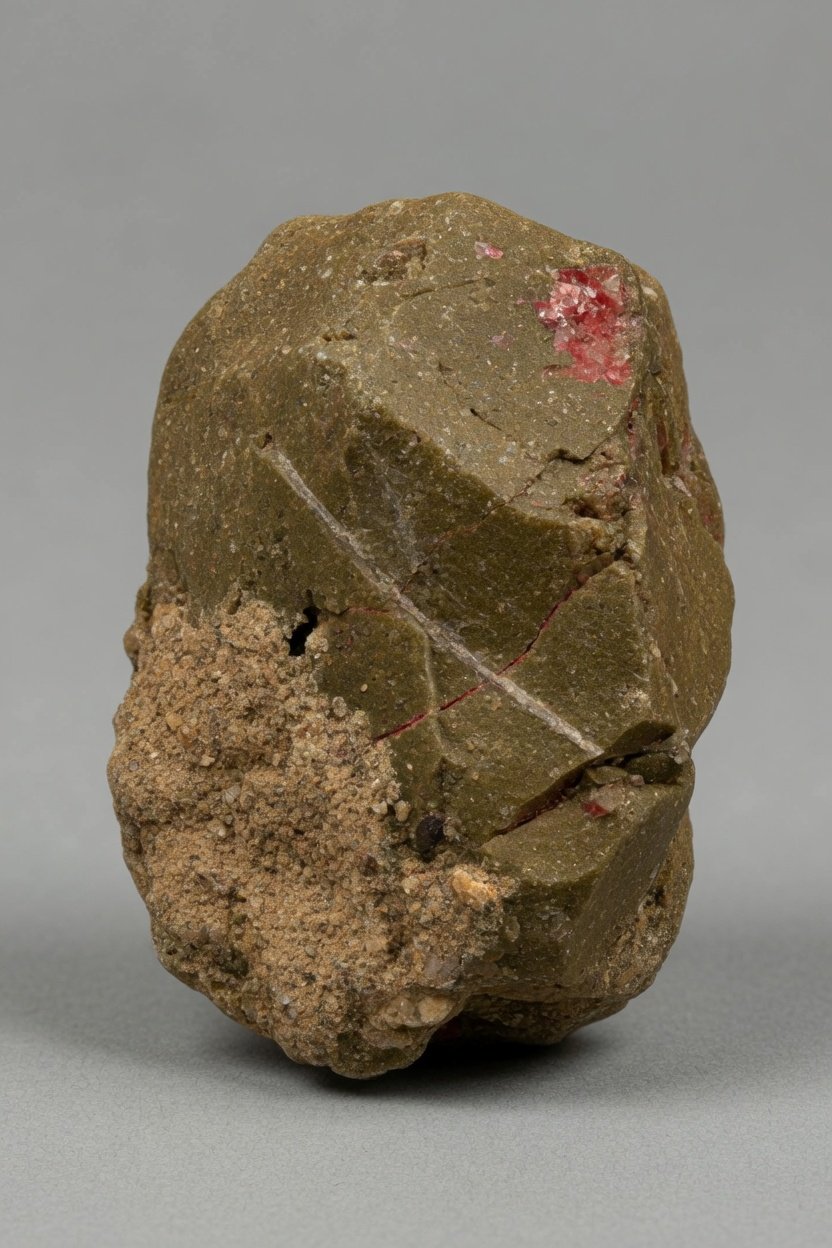
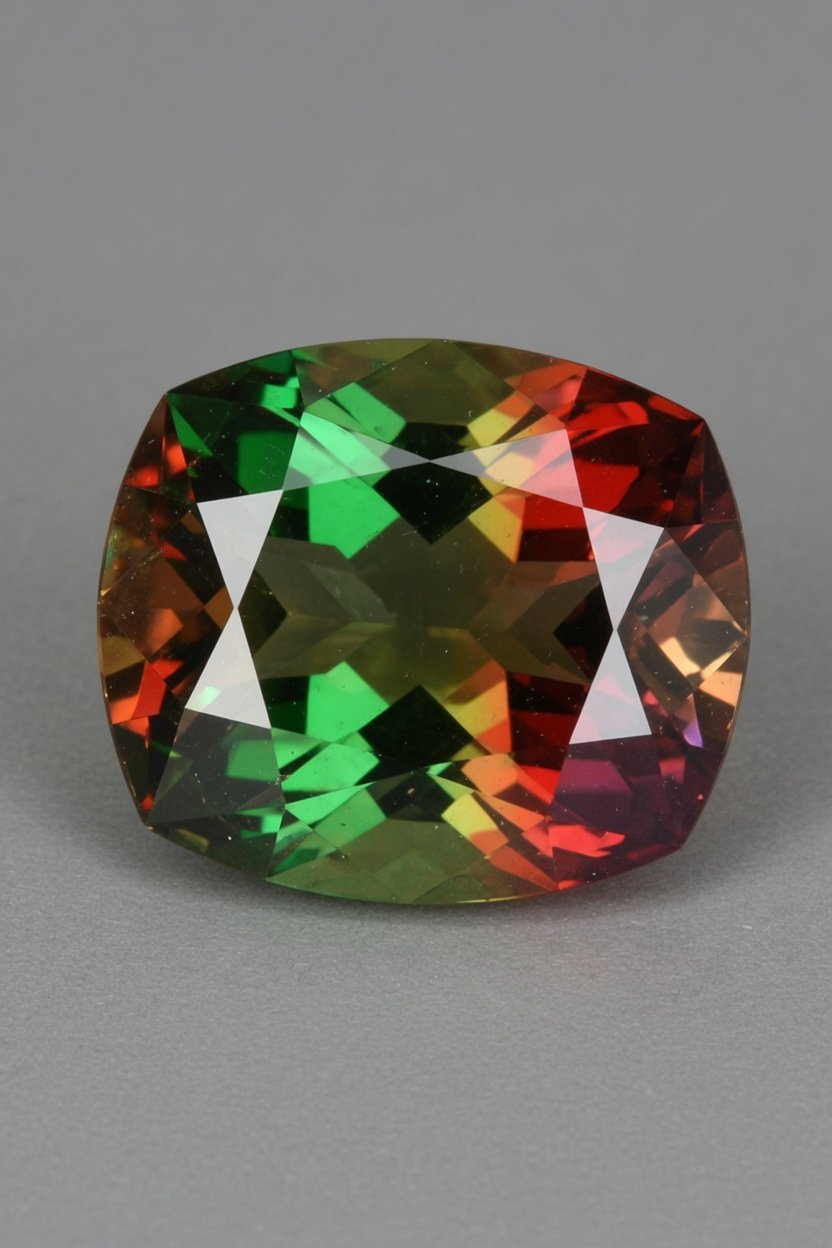
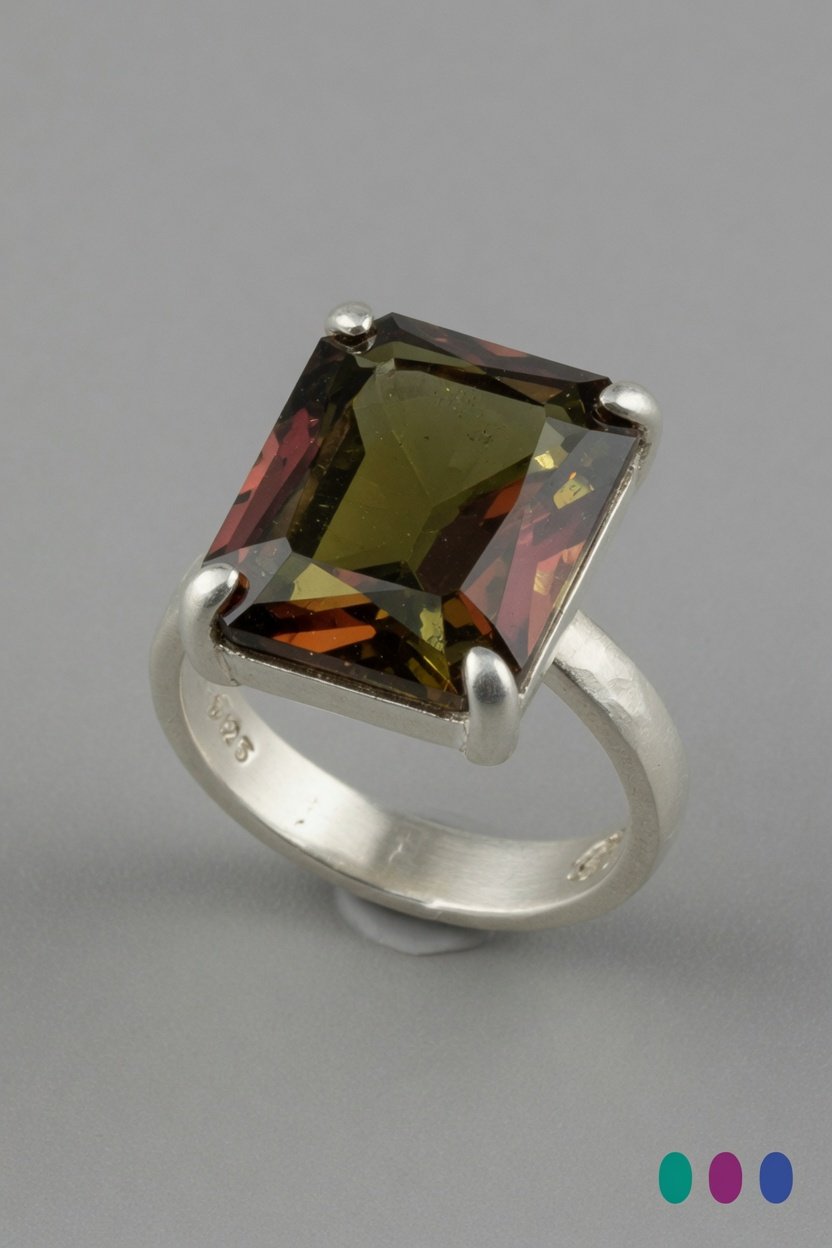
Andalusite draws the eye with its striking pleochroism, shifting between rich olive green, warm reddish brown, and deep brick red as the stone turns under light. This optical behavior arises from its crystal structure and makes every well-cut specimen a miniature light show prized by jewelers who work in silver. The mineral forms in metamorphic and pegmatite environments, yielding transparent crystals that reward precise faceting.
Physical Properties Andalusite possesses a hardness of 6.5 to 7.5 on the Mohs scale, sufficient for everyday jewelry yet requiring care around sharp blows because of its distinct cleavage planes. Specific gravity ranges from 3.05 to 3.20, giving pieces a satisfying weight in the hand. The stone is biaxial and exhibits strong pleochroism, with three distinct colors visible along its crystallographic axes. Its luster is vitreous to sub-vitreous on polished faces. Transparent to translucent material is most valued for gems. Andalusite shows no reaction to ordinary household chemicals, yet its surface can scratch if abraded by harder stones. Always set the stone after all soldering operations are complete and the piece has cooled to room temperature; avoid ultrasonic cleaners that could stress internal fractures.
Origin and Sourcing Primary commercial sources lie in Brazil’s Minas Gerais region, Spain’s Andalusia province, Sri Lanka’s central highlands, and scattered deposits in Canada and Australia. Most gem rough is recovered from hard-rock mining of metamorphic schists and pegmatite veins where aluminum-rich sediments have been recrystallized under heat and pressure. Miners follow narrow adits into the hillside, using controlled blasting and hand sorting to separate crystals from the host rock. Rough is then graded for color zoning and clarity before export. Trace amounts of iron and manganese produce the characteristic color shifts, while inclusions of graphite or mica sometimes create subtle internal patterns visible under magnification.
History and Significance Named for the Spanish region of Andalusia where it was first described in the nineteenth century, andalusite has been known to local lapidaries for far longer. Indigenous artisans in South America incorporated similar aluminum silicates into ritual objects long before European contact. In European mineral collections it earned a reputation as a curiosity because of its color-changing habit, yet it remained largely overlooked by mainstream jewelry until modern cutters learned to orient facets to maximize pleochroism. Today it symbolizes adaptability and grounded perception, qualities that resonate with contemporary silversmiths seeking stones that reward careful orientation.
In Jewelry and Silversmithing Transparent andalusite is almost always faceted to reveal its three-color play, most often in oval, cushion, or emerald cuts that allow light to travel along multiple axes. Because the strongest color contrast appears when the table is cut perpendicular to the c-axis, cutters must study each crystal before committing to a design. The finished gem sits comfortably in sterling silver, where the cool metal tone enhances the earthy color shifts. Bezel settings are preferred for stones showing pronounced color zoning, while prong mounts suit clean, inclusion-free material. Always set the stone after all soldering operations are complete and the piece has cooled; thermal shock from direct torch exposure can open cleavage planes. Routine care involves gentle wiping with a soft cloth and avoidance of prolonged sunlight that may fade iron-related color centers over decades.
Identifying Andalusite in the Field In outcrop, andalusite appears as elongated prismatic crystals with square cross-sections and a dull brownish exterior crust. Fresh breaks reveal the vitreous interior and, under strong light, the tell-tale color shift when the specimen is rotated. Associated minerals include kyanite, sillimanite, garnet, and mica schist. A simple field test is to examine the crystal under a dichroscope or even a simple polarizing filter; the three distinct colors confirm identity. Hardness testing with a steel point distinguishes it from softer alteration products, while its lack of reaction to dilute hydrochloric acid separates it from carbonate minerals that may share the same terrain.
Quick Facts
Common names: Andalusite, viridine (green variety)
Chemical formula: Al₂SiO₅
Mohs hardness: 6.5–7.5
Specific gravity: 3.05–3.20
Color: Green, reddish-brown, brick red with strong pleochroism
Crystal system: Orthorhombic
Luster: Vitreous to sub-vitreous
Transparency: Transparent to translucent
Common cuts: Oval, cushion, emerald
Common treatments: None
Best silver setting: Bezel or prong
Birthstone month (if any): None
Main sources: Brazil, Spain, Sri Lanka, Canada
Meaning & Intentions
GROUNDING
Andalusite anchors scattered attention by displaying three distinct colors that remind the wearer to remain present through shifting circumstances. Silversmiths set the stone in protective bezels so the pleochroic flash stays visible during daily movement, turning each glance into a quiet cue for stability.
Chakra: Root chakra for security and embodiment PERCEPTION
The stone’s ability to change color with angle trains the observer to notice multiple viewpoints before deciding. When mounted in silver, andalusite becomes a portable meditation tool that encourages clear seeing without judgment during creative or personal work.
Chakra: Third-eye chakra for insight and discernment BOUNDARIES
Its strong cleavage planes symbolize natural limits; the gem therefore supports wearers who need to maintain healthy separation between work and rest. Set after soldering, the finished piece acts as a tangible reminder that protection and openness can coexist.
Chakra: Solar plexus chakra for personal power
Affirmation: "I see clearly from every angle and remain steady in change." AT A GLANCE: Chakra: Root, third-eye, solar plexus Element: Earth Energy: Receptive Zodiac: Virgo, Capricorn Planet: Saturn Affirmation: "I see clearly from every angle and remain steady in change."
Related Stones
Explore more stones from the Gemstone Library: Tourmaline · Chrysoberyl · Onyx