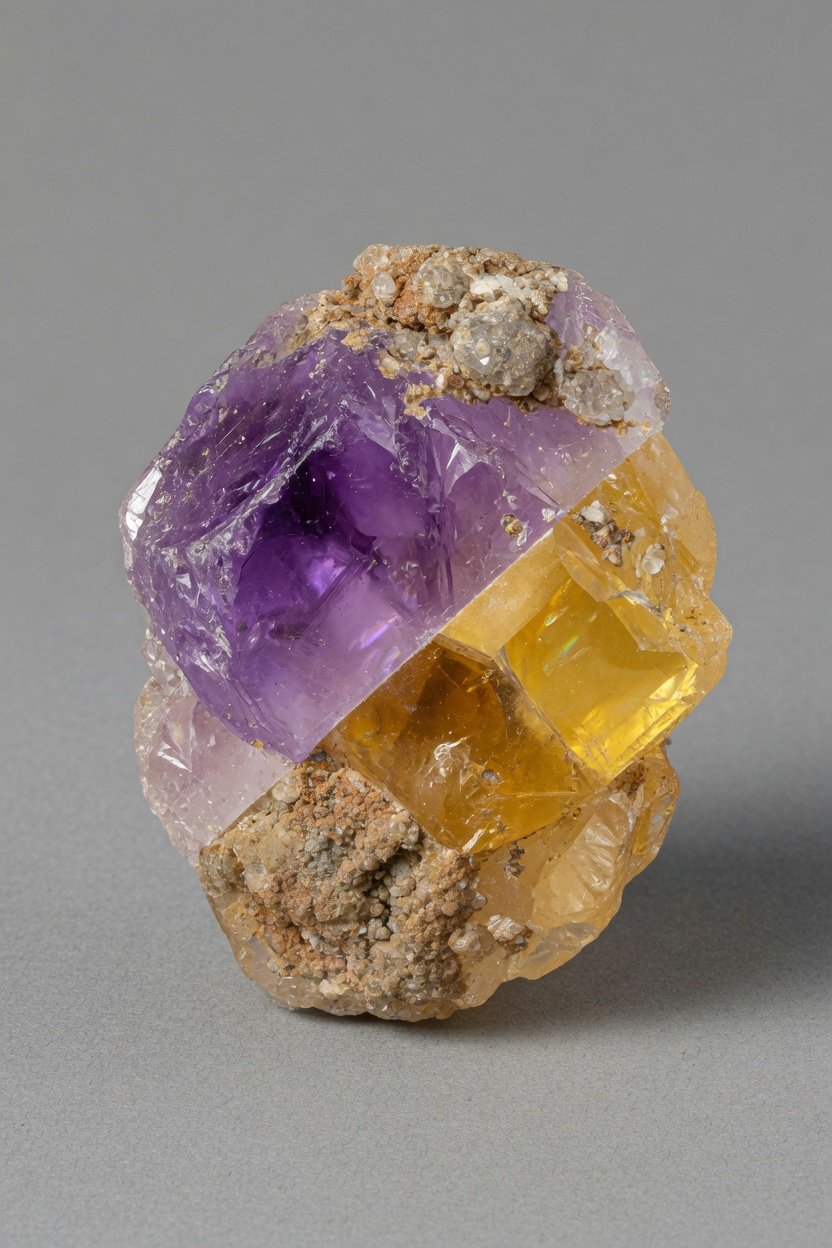
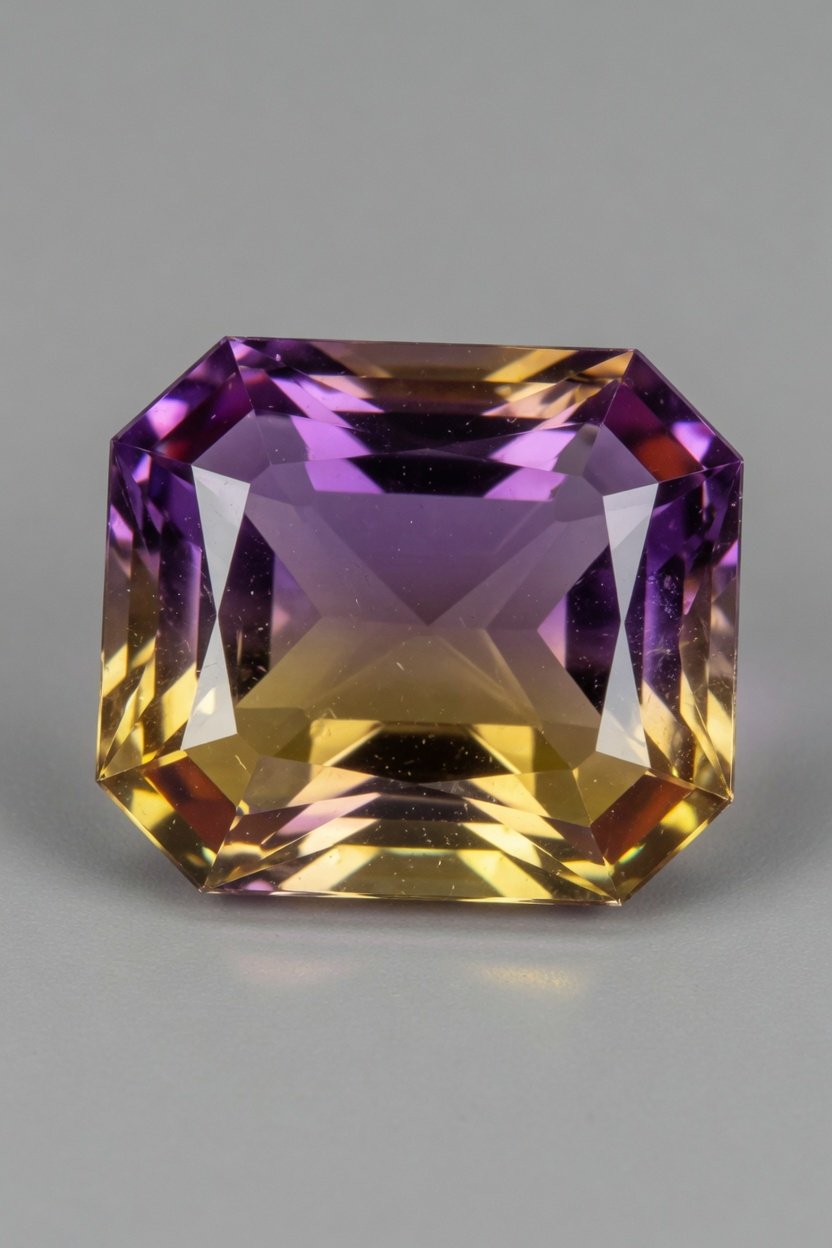
Ametrine emerges from the earth as a single quartz crystal split between royal purple and warm golden yellow, its zones meeting in sharp, natural lines that look almost painted by light itself. This rare bicolor variety forms only under precise temperature shifts deep within the Bolivian Andes, where iron impurities respond differently to heat and radiation in adjacent sections of the same stone. Silversmiths prize the contrast for pieces that carry both depth and brightness without needing multiple gems.
Physical Properties Ametrine is silicon dioxide with a Mohs hardness of 7, giving it solid durability for everyday jewelry while remaining workable for precise faceting. Its specific gravity sits at 2.65 and the crystal system is trigonal, producing vitreous luster and excellent transparency that lets color zones show cleanly from every angle. Because the purple and yellow result from natural heating rather than added dyes, the stone tolerates normal wear but should always be set after all soldering is complete so heat from the torch cannot alter the delicate color boundaries. Avoid prolonged sunlight and harsh chemicals that could fade the amethyst zones over time.
Origin and Sourcing The world's primary commercial source remains the Anahi mine in eastern Bolivia, where ametrine occurs in quartz veins within metamorphic rock. Miners extract the material through hard-rock tunneling rather than surface collection, following narrow seams that occasionally yield crystals large enough for substantial gems. Trace amounts appear in other quartz deposits, yet Bolivia supplies virtually all gem-quality rough sold today.
History and Significance Spanish conquistadors first recorded the bicolor quartz in the 1600s, though indigenous peoples of the region had long collected it. The modern name "ametrine" combines amethyst and citrine, reflecting the two colors in one crystal. In the late twentieth century the Anahi mine's controlled output turned the stone from curiosity into a recognized gem, valued for its natural color split rather than laboratory treatment.
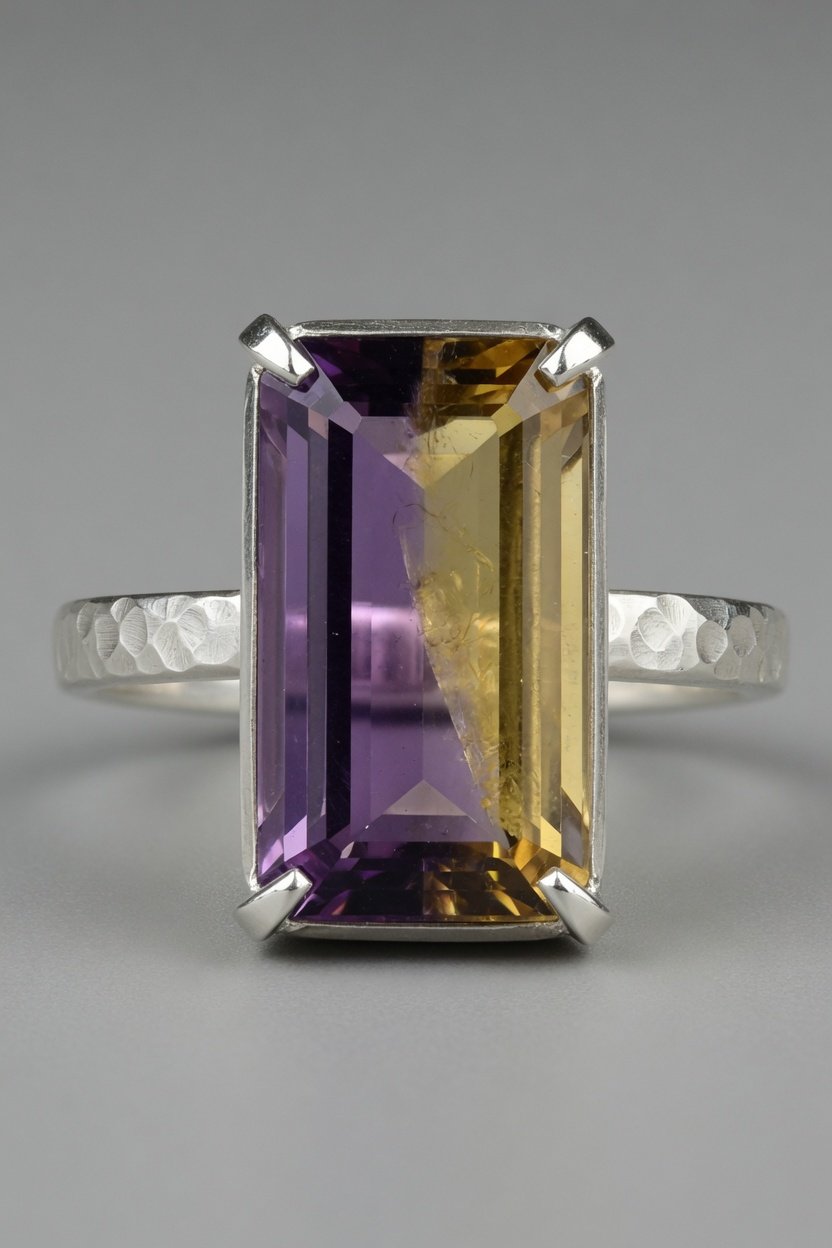
In Jewelry and Silversmithing Faceted ametrine captures light across both color zones, creating lively brilliance in rings, pendants, and earrings. Silversmiths set the finished stone only after all soldering and polishing steps are done, protecting the color zones from unnecessary heat. Its hardness supports secure prong or bezel settings, yet daily ring wear benefits from protective bezels or half-bezels to guard facet edges against abrasion. Ultrasonic cleaners are safe, but sudden temperature changes should be avoided.
Identifying Ametrine in the Field In rough form the stone shows distinct purple-to-yellow zoning with no color bleeding between zones, a key marker that separates it from heat-treated amethyst. A quick hardness test against steel confirms quartz, while the sharp color boundary visible even in small fragments distinguishes true ametrine from assembled or coated imitations.
Quick Facts
Common names: Ametrine, Bolivianite
Chemical formula: SiO2
Mohs hardness: 7
Specific gravity: 2.65
Color: Purple and golden-yellow zones
Crystal system: Trigonal
Luster: Vitreous
Transparency: Transparent to translucent
Common cuts: Faceted
Common treatments: None (natural color zoning)
Best silver setting: Contemporary Prong Ring
Birthstone month (if any): None
Main sources: Bolivia
Meaning & Intentions
BALANCE
Ametrine unites opposing energies within one crystal, helping the wearer hold steady when emotions swing between calm reflection and decisive action. The purple zones ground scattered thoughts while the yellow areas invite clear forward movement, making the stone a practical anchor during decision-heavy days or creative projects that demand both intuition and focus. Silversmiths often place the bicolor pattern so the transition line sits visibly across the center of a ring or pendant, reminding the owner of inner equilibrium each time the piece is worn.
Chakra: Solar Plexus — center of personal power and steady will CLARITY
The sharp division between purple and yellow sections acts as a visual metaphor for seeing situations from more than one angle at once. Wearers report that gazing into the zones helps separate emotional responses from practical facts, supporting honest self-assessment and clearer communication in both personal and professional settings. The stone's natural transparency lets light pass through both colors without distortion, mirroring the mental transparency the intention seeks.
Chakra: Third Eye — seat of insight and focused perception INTEGRITY
Ametrine encourages alignment between stated values and daily actions by displaying two distinct colors that nevertheless belong to the same crystal. The intention supports follow-through on commitments, whether creative, relational, or ethical, because the stone itself demonstrates unity across apparent opposites. In jewelry the clean color boundary becomes a quiet daily cue to keep word and deed consistent.
Chakra: Root — foundation of trust and grounded presence Affirmation: "I hold both depth and light in clear balance." AT A GLANCE: Chakra: Third Eye — seat of insight and focused perception Element: Air Energy: Projective Zodiac: Gemini, Libra Planet: Mercury Affirmation: "I hold both depth and light in clear balance."
Related Stones
Explore more stones from the Gemstone Library: Sunstone · Citrine · Scapolite