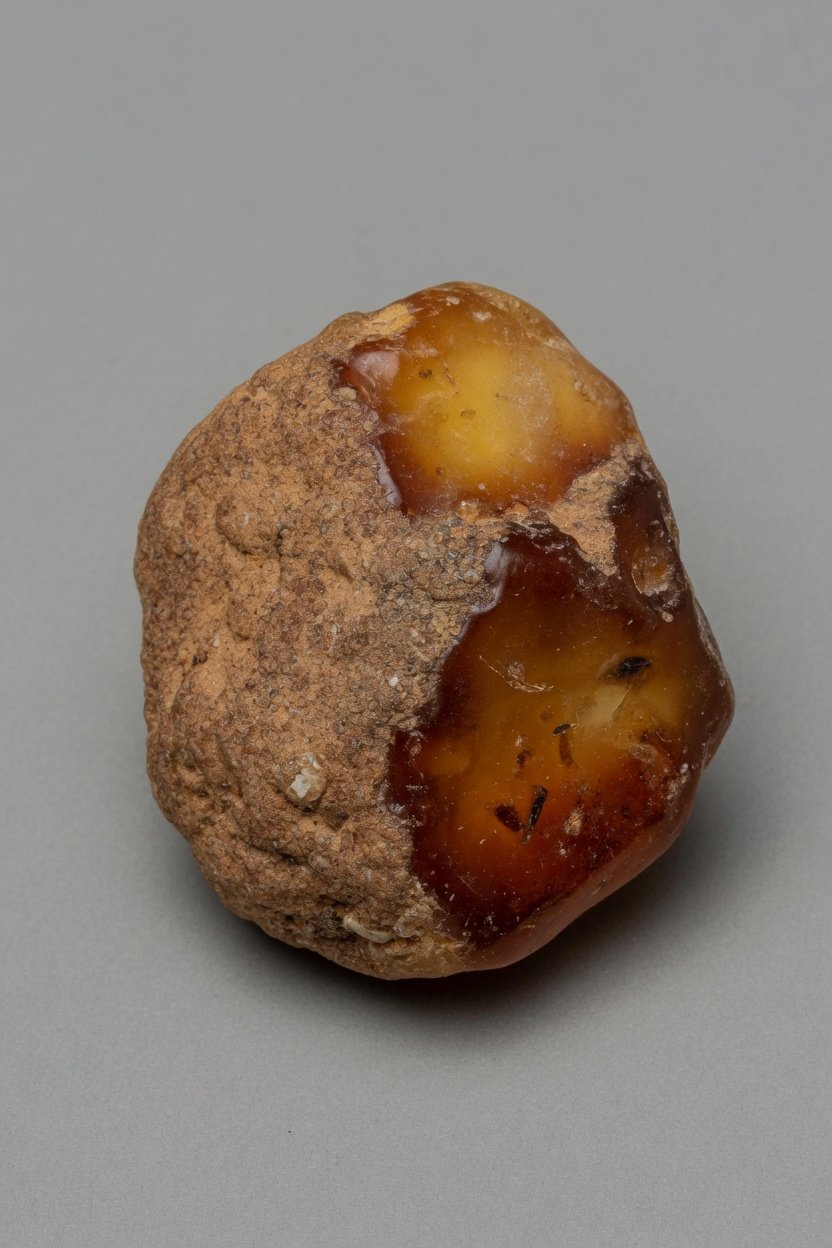
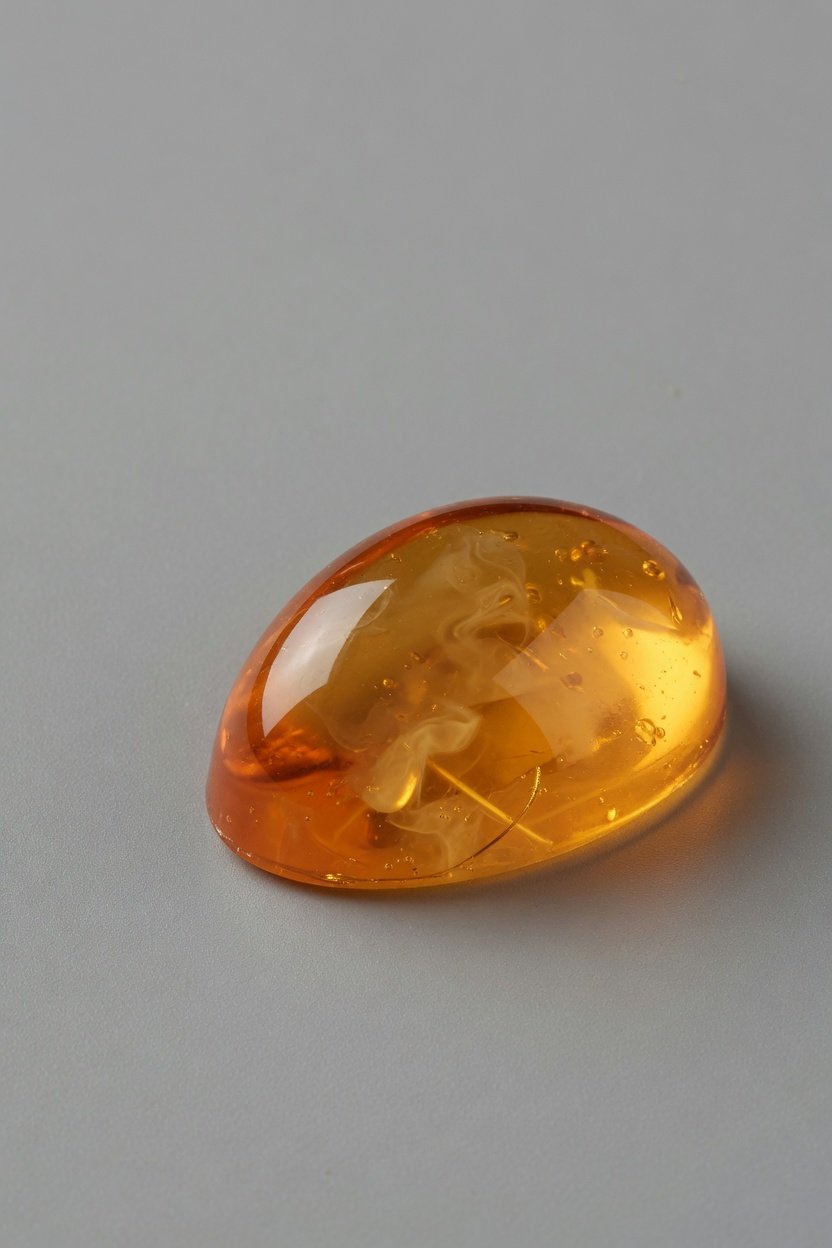
Amber begins as ancient tree resin that seeped from conifers millions of years ago and hardened into translucent golden lumps, preserving insects and plant fragments like tiny windows into prehistoric forests. Its soft glow and lightweight feel have drawn artisans for centuries, yet its organic nature demands careful handling during every stage of jewelry creation.
Physical Properties Amber is fossilized resin rather than a true mineral, with a Mohs hardness of only 2 to 2.5 that makes it easily scratched yet surprisingly tough against impacts. Its specific gravity hovers near 1.08, allowing pieces to float in saltwater, while its refractive index of 1.54 produces a warm, resinous luster ranging from glassy to waxy. Colors span honey yellow through deep cognac brown, often showing cloudy zones or sun-spangled inclusions; the material is amorphous with no crystal system. Because amber contains volatile compounds and can soften above 150°C, it must be set into silver only after all soldering and polishing are complete, and it should never be exposed to ultrasonic cleaners or harsh chemicals that can craze its surface.
Origin and Sourcing Major deposits formed in Eocene Baltic forests now submerged beneath the Baltic Sea, with additional sources in the Dominican Republic, Mexico, and Myanmar. Amber reaches the surface through coastal erosion or open-pit mining of blue-earth layers, where miners sift sediment by hand or use water jets to free the resin lumps. Ethical sourcing favors Baltic material collected from beaches or controlled mines that avoid deep excavation damage to surrounding ecosystems.
History and Significance Baltic amber traveled ancient trade routes known as the Amber Road, linking northern Europe to Mediterranean cultures where it was carved into amulets and traded as “northern gold.” Romans valued it for both jewelry and medicinal ointments, while medieval Europeans used it in rosaries and healing charms. Its ability to hold static charge when rubbed earned it the Greek name elektron, root of the word electricity, cementing its place in both myth and early science.
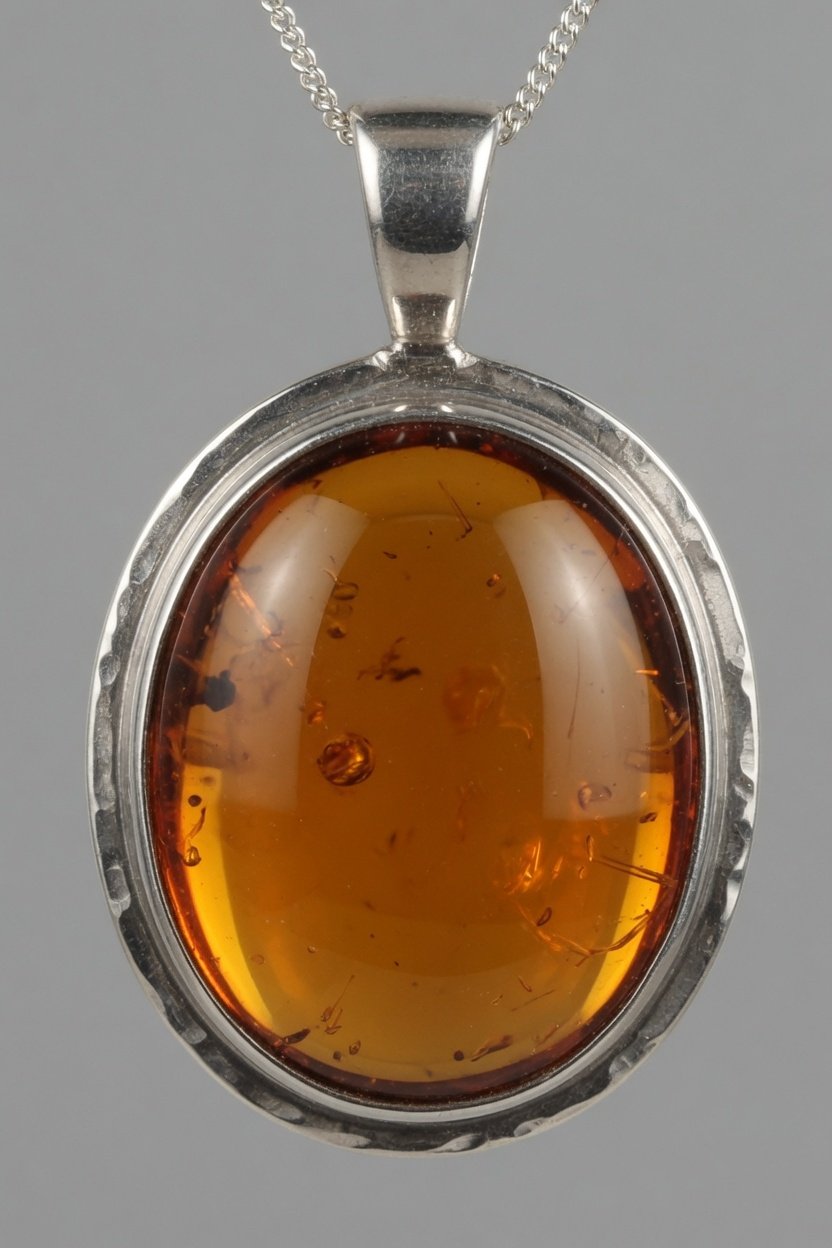
In Jewelry and Silversmithing Silversmiths favor amber for pendants, rings, and brooches because its low density keeps large pieces wearable. The stone is always seated after soldering to prevent heat damage that could darken or crack the resin. Traditional settings include simple bezels that protect the edges without pressure, while modern designs sometimes incorporate open backs to let light pass through. Care cautions include storing amber away from direct sunlight to avoid fading and cleaning only with a soft damp cloth.
Identifying Amber in the Field Field identification relies on its distinctive warmth to the touch, low weight, and pine-like scent when gently heated with a needle test. A saltwater float test separates true amber from plastic imitations, while ultraviolet light reveals blue fluorescence in many Baltic specimens. Inclusions of insects or botanical debris confirm natural origin and add value for collectors.
Quick Facts
Common names: Amber, Succinite, Fossil Resin
Chemical formula: C10H16O (approximate)
Mohs hardness: 2–2.5
Specific gravity: 1.05–1.10
Color: Yellow to orange-brown, rarely red or green
Crystal system: Amorphous
Luster: Resinous to waxy
Transparency: Transparent to translucent
Common cuts: Cabochon, freeform, beads
Common treatments: Heat clarification, fracture filling
Best silver setting: Bezel
Birthstone month (if any): None
Main sources: Baltic Sea region, Dominican Republic, Mexico
Meaning & Intentions
GROUNDING WARMTH
Amber anchors scattered energy by carrying the steady warmth of ancient sunlight, helping wearers feel centered during times of change and transition. Silversmiths often set it in protective bezels so the stone rests close to the skin, allowing its gentle vibration to steady the wearer throughout the day.
Chakra: Root — stability and connection to earth CLARITY OF VISION
Amber’s transparent golden depths encourage clear thinking and insight, dissolving mental fog so that creative ideas surface naturally. When placed in a pendant near the heart or throat, the stone supports focused intention during silversmithing projects or personal reflection.
Chakra: Solar Plexus — confidence and personal power PRESERVATION AND MEMORY
Amber’s fossilized inclusions remind wearers to honor the past while protecting what matters most, serving as a talisman for safeguarding memories and traditions. Crafted into heirloom jewelry, it carries stories forward across generations.
Chakra: Sacral — creativity and emotional flow Affirmation: "I hold warmth and clarity within." AT A GLANCE: Chakra: Root, Solar Plexus, Sacral Element: Earth Energy: Receptive Zodiac: Leo, Libra Planet: Sun Affirmation: "I hold warmth and clarity within."
Related Stones
Explore more stones from the Gemstone Library: Agate · Hessonite · Moss Agate