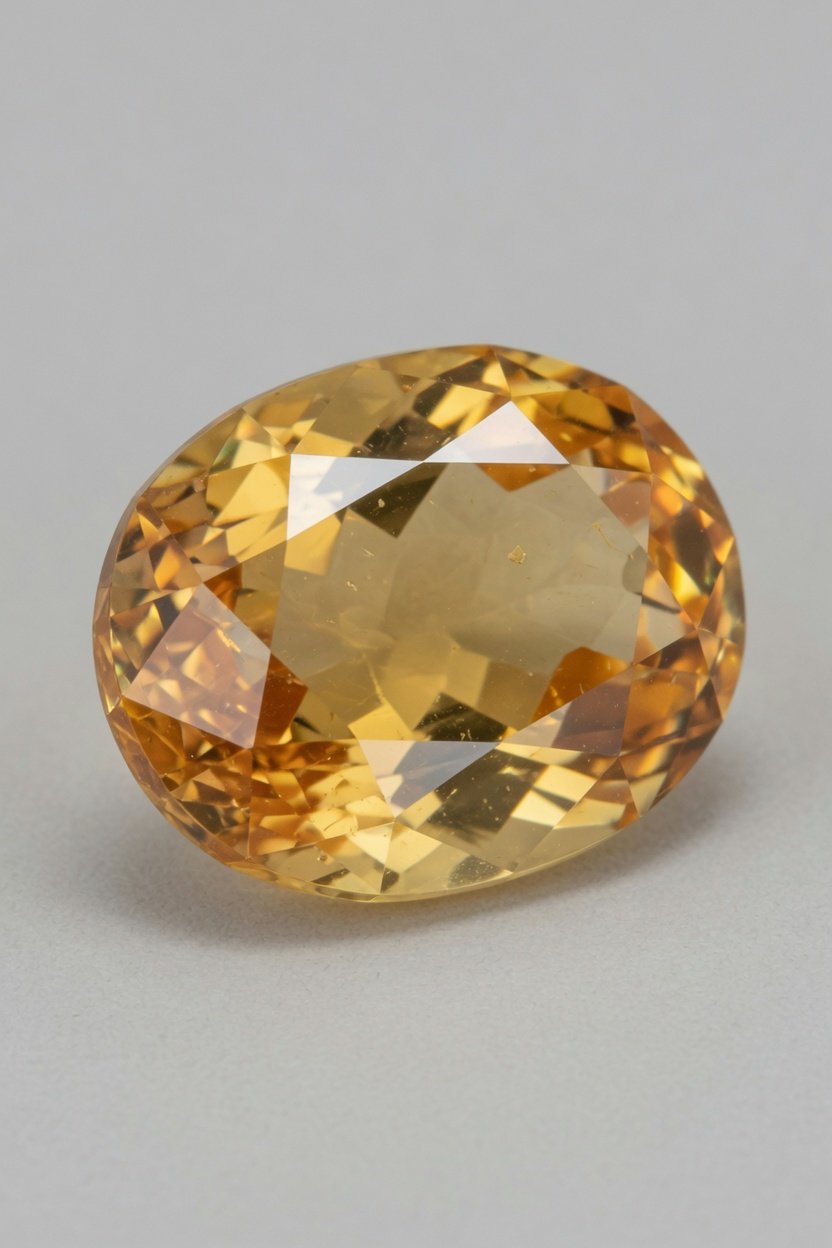
Heliodor, also known as Golden Beryl, catches the eye with its clear, sunlit yellow tones that range from pale honey to rich golden-amber. This variety of beryl forms in pegmatites where slow cooling allows large, transparent crystals to develop, giving jewelers a durable, light-filled stone that holds its color under most conditions.
Physical Properties Heliodor belongs to the beryl family with the chemical formula Be₃Al₂Si₆O₁₈. It registers 7.5–8 on the Mohs scale, making it hard enough for everyday wear yet requiring care during fabrication. Specific gravity sits between 2.66 and 2.70, and its hexagonal crystal system produces prismatic crystals with vitreous luster. The stone is transparent to translucent, with refractive indices of 1.57–1.60. Always set the stone after all soldering is complete to avoid heat damage that can lighten or fracture the crystal along cleavage planes. Store finished pieces away from ultrasonic cleaners and sudden temperature changes.
Origin and Sourcing Primary deposits occur in Brazil’s Minas Gerais pegmatites, Madagascar’s highland veins, and select sites in Ukraine and Namibia. Miners extract the mineral through hard-rock tunneling, following quartz-rich zones where beryl crystals grow alongside feldspar and mica. Rough material is sorted at the mine face, then transported to cutting centers where only the clearest sections are selected for faceting. Trace iron gives the stone its characteristic golden hue; higher iron content deepens the color while lower amounts produce lighter straw shades.
History and Significance Ancient texts from the Mediterranean region mention golden beryl as a stone of clarity and resolve. In the eighteenth and nineteenth centuries, Brazilian specimens reached European courts, where they were cut into large table stones for royal collections. During the Art Deco period, heliodor’s bright yellow made it a favored accent in geometric silver designs. Today the stone continues to symbolize steady illumination, its color evoking both harvest fields and early morning light.
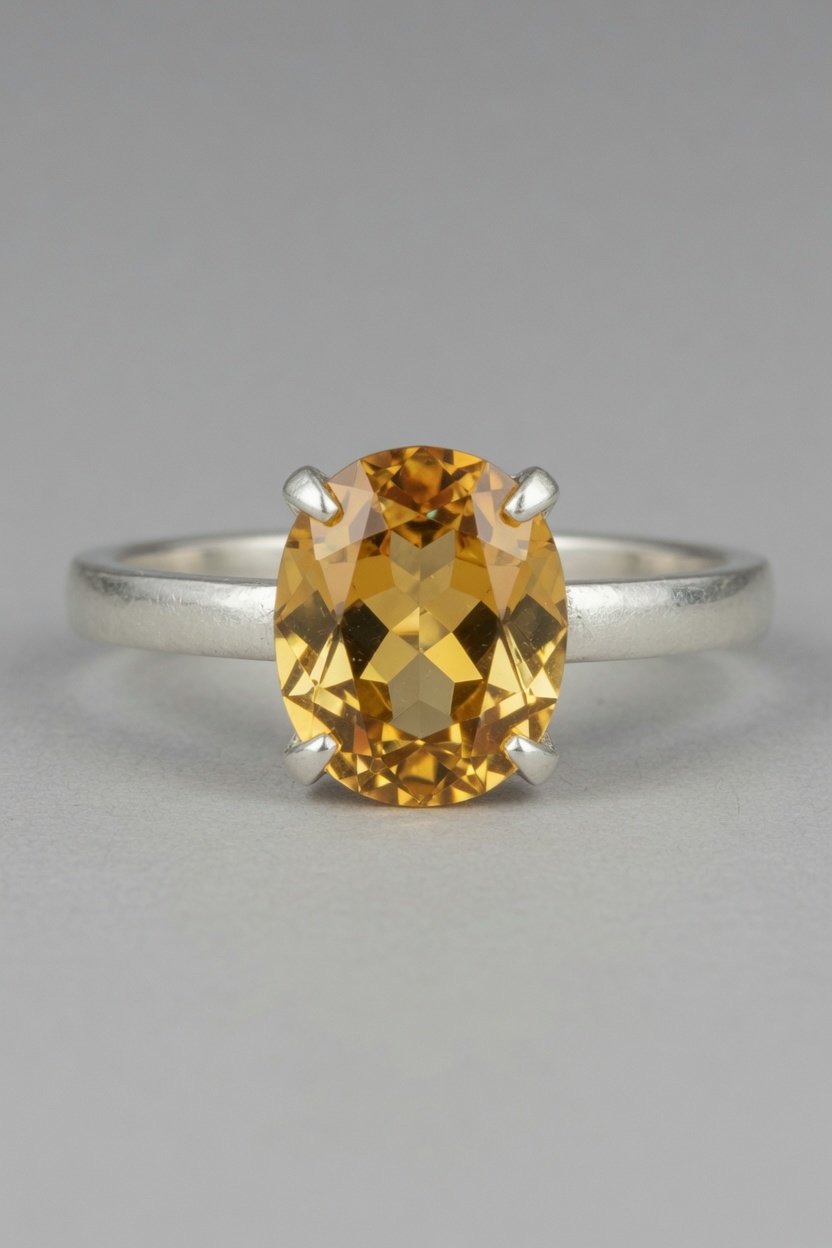
In Jewelry and Silversmithing Silversmiths choose heliodor for rings, pendants, and earrings because its hardness pairs well with sterling silver’s cool tone. Faceted stones are typically set in prongs or low bezels that allow light to pass through the pavilion. After polishing, the piece is cleaned in mild soap solution only. Avoid prolonged exposure to strong acids or prolonged sunlight, which may cause gradual fading in some specimens. The stone’s toughness supports protective bezel edges when used in daily-wear items.
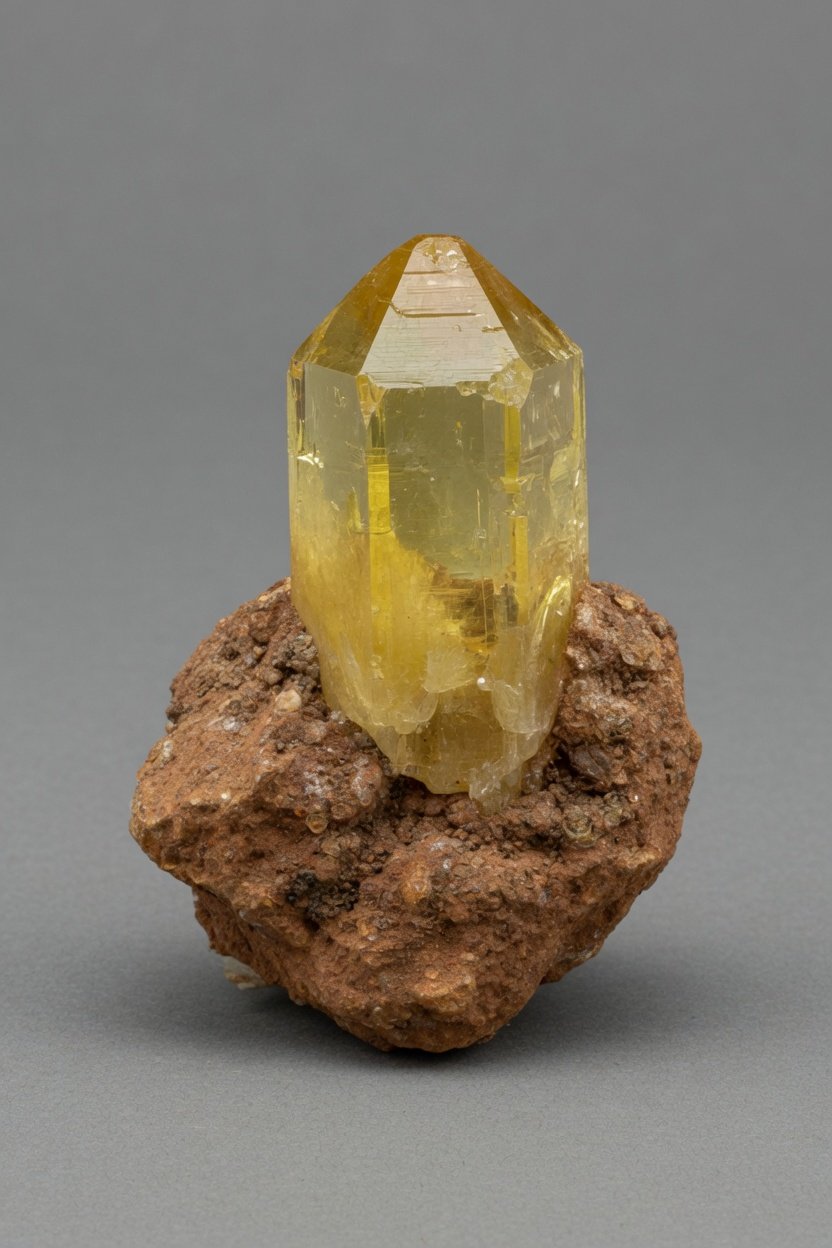
Identifying Heliodor (Golden Beryl) in the Field In rough form, heliodor appears as elongated hexagonal prisms with flat terminations, often showing a thin white or brown weathering crust. A streak plate test yields white, and the stone feels noticeably lighter than quartz of similar size. Under magnification, natural crystals may display tiny fluid inclusions or parallel growth lines. Color zoning, when present, runs lengthwise rather than in concentric bands. These visual markers, combined with hardness and crystal habit, distinguish heliodor from citrine or yellow topaz.
Quick Facts
Common names: Heliodor, Golden Beryl
Chemical formula: Be₃Al₂Si₆O₁₈
Mohs hardness: 7.5–8
Specific gravity: 2.66–2.70
Color: Golden yellow to honey-amber
Crystal system: Hexagonal
Luster: Vitreous
Transparency: Transparent to translucent
Common cuts: Emerald, round, oval, cushion
Common treatments: Occasional heat or irradiation
Best silver setting: Contemporary Prong Ring
Birthstone month (if any): None
Main sources: Brazil, Madagascar, Ukraine, Namibia
Meaning & Intentions
CLARITY
Heliodor supports clear decision-making by anchoring scattered thoughts into focused intention. Silversmiths set the faceted stone in a simple silver band so the wearer can touch the cool metal and golden face during moments of doubt, allowing the stone’s steady light to reinforce mental order without distraction.
Chakra: Solar Plexus — confidence and directed will PERCEPTION
The stone’s transparent golden body is used to heighten awareness of subtle patterns in daily life. When set as a pendant resting near the heart, heliodor encourages quiet observation, helping the wearer notice opportunities that might otherwise pass unseen while remaining grounded in practical action.
Chakra: Third Eye — insight and focused attention STABILITY
Heliodor set in silver is carried to maintain steady energy through change. Its durable structure and consistent color remind the wearer that inner resources remain constant even when outer circumstances shift, supporting long-term projects without unnecessary fluctuation.
Chakra: Root — security and endurance Affirmation: "I hold steady light through every season." AT A GLANCE: Chakra: Solar Plexus — confidence and directed will Element: Fire Energy: Projective Zodiac: Leo Planet: Sun Affirmation: "I hold steady light through every season."
Related Stones
Explore more stones from the Gemstone Library: Sunstone · Citrine · Scapolite