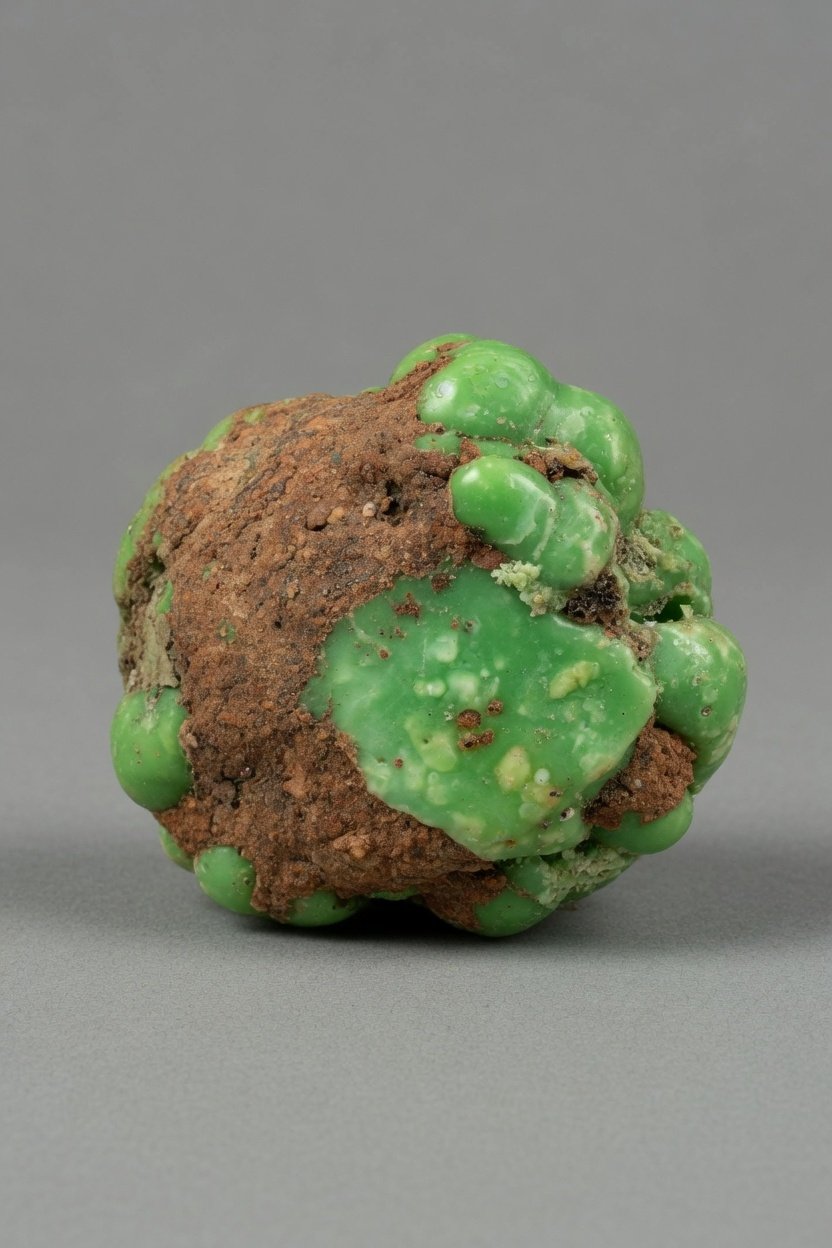
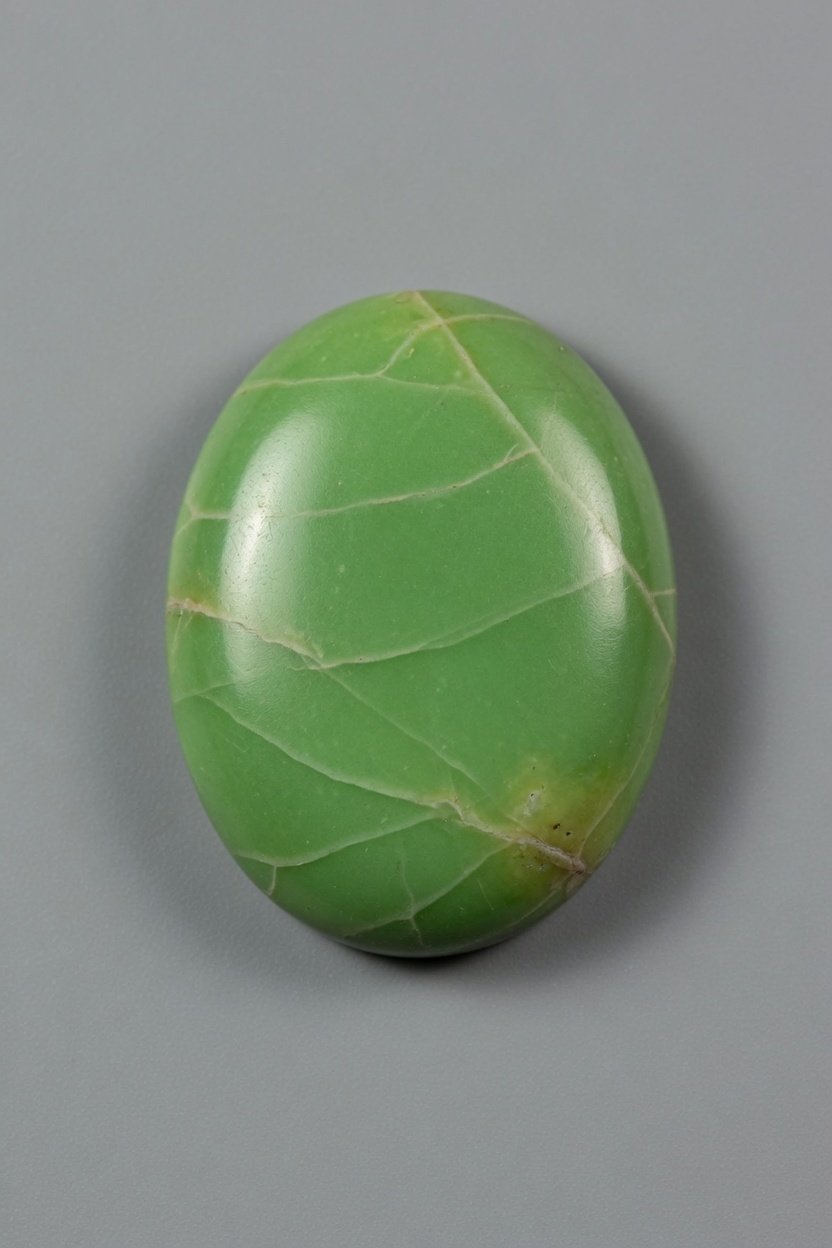
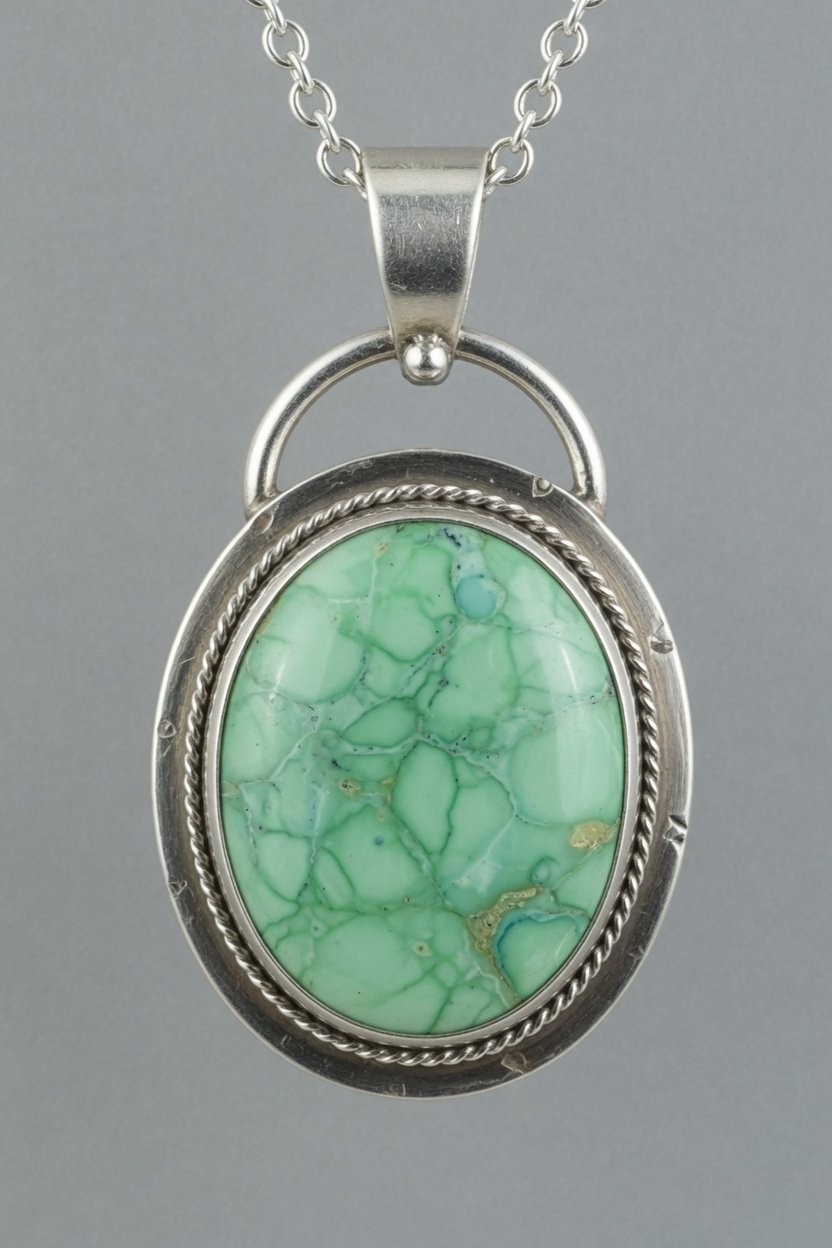
Variscite emerges from ancient phosphate-rich deposits as a vivid apple-green stone that immediately captures attention with its soft, waxy glow and occasional matrix veining. This phosphate mineral forms in the same geological environments as turquoise yet offers a distinct, cooler hue that silversmiths prize for its ability to complement sterling silver without overwhelming it. Its gentle translucency in thinner areas adds depth once set, making each finished piece quietly luminous.
Physical Properties Variscite is a hydrated aluminum phosphate with the formula AlPO₄·2H₂O. It registers 4 to 5 on the Mohs scale, rendering it softer than turquoise and more prone to scratching during wear. Specific gravity sits between 2.4 and 2.6. The stone displays a waxy to dull luster and remains opaque except in the thinnest sections. Because of its water content, Variscite is heat-sensitive; prolonged exposure above 200 °C can cause cracking or color shift. Always set the stone after all soldering and pickling operations are complete. Avoid ultrasonic cleaners and steam; wipe with a soft, damp cloth only.
Origin and Sourcing Commercial quantities come primarily from the western United States, especially Utah’s Clay Canyon and Nevada’s Candelaria Hills, with smaller production in Australia and Germany. Miners extract the material from near-surface veins and nodules within altered sedimentary rocks. Open-pit methods predominate, exposing nodules surrounded by limonite or sandstone matrix. Rough is hand-sorted at the mine to preserve the most vivid green areas before shipment to lapidaries.
History and Significance Indigenous peoples of the Great Basin used variscite for beads and pendants as early as 500 BCE. In the early twentieth century, American jewelers rediscovered the stone and marketed it as “Utahlite.” Its name derives from the Latin “Variscia,” an ancient district in Germany where similar material was first described. Collectors still seek classic spiderweb-matrix specimens from the original Utah claims.
In Jewelry and Silversmithing Variscite’s even green tone pairs beautifully with oxidized silver and simple bezels that protect its soft surface. Silversmiths cut oriented slabs so that any subtle banding runs horizontally across the finished cabochon. Because the stone contains structural water, it must be set only after all torch work and pickling are finished. A light coat of microcrystalline wax after polishing helps stabilize surface porosity. The material accepts a high polish but scratches easily, so final buffing uses gentle compounds and low pressure.
Identifying Variscite in the Field Look for apple-green to turquoise-green nodules or veins in pale sedimentary host rock. A drop of hydrochloric acid produces a slow effervescence on weathered surfaces, distinguishing it from similar green minerals. Hardness testing with a steel point leaves a visible mark, confirming its relative softness. Fresh fractures show a dull, earthy texture rather than the glassy break of chalcedony.
Quick Facts
Common names: Variscite, Utahlite
Chemical formula: AlPO₄·2H₂O
Mohs hardness: 4–5
Specific gravity: 2.4–2.6
Color: Apple green to yellow-green, often with brown matrix
Crystal system: Orthorhombic
Luster: Waxy to dull
Transparency: Opaque
Common cuts: Cabochon, freeform, beads
Common treatments: Wax stabilization, occasional dyeing
Best silver setting: Classic Silver Bezel Pendant
Birthstone month (if any): None
Main sources: USA (Utah, Nevada), Australia, Germany
Meaning & Intentions
GROUNDING
Variscite anchors scattered energy and encourages steady presence during demanding creative work. Silversmiths keep a small polished piece on the bench to maintain calm focus while filing and setting. The stone’s cool green tone visually reinforces stability, helping the maker remain centered through repetitive tasks.
Chakra: Root — stability and physical security CLARITY
The stone’s even color supports clear decision-making when choosing designs or selecting companion metals. Wearers report that gazing into the polished surface quiets mental static and highlights practical next steps. In jewelry it serves as a tactile reminder to pause and observe before acting.
Chakra: Third Eye — insight and perception PROTECTION
Variscite is carried as a quiet shield against external pressures that drain creative reserves. Its phosphate structure is believed to absorb and neutralize stray negativity encountered during daily wear. Set in silver, the stone forms a compact energetic boundary around the wearer.
Chakra: Heart — emotional safety Affirmation: "I remain steady and clear." AT A GLANCE: Chakra: Root, Third Eye, Heart Element: Earth Energy: Receptive Zodiac: Taurus, Virgo Planet: Venus Affirmation: "I remain steady and clear."
Related Stones
Explore more stones from the Gemstone Library: Serpentine · Agate · Aragonite