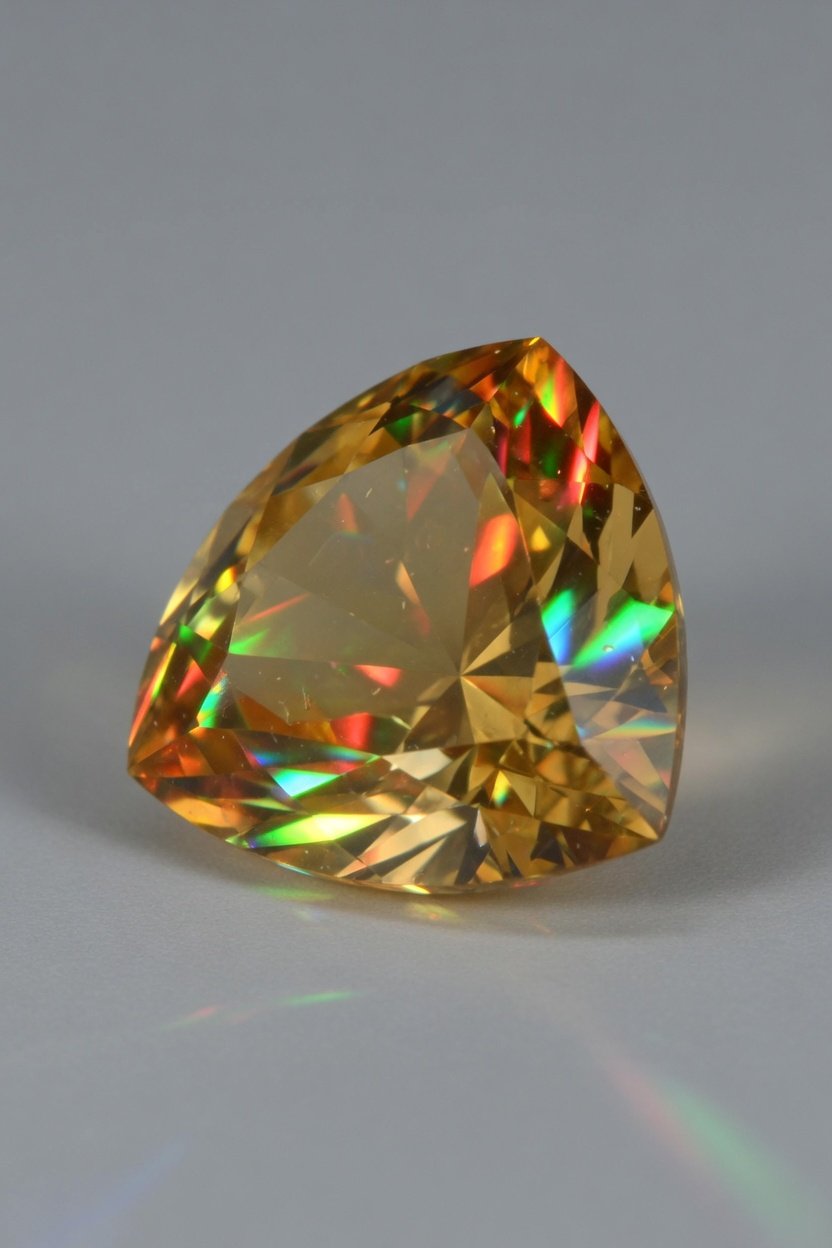
Sphalerite draws the eye with its resinous glow and flashes of color that shift between honey yellow and deep brown, a mineral whose fire rivals finer gems yet demands careful handling from any silversmith. Its high dispersion creates rainbow play inside each facet, yet the stone’s softness and perfect cleavage require the setter to work only after every torch is cold. This balance of brilliance and fragility makes sphalerite a quiet test of skill in the workshop.
Physical Properties Sphalerite registers 3.5 to 4 on the Mohs scale and shows a specific gravity near 4.0, values that immediately signal caution when planning a piece. The mineral’s adamantine to resinous luster and cubic cleavage planes mean any pressure during setting can cause sudden splits. Because of these traits the stone is always set after all soldering is finished and the piece has cooled completely; even brief heat can cloud the surface or open hidden fractures. Gentle ultrasonic cleaning is avoided in favor of warm soapy water and a soft brush.
Origin and Sourcing Major deposits occur in the zinc-rich veins of Mexico, the United States, Spain, and China, where miners follow narrow seams through hard rock. Transparent yellow and orange crystals suitable for faceting come chiefly from the Naica and Santa Eulalia districts in Mexico and from the Balmat-Edwards district in New York. Rough is usually recovered as by-product of zinc mining rather than as a primary gem target, so parcels reach lapidaries only after careful hand sorting.
History and Significance European mineralogists first distinguished sphalerite from galena in the eighteenth century, naming it for its deceptive resemblance to other ores. In mining folklore the stone was carried as a talisman against false friends because its shifting colors seemed to reveal hidden truth. Modern collectors prize well-cut examples for their dispersion that exceeds diamond, yet the gem remains rare in antique jewelry because early cutters lacked techniques to manage its cleavage.
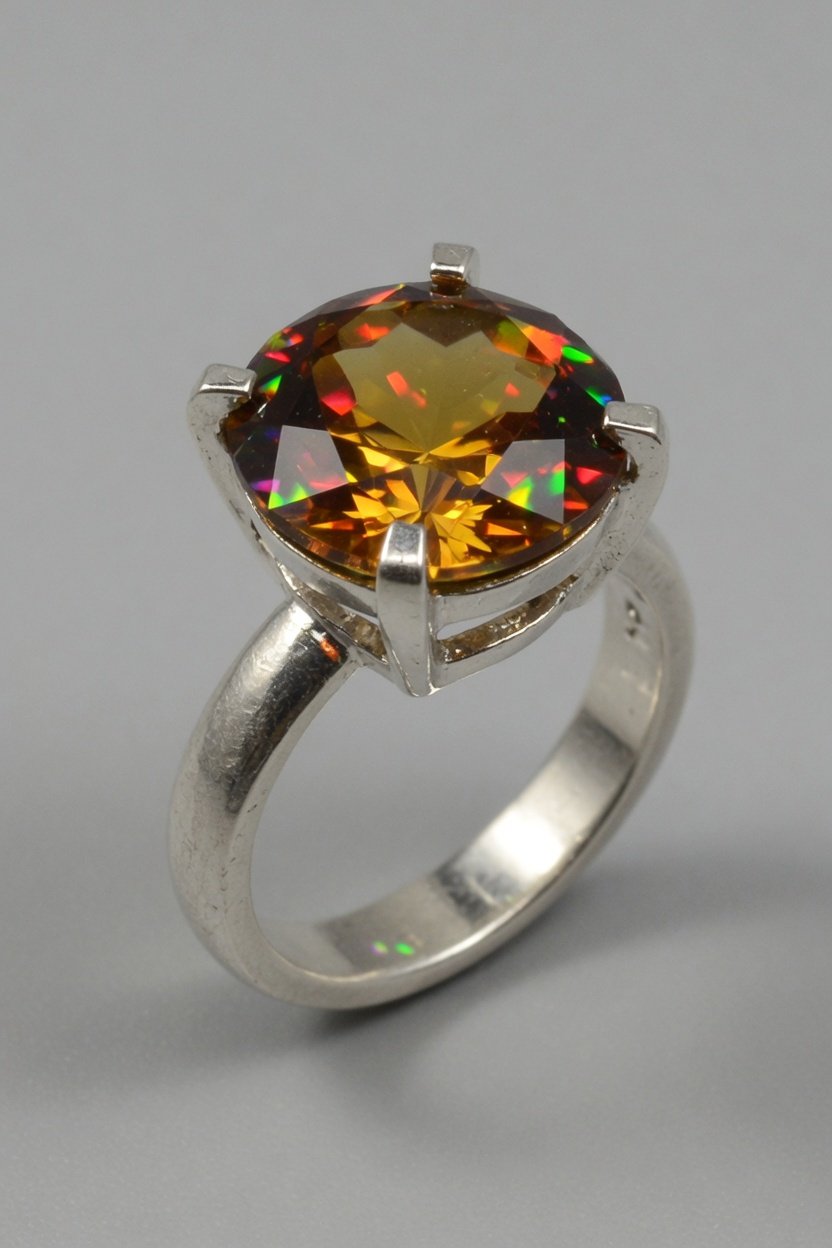
In Jewelry and Silversmithing When faceted, sphalerite rewards precise angles that maximize its spectral flashes while protecting the vulnerable cleavage planes. Contemporary prong settings in sterling silver allow light to enter from all sides without placing metal over the stone’s weakest directions. The finished piece is always set after soldering; the setter uses a low-temperature torch only for final adjustments and then cools the work slowly to avoid thermal shock. Daily wear is discouraged because everyday knocks can bruise the surface or start a cleavage crack.
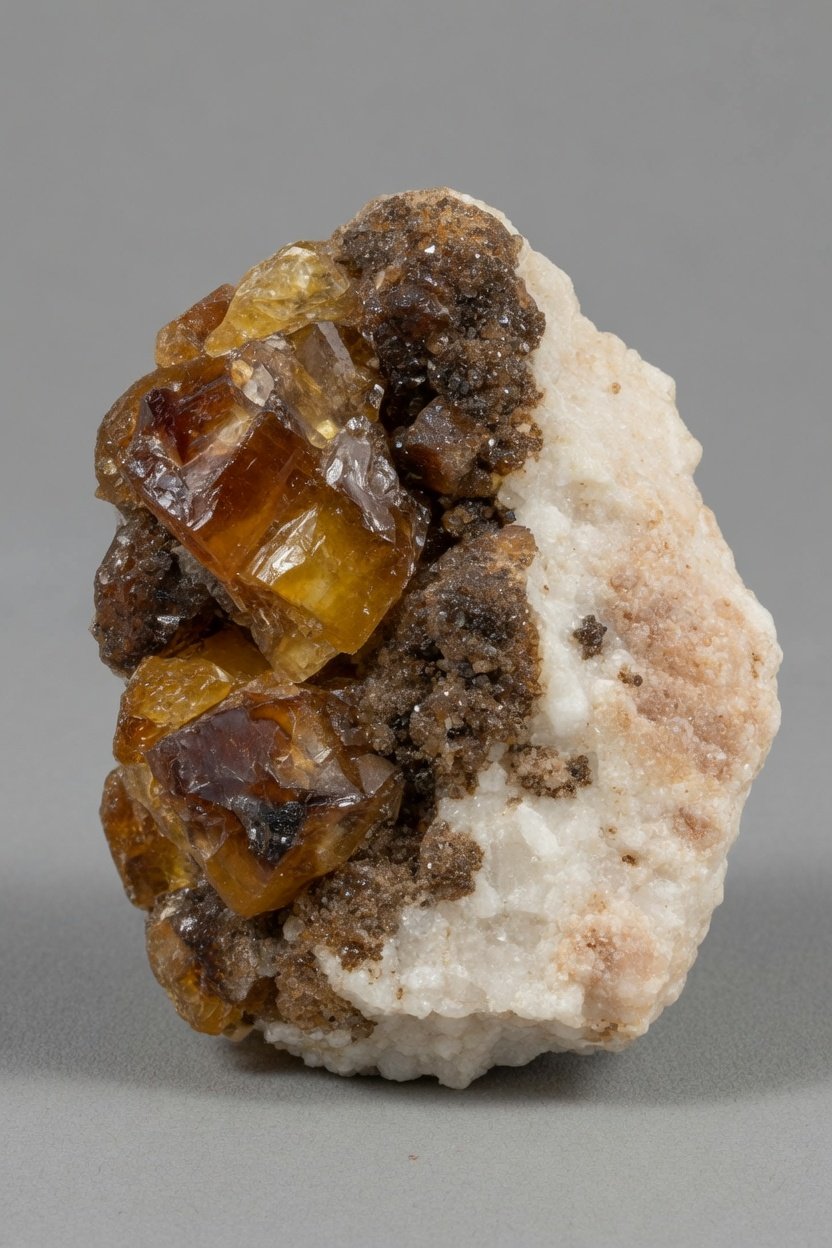
Identifying Sphalerite in the Field In outcrop the mineral appears as tetrahedral crystals or massive granular ore with a resinous sheen that distinguishes it from quartz or calcite. A streak plate test yields a pale yellow to brown line, and the distinctive smell of sulfur when struck with a hammer confirms identity. Collectors note that transparent crystals often rest in matrix of white dolomite or dark sphalerite, providing a natural contrast that highlights the gemmy zones.
Quick Facts
Common names: Sphalerite, Zinc Blende, Black Jack
Chemical formula: ZnS
Mohs hardness: 3.5–4
Specific gravity: 3.9–4.1
Color: Yellow, orange, brown, red, black
Crystal system: Cubic
Luster: Adamantine to resinous
Transparency: Transparent to translucent
Common cuts: Faceted, rarely cabochon
Common treatments: None
Best silver setting: Contemporary Prong Ring
Birthstone month (if any): None
Main sources: Mexico, USA, Spain, China
Meaning & Intentions
CLARITY
Sphalerite’s shifting internal colors are used in meditation to cut through mental fog and reveal the core of a situation. Practitioners place a faceted stone on the desk during study or decision-making sessions, allowing its flashes to interrupt circular thinking and prompt clearer questions. The stone is said to steady the mind without dulling emotional sensitivity.
Chakra: Third Eye — insight and focused perception PERCEPTION
When carried or worn, the gem is believed to heighten awareness of subtle cues in conversation and environment. Its high dispersion mirrors the way light bends, reminding the user that appearances shift with angle and that hidden layers often lie beneath the obvious surface.
Chakra: Third Eye — insight and focused perception PROTECTION
The mineral’s dense structure and zinc content are traditionally linked to shielding the wearer from scattered or draining energies. In personal talisman work a small faceted piece is kept in a pocket or set into a pendant that rests near the heart, serving as a quiet anchor during times of transition.
Chakra: Root — grounding and stability Affirmation: "I see clearly and remain grounded." AT A GLANCE: Chakra: Third Eye Element: Earth Energy: Receptive Zodiac: Virgo Planet: Saturn Affirmation: "I see clearly and remain grounded."
Related Stones
Explore more stones from the Gemstone Library: Pezzottaite · Phenakite · Sillimanite