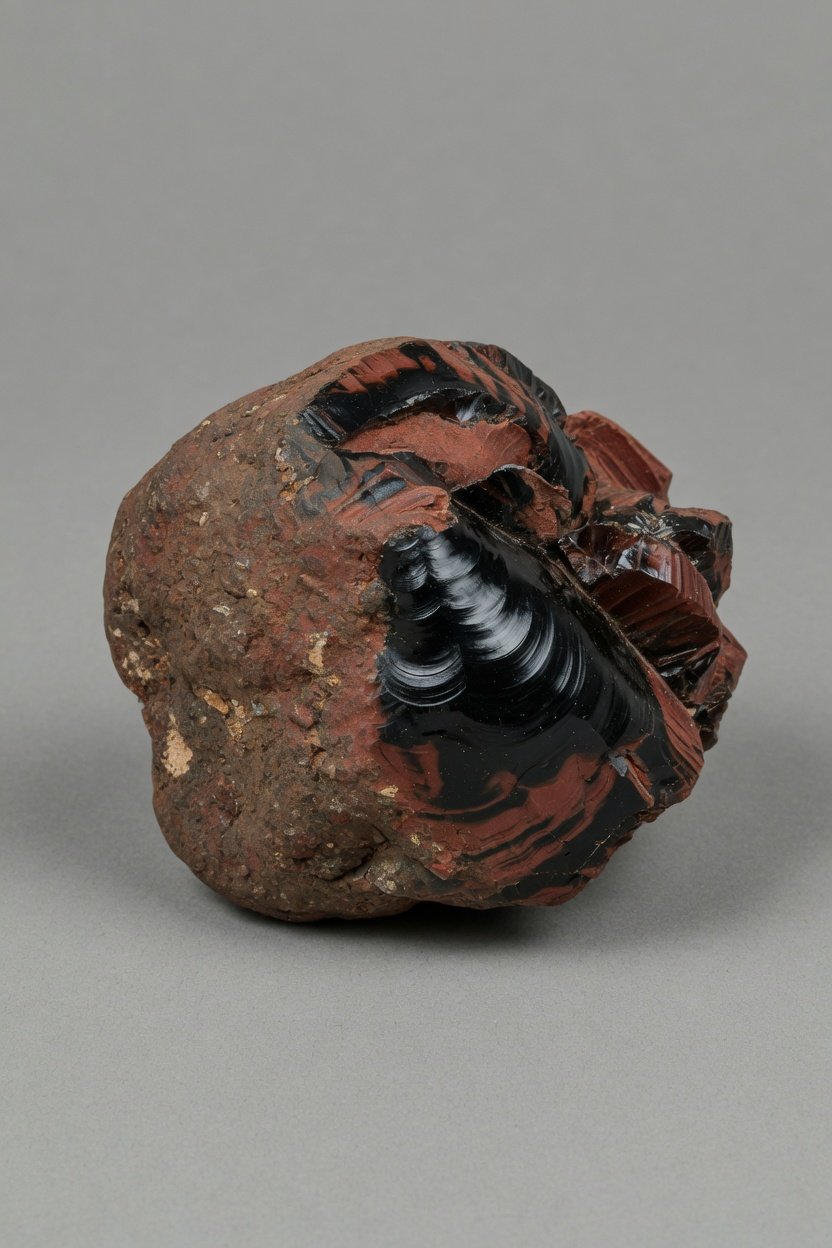
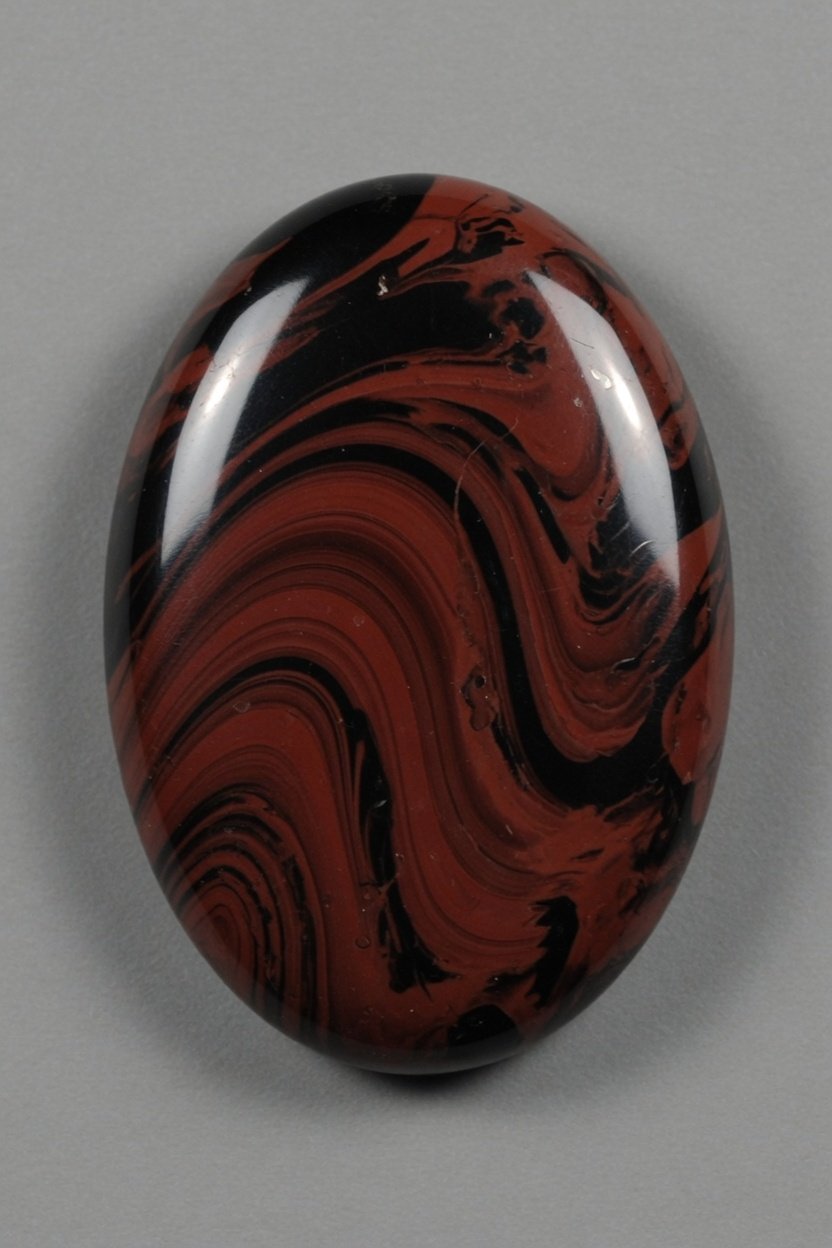
Mahogany Obsidian forms when silica-rich lava cools so rapidly that crystals cannot grow, locking in swirling patterns of deep reddish brown against jet black. This volcanic glass captures the raw energy of ancient eruptions and turns it into a material prized by silversmiths for its bold contrast and workable toughness. The stone’s glassy surface and distinctive mahogany streaks make it immediately recognizable once polished.
Physical Properties Mahogany Obsidian is an amorphous volcanic glass with no crystal structure. It registers 5 to 5.5 on the Mohs scale and has a specific gravity between 2.35 and 2.60. The material shows a vitreous luster and breaks with a conchoidal fracture that produces razor-sharp edges. Its opacity and rich reddish-brown to black banding result from iron oxide inclusions. Silversmiths always set Mahogany Obsidian after all soldering is complete to avoid thermal shock that could craze or fracture the glass. Avoid prolonged exposure to ultrasonic cleaners or sudden temperature changes that might stress the stone.
Origin and Sourcing Primary commercial deposits lie in the volcanic highlands of central Mexico, with additional material coming from Arizona and New Mexico in the United States. Miners extract the obsidian from rhyolitic flows using hard-rock methods that involve adits and controlled blasting. Rough blocks are then sorted for color intensity before being shipped to lapidary workshops. The mahogany variety is less common than black obsidian, making well-patterned pieces especially valued for jewelry.
History and Significance Pre-Columbian cultures in Mesoamerica knapped obsidian into tools and ceremonial blades, recognizing its sharpness and dark sheen. Mahogany Obsidian’s warmer tones appear in later Mesoamerican carvings and trade goods. Modern silversmiths continue this lineage by pairing the stone with sterling silver to create contemporary talismans that echo ancient craftsmanship.
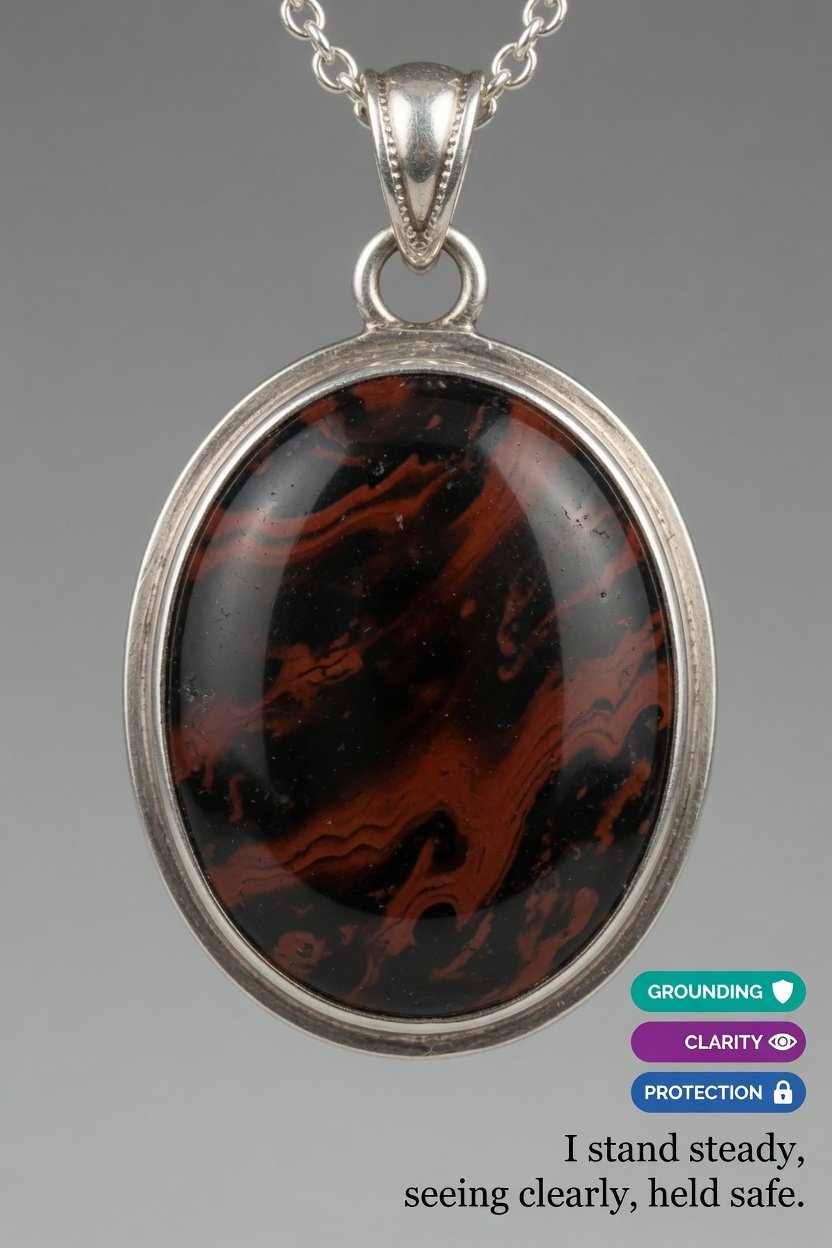
In Jewelry and Silversmithing The stone’s opacity suits cabochon cuts that emphasize flowing color bands. Bezel settings protect the edges while allowing light to play across the polished dome. Silversmiths always set Mahogany Obsidian after all soldering is complete. Care cautions include avoiding harsh abrasives that could scratch the softer glass surface and storing pieces separately to prevent contact with harder gemstones.
Identifying Mahogany Obsidian in the Field Look for glassy texture and conchoidal fracture on freshly broken surfaces. The diagnostic mahogany-red patches against black matrix distinguish it from other obsidians. Fresh pieces feel slightly warmer than crystalline rocks of similar size because of lower thermal conductivity. Always confirm the material is natural by checking for uniform banding rather than painted or dyed surfaces.
Quick Facts
Common names: Mahogany Obsidian, Mahogany Glass
Chemical formula: SiO₂ with Fe₂O₃ inclusions
Mohs hardness: 5–5.5
Specific gravity: 2.35–2.60
Color: Reddish-brown and black
Crystal system: Amorphous
Luster: Vitreous
Transparency: Opaque
Common cuts: Cabochon, tumbled
Common treatments: None
Best silver setting: Classic Silver Bezel Pendant
Birthstone month (if any): None
Main sources: Mexico, United States
Meaning & Intentions
GROUNDING
Mahogany Obsidian anchors scattered energy by linking the wearer to the steady pulse of volcanic earth. Silversmiths place the stone in a low-profile bezel so the reddish bands rest against the skin, creating a tactile reminder of stability during daily wear. The dark matrix absorbs excess nervous tension while the mahogany streaks supply quiet warmth.
Chakra: Root — stability and physical presence CLARITY
The stone’s contrasting bands act as a visual map that helps the wearer distinguish essential priorities from fleeting distractions. When set in silver, the polished surface reflects light in ways that encourage focused observation of one’s own patterns. Regular handling of the cabochon reinforces mental sorting and decisive action.
Chakra: Third Eye — insight and perception PROTECTION
Dense volcanic glass forms a natural barrier that deflects scattered or intrusive influences before they reach the wearer. A simple bezel mounting keeps the stone close to the body, allowing its solid mass to serve as a silent shield throughout the day. The deep colors absorb and neutralize discordant energy without fanfare.
Chakra: Root — security and containment Affirmation: "I stand steady, seeing clearly, held safe." AT A GLANCE: Chakra: Root Element: Earth Energy: Receptive Zodiac: Scorpio Planet: Saturn Affirmation: "I stand steady, seeing clearly, held safe."
Related Stones
Explore more stones from the Gemstone Library: Aragonite · Onyx · Picture Jasper