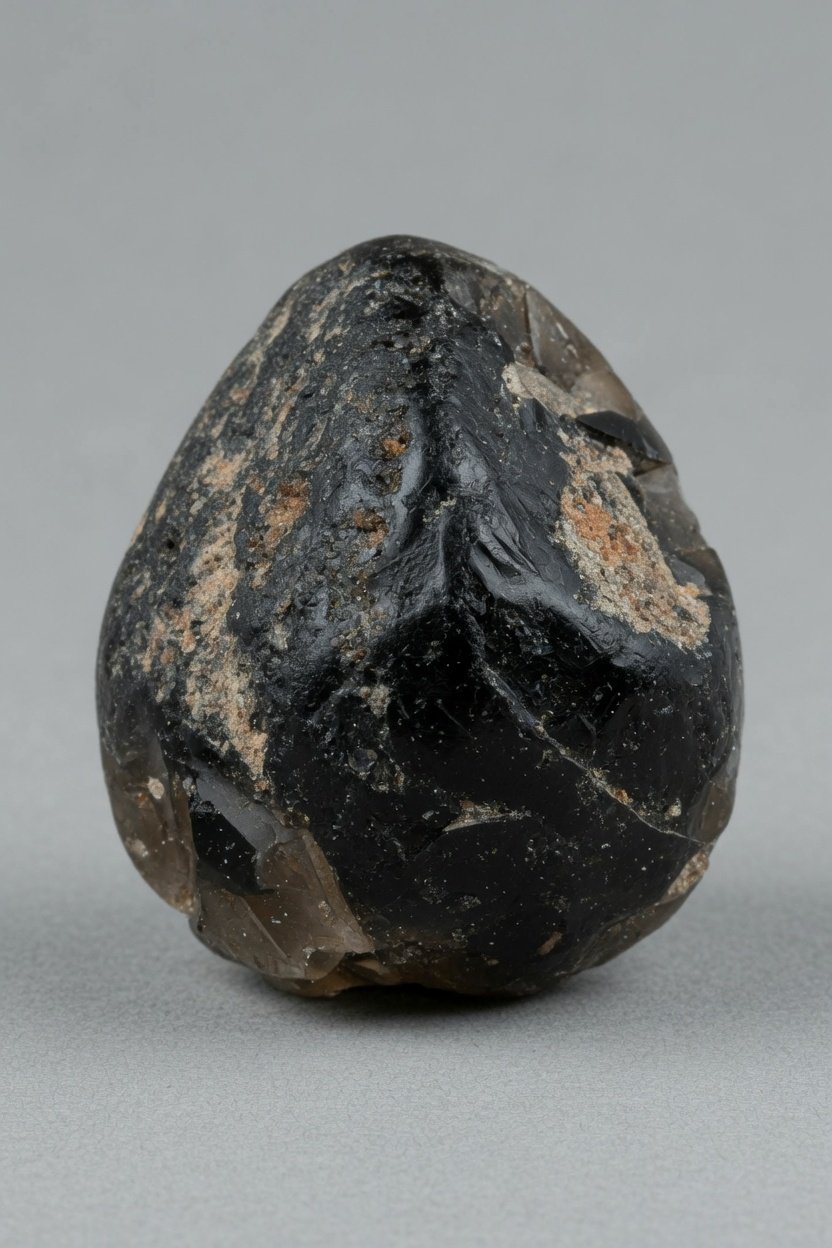
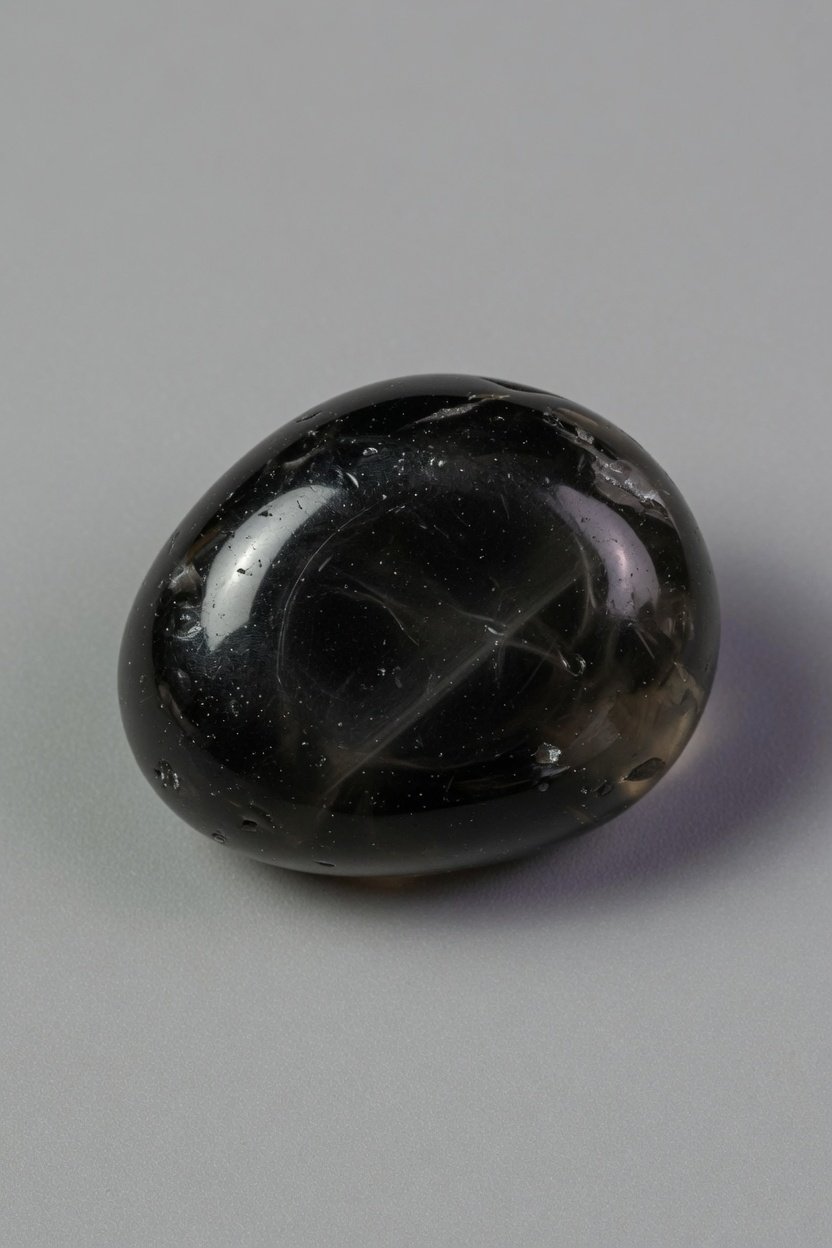
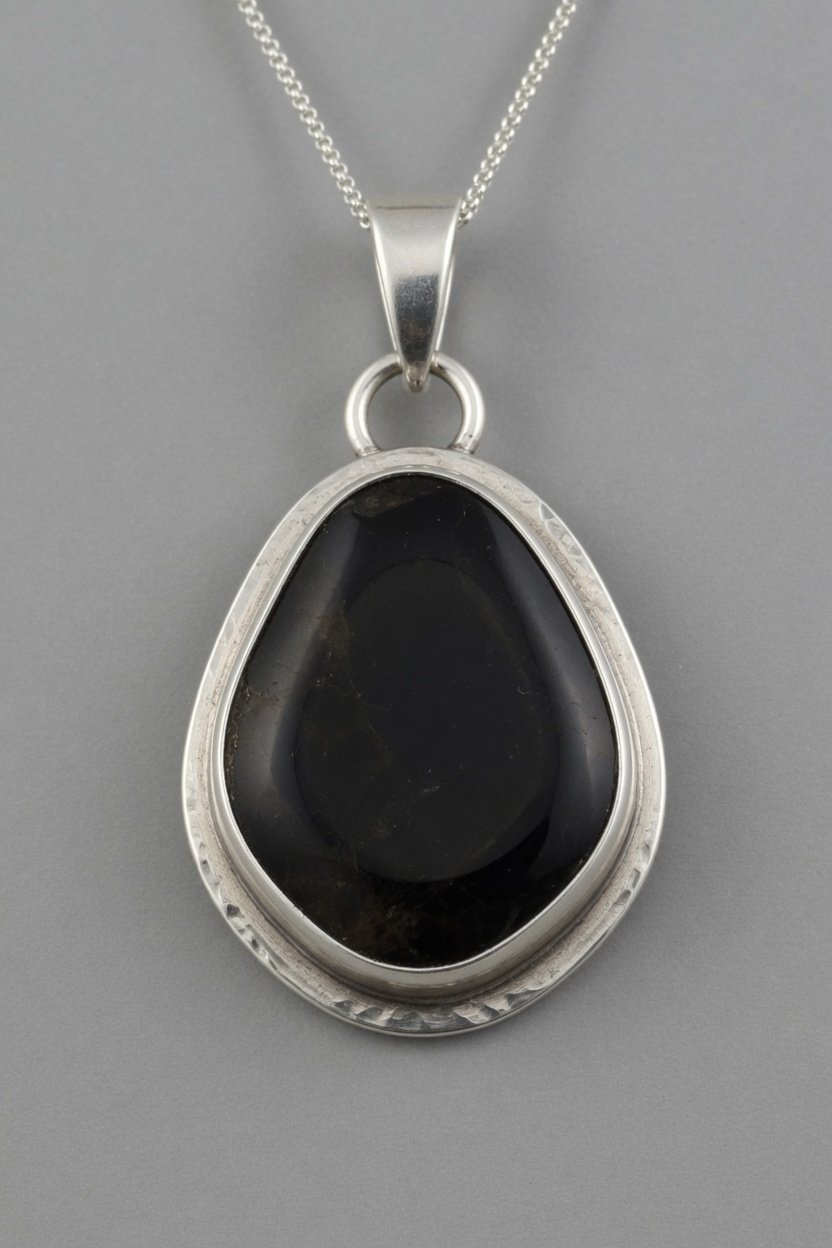
Apache Tears emerge from the volcanic landscapes of the American Southwest as small, dark nodules that seem to hold the weight of ancient stories within their glassy depths. These obsidian pebbles carry a quiet intensity that draws silversmiths and collectors alike, offering both visual depth and a tangible link to the earth’s fiery origins. Their smooth, rounded forms invite careful handling and thoughtful placement in handmade jewelry.
Physical Properties Apache Tears consist of natural volcanic glass with a Mohs hardness of 5 to 6, making them workable yet requiring gentle techniques during finishing. Specific gravity ranges from 2.35 to 2.60, giving each stone a satisfying heft despite its modest size. The material displays a vitreous luster and ranges from fully opaque black to smoky translucent edges when sliced thin. Because the stone can fracture under sudden temperature changes, it must be set into silver only after all soldering and pickling steps are complete. Avoid ultrasonic cleaners or steamers; wipe with a soft cloth and mild soap instead.
Origin and Sourcing These nodules form when rhyolitic lava cools rapidly, trapping gas bubbles that later weather into rounded pebbles. Primary deposits lie in Arizona’s high desert regions, particularly near Superior and Globe, where erosion frees the stones from surrounding tuff. Smaller quantities appear in New Mexico and parts of northern Mexico. Ethical sourcing favors surface collection over mechanized mining, preserving fragile desert ecosystems while yielding stones free of heavy matrix.
History and Significance Apache Tears take their name from a 19th-century legend recounting the grief of Apache families after a battle near what is now Superior, Arizona. The dark stones are said to represent the tears of those left behind. Beyond folklore, obsidian tools and ornaments appear in archaeological sites across the Southwest, demonstrating long-standing human appreciation for the glass’s sharpness and reflective surface. Contemporary silversmiths value the stones for their connection to place and story.
In Jewelry and Silversmithing The rounded shape of Apache Tears suits simple bezel or prong settings that protect the edges without overwhelming the stone’s natural contour. Silversmiths often pair them with oxidized silver to accentuate the contrast between dark glass and bright metal. Because the material is amorphous, it accepts a high polish but shows no directional grain. Set the stone only after all soldering operations are finished and the piece has cooled completely. Store finished work away from other hard gems to prevent scratching.
Identifying Apache Tears in the Field Look for small, jet-black pebbles with a waxy or glassy feel and conchoidal fracture edges that catch light like broken bottle glass. True specimens often show faint smoky translucency at the margins when backlit and lack the banding seen in some agates. Surface texture is typically smooth from weathering rather than artificially tumbled. Avoid pieces with air bubbles or uniform molded shapes that suggest man-made glass imitations.
Quick Facts
Common names: Apache Tears, Arizona Obsidian
Chemical formula: SiO₂ (amorphous)
Mohs hardness: 5–6
Specific gravity: 2.35–2.60
Color: Black to smoky gray
Crystal system: Amorphous
Luster: Vitreous
Transparency: Opaque to translucent
Common cuts: Tumbled freeform, small cabochon
Common treatments: None
Best silver setting: Bezel or simple prong
Birthstone month (if any): None
Main sources: Arizona, USA
Meaning & Intentions
PROTECTION
Apache Tears are carried or worn to create a quiet energetic boundary that helps the wearer feel steadier during uncertain times. Silversmiths set the dark nodules in protective talismans that rest close to the skin, allowing the stone’s natural density to serve as a tactile reminder of resilience. The rounded form fits comfortably in the palm during moments of reflection.
Chakra: Root — grounding and physical presence CLARITY
Holding an Apache Tear to light reveals subtle smoky layers that encourage focused attention on inner patterns. When placed in a pendant or ring, the stone’s glassy surface acts as a mirror for self-examination, helping the wearer sort through scattered thoughts with calm precision. Silversmiths often leave the natural surface untouched to preserve this reflective quality.
Chakra: Third Eye — insight and mental focus GROUNDING
The dense, cool weight of Apache Tears anchors scattered energy and supports a sense of physical and emotional steadiness. Set into everyday jewelry, the stones become portable touchstones that reconnect the wearer with the present moment during stressful transitions. Their volcanic origin adds a layer of ancient stability to modern silver designs.
Chakra: Root — stability and embodiment Affirmation: "I stand steady, held by the earth’s quiet strength." AT A GLANCE: Chakra: Root Element: Earth Energy: Receptive Zodiac: Scorpio Planet: Saturn Affirmation: "I stand steady, held by the earth’s quiet strength."
Related Stones
Explore more stones from the Gemstone Library: Anyolite (Ruby-Zoisite) · Onyx · Serpentine