Benitoite emerges from the earth as one of nature’s rarest treasures, its intense sapphire-blue flashes cutting through the white matrix like captured twilight. This barium titanium silicate forms in only a handful of locations worldwide, yet its optical fire and limited supply have made it a legend among collectors and artisans alike. Silversmiths prize the stone for its ability to hold crisp facets that amplify its natural brilliance once set after all soldering is complete.
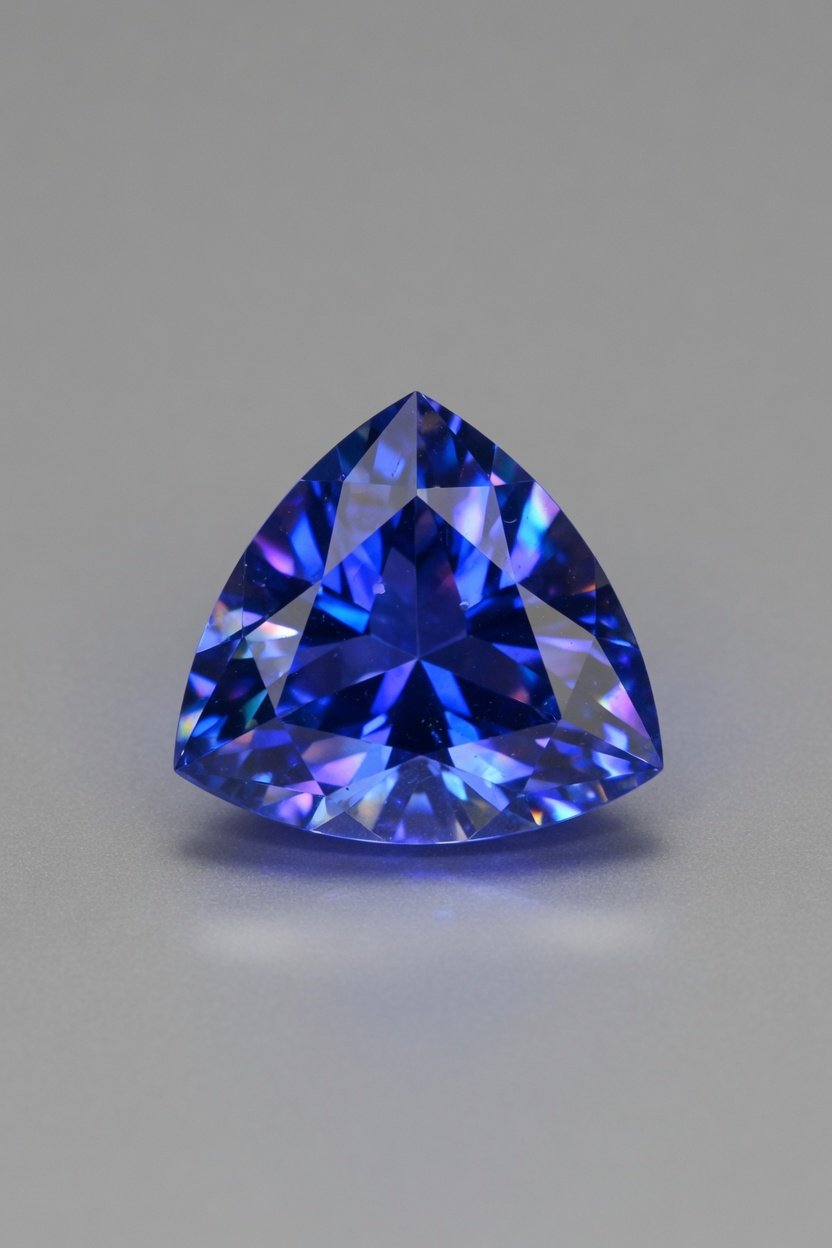
Physical Properties Benitoite registers 6 to 6.5 on the Mohs scale, giving it respectable durability for everyday wear yet requiring mindful handling during fabrication. Its specific gravity of 3.65 places it slightly heavier than quartz, and its hexagonal crystal system produces distinctive triangular terminations. The stone exhibits strong vitreous luster and displays striking dichroism, shifting from rich blue to colorless or pale violet depending on the viewing angle. Transparent specimens are routinely faceted to maximize brilliance, while any matrix material is carefully removed before setting. Because Benitoite can suffer thermal shock along its cleavage planes, the finished piece must be set only after all soldering and heat work are finished; ultrasonic cleaning is likewise avoided to prevent internal fractures.
Origin and Sourcing Commercial quantities occur almost exclusively in the San Benito River headwaters of central California, where narrow veins of natrolite cut through serpentine. Miners work small-scale hard-rock adits, extracting the delicate crystals by hand to avoid damage. Limited finds in Japan and Arkansas exist but yield far smaller, less saturated stones, making California material the benchmark for both color and size. Ethical sourcing emphasizes reclamation of older tailings rather than new blasting, preserving the fragile habitat around the historic Dallas Gem Mine.
History and Significance First documented in 1907 by a local prospector, benitoite was initially mistaken for sapphire until chemical analysis revealed its unique composition. The state of California designated it the official gemstone in 1985, celebrating both its rarity and the distinctive mining district that produced it. Early twentieth-century jewelers used the material sparingly because of its scarcity; today it remains a collector’s prize, with fine stones commanding prices comparable to fine sapphire.
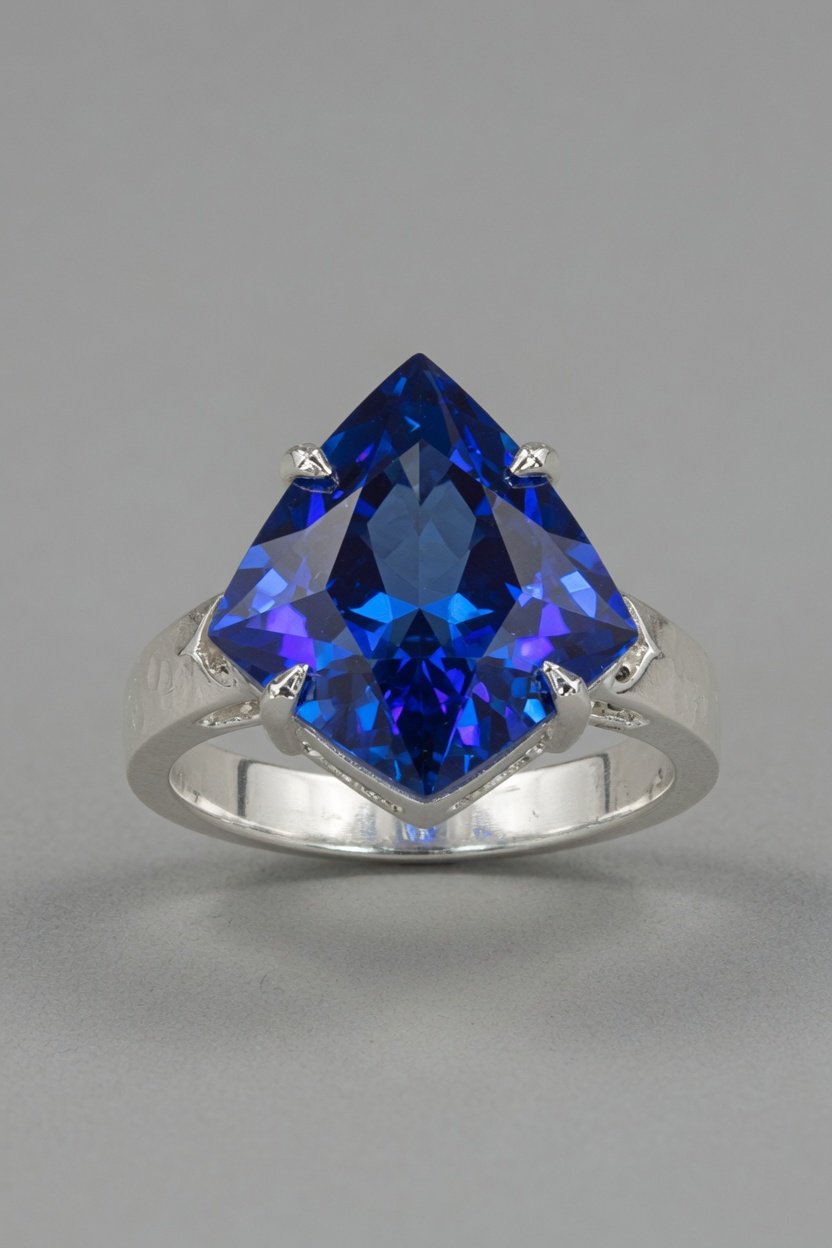
In Jewelry and Silversmithing Faceted benitoite excels in sterling silver because the cool metal tones complement the stone’s blue without competing for attention. Contemporary prong settings allow maximum light return while protecting the girdle, and the finished piece is set only after soldering is complete. Care cautions include avoiding prolonged sunlight exposure that can fade weaker color zones and storing the jewelry separately to prevent abrasion from harder gems. A simple polish with a soft cloth restores luster without chemical cleaners.
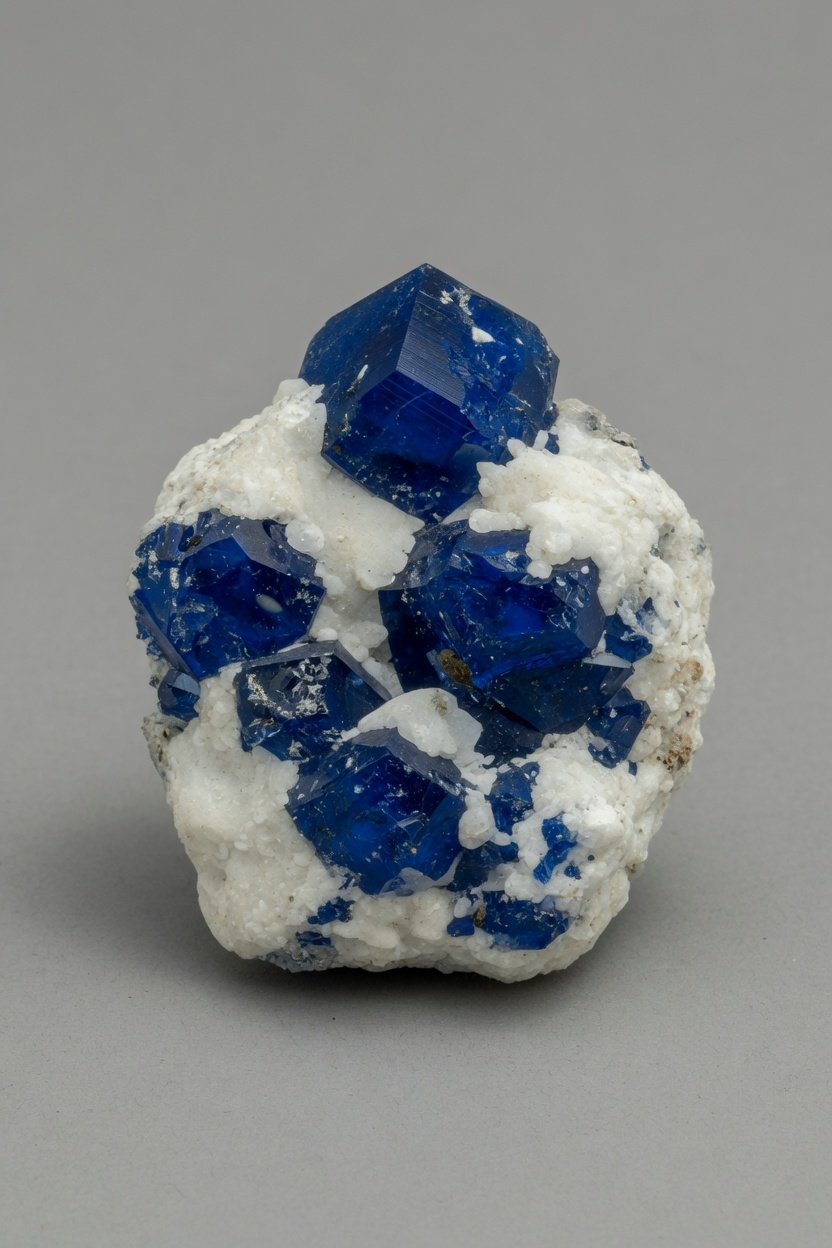
Identifying Benitoite in the Field In matrix, benitoite appears as small, glassy blue crystals embedded in snowy natrolite, often accompanied by black neptunite needles. A portable ultraviolet lamp reveals its intense blue fluorescence, a diagnostic trait that separates it from sapphire or iolite. Hardness testing with a steel point leaves no mark, while its strong dichroism becomes visible when the specimen is rotated under strong light.
Quick Facts
Common names: Benitoite
Chemical formula: BaTiSi₃O₉
Mohs hardness: 6–6.5
Specific gravity: 3.64–3.68
Color: Intense sapphire blue, violet tint, colorless
Crystal system: Hexagonal
Luster: Vitreous
Transparency: Transparent to translucent
Common cuts: Faceted oval, round, cushion
Common treatments: None (rare heat treatment for color)
Best silver setting: Contemporary Prong Ring
Birthstone month (if any): None
Main sources: California, USA
Meaning & Intentions
CLARITY
Benitoite’s penetrating blue is traditionally used to clear mental fog and support focused decision-making. Wearers keep a faceted stone near during study or planning sessions so its steady light reminds them to cut through distraction and choose with precision.
Chakra: Third Eye – insight and inner vision INSIGHT
The stone’s strong dichroism mirrors the ability to see situations from multiple angles. Practitioners meditate with benitoite to sharpen perception and notice subtle patterns that others overlook, turning confusion into clear understanding.
Chakra: Throat – truthful expression BOUNDARIES
Its rarity and protective matrix associations make benitoite a talisman for maintaining healthy limits. The gem is carried or set in jewelry when one needs to safeguard personal energy without becoming closed off to genuine connection.
Chakra: Root – grounded security Affirmation: "I see clearly and protect what matters." AT A GLANCE: Chakra: Third Eye – insight and inner vision Element: Water Energy: Receptive Zodiac: Virgo Planet: Neptune Affirmation: "I see clearly and protect what matters."
Related Stones
Explore more stones from the Gemstone Library: Fluorite · Azurite · Amazonite