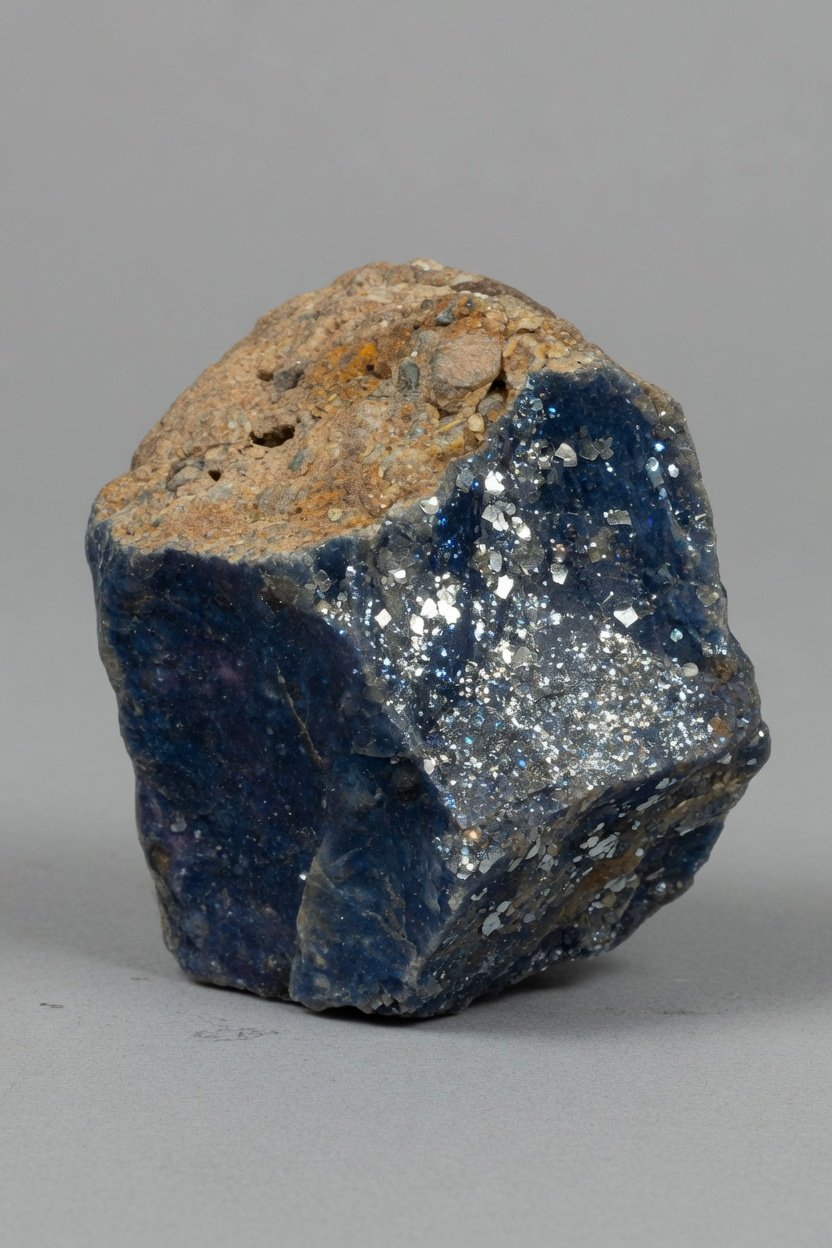
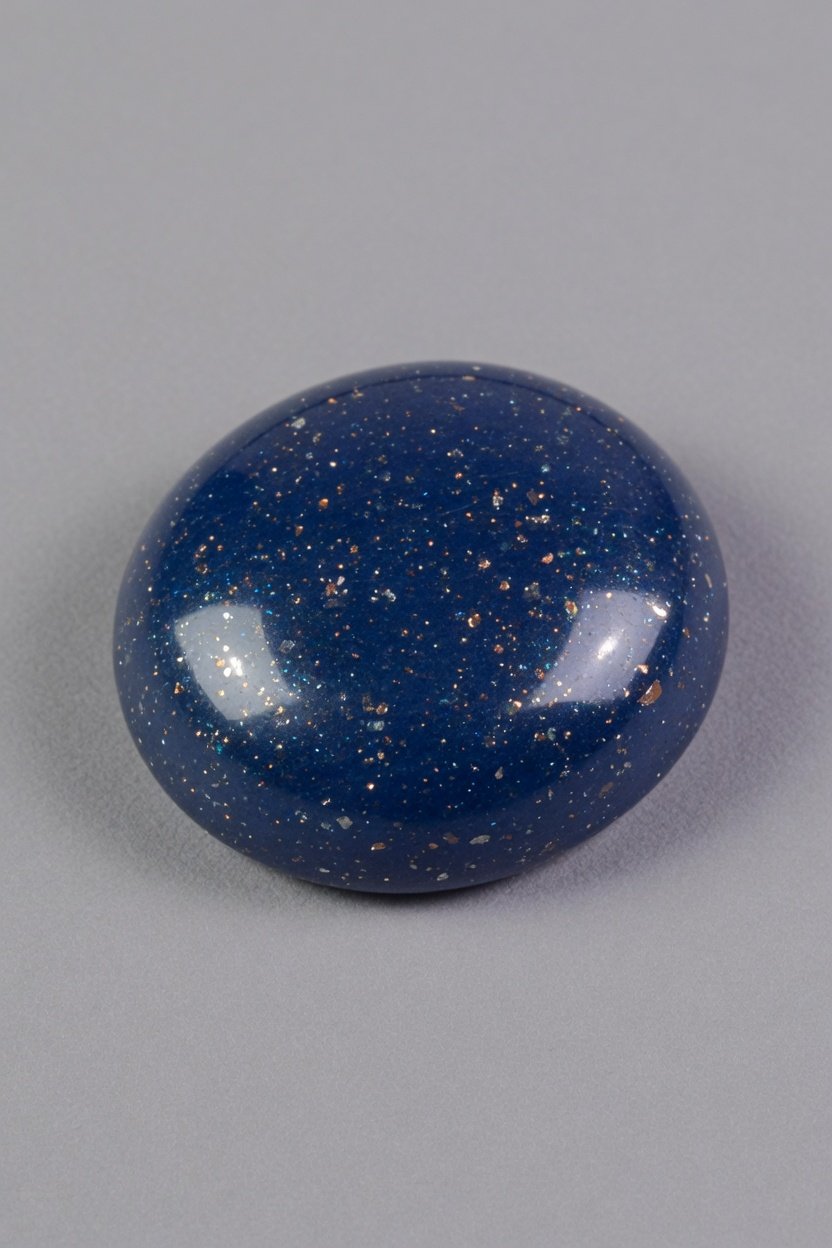
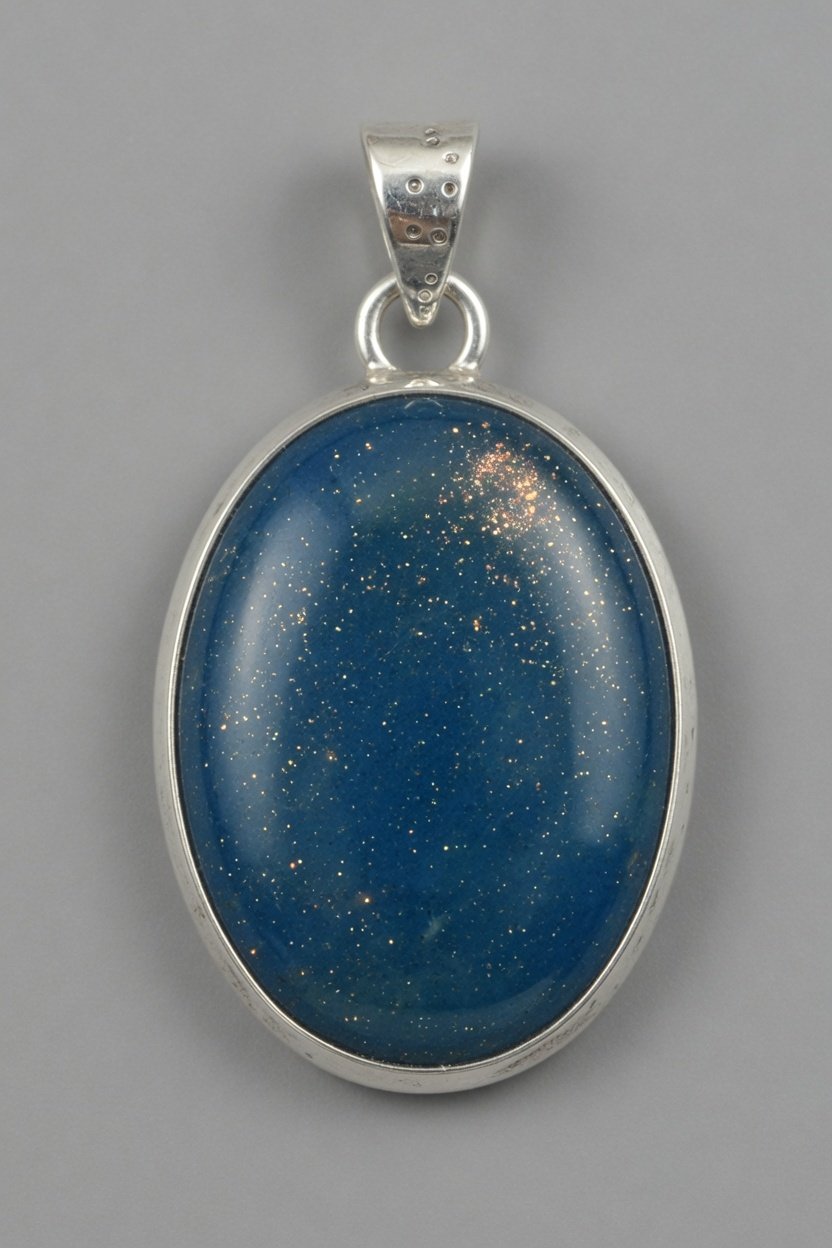
Blue Aventurine emerges from the earth with a quiet shimmer that catches light like scattered frost on a winter lake. Its deep blue body holds tiny reflective inclusions that create a soft, moving sparkle without any harsh glitter. This stone rewards patient observation, revealing depth only when turned slowly under natural light.
Physical Properties Blue Aventurine is a variety of quartz colored by inclusions of dumortierite or other minerals that produce its characteristic blue hue and aventurescence. It registers 7 on the Mohs scale, giving it good durability for everyday wear while remaining workable for silversmiths. Specific gravity falls between 2.64 and 2.69, and its luster ranges from vitreous to slightly waxy on polished surfaces. The stone shows no cleavage and fractures conchoidally, which helps when shaping cabochons but requires care to avoid chips during setting.
Origin and Sourcing Primary commercial deposits lie in India, with additional material coming from Brazil and Russia. Indian sources often yield the richest blue tones with dense mica-like inclusions that create strong aventurescence. Extraction typically occurs through open-pit methods where weathered quartz veins are carefully removed from laterite soils. Miners sort rough at the site to preserve larger pieces suitable for cabochon cutting before transport to lapidary workshops.
History and Significance Blue Aventurine has been used in decorative objects since at least the nineteenth century, though its recognition as a distinct variety grew with expanded trade from Indian mines. Ancient cultures valued similar quartz materials for amulets and carvings, associating the blue color with calm and clarity. Modern lapidaries continue this tradition by orienting rough to maximize the internal sparkle that gives the stone its name.
In Jewelry and Silversmithing Silversmiths favor cabochon cuts for Blue Aventurine because the smooth dome best displays aventurescence. The stone must be set only after all soldering is complete to prevent heat damage to the inclusions that produce its color and sparkle. Prong or bezel settings work well, but thin bezels are preferred to avoid cracking the brittle quartz. Care cautions include avoiding prolonged exposure to strong sunlight, which can fade the blue over time, and storing pieces separately to prevent scratches from harder gems.
Identifying Blue Aventurine in the Field In rough form the stone appears as translucent to opaque blue masses with a sugary texture on broken surfaces. Fresh fractures show the characteristic glitter of aventurescence when tilted toward light. Collectors distinguish it from sodalite by the presence of reflective platelets rather than white veining, and from dyed howlite by its greater hardness and natural luster.
Quick Facts
Common names: Blue Aventurine, Aventurine Quartz
Chemical formula: SiO₂ with dumortierite inclusions
Mohs hardness: 7
Specific gravity: 2.64–2.69
Color: Deep blue with silvery or white sparkles
Crystal system: Trigonal
Luster: Vitreous to waxy
Transparency: Translucent to opaque
Common cuts: Cabochon
Common treatments: None
Best silver setting: Classic Silver Bezel Pendant
Birthstone month (if any): None
Main sources: India, Brazil, Russia
Meaning & Intentions
CALM FOCUS
Blue Aventurine supports steady concentration during long silversmithing sessions by encouraging a grounded sense of patience. Artisans often keep a small polished piece near the bench to maintain composure when intricate work demands extended attention. The stone’s cool blue tone and gentle sparkle remind the maker to breathe evenly and return to the task without frustration.
Chakra: Throat — clear communication and thoughtful expression INSIGHT
The reflective inclusions within Blue Aventurine are used in meditation to encourage deeper self-observation and recognition of subtle patterns. Practitioners hold the stone while reviewing creative choices, allowing the quiet sparkle to mirror internal clarity. This practice helps silversmiths notice overlooked design details before committing to metal.
Chakra: Third Eye — intuitive vision and inner awareness PROTECTION
Blue Aventurine is carried as a talisman to maintain personal boundaries during busy market days or collaborative workshops. Its sturdy quartz structure symbolizes resilience while the blue color offers a visual reminder to stay centered. Makers report feeling more secure when presenting work to new clients after keeping the stone close.
Chakra: Root — stability and energetic grounding Affirmation: "I work with steady hands and clear vision." AT A GLANCE: Chakra: Throat Element: Air Energy: Receptive Zodiac: Aquarius Planet: Venus Affirmation: "I work with steady hands and clear vision."
Related Stones
Explore more stones from the Gemstone Library: Apatite · Amazonite · Indicolite (Blue Tourmaline)