Golden Aventurine emerges from the earth as a quartz variety laced with fine golden mica inclusions that catch light in delicate, metallic flashes. This warm, sunlit stone has long drawn the attention of lapidaries who seek its distinctive shimmer for both ornamental and energetic purposes. Its balanced hardness and lively optical effect make it a practical yet striking choice for silver jewelry that must withstand daily wear.
Physical Properties Golden Aventurine is a translucent to opaque variety of quartz whose body color ranges from pale honey to deep golden brown, punctuated by reflective platelets of mica or hematite that produce a bright aventurescent sparkle. It registers 7 on the Mohs scale, rendering it durable enough for most jewelry applications while remaining workable with standard lapidary tools. Specific gravity sits near 2.65, and the stone displays a vitreous to submetallic luster depending on the density of inclusions. Because the material can contain minor water or internal stress planes, it is always set after all soldering and torch work are complete; sudden heat can cause fractures or clouding of the inclusions. Routine care requires only warm soapy water and a soft cloth; ultrasonic cleaners are safe, but prolonged exposure to strong acids or abrasives should be avoided.
Origin and Sourcing Primary commercial deposits occur in India, particularly the states of Karnataka and Tamil Nadu, where pegmatite veins yield the golden variety alongside green aventurine. Additional material comes from Brazil and parts of Russia, though Indian sources dominate the market for consistent color and inclusion density. Mining is typically small-scale open-pit or shallow hard-rock extraction, with ore sorted by hand at the site before transport to cutting centers.
History and Significance Aventurine quartz appears in ancient Indian and Tibetan carvings dating back centuries, valued both for its decorative glitter and its supposed protective qualities. European lapidaries adopted the material in the eighteenth century after trade routes expanded, incorporating it into watch fobs and snuff boxes. The golden hue specifically became associated with prosperity and steady resolve in folk traditions across South Asia.
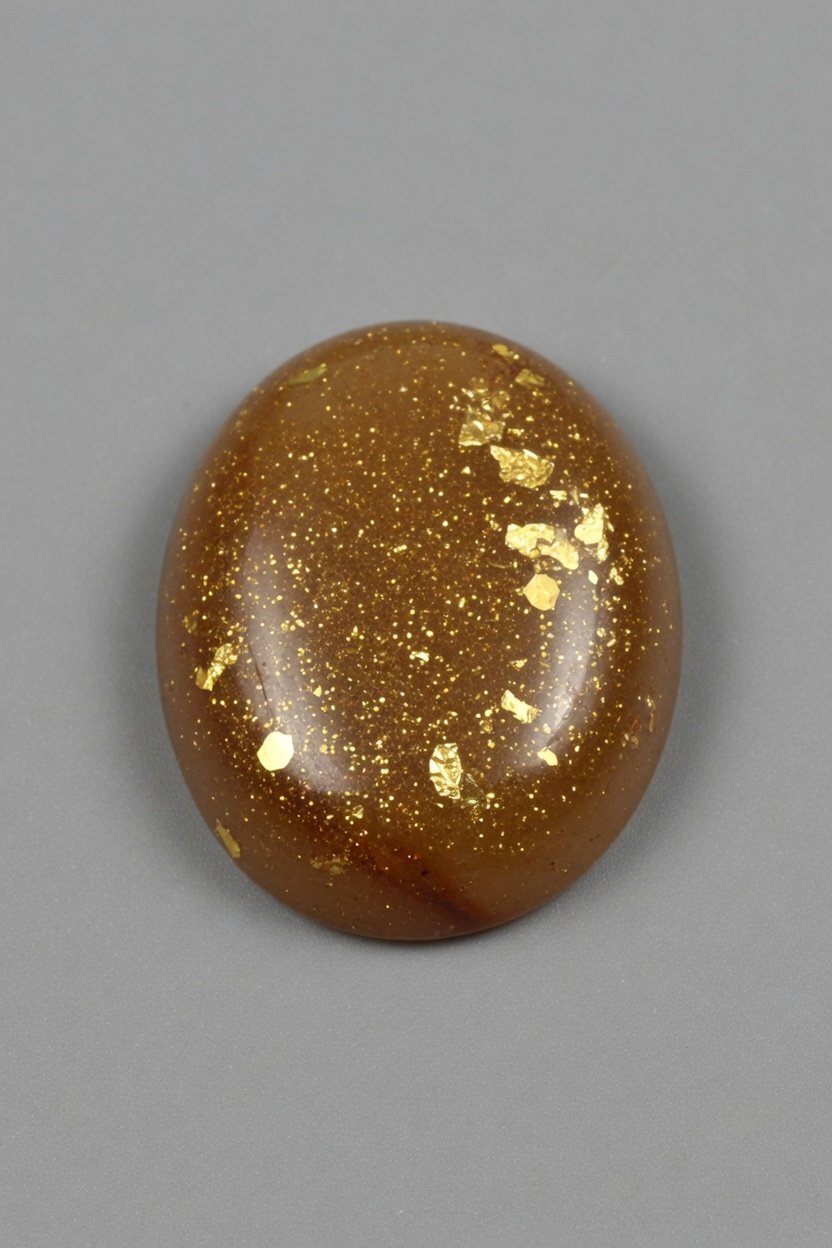
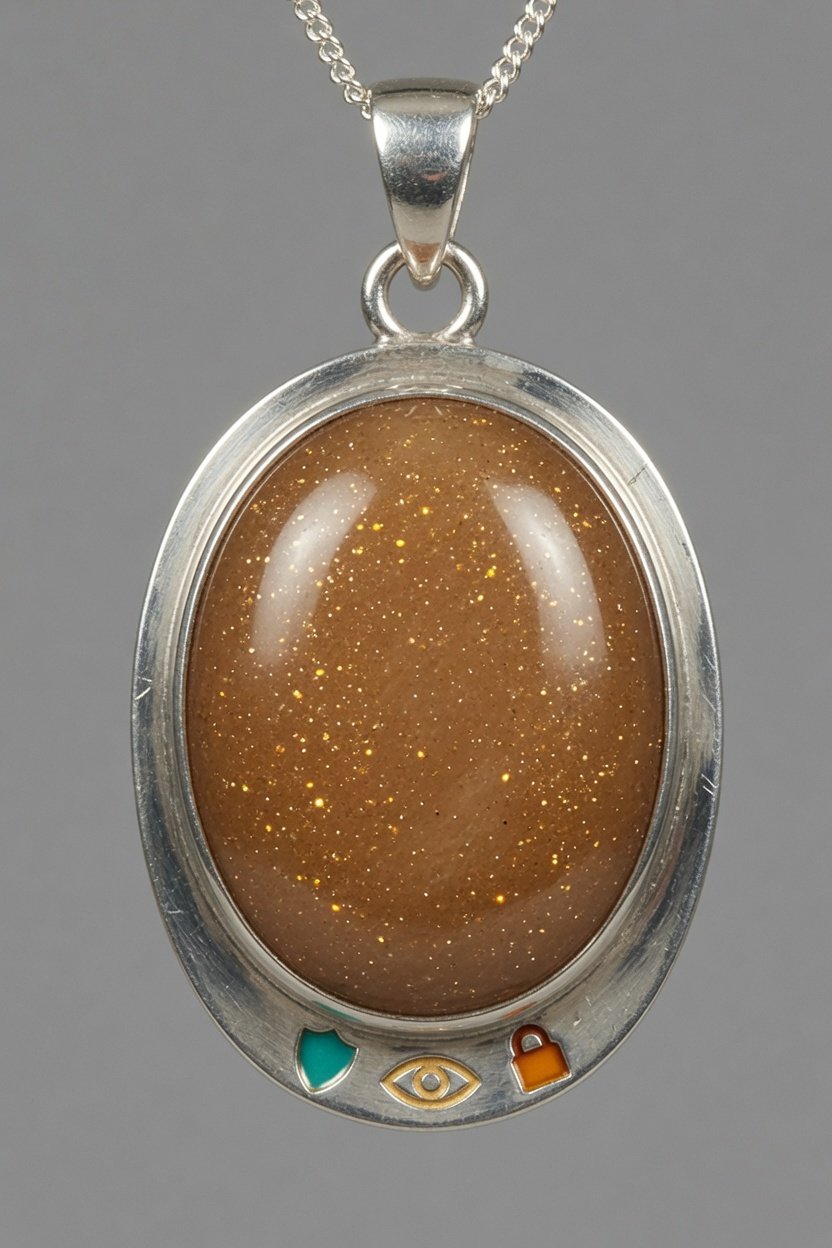
In Jewelry and Silversmithing Silversmiths favor cabochon cuts for Golden Aventurine because the smooth dome maximizes the play of light across the mica platelets. The stone pairs naturally with sterling silver in bezel settings that protect the edges while allowing the sparkle to remain visible. After final polishing, the piece is set only once all soldering is finished to prevent heat damage. Its modest price and reliable hardness make it suitable for both statement pendants and everyday rings.
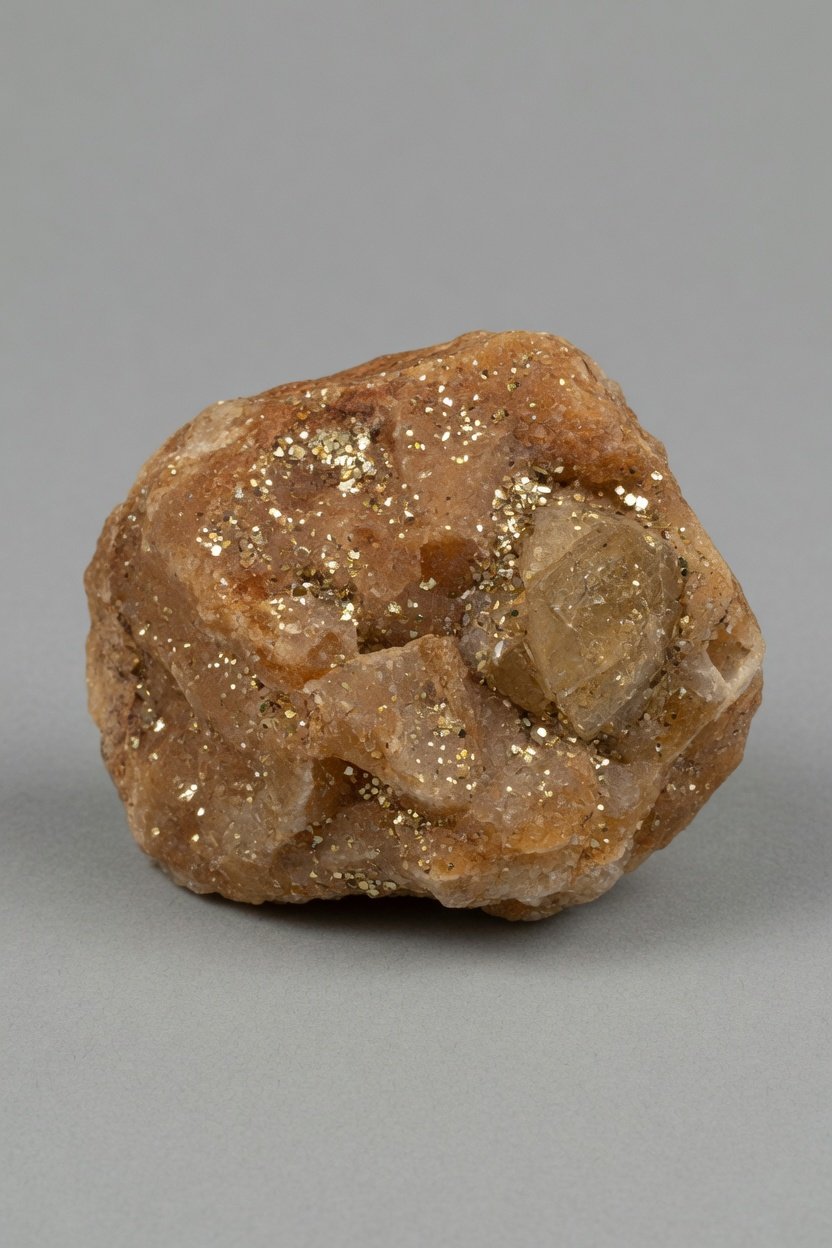
Identifying Golden Aventurine in the Field In rough form the stone shows a sugary quartz texture with visible golden specks that intensify when the piece is wetted or held to strong light. Unlike plain quartz, it lacks transparency in thicker sections and displays a distinctive metallic flash rather than simple translucency. Hardness testing with a steel file leaves no mark, while a quick visual check for uniform golden platelets distinguishes it from yellow jasper or tiger’s-eye.
Quick Facts
Common names: Golden Aventurine, Golden Aventurine Quartz
Chemical formula: SiO₂ with mica inclusions
Mohs hardness: 7
Specific gravity: 2.65
Color: Golden yellow to brown with metallic sparkle
Crystal system: Trigonal
Luster: Vitreous to aventurescent
Transparency: Translucent to opaque
Common cuts: Cabochon
Common treatments: None
Best silver setting: Classic Silver Bezel Pendant
Birthstone month (if any): None
Main sources: India, Brazil
Meaning & Intentions
PROSPERITY
Golden Aventurine is carried or worn to steady financial focus and encourage measured growth; its golden inclusions are thought to mirror sunlight on harvested grain, reminding the wearer to persist through incremental effort rather than sudden windfalls. In silversmithing the stone is often placed in a simple bezel so the sparkle remains visible during daily handling, reinforcing the intention through touch and sight.
Chakra: Solar Plexus — confidence and personal power CLARITY
The stone’s reflective platelets are used in meditation to illuminate scattered thoughts, helping the user distinguish genuine opportunities from distractions; practitioners place a polished cabochon on a desk or altar so that shifting light across the surface serves as a quiet cue to return to focused intention.
Chakra: Third Eye — insight and perception PROTECTION
Worn as a pendant or ring, Golden Aventurine is believed to form a subtle energetic boundary against envy or undue influence; the mica inclusions are said to deflect scattered energies while the quartz matrix grounds the wearer, making it a practical talisman for those navigating competitive environments.
Chakra: Root — stability and security Affirmation: "I welcome steady growth and clear vision." AT A GLANCE: Chakra: Solar Plexus Element: Earth Energy: Projective Zodiac: Aries Planet: Mercury Affirmation: "I welcome steady growth and clear vision."
Related Stones
Explore more stones from the Gemstone Library: Ametrine · Citrine · Sunstone