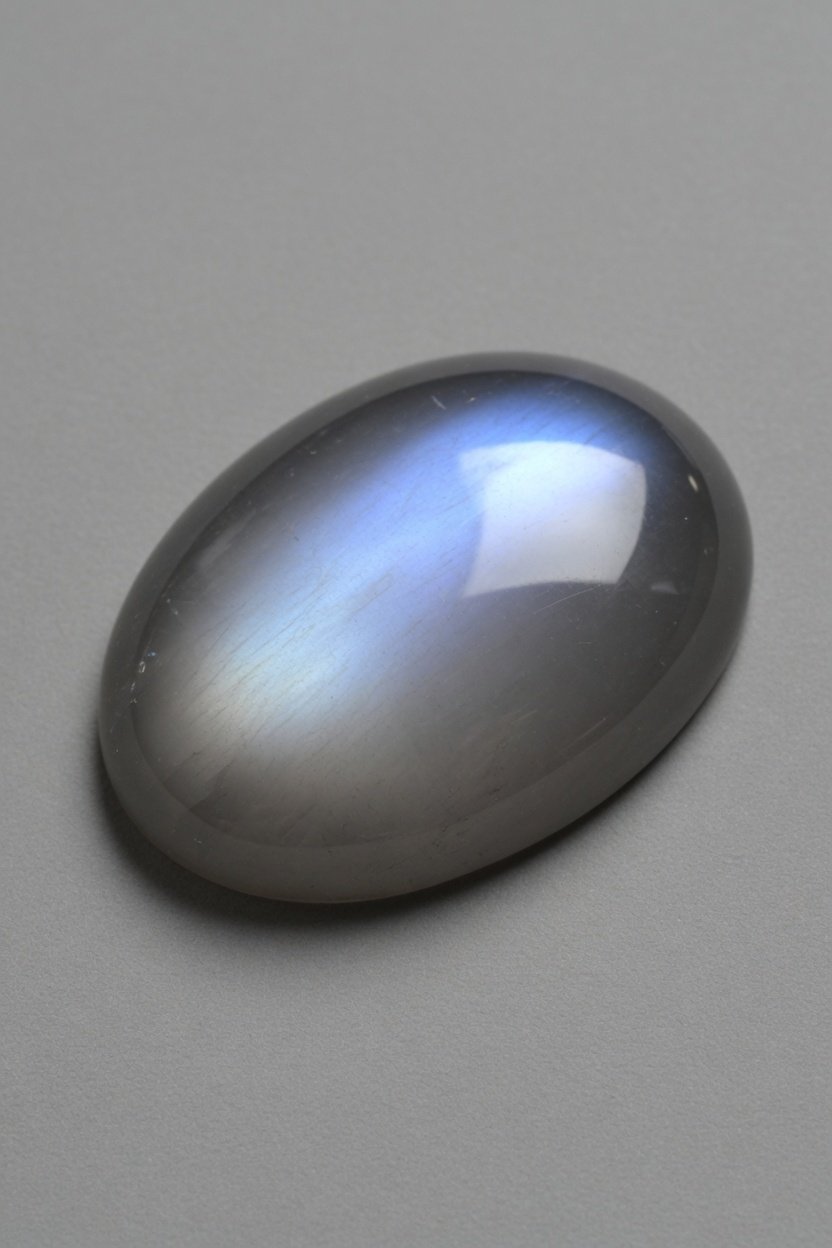
Gray Moonstone emerges from the earth with a quiet, silvery presence that immediately draws the eye. Its soft gray body seems to hold an inner light that shifts gently with every angle, creating an ethereal glow known as adularescence. This optical effect gives the stone its signature moonlit quality, making it a favorite among silversmiths who seek understated elegance in their work.
Physical Properties Gray Moonstone belongs to the feldspar group, most often orthoclase or labradorite with a Mohs hardness of 6 to 6.5. Its specific gravity ranges from 2.56 to 2.59, and it displays a vitreous to pearly luster. The stone is typically translucent to semi-translucent, with a gray base color that can range from light silver to deeper charcoal. Thin layers within the crystal produce the characteristic blue or white sheen that moves across the surface when the stone is turned. Because of its perfect cleavage, Gray Moonstone requires careful handling during cutting and setting. Always set the stone after all soldering is complete to avoid heat damage that could cloud the adularescence or cause fractures along cleavage planes. Avoid ultrasonic cleaners and sudden temperature changes; wipe with a soft cloth and store separately from harder gems.
Origin and Sourcing Primary sources for Gray Moonstone include the pegmatite fields of Madagascar, the hills of southern India, and select deposits in Sri Lanka. Miners extract the material through hard-rock methods, following veins in granite where large feldspar crystals form. The gray variety often occurs alongside white and peach moonstone, though its subtler body color makes it less common in mass production. Responsible sourcing emphasizes small-scale operations that minimize environmental impact while preserving the crystal integrity needed for high-quality cabochons.
History and Significance Ancient cultures associated moonstone with lunar deities and believed it carried protective energies during night travel. Roman naturalist Pliny the Elder described stones that “changed appearance with the phases of the moon,” a reference that likely included early moonstone varieties. In India, the gem was traditionally set into amulets for emotional balance. European jewelers of the Art Nouveau period revived interest in moonstone for its dreamy optical effect, incorporating it into flowing silver designs that echoed natural forms.
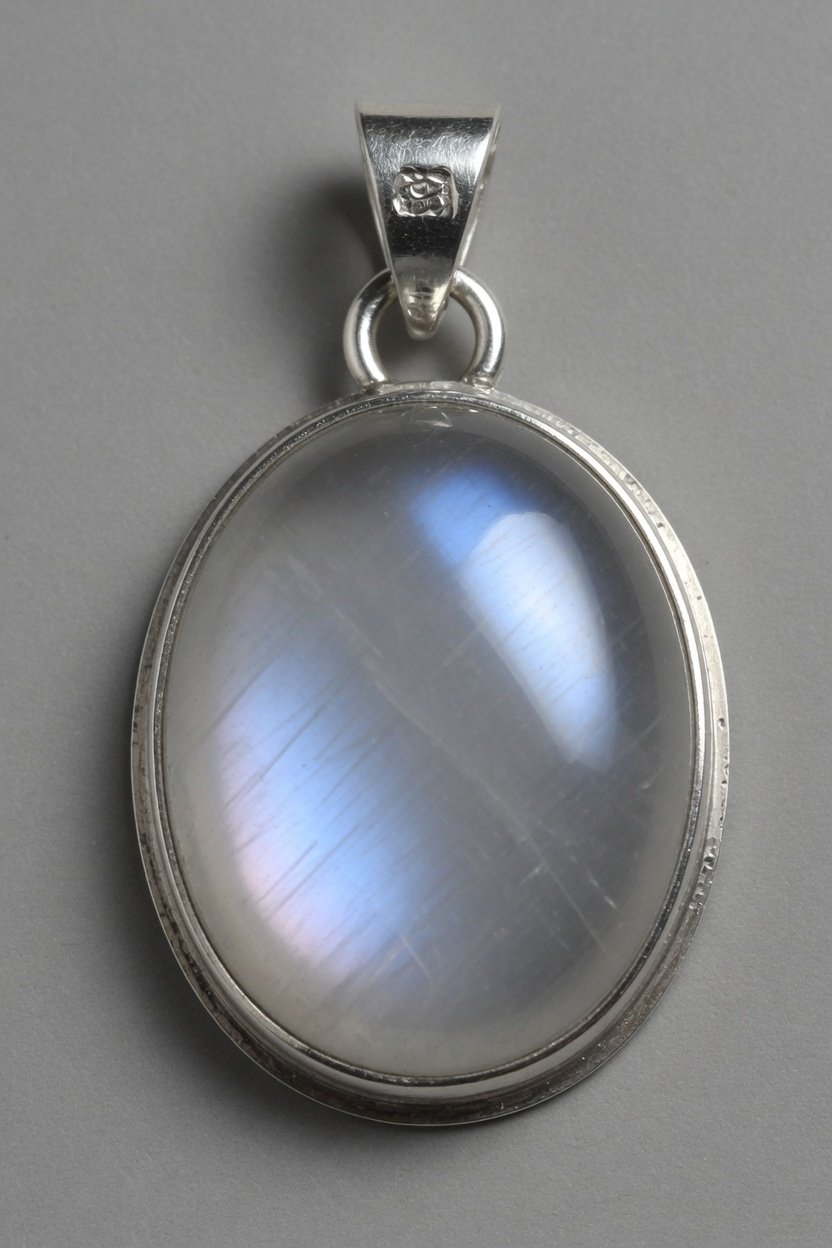
In Jewelry and Silversmithing Silversmiths prize Gray Moonstone for its compatibility with sterling silver, where the cool gray tones complement the metal’s brightness without competing. The stone is almost always cut as a cabochon to maximize the adularescent glow across a smooth, domed surface. Bezel settings are preferred because they protect the vulnerable edges while allowing light to enter from the sides. After soldering any mounting, the stone must be set only when the piece has cooled completely. Clean finished pieces with mild soap and water; avoid prolonged sunlight exposure that may fade the body color over decades.
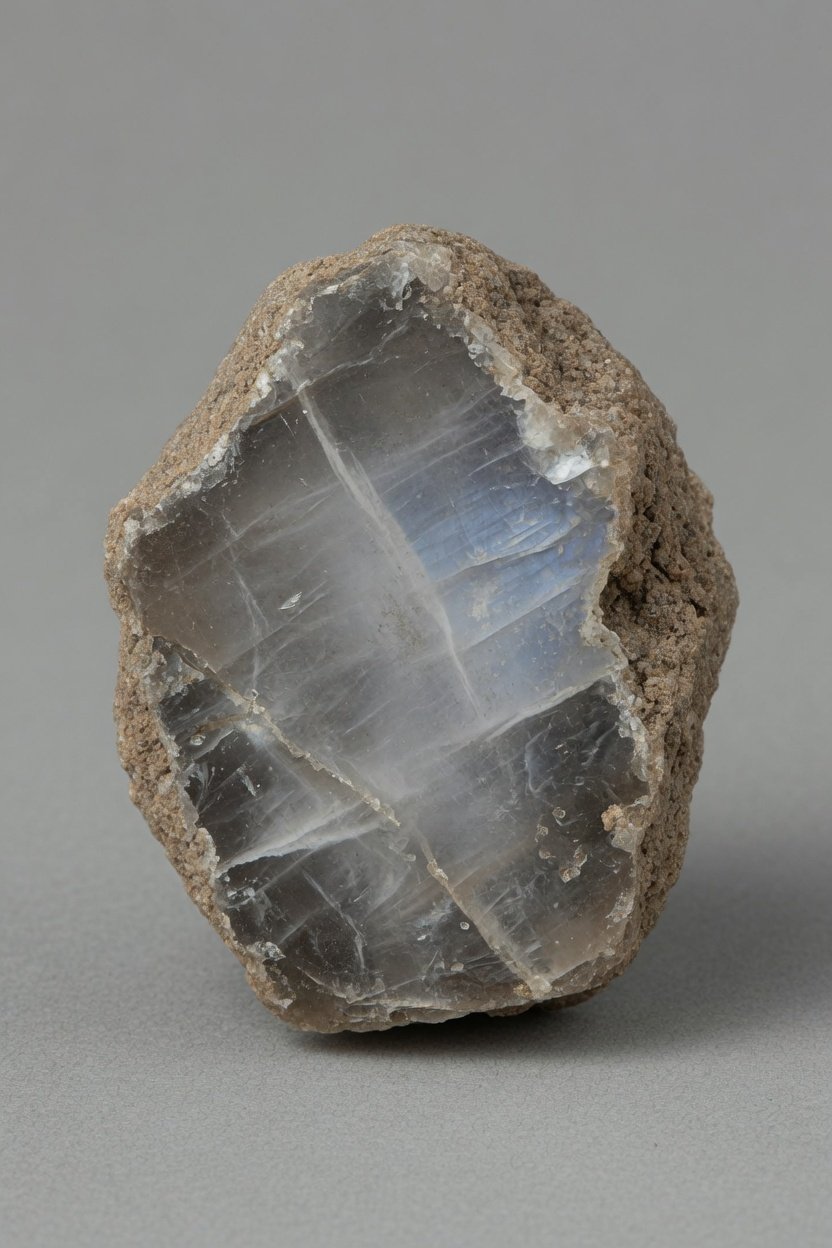
Identifying Gray Moonstone in the Field In rough form, Gray Moonstone appears as blocky, translucent crystals with a slightly waxy feel and occasional white streaks. A quick test involves tilting the specimen under direct light to watch for the moving sheen. Unlike similar feldspars, Gray Moonstone rarely shows strong labradorescence colors beyond blue-white. Common imitations include glass with backing or low-grade chalcedony, but neither will display true adularescence when rotated. Always examine for cleavage planes and the characteristic pearly luster on broken surfaces.
Quick Facts
Common names: Gray Moonstone, Silver Moonstone
Chemical formula: KAlSi₃O₈ (orthoclase) or (Ca,Na)(Al,Si)₄O₈ (labradorite)
Mohs hardness: 6–6.5
Specific gravity: 2.56–2.59
Color: Gray body with blue or white adularescence
Crystal system: Monoclinic
Luster: Vitreous to pearly
Transparency: Translucent to semi-translucent
Common cuts: Cabochon
Common treatments: None
Best silver setting: Bezel
Birthstone month (if any): None
Main sources: Madagascar, India, Sri Lanka
Meaning & Intentions
CALM FOCUS
Gray Moonstone is carried or worn to quiet mental chatter and support steady attention during long creative sessions. Silversmiths keep a small cabochon on the bench as a tactile reminder to breathe and return to the present task when frustration rises. The stone’s gentle sheen is said to mirror the mind’s own shifting light, encouraging patience without forcing stillness.
Chakra: Third Eye – intuition and clear perception INNER VISION
Practitioners use Gray Moonstone during reflective practices to strengthen the ability to perceive subtle patterns in both metalwork and personal insight. The moving light within the stone is treated as a visual metaphor for seeing beneath surface appearances, helping artists notice details they might otherwise overlook in a design.
Chakra: Third Eye – intuition and clear perception PROTECTED BOUNDARIES
Gray Moonstone is valued for reinforcing emotional boundaries during periods of intense creative output or interpersonal demands. Wearers report that the stone’s cool, contained energy helps them remain centered without becoming closed off, making it useful for those who work with clients or teach workshops.
Chakra: Root – grounding and stability Affirmation: "I move through change with quiet clarity." AT A GLANCE: Chakra: Third Eye Element: Water Energy: Receptive Zodiac: Cancer Planet: Moon Affirmation: "I move through change with quiet clarity."
Related Stones
Explore more stones from the Gemstone Library: Star Sapphire · Cat's Eye Moonstone · Cat's Eye Tourmaline