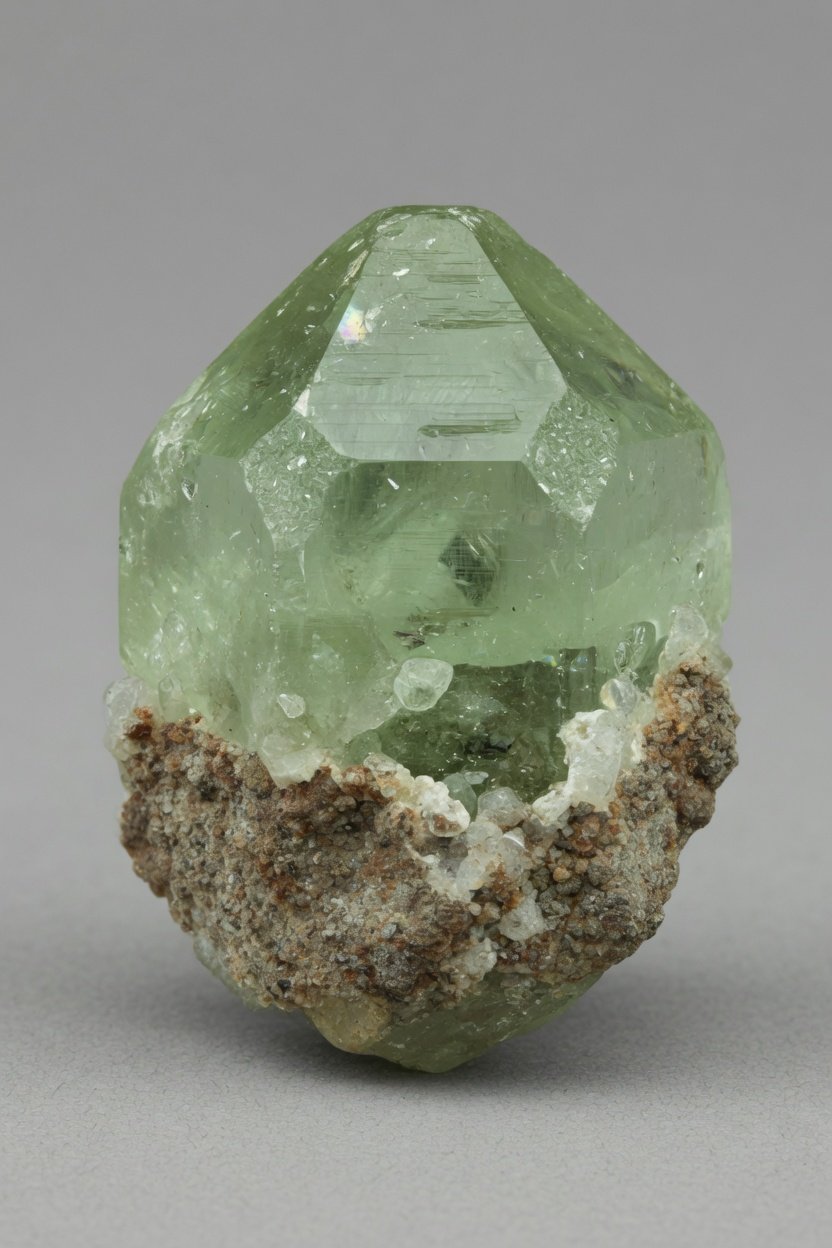
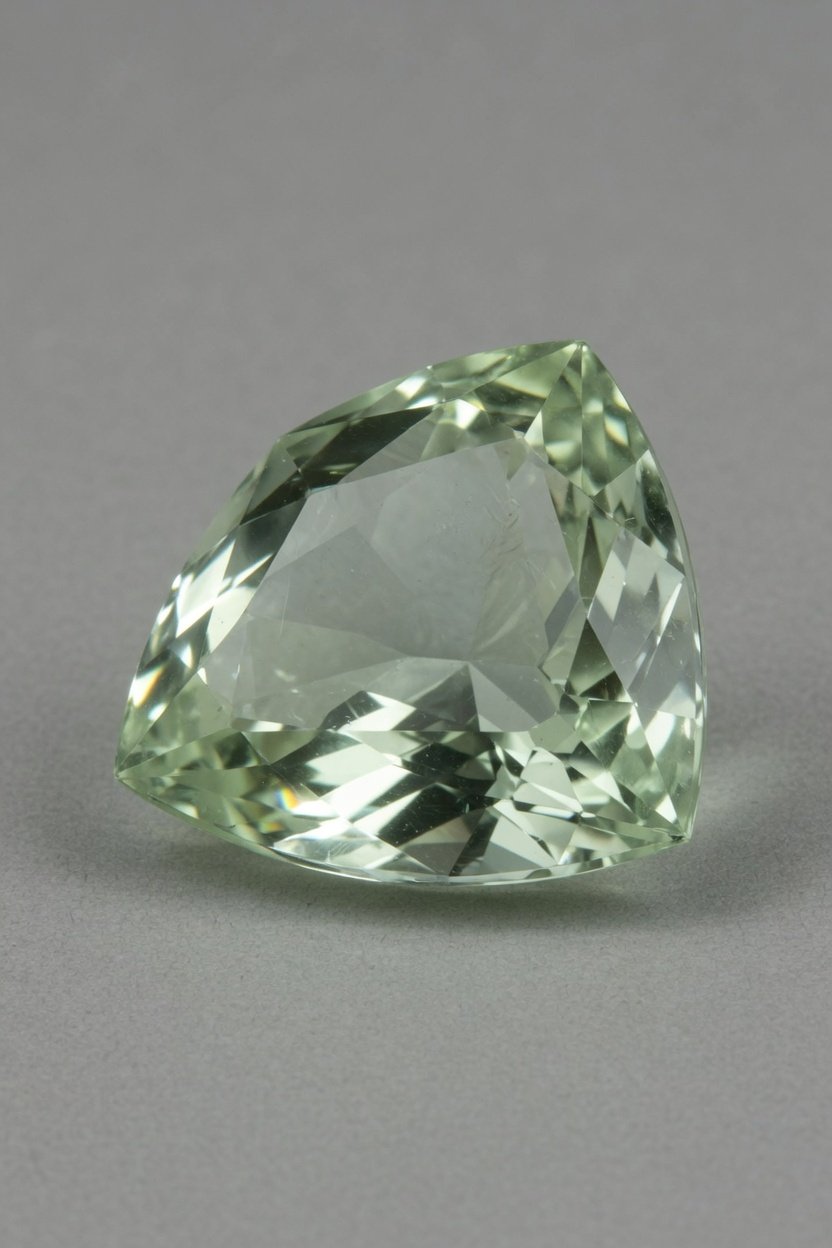
Prasiolite emerges from the earth as a luminous green quartz, its color shifting between pale mint and deep forest tones that catch light like liquid jade. Formed deep within the crust, this variety of quartz carries the clarity of crystal with an unexpected verdant hue that sets it apart from its colorless or purple siblings. Silversmiths prize it for its ability to bring a fresh, natural elegance to handcrafted pieces.
Physical Properties Prasiolite registers 7 on the Mohs scale, making it durable enough for everyday wear yet requiring careful handling during fabrication. Its specific gravity of 2.65 and hexagonal crystal system produce stones with strong vitreous luster and excellent transparency when free of inclusions. The stone must always be set after all soldering is complete to avoid heat damage that can fade its color back to clear or yellow; avoid ultrasonic cleaners and prolonged sunlight exposure, which may cause gradual fading over years.
Origin and Sourcing Most commercial prasiolite originates in Brazil, where amethyst is heat-treated to achieve the green hue, though natural deposits occur in Canada’s Thunder Bay region and parts of Poland. Mining occurs in hard-rock quartz veins using traditional adit methods that preserve crystal integrity. Ethical sourcing focuses on mines that limit environmental disruption while yielding the transparent rough suitable for faceting.
History and Significance Ancient Romans and Greeks valued green quartz for its resemblance to emerald, though true prasiolite identification came much later with modern gemology. In the nineteenth century, Brazilian heat-treatment techniques transformed abundant amethyst into this accessible green gem, democratizing its use beyond royalty. Today it symbolizes renewal and growth, bridging natural mineralogy with human ingenuity in color enhancement.
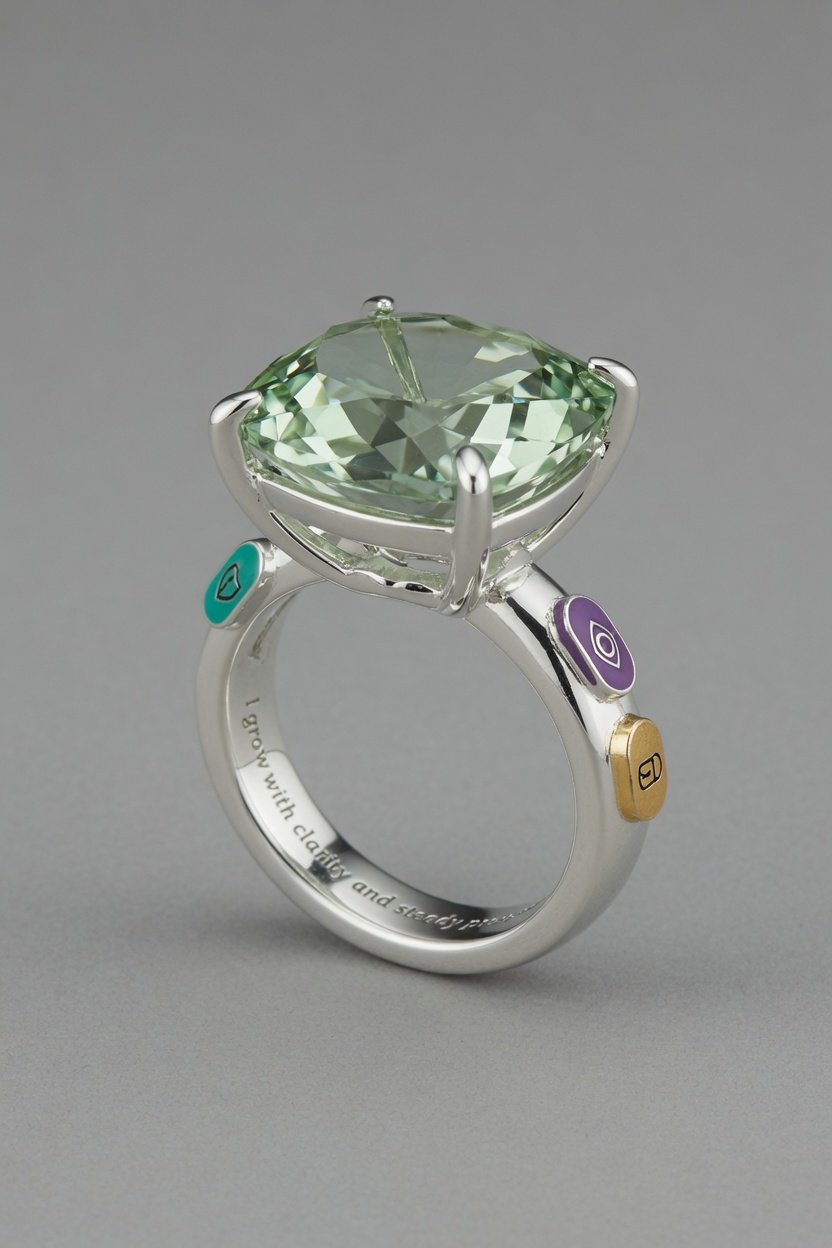
In Jewelry and Silversmithing Silversmiths favor prasiolite for its ability to complement sterling silver’s cool tones, creating pieces that evoke forest light or spring growth. The stone is typically faceted to maximize brilliance and set in prongs or bezels after all torch work finishes. Its moderate toughness suits pendants, rings, and earrings, though care cautions include removing jewelry before heavy cleaning or exposure to chemicals that could etch the surface.
Identifying Prasiolite in the Field In the field, prasiolite appears as hexagonal prisms with a distinct green body color ranging from pale to medium intensity and strong vitreous luster on clean faces. Natural specimens often show color zoning or faint purple remnants if derived from amethyst, while treated stones display uniform green without natural color gradients. Testing includes checking for pleochroism and confirming hardness against known quartz references.
Quick Facts
Common names: Prasiolite, Green Amethyst, Green Quartz
Chemical formula: SiO₂
Mohs hardness: 7
Specific gravity: 2.65
Color: Pale to medium green, transparent
Crystal system: Hexagonal (trigonal)
Luster: Vitreous
Transparency: Transparent to translucent
Common cuts: Faceted rounds, ovals, emerald cuts
Common treatments: Heat treatment (from amethyst)
Best silver setting: Prong or bezel in sterling silver
Birthstone month (if any): None
Main sources: Brazil, Canada, Poland
Meaning & Intentions
GROWTH
Prasiolite supports personal expansion by anchoring intentions of renewal and forward movement, its green color echoing spring foliage and new beginnings. Silversmiths set the stone in talismanic pieces worn during times of transition to maintain steady focus on positive change.
Chakra: Heart — compassion and emotional balance CLARITY
Worn to sharpen perception, prasiolite clears mental fog and encourages honest self-examination, its transparent green depths mirroring inner truth-seeking. The stone’s natural quartz structure amplifies focused thought when used in meditation or daily reflection jewelry.
Chakra: Third Eye — intuition and insight PROTECTION
Prasiolite creates a gentle energetic boundary that shields the wearer from negativity while allowing positive energy to flow, its durable quartz body providing lasting stability. In silver settings it becomes a quiet guardian for those navigating uncertain environments.
Chakra: Root — grounding and security Affirmation: "I grow with clarity and steady protection." AT A GLANCE: Chakra: Heart Element: Earth Energy: Receptive Zodiac: Capricorn Planet: Venus Affirmation: "I grow with clarity and steady protection."
Related Stones
Explore more stones from the Gemstone Library: Emerald · Aventurine · Rhodonite