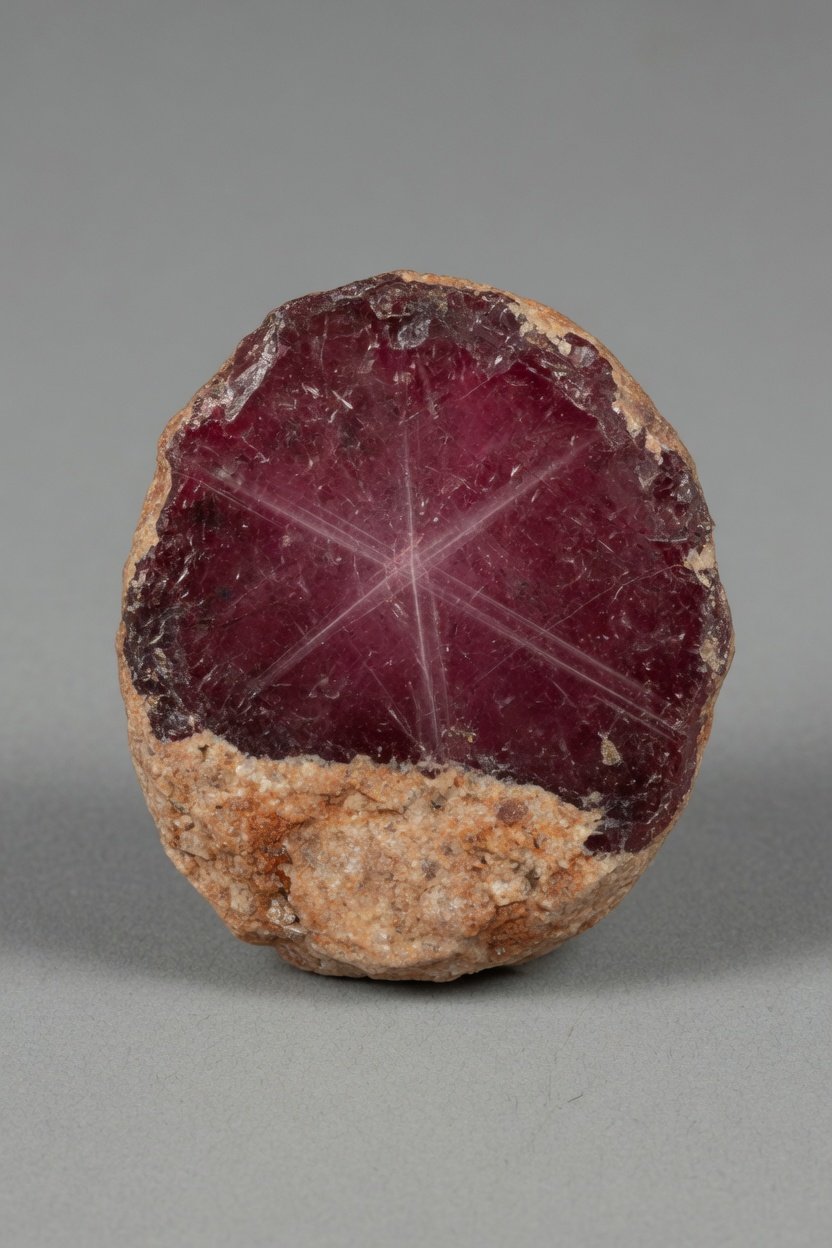
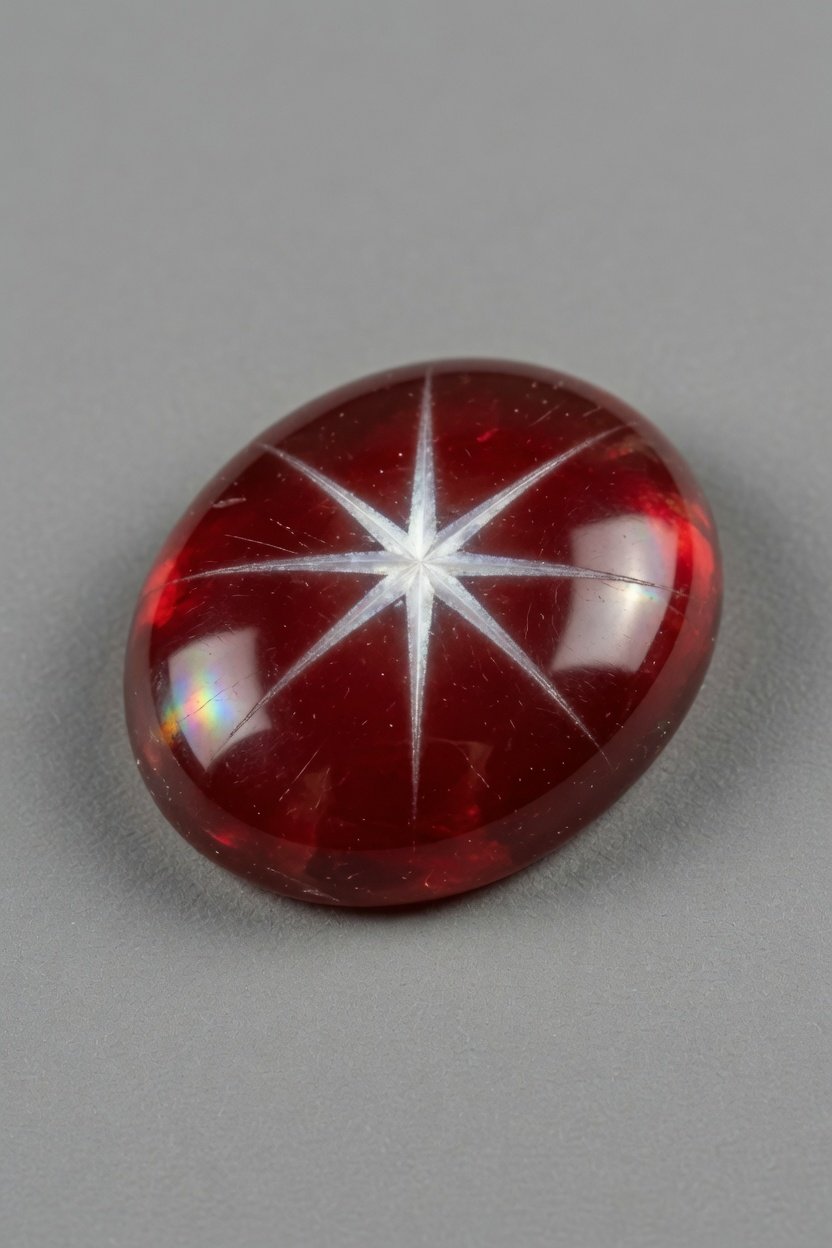
Ruby draws the eye with its saturated crimson hue that seems lit from within, a color so pure it once commanded the loyalty of kings and the reverence of gem traders across continents. Formed under extreme pressure and heat deep in the earth, this variety of corundum carries both exceptional durability and a distinctive optical presence that silversmiths have prized for centuries.
Physical Properties Ruby is a variety of corundum with the chemical formula Al₂O₃. It registers 9 on the Mohs scale, second only to diamond, and displays a specific gravity near 4.00. Its trigonal crystal system produces a vitreous luster and a refractive index of 1.76–1.77. Color arises from chromium substitution; stones range from pinkish red to deep pigeon-blood crimson. Inclusions such as rutile needles or hexagonal color zoning are common and help confirm natural origin. Because ruby can fracture along cleavage planes when overheated, the stone must be set only after all soldering and polishing are complete. Avoid ultrasonic cleaners and sudden temperature changes that could propagate internal stress.
Origin and Sourcing Primary ruby deposits occur in Myanmar’s Mogok Valley, Madagascar’s alluvial basins, Mozambique’s Montepuez region, and Thailand’s Chanthaburi district. Myanmar has historically supplied the most saturated “pigeon-blood” material, while Madagascar yields larger crystals from weathered gravels. Mining methods vary from hard-rock tunneling with headlamps and ore carts to gravel-bed screening in seasonal streams. Trace-element signatures such as vanadium and iron ratios allow gem laboratories to separate these geographic sources with high confidence.
History and Significance Ancient Sanskrit texts called ruby “ratnaraj,” king of gems, and Burmese warriors believed the stone granted invulnerability in battle. European royalty set rubies into crowns and signet rings as emblems of power and protection. In the Renaissance, alchemists associated the stone with vitality and the heart. Today ruby remains July’s birthstone and continues to appear in both heirloom jewelry and contemporary silver work.
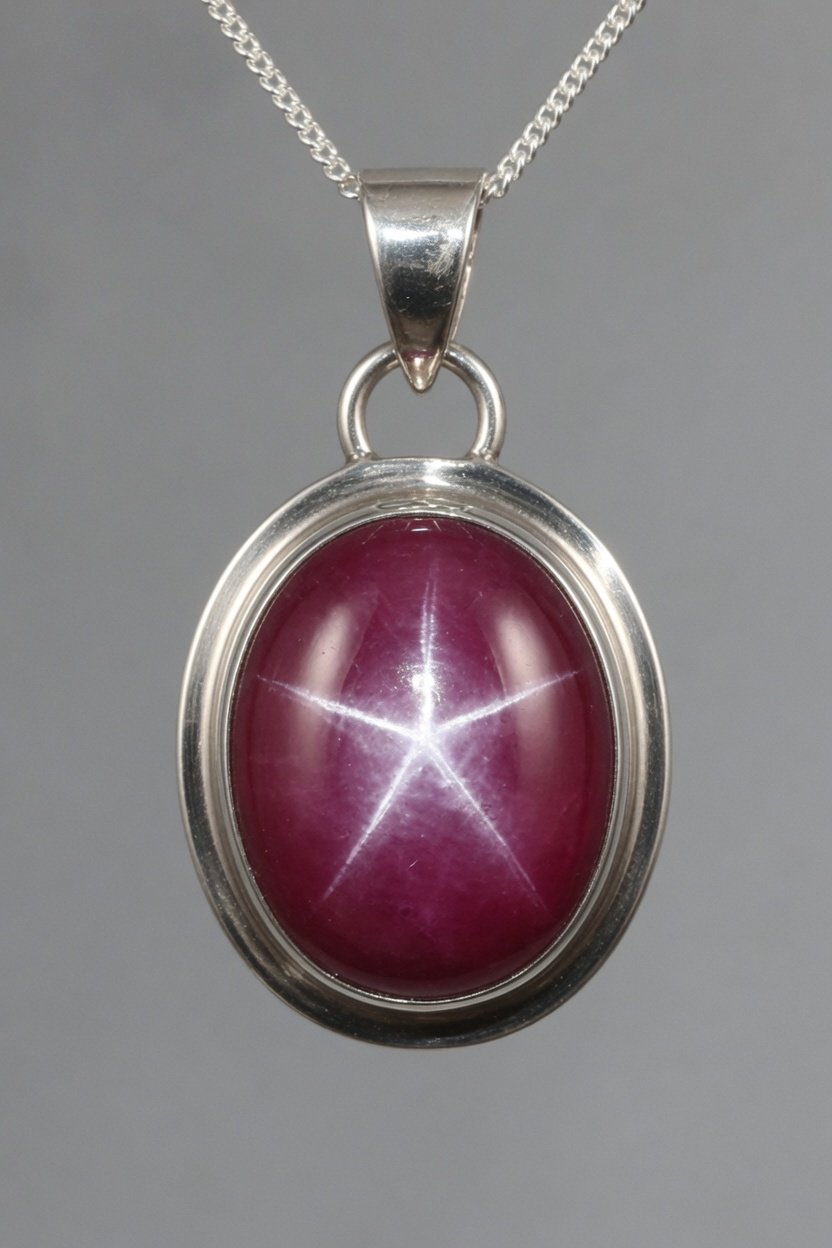
In Jewelry and Silversmithing Ruby’s hardness allows it to withstand daily wear, yet its chromium-derived color can shift under prolonged heat. Silversmiths therefore complete all torch work before setting the stone. Classic bezel settings in sterling silver protect pavilion edges while allowing light to enter the crown; prong settings suit well-cut faceted stones. Care cautions include avoiding chlorine solutions and storing rubies separately from softer gems to prevent abrasion.
Identifying Ruby in the Field A field test begins with hardness: ruby will scratch all but diamond and sapphire. Its red color persists under different lighting, unlike garnet or spinel imitations. Magnification often reveals straight hexagonal growth lines or rutile silk, while synthetic material shows curved striae or gas bubbles. Specific gravity testing with a balance separates ruby from lighter red glass or plastic simulants.
Quick Facts
Common names: Ruby
Chemical formula: Al₂O₃
Mohs hardness: 9
Specific gravity: 4.00
Color: Red to crimson
Crystal system: Trigonal
Luster: Vitreous
Transparency: Transparent to translucent
Common cuts: Faceted oval, round brilliant, cabochon
Common treatments: Heat treatment
Best silver setting: Classic Silver Bezel Pendant
Birthstone month (if any): July
Main sources: Myanmar, Madagascar, Mozambique, Thailand
Meaning & Intentions
VITAL PROTECTION
Ruby is traditionally carried for energetic shielding, its chromium-rich lattice believed to deflect negativity and strengthen personal resolve during conflict or transition. Silversmiths often mount the stone in a closed-back bezel so the color remains stable while the wearer moves through demanding environments.
Chakra: Root — grounding and physical vitality
CLARITY OF VISION
The stone’s optical density is said to sharpen focus, helping users cut through distraction and perceive underlying patterns in relationships or creative work. When set as a pendant, ruby rests near the heart, reinforcing both emotional insight and decisive action.
Chakra: Third Eye — intuitive perception
SECURE BOUNDARIES
Ruby’s hardness symbolizes enduring limits; wearers use it to maintain healthy personal space without aggression. In silver jewelry the cool metal tempers the stone’s warmth, creating a balanced talisman for those who negotiate or lead.
Chakra: Solar Plexus — personal power
Affirmation: "I move through the world with steady strength and clear sight." AT A GLANCE: Chakra: Root, Third Eye, Solar Plexus Element: Fire Energy: Projective Zodiac: Leo, Aries, Cancer Planet: Mars Affirmation: "I move through the world with steady strength and clear sight."
Related Stones
Explore more stones from the Gemstone Library: Tiger's Eye · Bloodstone · Jade