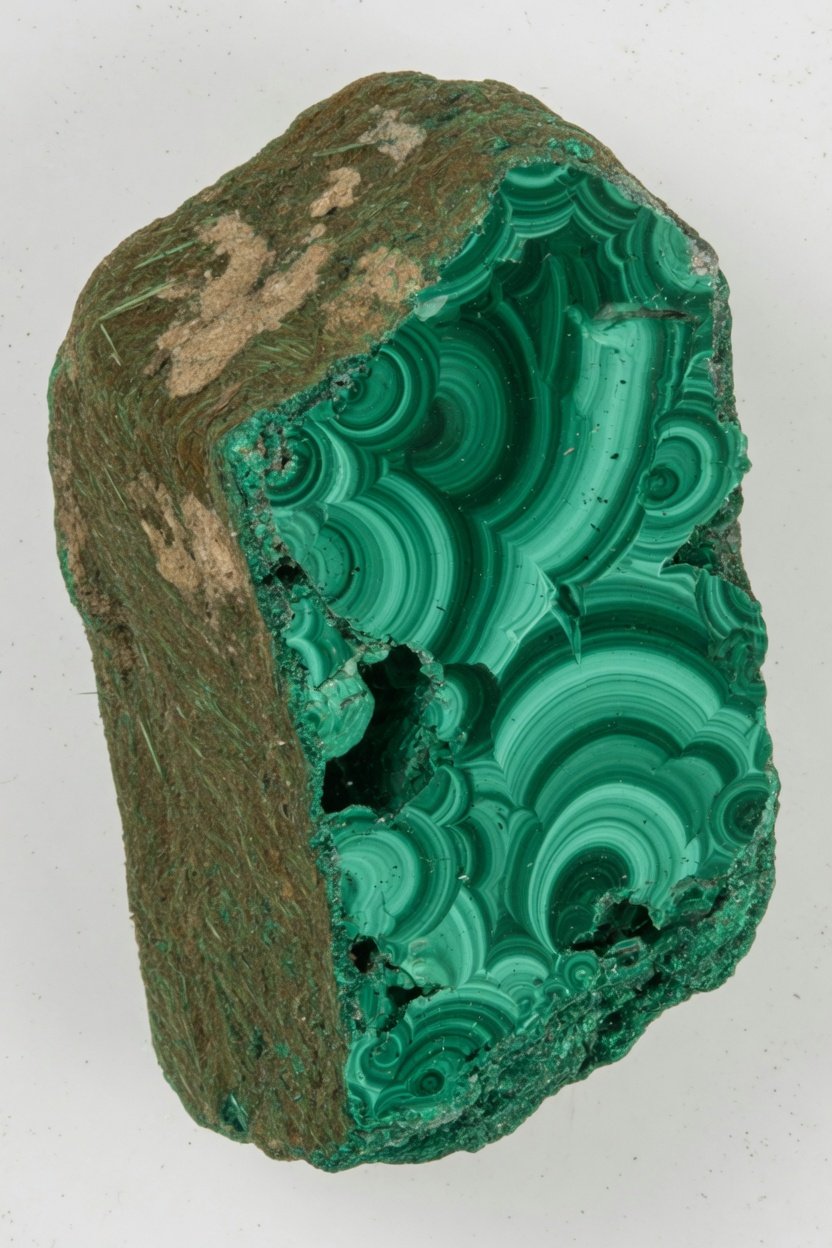
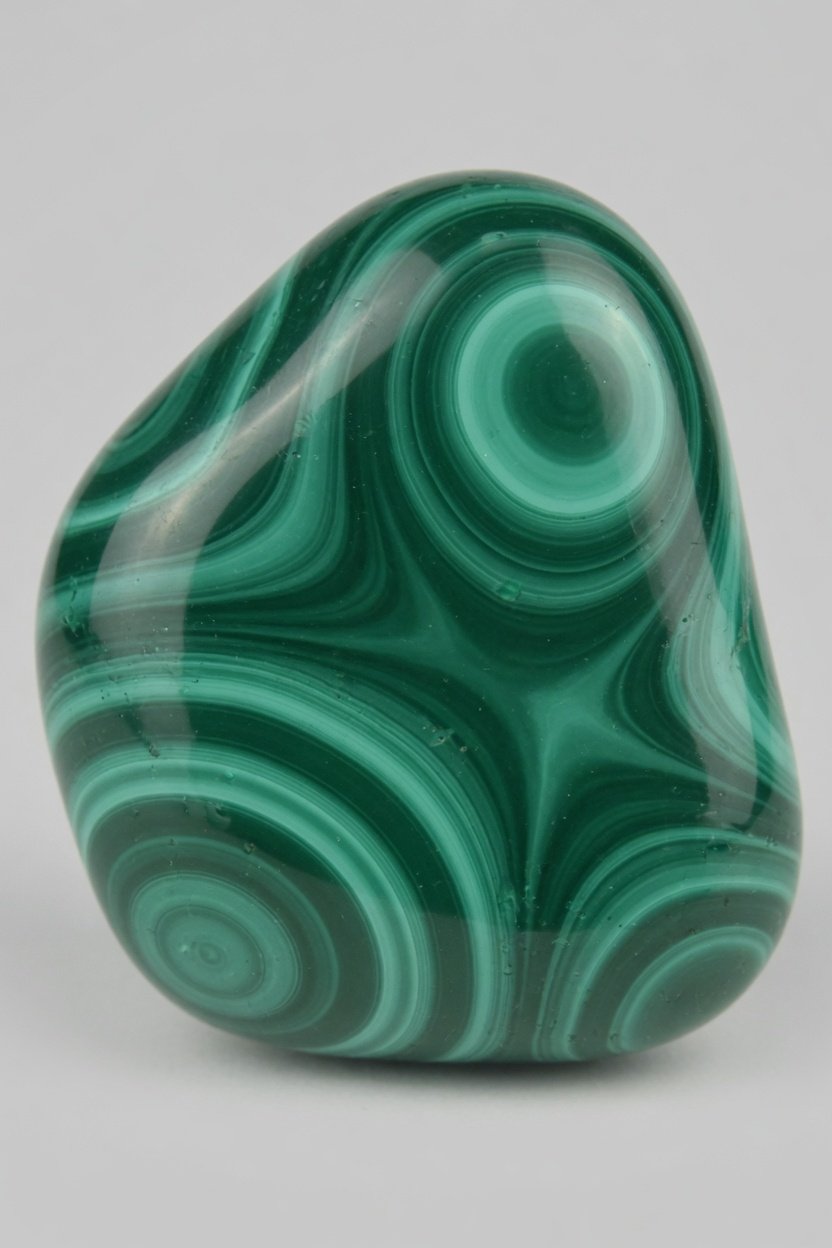
Malachite draws the eye with its intense, banded greens that swirl across the surface like liquid velvet. The stone forms in copper-rich environments where water and minerals interact over long periods, producing the distinctive patterns that make each piece unique. Its rich color and concentric rings have captivated artisans and collectors for thousands of years.
Physical Properties Malachite is a copper carbonate hydroxide mineral with a Mohs hardness of 3.5 to 4, making it relatively soft and prone to scratching. Specific gravity ranges from 3.6 to 4.0, and it displays a silky to vitreous luster with perfect cleavage in one direction. The stone is opaque, and its color arises from copper content. In silversmithing, malachite must always be set after all soldering is complete because heat can cause it to darken or fracture. Care requires avoiding ultrasonic cleaners, prolonged sunlight, and harsh chemicals that may dull the polish or damage the banding.
Origin and Sourcing Primary sources include the Democratic Republic of Congo, Zambia, Russia, and parts of Australia and Morocco. The most vivid material comes from the Katanga region of the DRC, where large nodules and botryoidal masses are extracted from copper mines. Zambian deposits often yield stones with tighter, more uniform banding. Miners work in hard-rock underground operations, following veins through host rock that frequently contains other copper minerals such as azurite and chrysocolla.
History and Significance Ancient Egyptians mined malachite in the Sinai and used ground pigment for eye cosmetics and tomb paintings. In the medieval period, Russian czars commissioned massive malachite veneers for palace rooms and tabletops. The stone was long regarded as a protective amulet against negative influences and a symbol of transformation through its association with copper and the earth’s mineral wealth. European silversmiths of the nineteenth century frequently paired it with silver in revivalist jewelry.
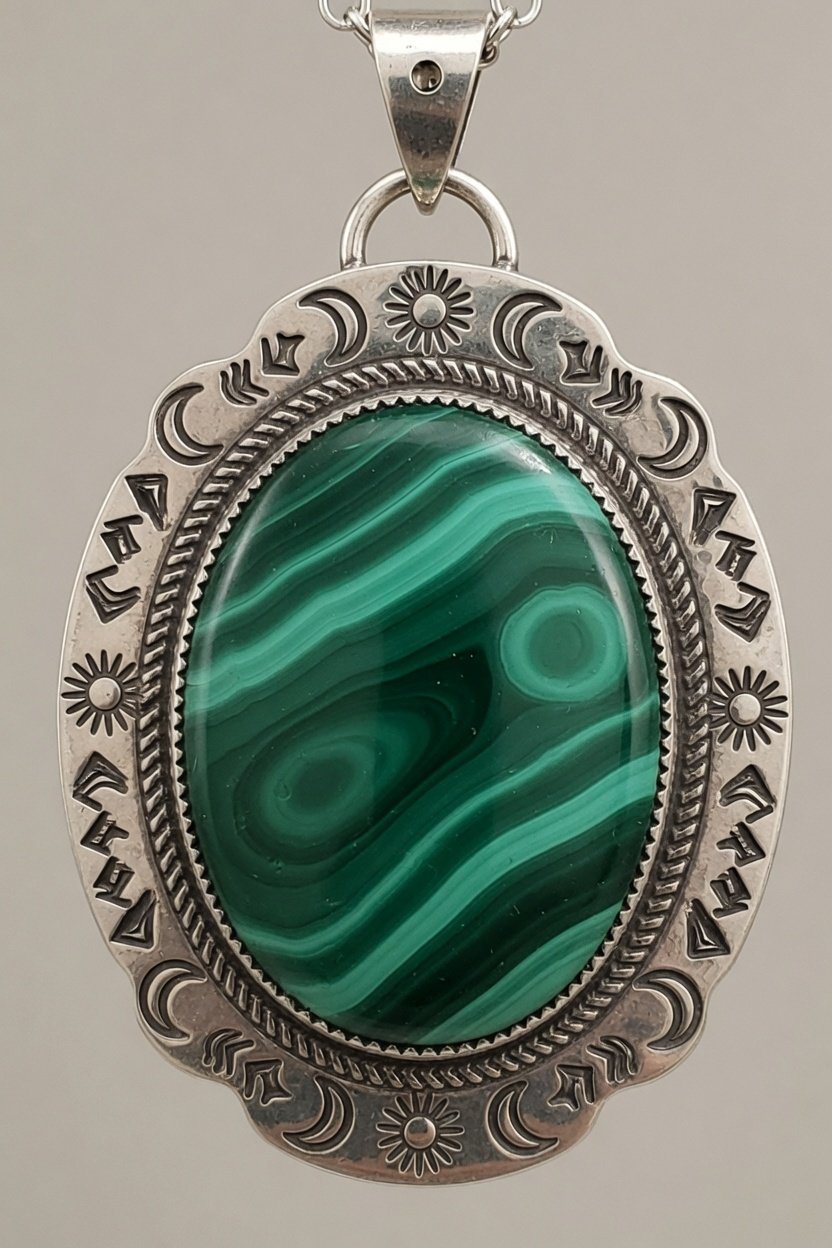
In Jewelry and Silversmithing Malachite is almost always cut as cabochons to showcase its banding. Silversmiths set the finished cabochon only after the silver piece has cooled completely from soldering, typically using a classic bezel or simple prong construction that protects the soft edges. The stone’s color contrasts beautifully with oxidized or polished silver. Regular care includes gentle wiping with a soft cloth and storage away from other harder gems to prevent abrasion.
Identifying Malachite in the Field In the field, malachite is recognized by its vivid green color and concentric or botryoidal banding that often shows lighter and darker zones. It effervesces slightly in dilute acid and leaves a green streak. The silky luster and copper association help distinguish it from similar green stones such as serpentine or aventurine.
Quick Facts
Common names: Malachite
Chemical formula: Cu₂CO₃(OH)₂
Mohs hardness: 3.5–4
Specific gravity: 3.6–4.0
Color: Vivid green with concentric banding
Crystal system: Monoclinic
Luster: Silky to vitreous
Transparency: Opaque
Common cuts: Cabochon, freeform, beads
Common treatments: Stabilization with resin
Best silver setting: Classic Silver Bezel Pendant
Birthstone month (if any): None
Main sources: Democratic Republic of Congo, Zambia, Russia
Meaning & Intentions
PROTECTION
Malachite has long been carried as a guardian stone that absorbs negative energy and shields the wearer during travel or difficult transitions. Silversmiths often set it in protective talismans where the banding is fully visible inside a secure bezel that keeps the soft surface safe from daily wear.
Chakra: Heart — opens compassion while releasing old emotional patterns INSIGHT
The concentric rings of malachite are said to encourage clear perception and help the user recognize patterns in relationships or personal habits. When set in silver, the stone’s reflective surface acts as a meditative focal point for quiet observation and honest self-examination.
Chakra: Third Eye — supports intuitive vision and mental clarity BOUNDARIES
Malachite strengthens personal boundaries by reminding the wearer to honor limits and release what no longer serves. Its copper origin ties it to the earth’s stabilizing forces, making it useful in jewelry intended for grounding work or recovery after emotional upheaval.
Chakra: Root — anchors energy and reinforces stability "Affirmation: I move forward protected and clear." AT A GLANCE: Chakra: Heart Element: Earth Energy: Receptive Zodiac: Capricorn, Scorpio Planet: Venus Affirmation: "I move forward protected and clear."
Related Stones
Explore more stones from the Gemstone Library: Aventurine · Jade · Amazonite