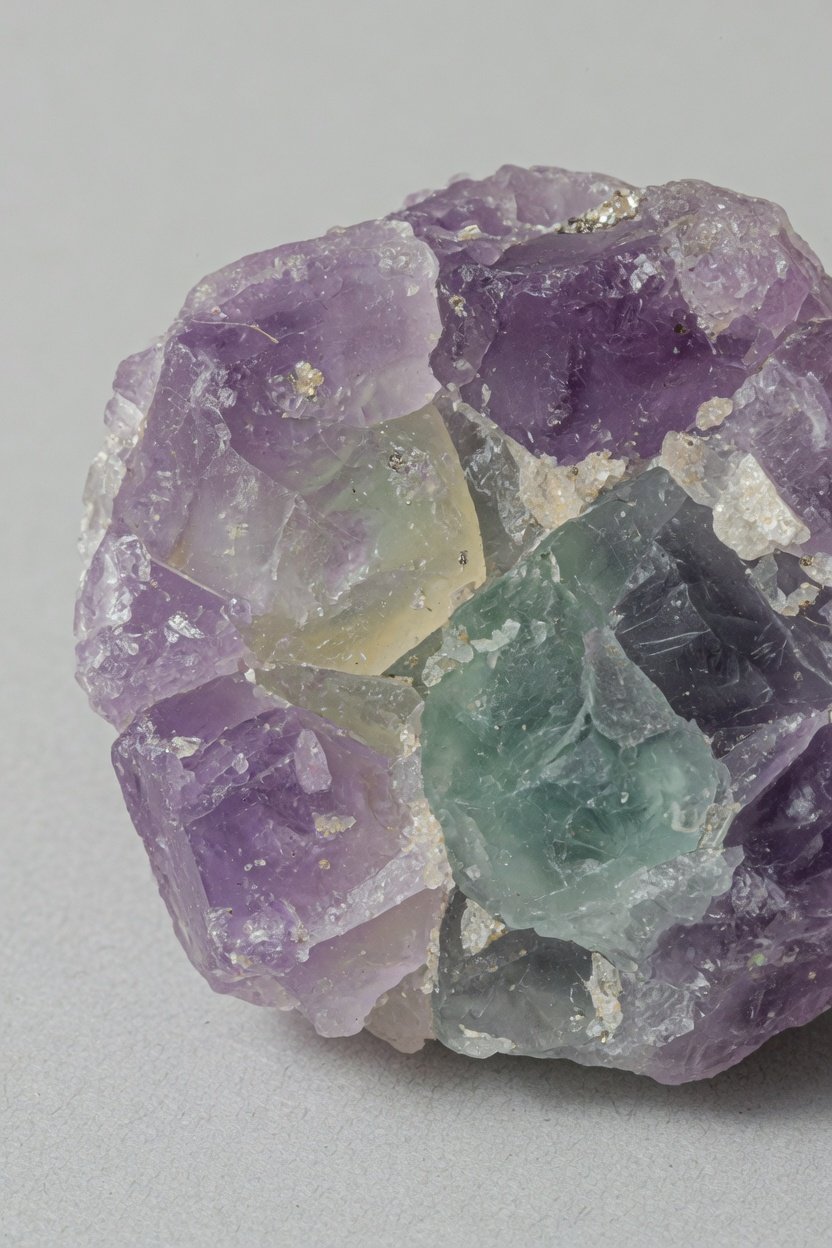
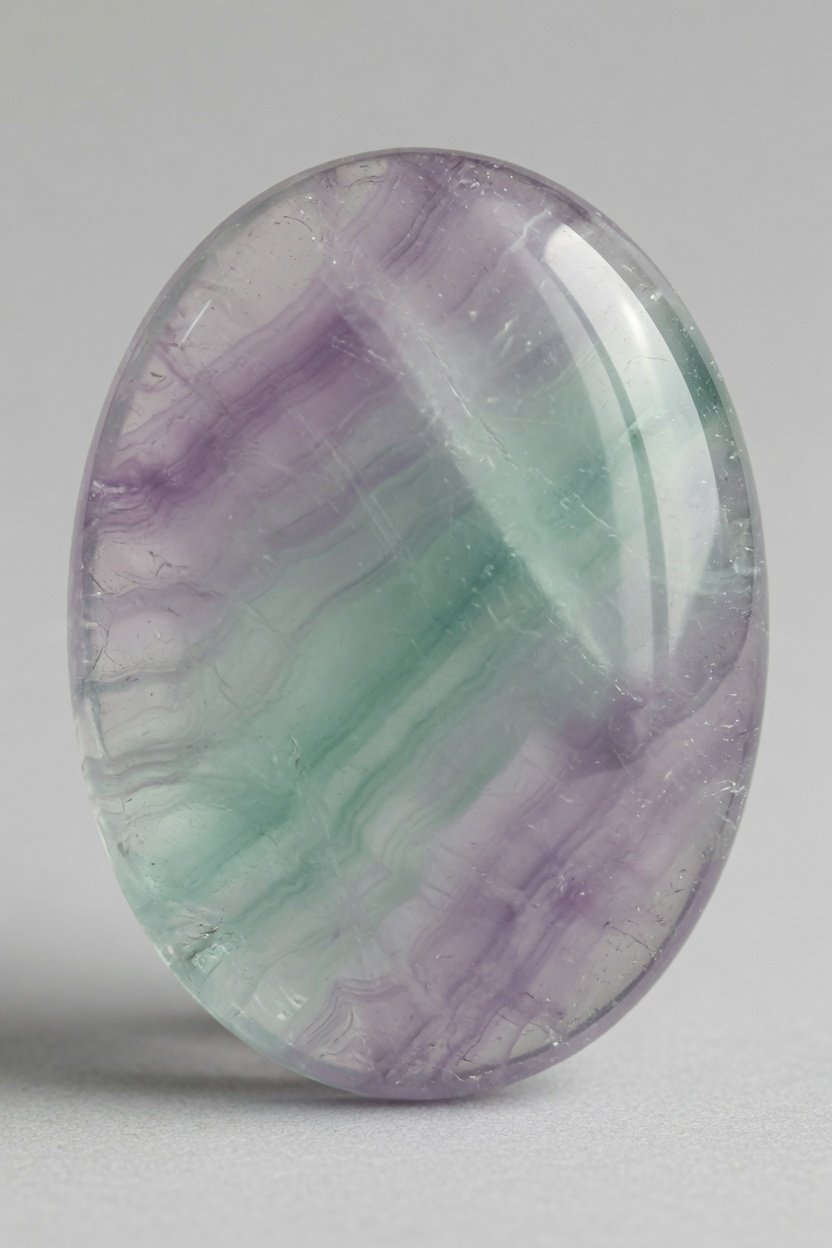
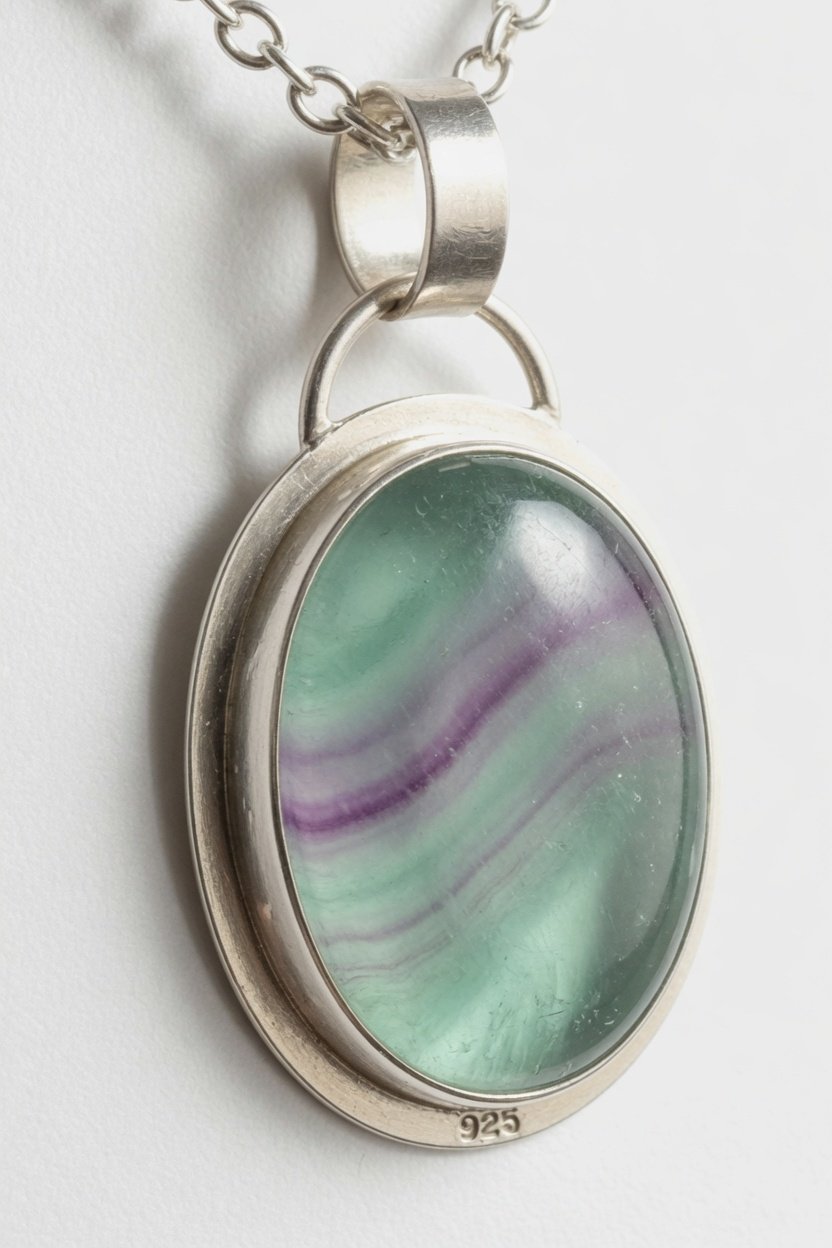
Fluorite draws the eye with its vivid bands of purple, green, and blue that seem to shift under light, a mineral prized by silversmiths for the way it catches and holds color inside silver settings. Its natural fluorescence under ultraviolet light adds an unexpected glow that makes finished pieces memorable long after the bench work ends. This stone rewards careful handling from the first rough cut through final polish.
Physical Properties Fluorite registers 4 on the Mohs scale and possesses perfect octahedral cleavage that can cause it to split cleanly if struck. Specific gravity sits near 3.18, giving pieces a substantial feel without excessive weight. The mineral is brittle, so edges require protection once set. Always set fluorite after all soldering is complete and the piece has cooled; direct heat can cause internal fracturing along cleavage planes. Avoid ultrasonic cleaners and store away from harder stones that might scratch its surface.
Origin and Sourcing Major deposits occur in China, Mexico, South Africa, and the United States, often as a byproduct of lead and zinc mining. Chinese material frequently shows strong color zoning in large cubic crystals, while Mexican fluorite tends toward deeper purples and greens from the Durango region. South African specimens often arrive with attractive matrix attachments that silversmiths sometimes leave visible for contrast. Ethical sourcing tracks these mining operations to ensure minimal environmental impact and fair labor practices.
History and Significance Ancient Egyptians carved fluorite into vessels and amulets, valuing its translucency and the way light passed through carved surfaces. Roman and Chinese artisans used it for small sculptures and inlays. During the Industrial Revolution the mineral became essential as flux in steelmaking, yet its gem qualities continued to attract lapidaries who cut it into beads and cabochons. Its name derives from the Latin “fluere,” meaning to flow, referencing both its use in smelting and its low melting point relative to many other minerals.
In Jewelry and Silversmithing Silversmiths favor fluorite for pendants and rings because its range of colors complements oxidized or patinated silver. Because of perfect cleavage, the stone is almost always cut as cabochons rather than faceted; the smooth dome reduces risk of chipping. Bezels provide the best protection for the girdle and pavilion. Set the stone after all soldering and pickling steps are finished, then secure it with gentle pressure to avoid stressing cleavage planes. A final coat of wax or resin can reduce surface scratching during wear.
Identifying Fluorite in the Field In the field, look for cubic crystals with stepped faces and a glassy luster that may show rainbow flashes on cleavage planes. Hardness testing with a copper coin leaves no mark, yet a steel knife scratches easily. Under long-wave ultraviolet light many specimens glow blue-violet or green, a diagnostic reaction that separates fluorite from similarly colored calcite or apatite. Color banding is usually concentric or zonal rather than the straight stripes seen in some agates.
Quick Facts
Common names: Fluorite, Fluorspar
Chemical formula: CaF₂
Mohs hardness: 4
Specific gravity: 3.18
Color: Purple, green, blue, yellow, colorless with frequent zoning
Crystal system: Cubic
Luster: Vitreous
Transparency: Transparent to translucent
Common cuts: Cabochon, bead, occasional faceted
Common treatments: None
Best silver setting: Classic Silver Bezel Pendant
Birthstone month (if any): None
Main sources: China, Mexico, South Africa, United States
Meaning & Intentions
CLARITY
Fluorite sharpens mental focus by aligning thought patterns and clearing scattered energy that can cloud decision-making. Silversmiths set the stone in pendants worn near the heart so the wearer can draw on steady concentration during creative work or daily tasks. The mineral’s cubic structure is believed to create an orderly field that supports clear perception without distraction.
Chakra: Third Eye — center of insight and focused awareness VISION
The banded colors of fluorite encourage intuitive sight, helping users notice subtle patterns and hidden connections in their surroundings. When placed in a silver bezel and worn as a pendant, the stone acts as a visual anchor during meditation or reflective moments. Its natural fluorescence reminds the wearer that deeper perception often appears under different light.
Chakra: Third Eye — center of insight and focused awareness STABILITY
Fluorite’s orderly crystal lattice offers a sense of inner grounding, countering chaotic emotions with quiet structure. Set after soldering in protective silver bezels, the stone becomes a wearable reminder to maintain balance when external pressures rise. Wearers report feeling more composed when the cabochon rests against the skin throughout the day.
Chakra: Root — foundation and steady presence Affirmation: "I see clearly and remain steady." AT A GLANCE: Chakra: Third Eye Element: Air Energy: Receptive Zodiac: Aquarius Planet: Mercury Affirmation: "I see clearly and remain steady."
Related Stones
Explore more stones from the Gemstone Library: Moss Agate · Chrysoprase · Amazonite