Tsavorite emerges from the earth as a flash of electric green, its vivid hue born deep within the metamorphic rocks of East Africa where chromium and vanadium weave their alchemy. This rare garnet captures light with an intensity that rivals emerald yet carries its own distinct fire, making it a prized find for artisans who seek stones of uncompromising color and durability. Its journey from rough crystal to finished jewel tells a story of precision, patience, and respect for the material.
Physical Properties Tsavorite belongs to the grossular garnet family, displaying a Mohs hardness of 6.5 to 7.5 that allows it to withstand daily wear while retaining its brilliant polish. Its specific gravity hovers near 3.6, and it crystallizes in the cubic system, often forming dodecahedral or trapezohedral habits. The stone’s refractive index of 1.74 produces strong brilliance and dispersion when properly faceted. Always set Tsavorite after all soldering operations are complete to avoid thermal shock that could fracture the crystal along subtle cleavage planes. For care, clean with warm soapy water and a soft brush; avoid ultrasonic cleaners and prolonged exposure to strong acids or sudden temperature changes that might stress internal fractures.
Origin and Sourcing Primary deposits lie in the metamorphic terrains of Kenya’s Tsavo National Park region and neighboring Tanzania, where Precambrian rocks have been altered by heat and pressure over millions of years. Miners extract the garnet from narrow veins within graphite-bearing gneisses, often by hand in small-scale operations that limit environmental impact. Trace chromium and vanadium impurities create the signature vivid green, with the finest material showing a pure, slightly bluish undertone rather than yellow or brown secondary hues. Ethical sourcing remains critical because the deposits are limited and easily exhausted.
History and Significance Discovered in the late 1960s by British geologist Campbell Bridges, Tsavorite received its name from the Tsavo region where it was first found in commercial quantities. Bridges recognized its potential as a rival to emerald, and Tiffany & Co. helped popularize the stone in the 1970s. Unlike many garnets known since antiquity, Tsavorite’s modern debut means it carries little ancient lore yet has quickly gained significance among collectors who value its rarity and intense saturation. Its scarcity—far less common than other green garnets—adds to its allure in contemporary gem markets.
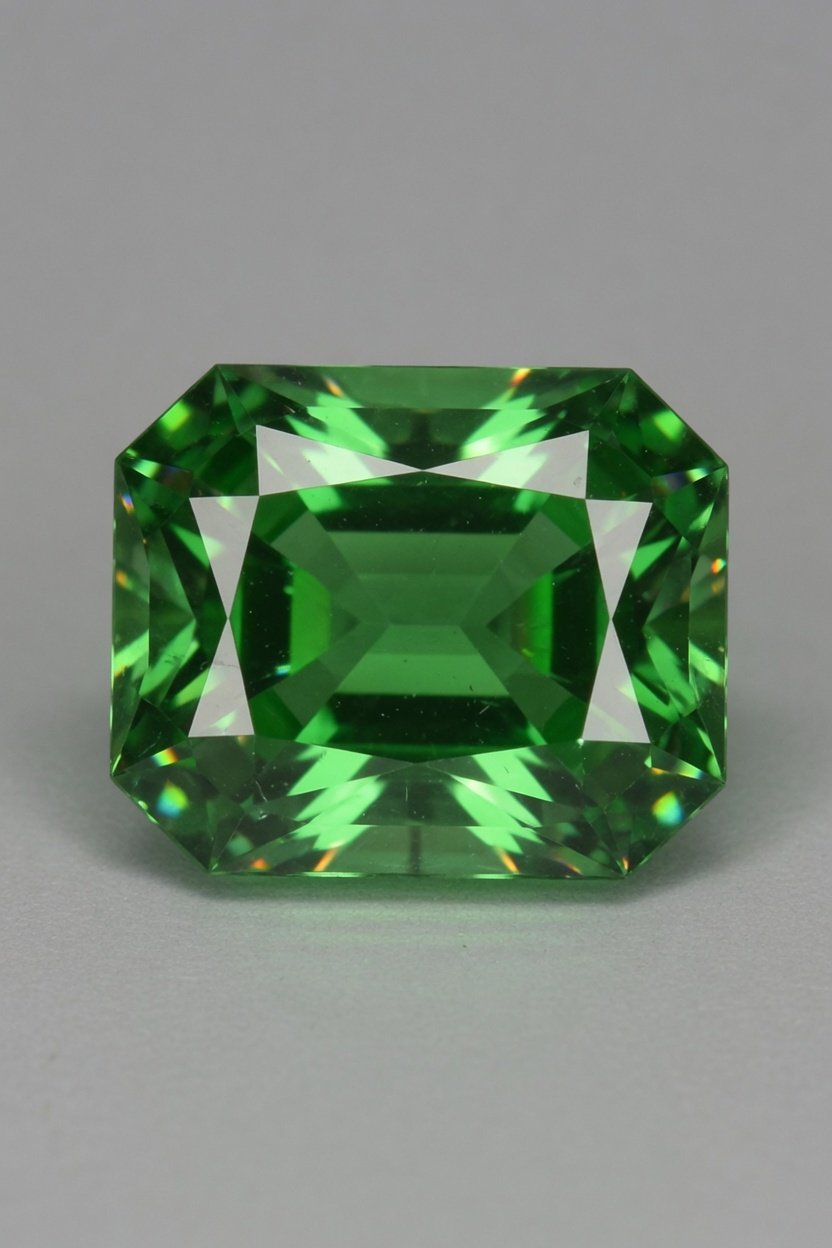
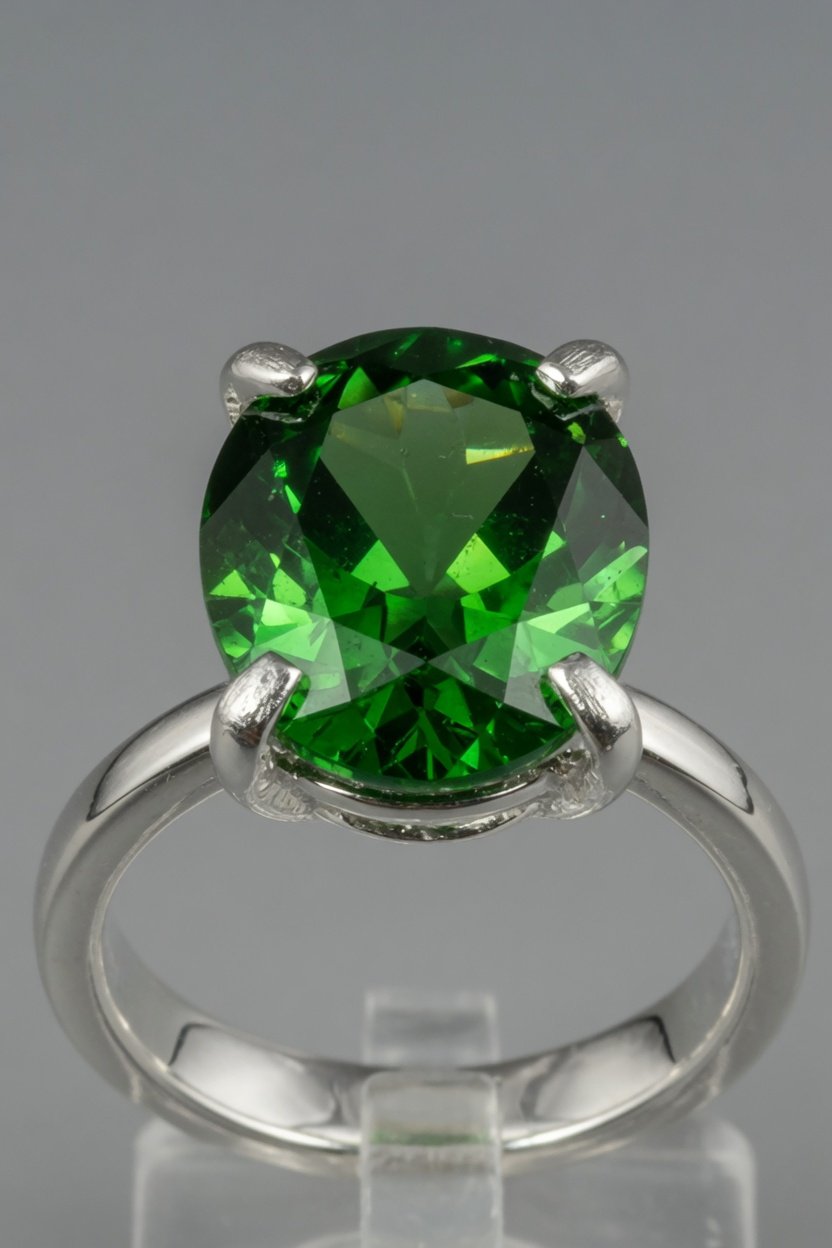
In Jewelry and Silversmithing In silversmithing, Tsavorite’s high refractive index and transparency reward precise faceting that maximizes light return. The stone’s toughness makes it suitable for prong settings that allow maximum light entry, though bezel settings can also protect the girdle on smaller stones. Always complete all soldering and annealing before setting the stone to prevent heat damage. Its vivid green pairs beautifully with oxidized silver or high-polish finishes, creating striking contrast. Jewelers often orient the table facet parallel to the crystal’s natural growth planes to enhance color uniformity across the face.
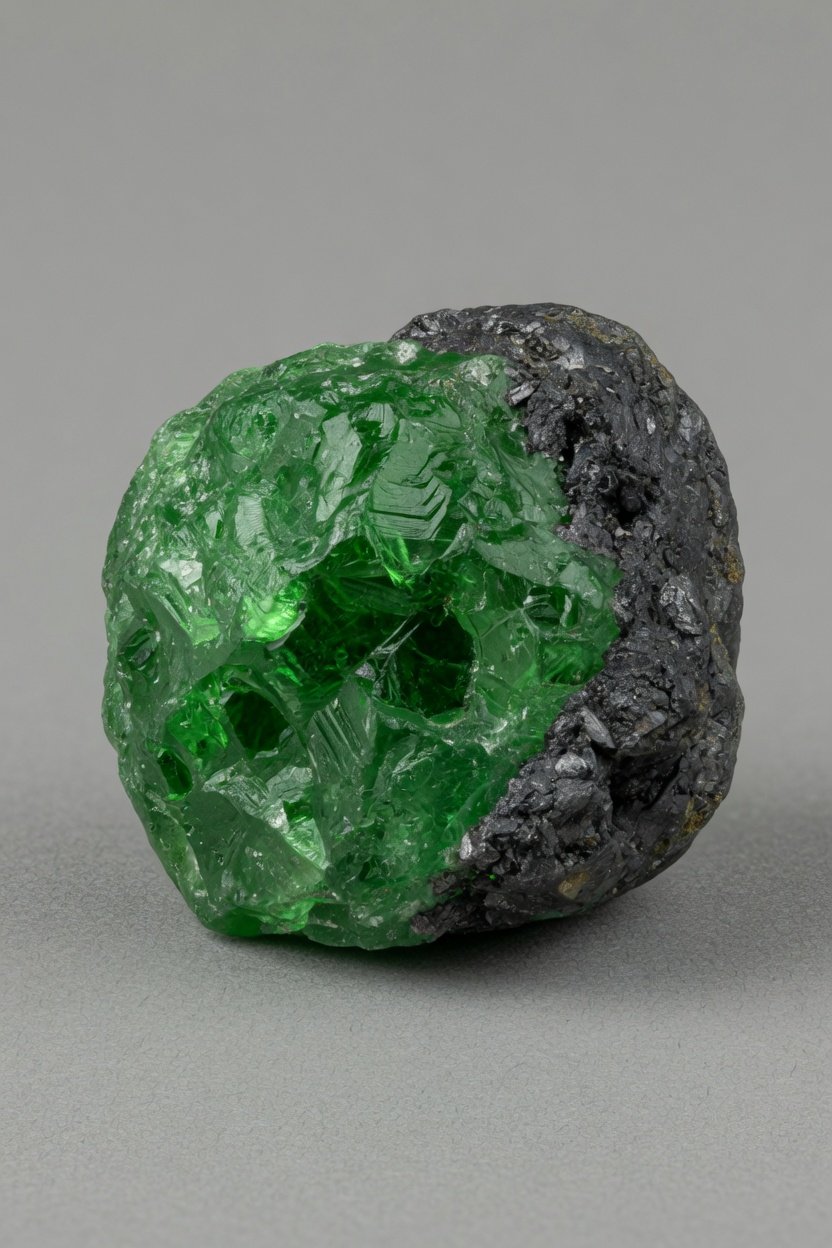
Identifying Tsavorite in the Field In rough form, Tsavorite appears as translucent green fragments with a greasy to vitreous luster and occasional graphite inclusions that appear as black specks. Its lack of pleochroism distinguishes it from tourmaline, while its single refractive index separates it from beryl species. Field identification relies on color intensity, hardness testing against quartz, and association with graphite schists. Always confirm identity with refractometer or spectroscope before cutting, as misidentification can lead to disappointing results on the wheel.
Related Stones
Explore more stones from the Gemstone Library: Agate · Alexandrite · Amazonite