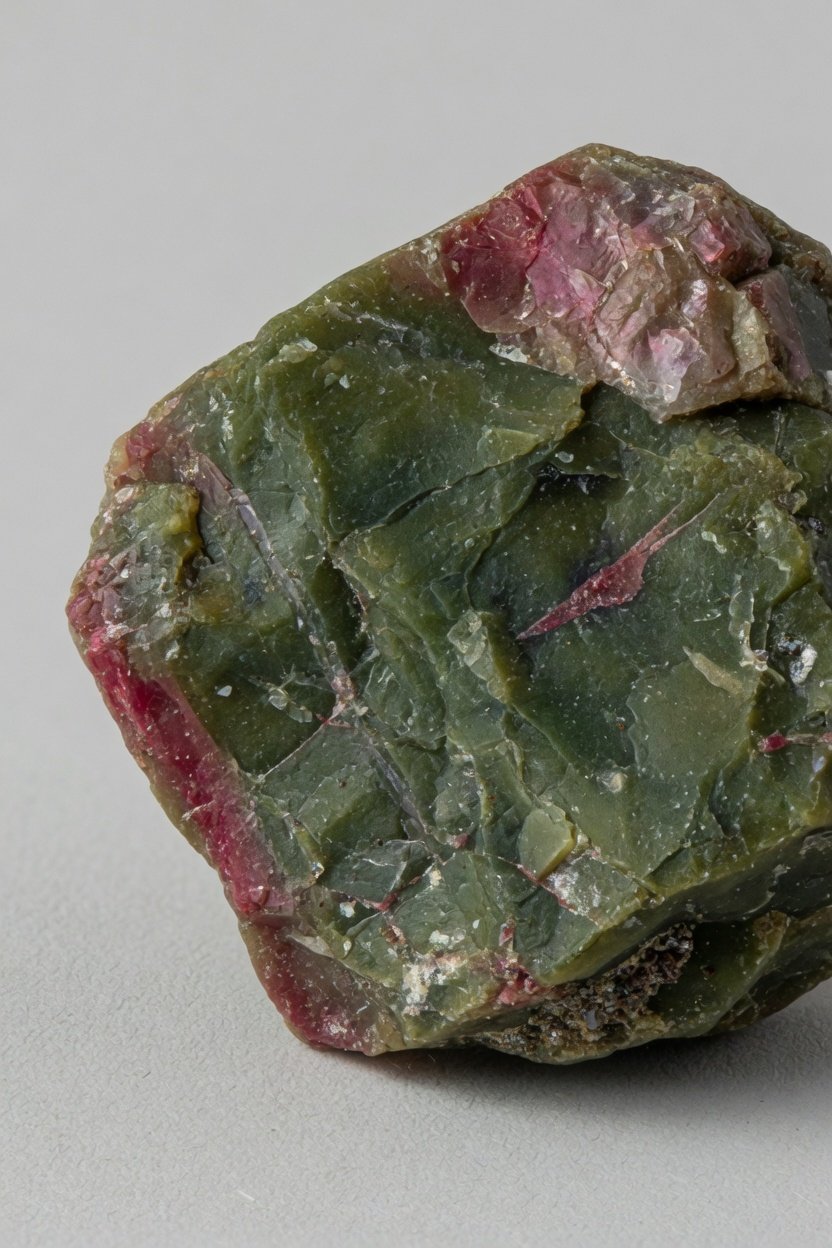
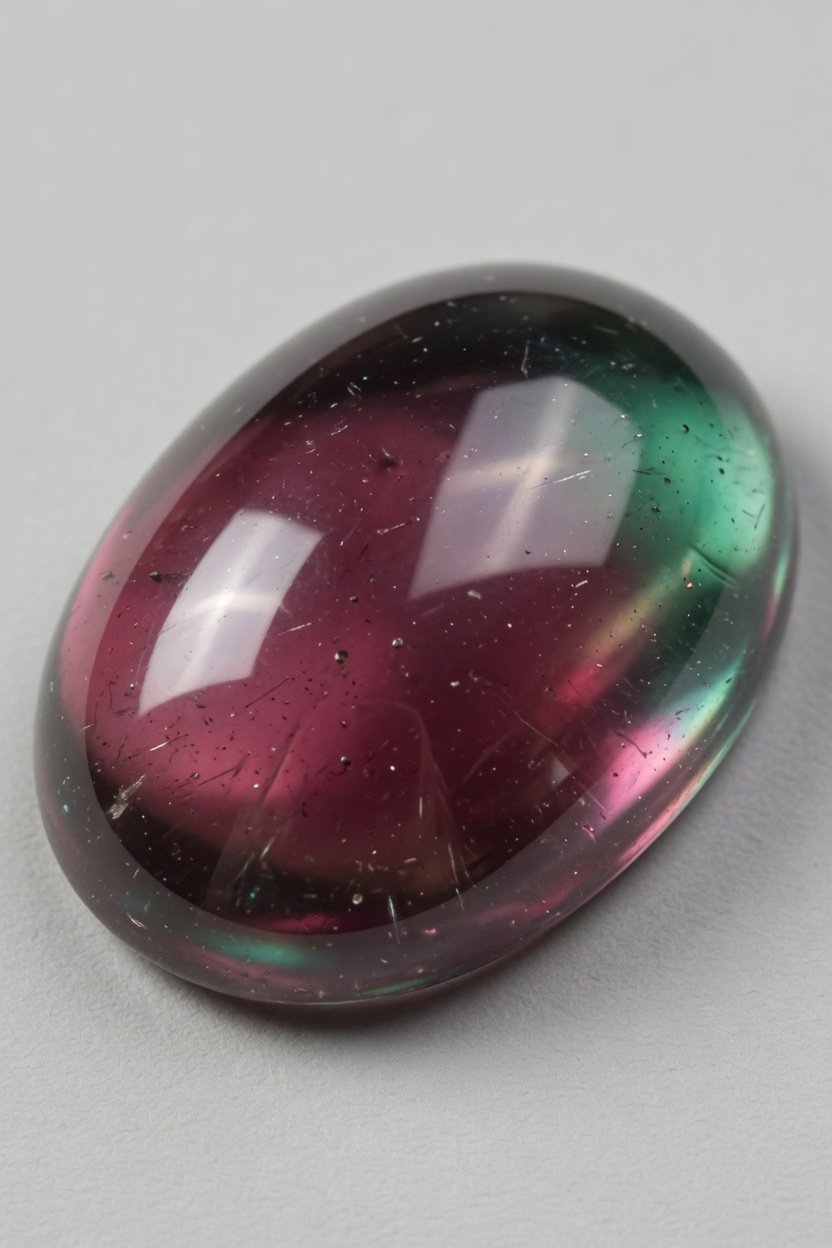
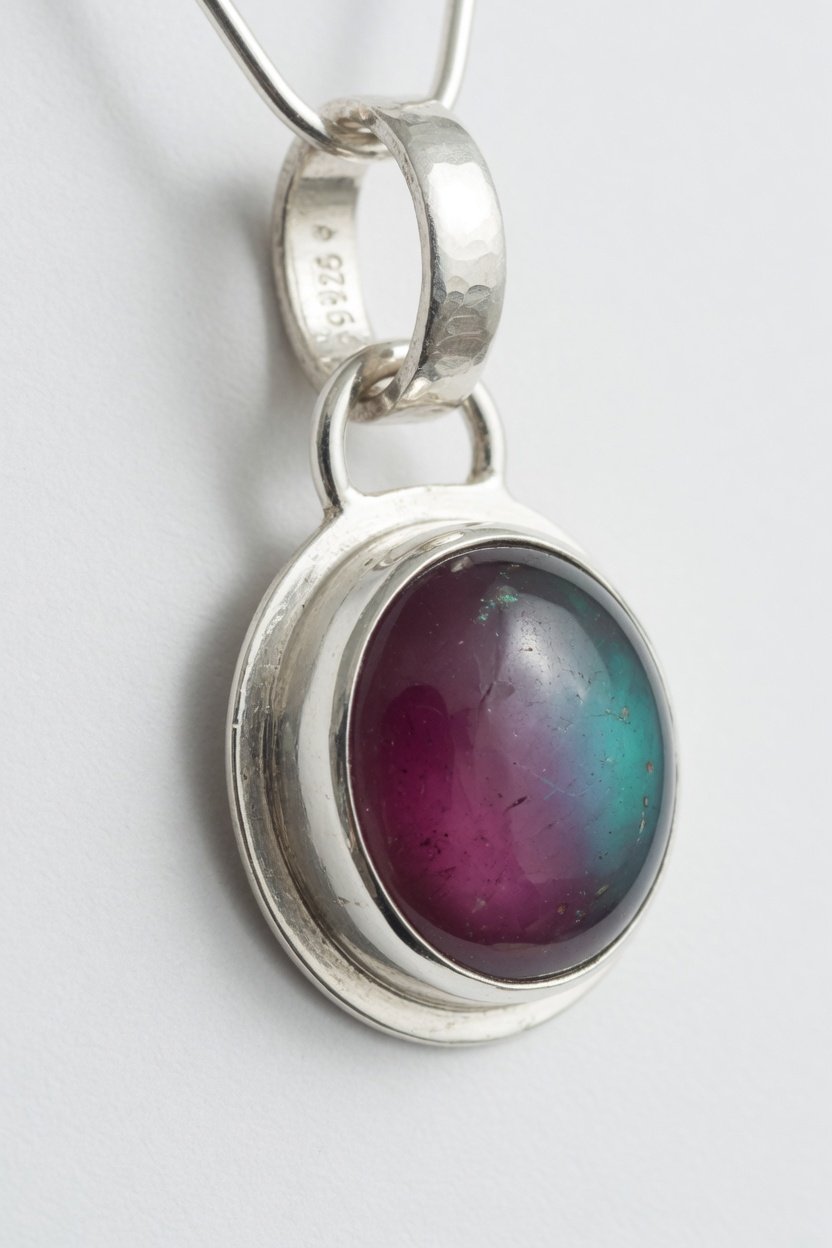
Alexandrite captures attention the moment light shifts across its surface, transforming from cool green to warm red in an instant that feels almost alive. This rare color-change phenomenon sets it apart from other gems and draws silversmiths who seek stones with built-in drama. Its chromium-driven response to different light sources creates a living palette that rewards careful observation and precise setting.
Physical Properties Alexandrite registers 8.5 on the Mohs scale, making it exceptionally durable for everyday wear yet still requiring thoughtful handling during fabrication. Specific gravity sits near 3.7, and the stone exhibits strong pleochroism alongside its signature color change. Because the gem can fracture along cleavage planes if overheated, it must be set only after all soldering and polishing are complete. Avoid ultrasonic cleaners and harsh chemicals that could dull the vitreous surface.
Origin and Sourcing Primary deposits lie in Russia’s Ural Mountains, with additional material coming from Brazil, Sri Lanka, and East Africa. Russian crystals formed in mica schists under high-pressure metamorphic conditions, while Brazilian stones often appear in alluvial gravels. Ethical sourcing now emphasizes traceable lots from small-scale operations that minimize environmental impact. Rough is typically sorted by daylight color strength before export.
History and Significance Discovered in 1830 near the Tokovaya River, the stone was named for Tsar Alexander II and quickly became a symbol of Russian imperial jewelry. Its red-and-green hues matched the national colors, elevating it to royal status within decades. By the late nineteenth century, supply dwindled, turning remaining crystals into collector treasures and inspiring modern synthetic versions that mimic the shift without matching natural rarity.
In Jewelry and Silversmithing Silversmiths favor low-profile bezels that protect the girdle while allowing light to enter from multiple angles. The color change reads most dramatically against oxidized silver, where dark patina makes the green phase appear deeper and the red phase more luminous. Set the stone only after all soldering and pickling are finished; liver-of-sulfur patina applied beforehand can create a dramatic frame without risking thermal shock. Gentle polishing with rouge on a soft wheel preserves the vitreous luster.
Identifying Alexandrite in the Field A reliable field test involves comparing the stone under north daylight versus warm tungsten light; genuine material shifts distinctly toward red. Refractive index near 1.75 and weak birefringence help separate it from tourmaline or garnet imitations. Surface wear on older specimens often reveals natural crystal faces rather than the rounded contours of synthetics. Always examine for straight color zoning rather than patchy distribution.
Quick Facts
Common names: Alexandrite, Color-change chrysoberyl
Chemical formula: BeAl₂O₄ with Cr³⁺
Mohs hardness: 8.5
Specific gravity: 3.68–3.78
Color: Green to red color change
Crystal system: Orthorhombic
Luster: Vitreous
Transparency: Transparent to translucent
Common cuts: Oval, cushion, round brilliant
Common treatments: None (rarely heated)
Best silver setting: Classic Silver Bezel Pendant
Birthstone month (if any): June
Main sources: Russia, Brazil, Sri Lanka, Tanzania
Meaning & Intentions
ADAPTABILITY
Alexandrite supports fluid responses to changing circumstances by mirroring its own color shift under different lights. Wearers carry the stone during transitions to maintain composure while remaining open to new information. The gem’s chromium structure records both daylight and firelight, reminding the user that perception itself can evolve without losing core identity.
Chakra: Throat – clear communication during change PERCEPTION
The stone sharpens awareness of subtle environmental cues, training the eye to notice shifts others overlook. Practitioners meditate with alexandrite to refine intuition and distinguish surface appearance from underlying truth. Its dual nature encourages balanced observation rather than reactive judgment.
Chakra: Third Eye – insight and pattern recognition BOUNDARIES
Alexandrite reinforces personal limits by demonstrating how light itself can be filtered or amplified. Users set clearer energetic boundaries when the stone is carried or worn consistently. The color change models selective permeability, allowing beneficial influences while deflecting those that drain vitality.
Chakra: Root – grounded protection Affirmation: "I shift with grace and remain whole." AT A GLANCE: Chakra: Throat, Third Eye, Root Element: Earth Energy: Receptive Zodiac: Gemini, Leo Planet: Mercury Affirmation: "I shift with grace and remain whole."
Related Stones
Explore more stones from the Gemstone Library: Rhodonite · Amazonite · Blue Lace Agate